20 Vet-Verified Himalayan Cat Colors & Coat Patterns (With Pictures)


In this article
The Himalayan cat is considered a division of the Persian breed by the Cat Fanciers’ Association (CFA), they are Persians with a colorpoint pattern. There are 20 recognized division colors of the Himalayan cat. All these wonderful variations are light, fluffy, and positively frothy confections of kitty cats! In this article, we’re going to give you some basic breed information and details about each of the 20 recognized Himalayan cat colors, as well as grooming tips to help keep your cat looking purr-fect!

The 20 Himalayan Cat Colors
There are twenty Himalayan division colors recognized by the Cat Fanciers’ Association—the leading authority when it comes to cat shows, competitions, breeds, and colors.

1. Chocolate Point Himalayan

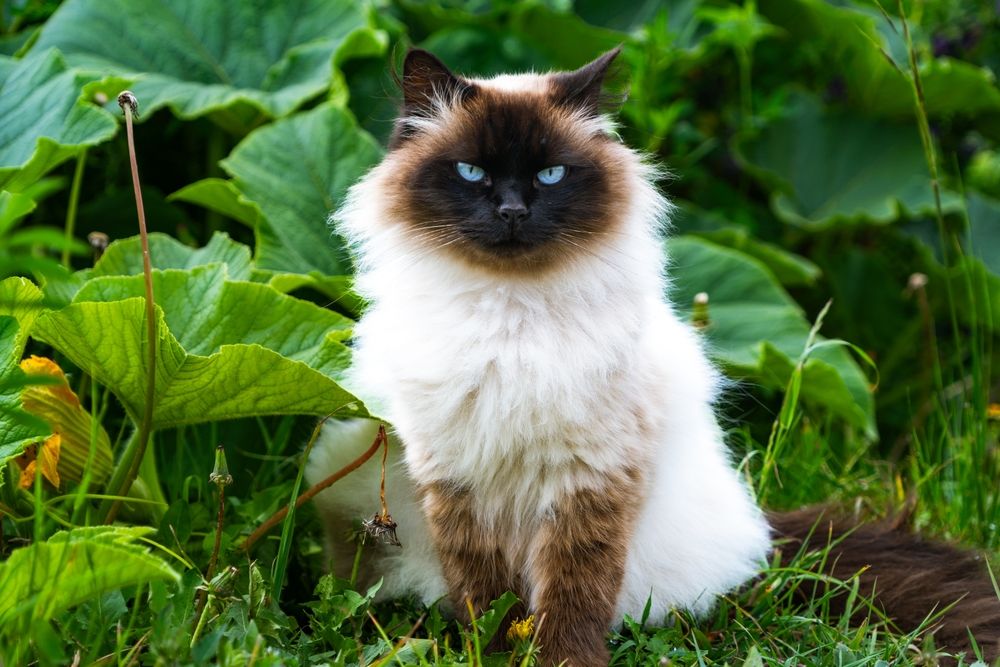
First on our list of Himalayan cat colors is the Chocolate Point. The body of this scrumptious cat is ivory with points of chocolate brown. Think warmer, milk chocolate tones! Their noses and paws are a dark or “cinnamon” pink color, and their eyes are always a vivid, deep blue.
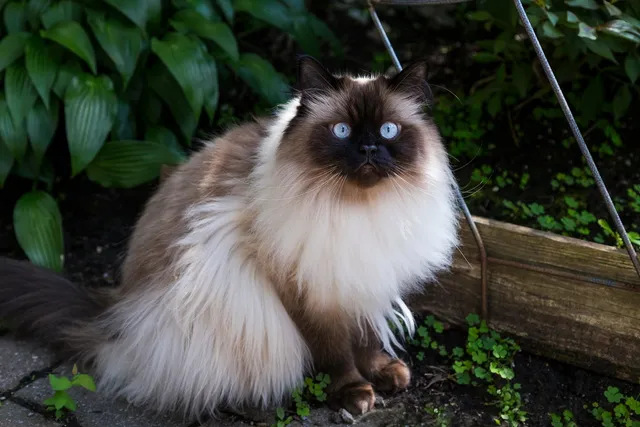
2. Seal Point Himalayan

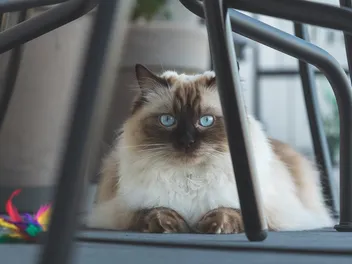
The body of the Seal Point Himalayan is a warm, pale shade from cream to fawn that shades gradually lighter toward the chest and stomach. Their points are a dark, almost wet-looking seal brown (which is how they get their name as the Seal Point Himalayan), as are the paw pads and nose.
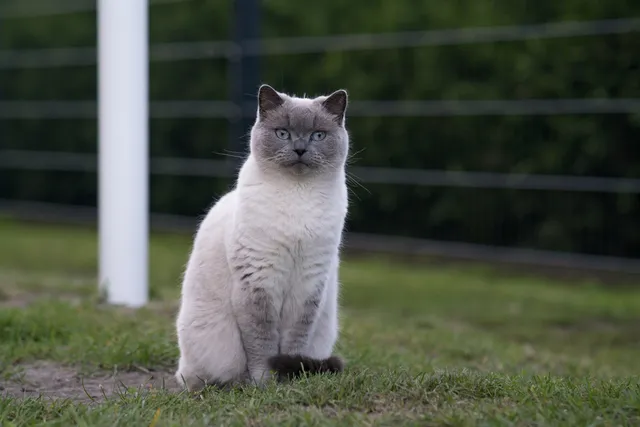
3. Lilac Point Himalayan
As one of the rarest colors of all the Persian coats, the Lilac Point has an icy white body and points of pale but warm gray. Their eyes are intensely blue, and their noses and paws are a delicate lavender pink.
4. Blue Point Himalayan

The Blue Point Himalayan cat is a striking feline. These cool-colored kitties are blue all over, and the body is an icy, bluish-white; points are a cold, dark blue; slate blue nose and paws; sapphire blue eyes.
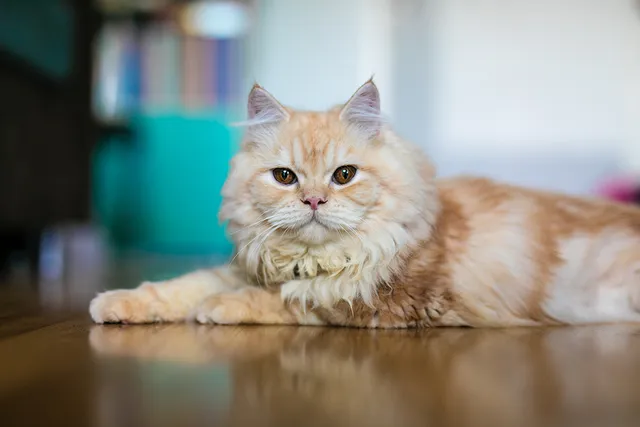
5. Flame (Red) Point Himalayan

The fiery contrast to the Blue Point, Flame Point Himalayans are all warm tones. It has a creamy white body, deep orange or red points, a nose and paws with a lively coral pink, and eyes of ultramarine.
6. Cream Point Himalayan

An overall lighter shade, the Cream Point Himalayan has a white-colored body like frothed milk and points only a touch darker in a buff or custard shade. Their eyes are a vibrant blue, and their noses and paws are a shade of coral or flesh.
7. Tortie Point Himalayan
A body of pale fawn to creamy white and seal brown points with patches of cream or red define the Tortie Point Himalayan. They can have either coral pink or seal brown noses and paws. Eyes are always deep blue.
8. Blue-Cream Point Himalayan
With a warmer tone of blue, the Blue-Cream Point Himalayan has a creamy white to blue-white body and blue points with cream patches. Their noses and paws come in pink or slate blue, and their eyes are Prussian blue.
9. Chocolate-Tortie Point Himalayan
As another delicious confection of a feline, these cats have ivory bodies and chocolate points with unbridled patches of cream or red. Noses and paw pads range in warm, sandy pink tones from cinnamon pink to coral.
10. Lilac-Cream Point Himalayan
Lilac is an exceptionally hard pattern to come by color but striking in its beauty. It has a glacial white body, lilac points with cream patches, cool pink or lavender-pink nose and paws, and eyes like lapis lazuli.
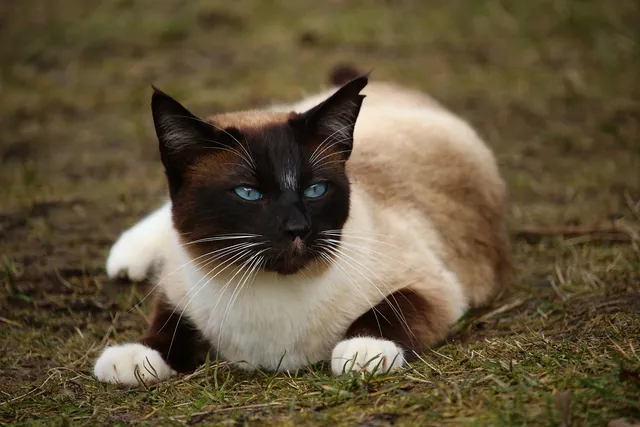
11. Seal Lynx Point Himalayan
As the first of the stripped pattern Lynx Point colors, the Seal Lynx Point Himalayan’s points are a light, beige brown brindled with dark brown tabby markings. The body is warm-toned, fawn to pale cream. These cats have either a brick red or seal brown nose and paws and deep blue eyes.
12. Blue Lynx Point Himalayan
A body of icy, bluish-white and points in silvery blue with brindled, dark blue tabby markings signifies this cool-toned cat. Their nose and paw pads can be blue or a dusky old rose, and their eyes are midnight blue.
13. Flame (Red) Lynx Point Himalayan
The warm sister to the cold Blue Lynx, Flame Lynx Point Himalayans, have bodies of creamy white and points of deep orange flame brindled with dark red tabby markings. Their paw pads and nose are coral pink to flesh tone, and eyes are deep violet-blue.
14. Cream Lynx Point Himalayan
The Cream Lynx Point Himalayan has a body creamy white that is barely, but noticeably, lighter than the pale cream points with dark cream brindling. Their nose and paws are either flesh or coral pink, and the eyes are deep blue.
15. Tortie Lynx Point Himalayan
Like your favorite glasses’ frames, these cats are a delightful patchwork of beige-brown points with dark brown brindling and red patches. Their bodies range from light cream to the white of freshly steamed milk, and their nose and paws are brick red, coral pink, or seal brown.
16. Blue-Cream Lynx Point Himalayan
The Blue-Cream Lynx Point Himalayan has a cool, bluish-toned white body and blue points with dark blue tabby markings and cream-colored patches. Nose and paw pads can be pink, old rose, or blue. Their eyes are a deep, Oxford blue.
17. Chocolate Lynx Point Himalayan
These warm-toned cats have ivory bodies and milk chocolate points brindled with dark chocolate tabby markings. Their nose and paws can be coral or cinnamon pink, and their eyes are a vibrant blue.
18. Lilac Lynx Point Himalayan
These pale, frosty cats are rare and highly sought after. They have bodies of glacier white, frosted grey points with a pink tone and dark lilac tabby markings, lavender-pink noses and paw pads, and eyes of deep cobalt.
19. Chocolate-Tortie Lynx Point Himalayan
An ivory body and milk chocolate points with dark chocolate tabby markings and red patches make the Chocolate-Tortie Lynx Point Himalayan one frothy mug of kitty cat! Their eyes are a warmer navy blue, and their noses and paws are coral or cinnamon pink.
20. Lilac-Cream Lynx Point Himalayan
Like some kind of delightful ghost cat cookie, these cats have icing white bodies and pale grey points with a tinge of pink, brindled dark lilac tabby markings, and cream patches. Their eyes are midnight blue, and their noses and paws range from coral to lavender-pink.
About Himalayan Cats
Himalayan cats are actually a sub-breed or “colorpoint” coat variation of the Persian cat. The term colorpoint describes the overall coat pattern of a solid, lightly colored body with darker color pooling at the “points,” or extremities of the body.
The Persian is an ancient breed and can be found documented in hieroglyphics that date as far back as 1684 BC. They are commonly believed to have come from Persia—a long-haired cat occasionally peeking out from amongst spices, exquisite rugs on a desert caravan across the Middle East—but experts are mystified to this day as to the exact origins of this magnificent cat.
These regal cats are beloved for their luxurious, silky fur and sweet faces. They have gentle personalities and quiet voices that some describe as musical. Himalayans are friendly, talkative, expressive cats that make charming pets for adults and children alike!
You may even recognize the breed as they have been used in Hollywood from time to time; one of the most well-known is Mr. Jinx, or Jinxy, the Seal Point Himalayan from Meet the Parents.
Himalayan Cat Grooming and Care
Whatever the color, the magnificent, flowing coat of the Himalayan Persian cat requires daily care. Brush them every day to prevent hairballs and tangles. Occasional baths and nail trimmings will also help keep their coat healthy and beautiful!
The wide face and large eyes of the Himalayan mean that some are prone to tearing or watery eyes. This is rarely a health concern, being much like the “sleep sand” that accumulates in our own eyes. Teary eyes are easily remedied with gentle daily eye cleaning or face washes.
Final Thoughts
Which creamy, dreamy shade of feline is your favorite? The sweet-faced Himalayan cat comes in all manner of delightful color combinations. From frosty whites and blues to flaming reds and oranges to chocolates and lilacs that recall a French pastry case, the Himalayan has it all. Whichever color you choose, we hope that this collection of downright delicious Himalayan colors helps satiate your sweet tooth and brings a smile to your face.
You may also enjoy:
Featured Image Credit: ecuadorplanet, Shutterstock
Expert cat care, straight to your inbox
News, insights, and useful advice, delivered to you.

No spam — unsubscribe anytime.
By signing up, you agree to our Terms & Conditions and Privacy & Cookies Policy.
How useful was this post?
Click a star to rate. You can leave written feedback afterwards. (We read all feedback.)
Christian started writing for a local newspaper as a teenager, and he's been involved in the publishing industry for most of his adult life. Combining his love of writing with a passion for animals, he is currently the Director of Editorial at Pangolia and the Editor-in-Chief at Catster.
Christian lives in the Philippines with his wife, son, and four rescue cats: Trixie, Chloe, Sparky, and Chopper.