Persian vs Himalayan Cat: What’s the Difference? (With Pictures)


In this article
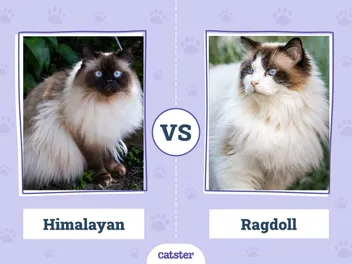
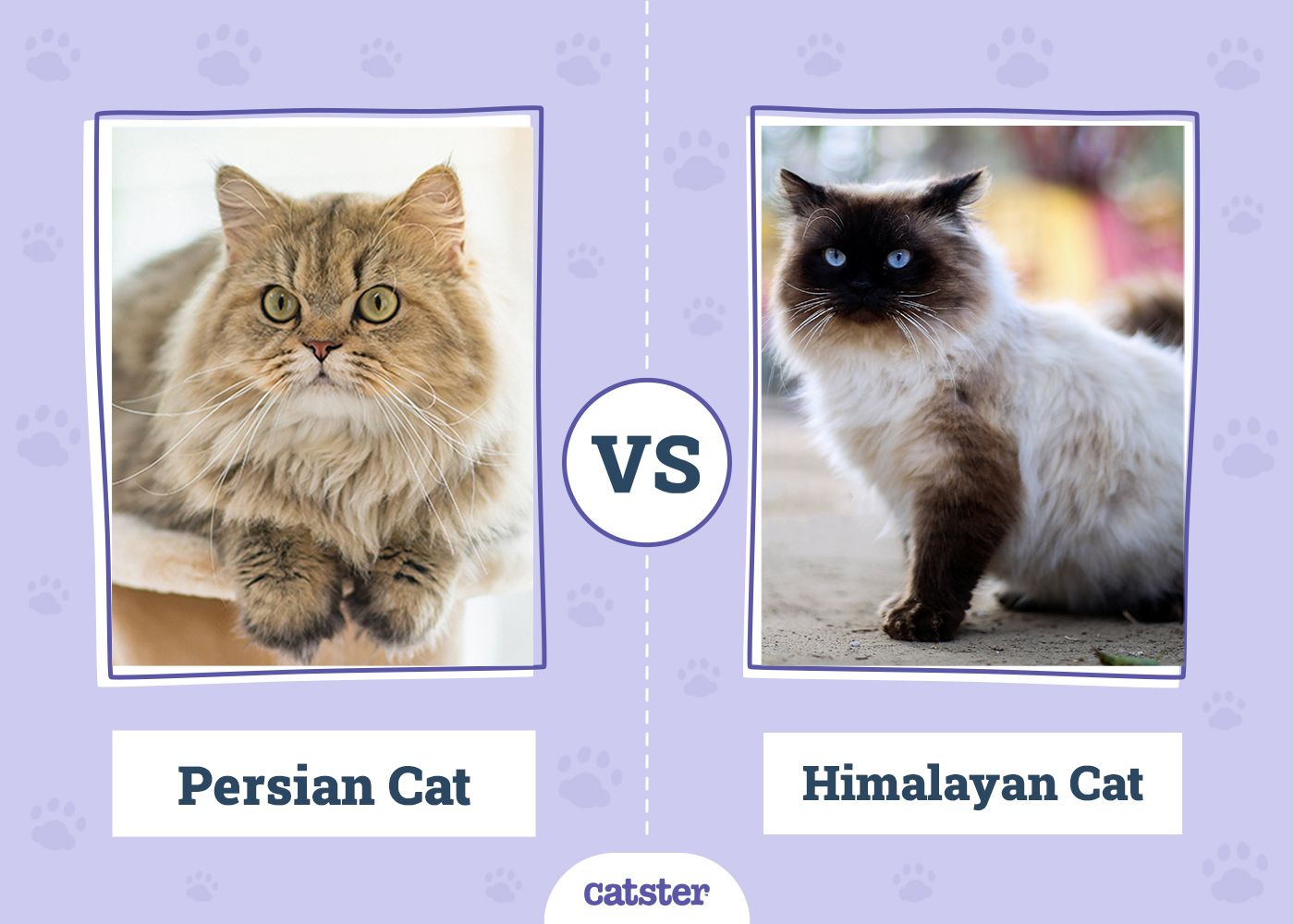
It’s easy to get the Persian and the Himalayan confused. Both of these immaculate, stunning purebreds have similar features and long, flowing coats. It’s part of the charm as to what makes each so appealing.
If you have an untrained eye, you might not even be able to spot a difference. In this article, we aim to explain a little bit more about each breed, and what to expect when you own them.
You might find that you still can’t make a decision until you actually meet the cats, as they are both fantastic cats with so much to offer a potential family. However, we can give you a pretty detailed background so you can make the best decision possible, based on the information you find.

Visual Differences

At a Glance

Persian Overview
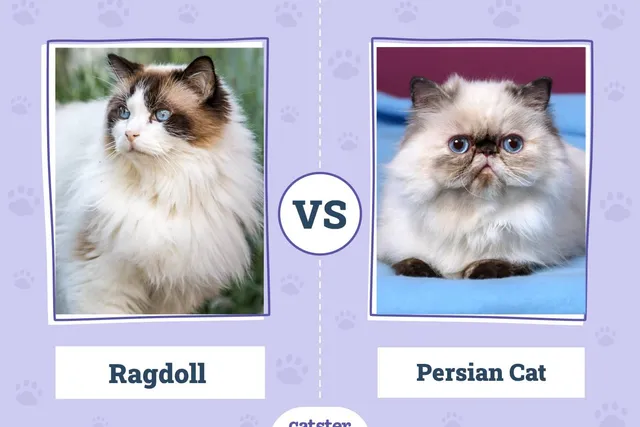
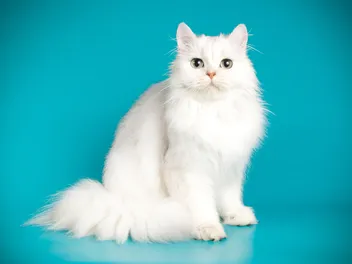
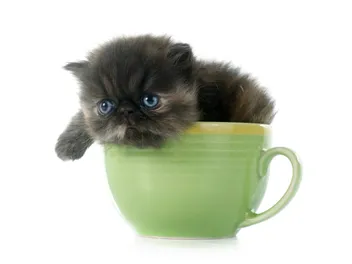
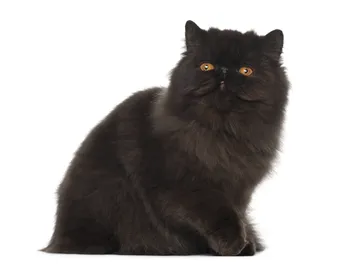
The beautiful Persian cat is one of the oldest cat breeds to exist, and its looks have changed quite drastically over time. Some Persians you see will have a very flat brachycephalic face with bulging beautiful eyes and a smooshed snout.
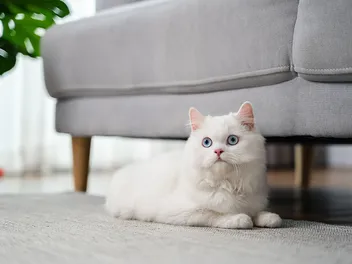
Others, known as doll-face Persians, have a more regular-shaped face with penetrating, large eyes. So, the Persians you see might differ greatly in looks, but their other features are usually very recognizable.

Personality / Character
Persians are known for being laid-back, charming, and affectionate. They aren’t the kind of cat that is going to spend long waking hours romping around the house and ripping down your curtains.
They much prefer a more relaxed approach, content cuddling up on your lap while you read or sitting pleasantly looking out the screen door watching nature. They are very calm, cool, and collected cats with a reputation for being sweethearts and lovebugs.
Training
Because Persians tend to be very docile and connected to their owners, they are perfect candidates for training. Simple concepts like litter training will happen extremely quickly. Other types of training may take longer, but it isn't impossible.
Health & Care
When it comes to health, Persians are not the healthiest cat breed to exist. There are plenty of different factors that can impact your Persian's overall lifespan and health status. With proper breeding, a lot of these issues can be averted.
Persians can experience a whirlwind of health issues, unfortunately leading to potentially higher vet bills and ongoing treatments. Some of these issues can include:
- Brachycephalic airway syndrome
- Eye problems, epiphora
- Dental disease
- Polycystic kidney disease
- Progressive renal atrophy
- Mast cell tumors
- Hypertrophic cardiomyopathy
That’s why it’s so important to buy from a breeder with a standing history of successful and healthy litters. At Catster, we stand with the veterinary association's recommendations against the reproduction of cats with extremely flat faces.

Breeding
Breeding should only ever occur if you are a professional on the matter. There are certain standards and regulations that you need to put in place, necessary for creating sound, healthy litters, especially with a breed prone to health issues like the Persian. You also don’t want your cat to have kittens you can’t take care of or find a good home for. The homeless cat population is bad enough already.
If you aren’t a breeder, it’s a good idea to have your Persian spayed or neutered as soon as possible. Speak with your vet about the best time to do this. Spaying or neutering not only prevents kittens but also reduces certain health problems and undesirable behaviors.

Himalayan Overview
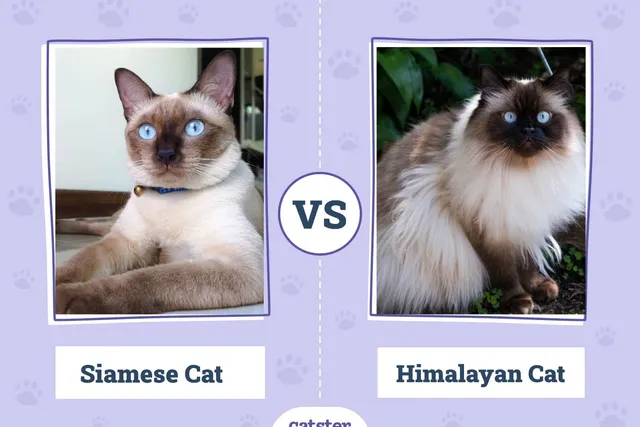
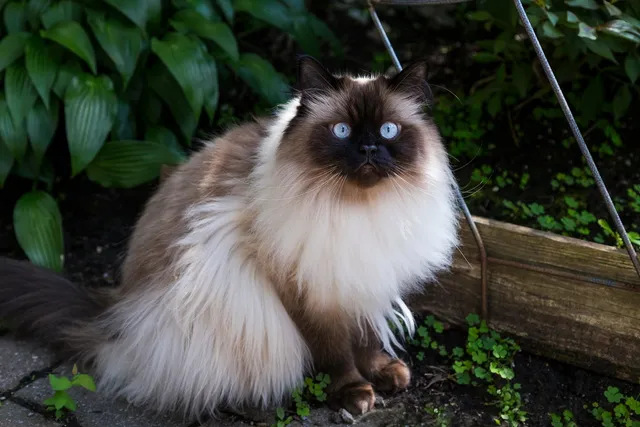
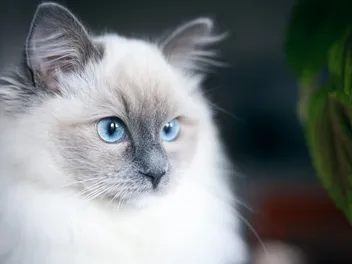
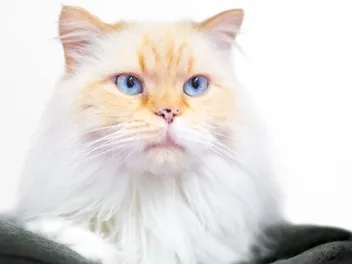
The beautiful Himalayan looks similar to the Persian and for good reason! These cats were actually bred in the 1920s and 1930s by crossing Siamese and Persian cats. The whole concept was to take the blue eyes and interesting markings of the Siamese and mix them with the luscious coat of the Persian.
So, when it comes to their character and personality, you're going to see a lot of overlapping similarities between the two.

Personality / Character
Himalayan cats are notorious for being very docile and easygoing. They take a very relaxed approach to life and can be pretty lackadaisical in the home. These cats are very affectionate and tolerant of most people in the home as well as other pets.
They generally don't put up much of a fuss and are not the type of cat that will shred your curtains or tear up your trim. Granted, they will still need scratching posts and other forms of entertainment like any other cat, but they don't really tend to be excessively overwhelming with their character.
Exercise
Like most other house cats, Himalayans need at least 15 minutes of exercise per day to stay happy and healthy. This is definitely the type of cat that you will find relaxing on a warm window as opposed to bouncing all around your home.
However, when they get in the mood, they will love to play interactive games and enjoy a good romp with other kitties in the home. Since they are so docile, it would be easy to leash train them, as they will be less likely to fight you with the restraint itself.
Training
Concepts like litter training, as with most other house cats, should be a breeze with your Himalayan. Litter box training is usually almost automatic with this breed. When it comes to advanced tricks and training, these are brainiacs as well.
The Siamese parent has a very keen sense of intelligence, making them slightly more notably brainy than their Persian parents. So, they are great candidates for advanced learning.

Health & Care
As we mentioned earlier in this article, Persians are not the healthiest cat breed to exist. Because Himalayans share genetics with Persians, they can inherit some of the same genetic abnormalities and conditions that Persians are prone to.
However, Siamese tend to be very healthy cats with sturdy structures and few health issues. Since the Himalayan is a combination, it can essentially take after either of the parent breeds, making genetic possibilities a little bit of a toss-up. But here is what we know.
Himalayans can be prone to:
- Brachycephalic airway syndrome
- Polycystic kidney disease
- Progressive renal atrophy
- Dental disease
- Hypertrophic cardiomyopathy
Testing of parental lines and regular vet visits are the best routes to prevent any type of health issue from arising and to get ahead of anything that might develop.
Breeding
As we mentioned, breeding should never happen intentionally with an inexperienced owner. If you are a licensed breeder, you should follow all the necessary steps to ensure healthy litters. Otherwise, you should always spay or neuter your cat before the age of sexual maturity. Your vet can let you know the best time to do this and answer any other questions you may have.

Which Breed Is Right for You?

Ultimately, the kitty you choose is completely up to you. There are more coat colors and versatility with the Persian breed. However, there are quite a few health issues to mention with the very flat-faced cats of this breed. Still, if you are well-versed and purchase from a reputable breeder, many of these issues can be avoided.
Himalayans have a very uniform appearance, making them a very instantly recognizable purebred cat. Because it takes on the beautiful coat of the Persian parent with the color points of the Siamese, you have a beautiful specimen for sure.
Keep in mind that because a Himalayan shares genetic material with the Persian parent, they can take on some of the same health issues, so monitor closely. Otherwise, both cats are extremely docile, good-natured, and versatile. They fit into a broad spectrum of lifestyles and situations. Which will you choose?
Featured Image Credit: (L) ANURAK PONGPATIMET, Shutterstock | (R) saleh alzamly, Shutterstock
Expert cat care, straight to your inbox
News, insights, and useful advice, delivered to you.

No spam — unsubscribe anytime.
By signing up, you agree to our Terms & Conditions and Privacy & Cookies Policy.
How useful was this post?
Click a star to rate. You can leave written feedback afterwards. (We read all feedback.)
As a freelance dog writer and passionate pet enthusiast, Ashley Bates is pursuing studies in animal therapy. A mother to four human children and 23 animal companions, Ashley is dedicated to volunteering at shelters, advocating for animal rights, and rescuing animals in need. Her goal is to spread awareness, provide education, and offer entertainment about pets to reduce homelessness. Ashley's specialties include dogs and cats.