Guts to Feel Good: A Healthy Inside Leads to a Healthy Outside

In this article
Founded in 2016, AnimalBiome is an emerging start-up company that offers a novel approach to companion animal health - rooted in the science of the gut microbiome. The company grew out of a research initiative by Holly Ganz, PhD at the UC Davis Genome Center called KittyBiome. KittyBiome is a citizen science project seeking to characterize the microbiome of healthy cats and gain an understanding of how a balanced gut microbiome supports overall pet health. Today, the company provides direct to consumer microbial assessment kits for dogs and cats and creates restorative supplements from material sourced directly from healthy pets to combat digestive issues and restore balance to the microbiome.

What is the gut microbiome?
All animals on earth have unique collections of thousands of different types of microbes in their digestive tracts, collectively termed the gut microbiome. Bacteria in the microbiome are crucial for digestion and obtaining nutrients from the food they eat. When these gut bacteria are out of balance, digestive disorders such as inflammatory bowel disease can occur. Beyond digestion, gut bacteria impact a broad spectrum of biological functions and can play roles in developing allergies, diabetes, and even anxiety.

Where is the gut microbiome located?
Digestion is a multi-step process that starts in the mouth, passes to the stomach, and finishes in the intestine. The vast majority of bacteria in the digestive tract are in the large intestine, and when we refer to the microbiome, we are referring primarily to these bacteria. Bacteria in the large intestine help our pets digest nutrients that they can’t break down themselves. These bacteria are also responsible for the production of vitamins and other essential nutrients.
Chronic digestive disorders tied to the gut microbiome
Chronic digestive disorders in pets are very common, with more than 10 percent of pet owners reporting a cat or dog suffering from a chronic digestive disorder. Many of these disorders are linked to imbalanced gut bacteria and can cause life-long discomfort for pets (and their owners). When the bacteria in a pet’s gut are out of balance, the microbiome can trigger intestinal inflammatory responses, which, left untreated, could lead to chronic illnesses such as inflammatory bowel disease (IBD.) There is currently no cure for chronic digestive disorders. Owners can spend thousands of dollars annually to manage these conditions once they develop.
Chronic digestive disorders are diverse. What we do know is that genetic and environmental factors impact these disorders. Some breeds seem to be genetically predisposed to digestive disorders. During the important development years, pets that are taken from their mothers prematurely may not receive all the healthy microbes that they need. Modern diets can also promote the growth of inflammatory groups of bacteria. Factors like these, along with others, may contribute to the development of bad bacteria levels and evolve into of a chronic digestive disorder.
Restoring your cat's gut microbiome with Fecal Microbiota Transplant Capsules
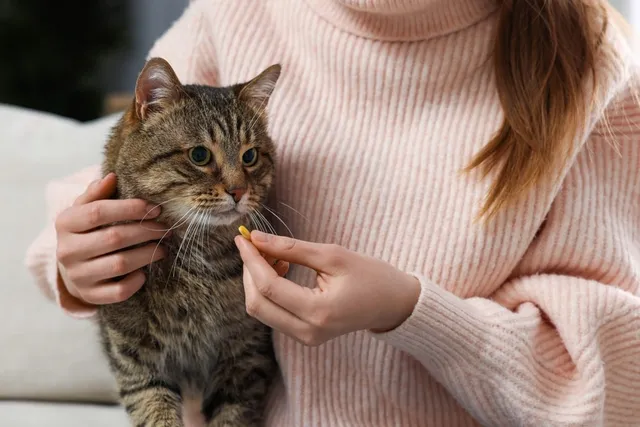
Your pet’s microbiome is a complex internal environment. Testing your pet’s microbiome provides insight into their gut health status. AnimalBiome's first-of-its-kind Fecal Microbiota Transplant (FMT) Capsules help supplement and restore your pet’s microbiome while relieving troublesome symptoms. AnimalBiome Fecal Microbiota Transplant (FMT) Capsules are a daily, oral microbiome supplement. Easily administered, and a gentle alternative for pets facing digestive, skin and immune system issues, the capsules contain stool from a healthy donor that is carefully screened for pathogens, health conditions, and microbiome composition.

How Can Fecal Microbiota Transplant (FMT) Help My Cat?
Research has shown that gut health is important for overall pet health and longevity. Pet digestive health can be disrupted by medications (like antibiotics), diet and environment. Fecal Microbiota Transplant (FMT) Capsules provide viable bacteria to your pet orally. The capsules are enteric-coated to allow delay of dissolution until the capsule has passed the stomach acid and reached the intestines. Multiple doses of the capsules repeatedly introduce beneficial organisms to increase the success of “seeding” your pet’s microbiome to a balanced and healthy state. Positive results are often seen within a few weeks.
How are Fecal Microbiota Transplant (FMT) Capsules Made?
AnimalBiome harvests stool from healthy, screened pet donors (yes: it’s a smelly, but important, job!) to fill easy-to-administer capsules for your cat (or dog.) The capsules are made following stringent quality control guidelines and carefully designed standard operating procedures. They use capsules that are manufactured and packaged in state-of-the-art current Good Manufacturing Practice-certified facilities, which meet all health compliance requirements. These capsules are made using only 100% pharmaceutical-grade vegetarian plant material.

Where does the material for the Fecal Transplant Capsules come from?
The donors for Fecal Microbiota Transplant (FMT) Capsules are pets screened for health, age, fecal consistency, behavior, and microbiome composition (based on DNA testing). Donated material is quarantined for at least 30 days to ensure that the donor remained healthy.
Donor samples are also submitted for pathogen screening (both DNA testing and culturing) to the UC Davis Real-time PCR and Diagnostics Core Facility, which has more than 15 years of genetic testing experience, stringent quality control guidelines, and well-validated standard operating procedures. In addition, the materials are screened for parasites and parasite eggs using the veterinary diagnostics company Idexx. .
For cats, the donated fecal matter comes from healthy indoor cats that have not had antibiotic treatment in the prior six months, have diverse and species-rich microbiomes, are not overweight, and have no behavioral issues. Pathogen screening includes Clostridium difficile toxins A and B, Cryptosporidium spp, Salmonella spp, Giardia spp, feline coronavirus, feline parvovirus (Panleukopenia), and Tritrichomonas foetus.
KittyBiome Microbiome Restoration System
The KittyBiome Microbiome Restoration System Includes two Microbiome Tests (one before and one after a course of supplements) and a course of supplements. The Microbiome Tests and Supplements work together to see how your cat's microbiome responds to the supplement. The Microbiome Test also helps owners understand the health status of their cat's digestive system as well as any actions they can take to improve it.
The purchase of the kit supports research to develop treatments for the millions of pets suffering from digestive disorders.
Marigold's Story
The folks at AnimaBiome shared this wonderful about Marigold, a beautiful cat with a sunny disposition. She was a stray who was taken to an Oakland, CA shelter and was soon scheduled for euthanasia because of her chronic diarrhea. Tracy Gondo adopted Marigold and tried to help her. She tried numerous treatments over several years to no avail. When Marigold started using AnimalBiome’s FMT pills her symptoms subsided and now she continues to live on with a healthy gut.
For more information, and to purchase the Fecal Microbiota Transplant (FMT) Capsules and/or the KittyBiome Microbiome Restoration System, please visit AnimalBiome.com.
This post is sponsored by AnimalBiome*
Featured Image Credit: Valeria Boltneva, Pexels
Expert cat care, straight to your inbox
News, insights, and useful advice, delivered to you.

No spam — unsubscribe anytime.
By signing up, you agree to our Terms & Conditions and Privacy & Cookies Policy.
How useful was this post?
Click a star to rate. You can leave written feedback afterwards. (We read all feedback.)
Ingrid King is an award-winning author, former veterinary hospital manager, and veterinary journalist who is passionate about cats.