IBS In Cats: Our Vet Explains Causes, Signs & Treatments
In this article
Irritable bowel syndrome—the name alone is enough to make you feel uncomfortable. Even if you’ve been fortunate enough to never experience the pain, discomfort, and embarrassment of this fairly common condition, you probably know someone who has. But did you know that cats can also suffer from a similar condition?
In cats, we refer to it as inflammatory bowel disease or IBD, but it may also be categorized as gastritis, enteritis, gastroenteritis, or chronic diarrhea, all of which can form part of feline IBD but are not the whole story.
Let’s look closer at IBD in cats, from what causes it to how to manage it.

IBS vs. IBD
You might be wondering what the difference between these two terms actually is, and it is largely to do with the species involved. Humans can suffer from both IBS and IBD, whereas cats and other animals can only be described as having IBD.
IBS, as the name suggests, describes a syndrome, or a set of symptoms that typically occur together, enabling the condition to be more accurately described and categorized. It is not itself a specific diagnosis, however, IBD can be a cause of IBS.
Symptoms describe how an illness or problem “feels,” and only humans can communicate that. A clinician can listen to those symptoms and combine them with the patient’s clinical signs to make an objective assessment.
When it comes to cats and other pets, they cannot describe their own symptoms, which is why veterinarians rely on the history provided by the pet’s owner, combined with the animal’s clinical signs, to make a diagnosis.
For example:
| Symptom | Clinical Sign |
| Sore leg | Limping, lameness |
| Earache | Head tilt, rubbing ear |
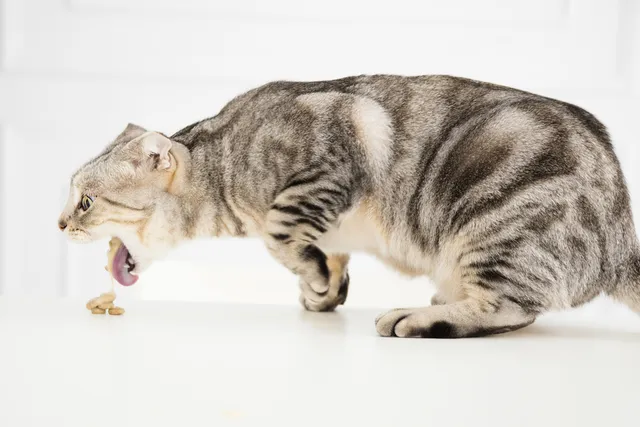
| Nausea | Drooling, vomiting, inappetence |
Now that we’ve got the semantics out of the way, let’s move on to the condition itself.

What Is Feline Inflammatory Bowel Disease?
IBD in cats occurs when the walls of the digestive tract become thickened and inflamed, reducing its ability to function properly. Although there are many conditions that can produce the same or similar signs, IBD is not due to an infection, food reaction, or parasite, although these must be ruled out in order to make a diagnosis. It can affect cats of all ages but is more common among middle-aged and older cats.
There are specific cell types that are usually involved in IBD which strongly suggest that it is an immune-mediated condition. It may be triggered by certain foods, infections, or stress. It can occur as part of a complex condition referred to as triaditis1, which involves inflammation of the liver, pancreas, and small intestine. IBD can also be characterized as idiopathic, which means that no inciting cause can be identified.
What Are the Signs of Feline Inflammatory Bowel Disease?
IBD can affect different parts of the digestive tract, so the clinical signs will depend on what area is involved.
- Gastritis (inflammation of the stomach)
- Enteritis (inflammation of the small intestine)
- Colitis (inflammation of the large intestine or colon)
The inflammation might occur in just one area or could affect all three. Although colitis often produces more noticeable signs, like frequent, bloody diarrhea, it is usually the least severe in terms of illness.
| Gastritis | Enteritis | Colitis | |
| Frequency of feces | Normal to reduced | Normal to reduced | Increased |
| Diarrhea | Mild or none | Large amount, watery | Small to large amounts of mucoid, may be bloody |
| Vomiting | Frequent, shortly after eating | Occasional, 4–6 hours after eating | None |
| Appetite | Reduced or absent | Normal to increased | Normal |
| Weight loss | Moderate | Moderate to severe | Mild to none |
| Energy levels | Normal to slightly reduced | Reduced | Normal |
Gastritis: When the stomach is inflamed, it can result in vomiting, but it won’t affect the digestion and absorption of nutrients from food that is kept down.
Enteritis: The majority of nutrient absorption takes place in the small intestine, so when this is inflamed, the body can become severely malnourished, particularly if a large amount of the intestine is involved, or if the cat is suffering from gastroenteritis (inflammation of both the stomach and intestines). The appetite may be increased to try to compensate for the nutrient loss.
Colitis: The main function of the large intestine is the reabsorption of fluid from the waste material. Inflammation in this area doesn’t usually have a significant impact on nutrition but can lead to dehydration if not addressed.
How Is Feline IBD Diagnosed?
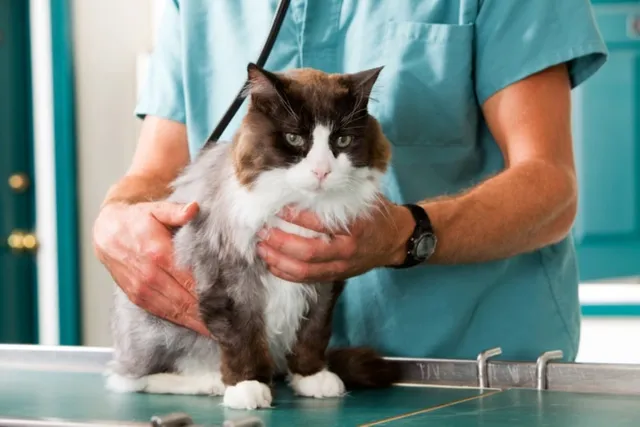
A large part of diagnosing IBD in cats is ruling out any other causes of the clinical signs. This can be a frustrating process, but a necessary one. There is no specific test for IBD, so the most important part of the diagnostic process is ruling out all the things that it isn’t.
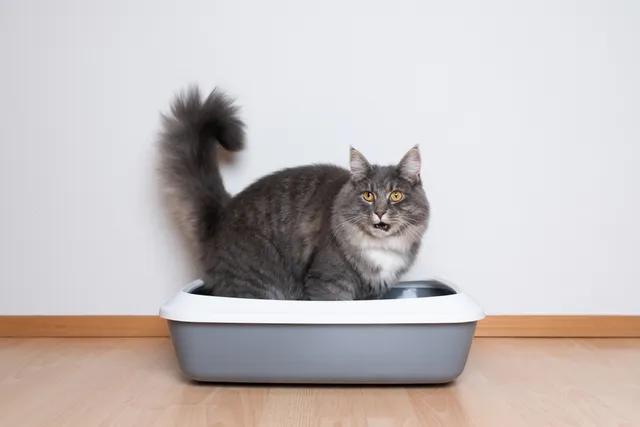
Patient history is an important component of this process, so if your cat’s clinical signs have been going on for a while, try to keep a detailed record of what they eat, any changes (however minor) in their habits, any possible exposure to toxins, unusual foods, etc. Photographs of their vomit and feces, although pretty gross, can also be really helpful.
Depending on your cat’s clinical signs, your vet may perform the following tests:
- Physical exam: Focusing particularly on hydration, body condition, and abdominal palpation.
- Blood tests: These can indicate the presence of systemic inflammation or infection, assess organ function and protein levels, as well as identify any viral infections, such as Feline Leukemia or Panleukopenia, and rule out other illnesses like diabetes and hyperthyroidism.
- Fecal exam: To check for parasites.
Sometimes vets will trial some treatments before making a diagnosis, such as giving anti-parasitic or anti-inflammatory medications. A diet trial is also a common and important step, not just in terms of diagnosis but in formulating a treatment plan.
Definitive Diagnosis
The only way to definitively diagnose feline IBD is through intestinal biopsies; however, they are not always completely accurate. Biopsies are performed under general anesthesia and may be done endoscopically (least invasive) or surgically (most accurate).
Once all other diseases have been excluded, there are two conditions that can only be differentiated with a biopsy: IBD and intestinal lymphoma. Biopsies will only give a specific diagnosis if the sample is taken from an area of the digestive tract that is affected by the disease, so false negatives do occur.
The treatment of both IBD and intestinal lymphoma are often very similar, and it is not uncommon for treatment to commence without biopsies.
There are two main types of feline intestinal lymphoma:
- Small cell lymphoma - A more diffuse form that affects a larger area of the intestine but is more responsive to treatment, with a mean survival of 2–4 years following diagnosis.
- Large cell lymphoma - Tends to form localized masses and has a much poorer prognosis. Surgery can be attempted, but survival times tend to be around 2–4 months.
How Is Feline IBD Treated?
In the majority of cases, the aim of treatment is management rather than cure. Some cats may experience a complete remission of all clinical signs after prolonged treatment, while others will need to be managed for the rest of their lives.
Again, the specifics will depend on the location of the inflammation and the severity of clinical signs, but common IBD treatments include:
- Diet management: Using a hypoallergenic, highly digestible food to reduce the amount of inflammation in the digestive tract and maximize nutrient absorption. There are a number of veterinary-based diets that have been developed for the management of feline IBD, and there have also been some reported successes using raw diets, although care must be taken to ensure adequate taurine levels are provided.
- Corticosteroids: Steroids (e.g., prednisone) are a commonly used medication to treat immune-mediated, inflammatory conditions. At higher doses, steroids cause immunosuppression, which can help reduce any autoimmune component, while also reducing inflammation. Due to the problematic side effects that high doses of steroids produce, the aim is to reduce dosing to the lowest therapeutic level once the clinical signs have improved.
- Cobalamin: AKA vitamin B12, this is essential for healthy immunity, nervous system, and digestive function. In cats with small intestinal IBD, cobalamin is poorly absorbed, leading to further deterioration of the condition and creating a very vicious cycle. By supplementing Cobalamin, with injections initially and later with oral supplements, the overall health of the cat is improved, as is their intestinal function.
- Chemotherapy: An oral medication called Chlorambucil can be used in conjunction with the above therapies to treat autoimmune conditions, as well as reduce the accumulation of thickened and abnormal tissue in the digestive tract. This is the treatment of choice for feline intestinal lymphoma but is also effective against severe IBD.
- Antiemetics: Medications to reduce vomiting and nausea are often used in the early stages of treatment if gastritis or gastroenteritis are involved.

What Is the Prognosis for Cats With IBD?
In most cases, once a suitable treatment regime has been found, cats do quite well. In some cases, treatment can be gradually reduced over time, but most of the time, management is lifelong. Prognosis is linked with how extensive and severe the inflammatory changes in the gut wall are, suggesting that cases that are diagnosed and treated earlier in the disease process will have a better outcome than cats that have extensive changes in their gastrointestinal tract.
Cats that spend a lot of time outdoors can be more difficult to manage as it is impossible to completely control what they are eating. The success of treatment in these cases comes down to how severe the cat’s condition is, and how much “off-plan” eating they do.
In cases where lymphoma has not been excluded, the outcome will largely depend on whether we are treating IBD, small cell lymphoma, or large cell lymphoma.
Summing Up
Feline inflammatory bowel disease is a relatively common condition, mostly affecting cats that are middle-aged or older. It can masquerade as many gastrointestinal disorders, all of which must be ruled out before a diagnosis of IBD can be reached.
Early treatment and management of this condition can result in fewer significant changes to the gastrointestinal wall, thus improving prognosis.
Although occasional vomiting and diarrhea are not uncommon in cats, if they have been showing these signs for more than 48 hours, and particularly if you notice weight loss or lethargy, you should book them in for a checkup with your vet ASAP.
See also:
Autoimmune Disease in Cats: Causes, Signs & Treatments (Vet Answer)
Colitis in Cats: Our Vet Explains Signs, Diagnosis & Treatment
Sources
https://vcahospitals.com/know-your-pet/inflammatory-bowel-disease-in-cats
https://vetspecialists.co.uk/fact-sheets-post/inflammatory-bowel-disease-fact-sheet/
https://www.vin.com/apputil/content/defaultadv1.aspx?pId=11343&catId=34568&id=5124300
https://www.rspcapetinsurance.org.au/pet-care/health-and-wellbeing/autoimmune-diseases-dogs-and-cats
Featured Image Credit: Andy Gin, Shutterstock

Expert cat care, straight to your inbox
Vet-reviewed advice, behavior tips, and the best of Catster. Free, and you can unsubscribe anytime.
By signing up, you agree to our Terms & Conditions and Privacy & Cookies Policy.
Dr. Karyn Kanowski BVSc MRCVS (Veterinarian)
Dr. Karyn comes from Queensland, Australia, and has lived in the UK for the past 10 years. In 2010, she graduated from The University of Queensland School of Veterinary Science and also has a Bachelor’s degree in Zoology. She is passionate about using evidence, experience, and owner collaboration to provide the best solutions for pets, and believes in making reliable information about animal health accessible to all. Dr. Karyn shares her home with five cats, four dogs, and one husband. When she is not in the scrubs, she spends her time writing, gardening, and cleaning up pet hair!
Join the conversation
Ask a question, share your story, or send private feedback.