Can Cats Sense Pregnancy? Here's What Research Says


In this article
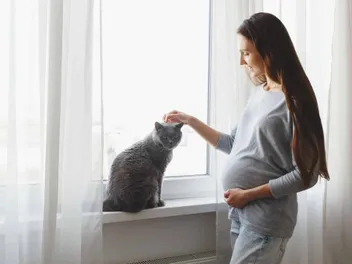
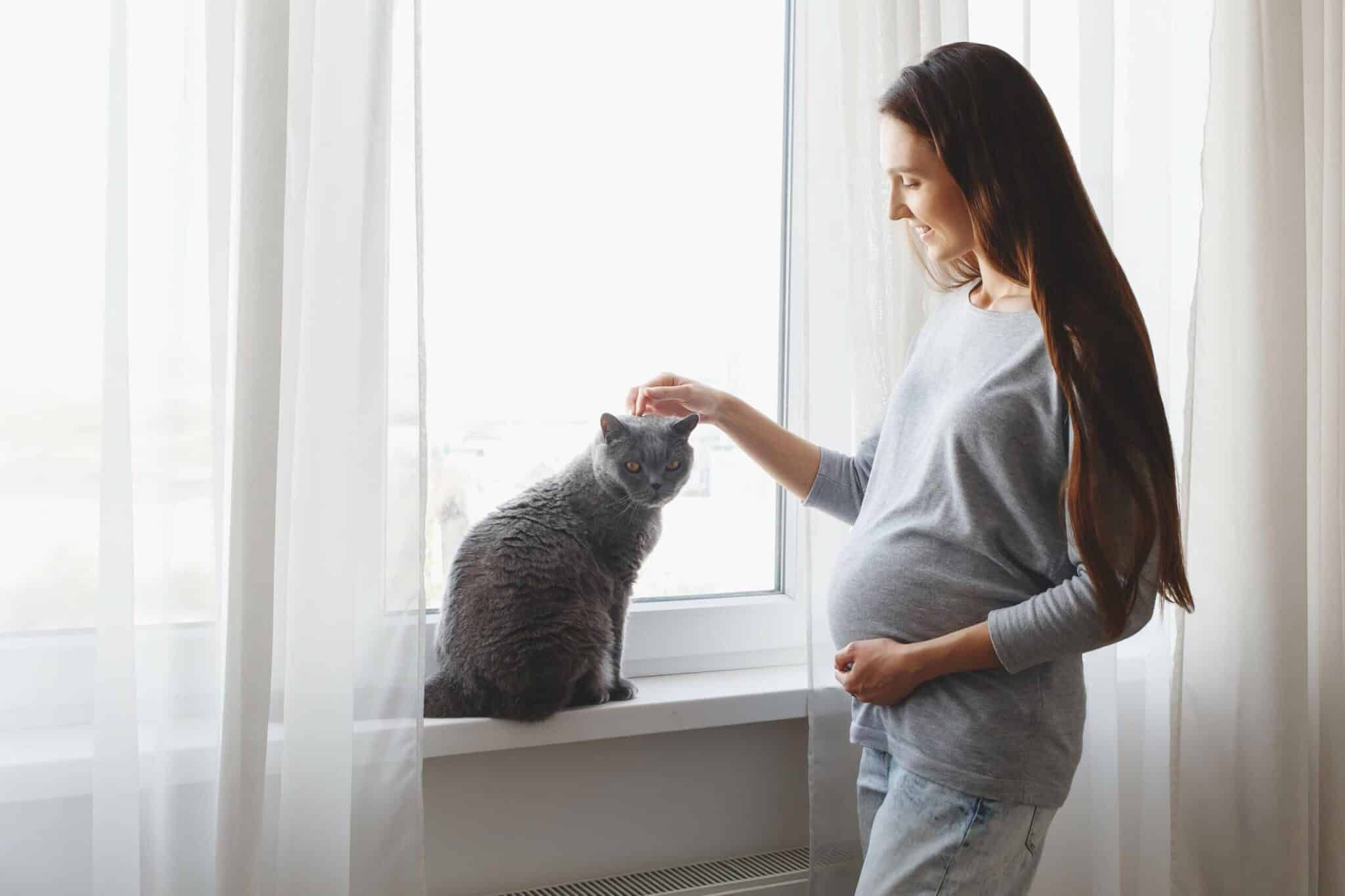
As a pet owner, you might have heard of or even experienced the phenomenon of your cat acting differently around you or someone else during pregnancy. You may be wondering, do cats really possess a sixth sense when it comes to detecting pregnancy? There isn't enough scientific evidence that suggests cats can sense pregnancy but their heightened senses and anecdotal evidence suggest that they can pick up on certain cues related to pregnancy. In this article, we will explore scientific research and anecdotal evidence surrounding this common belief and provide practical advice for expecting cat owners.

A Cat's Perception of the World
Cats are known for their heightened senses, which enable them to perceive the world differently than humans. Their keen sense of smell, sharp hearing, and unique ability to detect subtle changes in their environment contribute to their remarkable sensitivity.
1. Sense of Smell
A cat's sense of smell is 14 times stronger than that of humans. This extraordinary olfactory capability allows them to detect a wide range of scents, including pheromones and other chemical cues. Cats have around 200 million scent receptors in their noses, compared to approximately 6 million in humans. This powerful sense of smell helps them find food, mark their territory, identify other animals, and even communicate with one another.
In addition to their superior olfactory senses, cats also possess a unique organ called the vomeronasal organ (VNO) or Jacobson's organ. Located in the roof of their mouth, this organ enables cats to "taste" the air and pick up on chemical signals that are undetectable by humans. The VNO plays a vital role in their ability to process pheromones and other scent-related information.

2. Hearing
Cats have an incredible range of hearing, which extends beyond the human auditory spectrum. They can hear high-frequency sounds up to 64 kHz, while humans can only hear up to 20 kHz. This heightened sense of hearing enables cats to detect even the slightest changes in their environment.
Their ears are also designed for optimal sound localization; they can rotate up to 180 degrees, allowing them to pinpoint the source of a sound with remarkable accuracy. This exceptional hearing ability helps cats hunt more effectively, as they can detect the faintest rustling of prey or the subtlest movements of potential predators.
3. Vision
While not as well-known as their sense of smell and hearing, cats also have unique visual abilities that contribute to their perception of the world. Cats are crepuscular animals, meaning they are most active during dawn and dusk. Their eyes are adapted for low-light conditions, with a higher concentration of rod cells and a specialized layer called the tapetum lucidum that reflects light back through the retina, enhancing their night vision.
Cats also have a wider field of view than humans (200 degrees compared to 180 degrees), which helps them spot potential prey or danger more easily. However, their visual acuity is lower than that of humans, meaning they cannot see fine details as clearly.
To bring everything together, cats possess extraordinary sensory abilities that allow them to perceive the world in ways that humans cannot. Their keen sense of smell, sharp hearing, and unique visual adaptations contribute to their remarkable sensitivity and enable them to detect subtle changes in their environment. This heightened awareness might play a role in their ability to sense pregnancy-related changes, although further research is needed to confirm this hypothesis.


Can Cats Detect Changes in Hormones and Behavior Associated with Pregnancy?
While there is no definitive scientific evidence proving that cats can sense pregnancy by detecting hormonal changes, some studies and anecdotal evidence suggest that they might be able to pick up on certain cues.
Research Studies
A study investigated the ability of cats to recognize their owner's voice and respond accordingly. The study involved playing recordings of the cat owners' voices, as well as unfamiliar voices, to observe the cats' reactions. Results showed that cats were more likely to respond to their owner's voice, indicating that they can distinguish it from other voices.
This finding suggests that cats are attuned to the emotional state of their owners, which could potentially include changes in behavior or mood during pregnancy. Considering that pregnant women may experience mood changes, fatigue, or even alterations in their tone of voice, it is plausible that cats might pick up on these subtle cues, leading to the perception that they can sense pregnancy.
However, it is important to note that this study focused on cats recognizing their owner's voice and did not directly investigate their ability to detect pregnancy. Further research would be needed to establish a clearer link between cats' sensitivity to their owner's emotional state and their ability to sense pregnancy.

Anecdotal Evidence
There is a wealth of anecdotal evidence from pregnant women who have reported noticeable changes in their cat's behavior during pregnancy.
Some common observations include:
While these stories do not provide scientific proof that cats can sense pregnancy, they suggest that cats might be able to detect pregnancy-related changes in their owner's body or behavior. It is important to consider, however, that these observations are subjective and may not apply to all cats. Each cat is unique, and their individual reactions to pregnancy may vary widely.
Do Cats Have a Sixth Sense for Pregnancy?
While there is no concrete scientific evidence proving that cats can sense pregnancy, their heightened senses, combined with anecdotal reports, suggest that they might be able to detect certain cues associated with pregnancy. However, more research is needed to confirm this hypothesis.
Trusting Your Intuition: You Know Your Cat Best
As a cat owner, you have a unique bond with your feline companion, and nobody knows your cat better than you do. Over time, you become attuned to their habits, preferences, and behaviors, which can help you notice when something is different or unusual.
While scientific research and anecdotal evidence can provide insights into the potential ability of cats to sense pregnancy, it is essential to trust your intuition as a pet owner. If you believe that your cat is exhibiting changes in behavior or responding differently to you during pregnancy, it is worth considering that they might be picking up on subtle cues related to your condition.
However, it is also important to remember that cats can be sensitive to various changes in their environment, not just pregnancy-related ones. Factors such as stress, illness, or alterations in household routine can also impact your cat's behavior. If you are unsure about the cause of your cat's behavioral changes, consult with your veterinarian for professional advice.

Practical Advice for Expecting Cat Owners
If you are pregnant and have a cat, it is essential to maintain a healthy relationship with your furry friend during this time to prevent stress and anxiety, as changes to the household and routine can cause them stress.
Here are some practical tips for expecting cat owners:
Conclusion
We don't have any definitive proof that cats can sense pregnancy; but their heightened senses and anecdotal evidence suggest that they might be able to pick up on certain cues related to pregnancy. As an expecting cat owner, it is crucial to maintain a healthy and comfortable environment for both you and your feline companion during this exciting time.
Sources
Featured Image Credit: Nesolenaya-Alexandra, Shutterstock
Expert cat care, straight to your inbox
News, insights, and useful advice, delivered to you.

No spam — unsubscribe anytime.
By signing up, you agree to our Terms & Conditions and Privacy & Cookies Policy.
How useful was this post?
Click a star to rate. You can leave written feedback afterwards. (We read all feedback.)
Christian started writing for a local newspaper as a teenager, and he's been involved in the publishing industry for most of his adult life. Combining his love of writing with a passion for animals, he is currently the Director of Editorial at Pangolia and the Editor-in-Chief at Catster.
Christian lives in the Philippines with his wife, son, and four rescue cats: Trixie, Chloe, Sparky, and Chopper.