Bengal Cat History: Exploring Their Origins and Variants


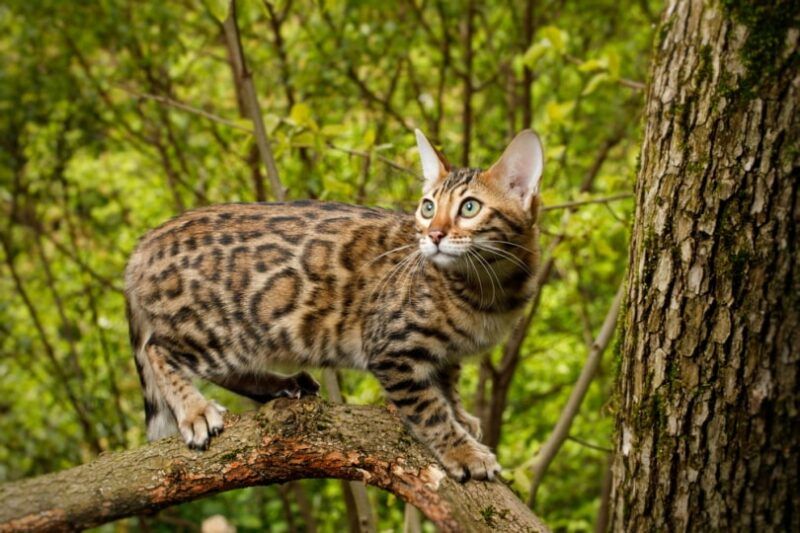
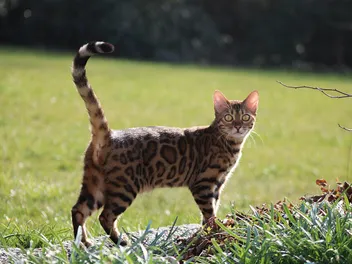
Bengal cats are gorgeous domestic cats that look like they’ve just strolled out of the jungle. The International Cat Association (TICA) officially recognized these stunning cats back in 1986, and the organization has admitted three variants, brown, silver, and snow Bengal cats, to championship status. There’s even a longhaired version, the Cashmere Bengal cat, gaining acceptance and popularity.
Bengal cats come in various colors, from snow to black, but all feature rosettes or marbled swirls that bring to mind the markings of wild kitties. Bengal cats are hybrid animals with Asian Leopard and domestic feline ancestry. While it’s possible to adopt first and second-generation hybrids, most of the cats sold by reputable breeders are at least four or five generations removed from their wild heritage.

The Earliest Records of Bengal Cats in History
Asian Leopard cats and domestic cat mixes have been kept as pets for more than 100 years. Harrison Weir, a British aristocrat instrumental in the development of modern cat shows and a pioneer in recognizing different breeds, wrote about the hybrids in Our Cats and All About Them in 1889. But the cats didn’t become common until the late 1970s when they began appearing in cat shows throughout the United States.
The world has a small group of cat fanciers and scientists to thank for the development of the breed, including Pat Warren, Willard Centerwall, and William Engle. However, it was Jean Mill, a breeder based in California, who was primarily responsible for bringing the cats into the mainstream by advocating for recognition by cat fancy organizations in the United States. She was also the first to develop a method to breed multiple generations of Bengal cats successfully.

How Bengal Cats Gained Popularity
Jean Mill was almost single-handedly responsible for making Bengal cats into commonly accepted household pets. Until the mid-1970s, it was possible to buy small wild cats such as Asian Leopard cats, Ocelots, and Servals in pet stores around the United States.
The trade of exotic animals was common during that era. Harrods, the famed department store in the United Kingdom, had an entire exotic animal department that sold everything from baby elephants to lions; the company only stopped selling animals in 1976.
Mill specifically developed and bred Bengal cats to provide an appropriate domesticated alternative for those drawn to the looks of small wild kitties. After advocating for the breed’s acceptance by various cat breed registries, her work paid off when TICA recognized the breed in 1986.

Formal Recognition of Bengal Cats
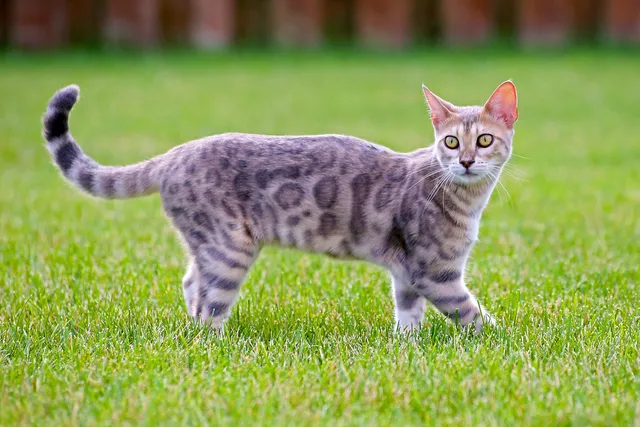
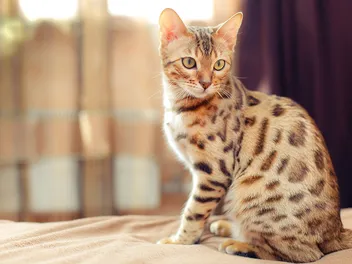
Bengal cats were first placed on TICA’s list of experimental breeds in 1986 and were admitted to championship status in 1991. There are three colors officially recognized by most cat registries: Brown, silver and snow. Brown Bengals come in various shades, including cream, golden, honey, taupe, caramel, beige, tawny, caramel, cinnamon and tan. Silver Bengal cats are defined by a background coat that lacks color, although the marbling and rosettes can come in several tones. Snow Bengal cats can be further categorized as snow seal mink point, snow seal sepia and snow seal lynx cats.
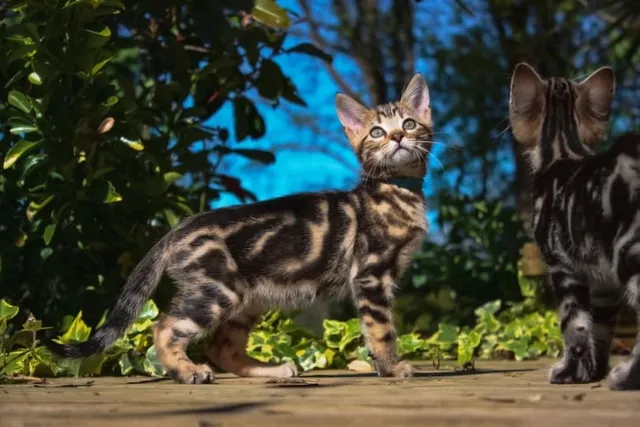
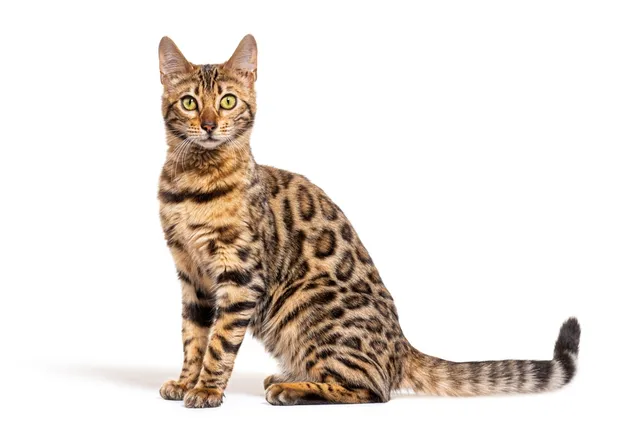
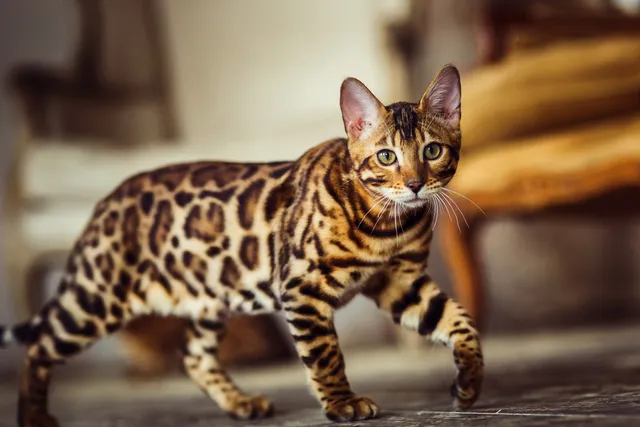
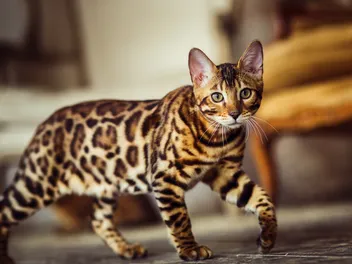
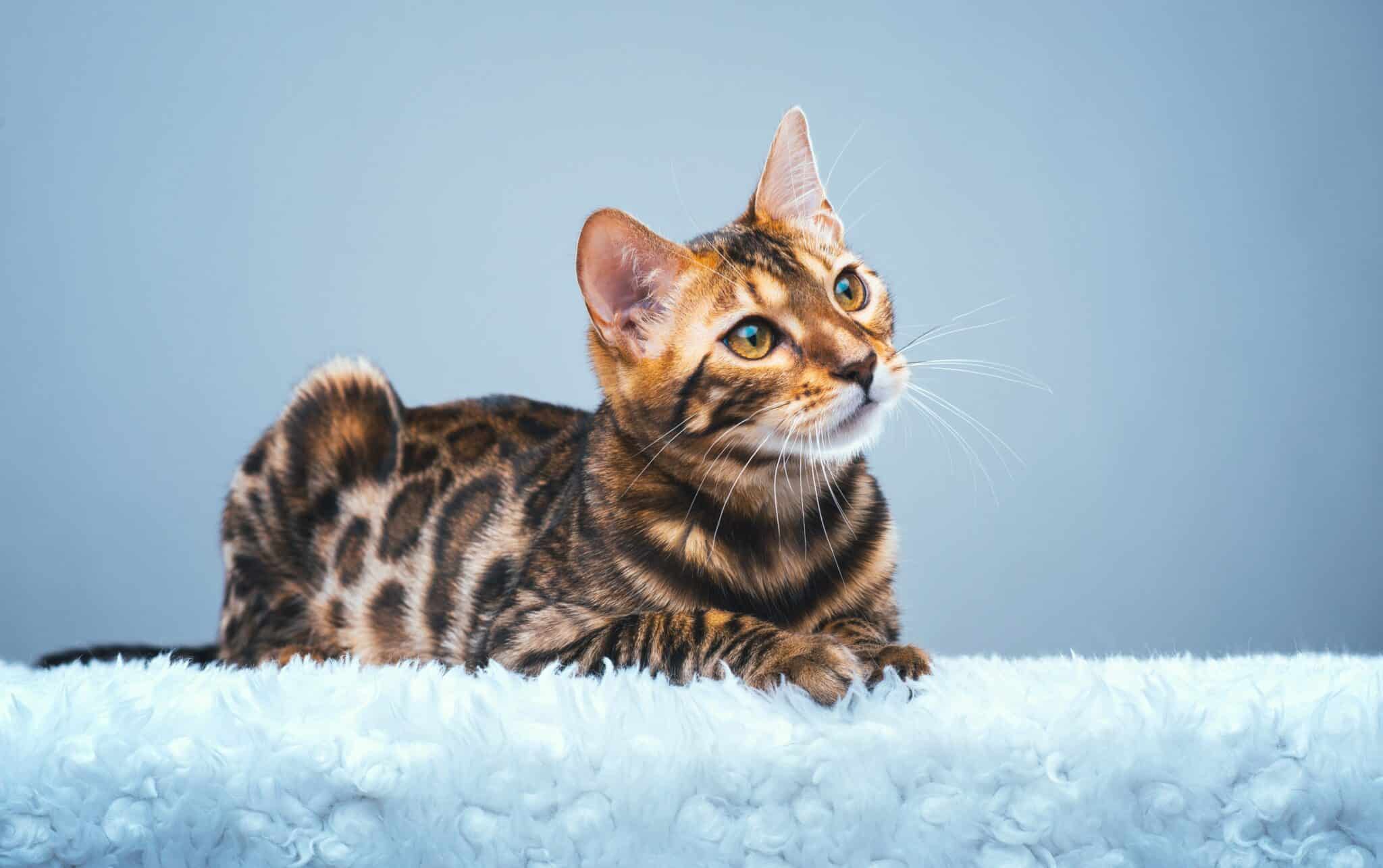
Two accepted marking patterns apply to Bengal cats of all coat colors: spotted and marbled. The Bengal cats you’re probably most familiar with are Brown Bengals, featuring brown markings and deep orange coats, making them look distinctly wild.
Breeders have developed several variants that have not yet gained recognition with any cat registry, including charcoal, blue and melanistic Bengal cats.
Top 3 Unique Facts About Bengal Cats
1. Charcoal Bengal Cats Have a “Zorro Cape and Mask” Pattern
Charcoal Bengal cats typically have dark gray or brown fur, and they come in both spotted and marbled variants. They tend to have dark face masks, and some also have a cape-like solid stripe along their backs, often called the “Zorro cape and mask” trait. All charcoal Bengal cats have brown or black tails with a black tip. They’re often much darker than brown, silver or Snow Bengal cats. The color is commonly found in first and second-generation mixes. Interestingly, the designation refers to a specific genetic trait, the Apb agouti gene, that can be found in Bengals of all colors. Charcoal Bengals aren’t yet on any cat registry’s list of recognized variants.
2. Blue Bengal Cats All Have Recessive Genes

Blue Bengals are another attractive option that hasn’t yet been recognized by cat registries. They have distinctive light blue fur with cream highlights, traits that come from a recessive gene, making the cats extremely hard to come by. You can find Blue Bengal cats with spotted and marbled marking patterns, which tend to be darker variants of their dominant color scheme. Although to be called a Blue Bengal cat, the markings must remain light enough to be classified as blue instead of black. All have a dark gray tip at the end of their tail and green, hazel, or golden eyes.
3. Melanistic Bengals Resemble Miniature Black Panthers
These gorgeous deep black felines may look entirely black, but they have “ghost” markings like little black panthers. Even though the dark marbling and spots are hard to see against the gorgeous dark of a Melanistic Bengal cat’s fur, the markings are easy to see in direct sunlight. Smoke Bengals are a lighter version of the combination.
Do Bengal Cats Make Good Pets?
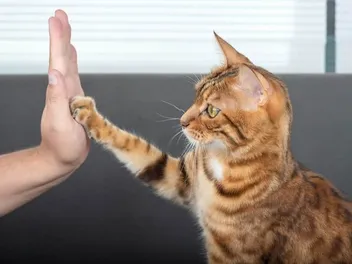
Bengal cats make excellent companions as long as you’re prepared to provide lots of love, attention, and exercise! The gorgeous cats are intelligent, which often leads to a bit of naughty behavior if they get bored or lack enough mental stimulation. As an active breed, they require a ton of exercise to stay happy and healthy. They’re easy to train, and many appear to love learning and performing tricks.
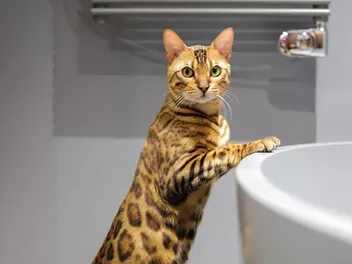
While they tend to get along well with other cats and dogs, they’re likely to fixate on and go after smaller pets such as mice, rats, hamsters, gerbils, and fish. Bengals love water, and they’re not above getting into an aquarium to help themselves to a fish or two.
Conclusion
Bengals are fun and bright and tend to bond deeply with their favorite people. Best of all, they come in several colors and shades, giving you tons of options if you’re looking for a personable, clever feline who loves to spend time with humans. However, they require plenty of mental stimulation and do best with families where they can get lots of love and attention.
Sources
https://www.tica.org/breeds/browse-all-breeds?view=article&id=1521:the-bengal-breed&catid=48
https://www.bengal-cats.com.au/about/history-of-the-bengal-cat/
http://royalbengalcattery.com/about-bengals/bengal-and-water.html
http://royalbengalcattery.com/about-bengals/bengal-and-water.html
https://bengalcatrepublic.com/where-to-buy-bengal-cats-in-australia/
https://web.archive.org/web/20070523103827/http://www.millwoodbengals.net/history/millhist.htm
https://www.latimes.com/archives/la-xpm-1987-09-17-ga-8687-story.html
https://www.ranker.com/list/1960s-exotic-pet-fad/claire-stephens
https://www.mylondon.news/news/nostalgia/harrods-pet-shop-elephant-lions-19948359
https://www.aspcapetinsurance.com/resources/bengal-cat-facts/
Featured Image Credit: Seregraff, Shutterstock
Expert cat care, straight to your inbox
News, insights, and useful advice, delivered to you.

No spam — unsubscribe anytime.
By signing up, you agree to our Terms & Conditions and Privacy & Cookies Policy.
How useful was this post?
Click a star to rate. You can leave written feedback afterwards. (We read all feedback.)
Lorre Luther is a writer who is firmly convinced that cats are smarter than humans. She left her law career in the United States and moved to the Netherlands to follow her dream of becoming a writer. Lorre currently lives in Rotterdam, she enjoys traveling and greatly appreciates the beauty of nature. Lorre has a spot for animals and admires the intelligence of cats.