Do Bengal Cats Like Water? Vet-Reviewed Facts & Ancestry


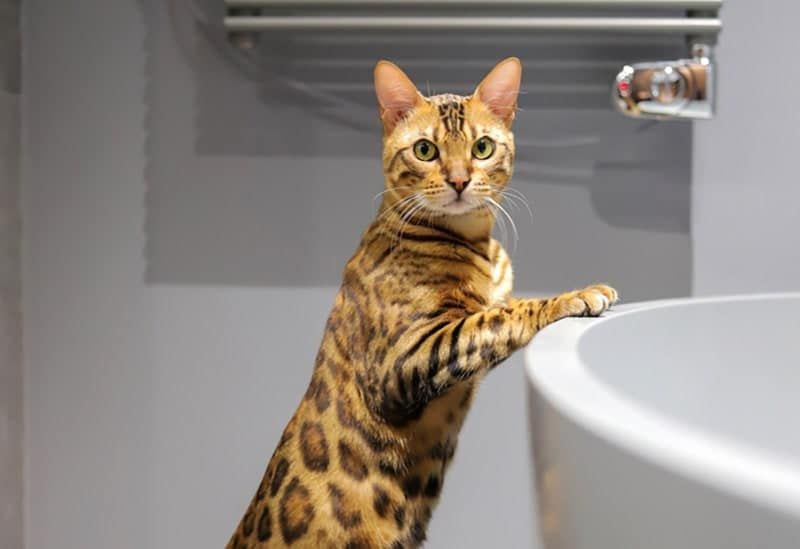
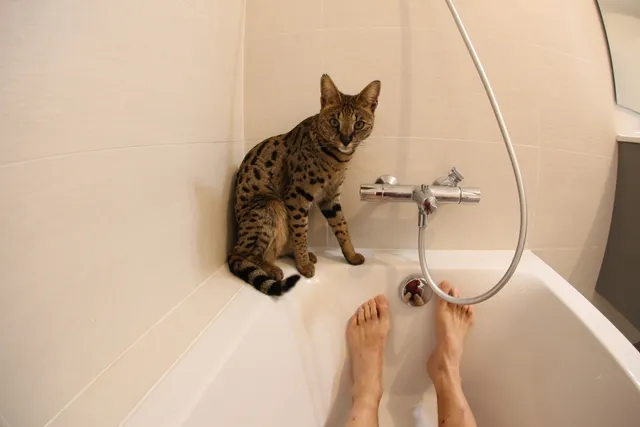
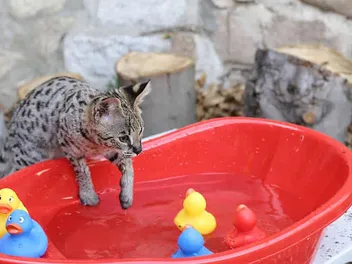
If you've ever wanted a cat that will play in the water with you, a Bengal is your choice! A survey done of Bengal cat owners showed that around 79.7% of Bengals are known to play with water so frequently that it becomes a management challenge for the owners. Some owners have even documented that their Bengal cat will jump into the shower with them to play.
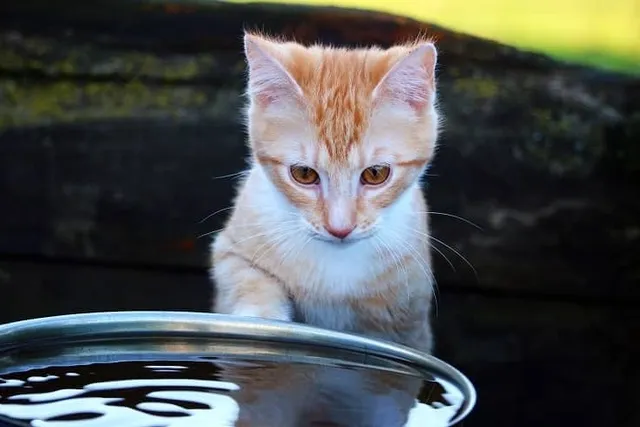
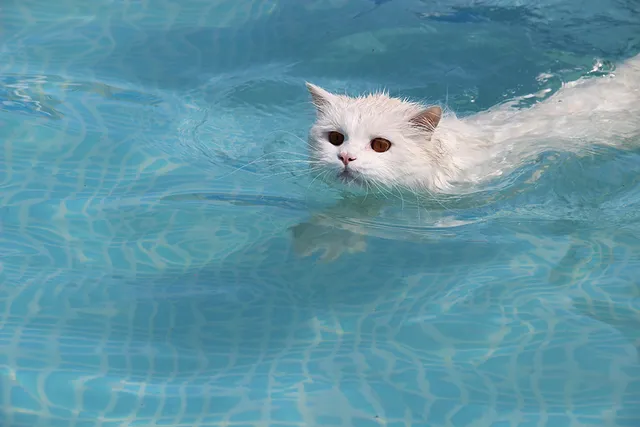
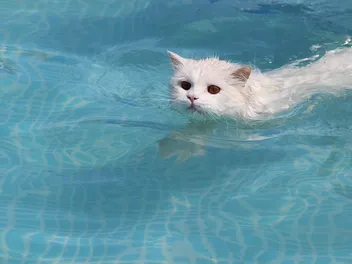
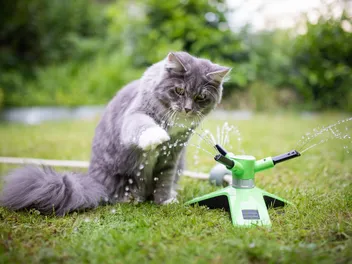
While most people assume that all cats hate water, that isn't true. Domestic cats tend to dislike water, and there are many theories as to why, but even different breeds of domestic cats have differing opinions on bathing. Some cats, like Bengals, even like the water and will enjoy romping and playing in the water to cool down on hot days.

Why Do Cats Hate Water?
There are many theories revolving around why cats hate water so much. It's hard to say exactly what causes cats to be so averse to moisture since they can't very well open their mouths and tell us. Still, we can make our best guesses based on the environmental factors of getting wet.

Origins
It's unclear where the exact point of cat domestication began. However, the widespread domestication of cats started more than nine thousand years before the common era in the area we now know as Egypt.
This domestication process took place mainly by accident. The African wildcat (Felis silvestris lybica) is recognized as the ancestor of domestic cats (Felis catus). These wildcats were attracted to early human settlements by stored grain and the rodents that fed on it.
The sands of the desert are an unforgiving place, and there's not much water out there. So, it's safe to say that the area is not a water park paradise where our cats' ancestors would have gotten used to a regular water bath.
The Passage of Time
Cats have also been in the process of domestication since 7500 BCE. That means that cats have been domesticated for over 9,000 years. Domestication can be achieved in as few as five generations. So, it's safe to say that cats have lived a comfortable life for quite some time.
This doesn't just mean that cats would be more adjusted to living with humans; it also means they'll have adjusted to living without certain dangers, stimuli, and needs—like crossing a body of water. Indoor-only cats don't need to run through a river to escape a predator or catch a fish to survive. So, they have little to no experience with water.
Everyone knows that the unknown is scary, and there are no words we can offer our cats to make them feel less afraid of the water when they've had several thousand years without having to experience it.
Being Wet Is Uncomfortable
One reason that has been given for why cats hate water is the simple factor of what wet fur feels like. Most people don't like to walk around in wet clothes. When we go for a swim, we do our best to strip down as much as legally possible because wet fabric feels uncomfortable and restrictive. Cats experience something similar. When their fur becomes soaked, it loses insulation, feels heavy, and can make movement awkward, which helps explain why most cats try to avoid getting wet.”
Wet fur isn't thermally efficient or comfortable. Your cat would struggle to hunt or even move around if they walked around with damp fur all the time. Forget running from a predator; your cat probably feels vulnerable and scared when they're wet because being wet impairs their ability to take care of and protect themselves.

Shock Factor
Finally, most cats aren't introduced to water in a neutral environment. Many cats' first introduction to water is falling into a sink or bathtub. That would be scary for anyone if they'd never been wet before!
For many cats, this initial shock factor is more than enough to turn them off from investigating bodies of water forever. However, Bengal cats often show a higher tolerance and curiosity toward water exposure.
Why Bengal Cats Like Water
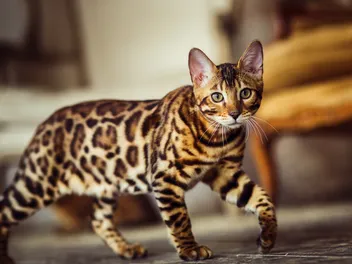
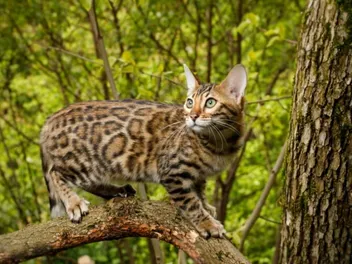
Bengal cats are famous because they're genealogically similar to wild cats. They're the result of selective crosses between the domestic cat (Felis catus) and the Asian leopard cat (Prionailurus bengalensis), a small wild feline species native to Asia. The breed was first developed in the 1960s and 1970s for its exotic coat and athletic behavior.
This hybrid ancestry likely influences why Bengal cats are so quick to get their paws wet. In the wild, Asian leopard cats are known to hunt near streams and occasionally enter shallow water to catch aquatic prey, behaviors that persist in their domestic descendants.
While domestic Bengal cats today are many generations removed from their wild ancestors, their retained behavioral traits, high activity, intelligence, and curiosity, make them more open to exploring water play.

Are There Other Cats Who Like Water?
There are several breeds of cats that you can bring home that enjoy playing with and in bodies of water. Maine Coons, Norwegian Forest Cats, Turkish Vans, and Abyssinians are all known for their love for water.
Notably, all the other cats who enjoy the occasional dip are cats who have water-resistant fur. The water rolls off their fur when these cats get wet instead of saturating the fibers.
Since the cats don't become saturated with water that makes them heavy, they don't tend to hate water with the same fervor as their non-resistant companions do.
Bengals don't have truly water-resistant fur, but their wild heritage makes them more open to the idea of playing in the water. If we encourage them to play with and enjoy the water, we'll be able to keep playing with them in the water.
Final Thoughts
Bengals are a true water cat breed. Their wild heritage makes them fearless when braving the tides, especially compared to their more strictly domesticated counterparts. They may not have water-resistant fur, but that will never stop them from having some fun in the water with you!
Featured Image Credit: Viktor Prymachenko, Shutterstock
Expert cat care, straight to your inbox
News, insights, and useful advice, delivered to you.

No spam — unsubscribe anytime.
By signing up, you agree to our Terms & Conditions and Privacy & Cookies Policy.
How useful was this post?
Click a star to rate. You can leave written feedback afterwards. (We read all feedback.)
Luxifa is a freelance writer with a passion for animal science and technology. She loves to share the world of animal science with people to help them make informed decisions for themselves and their pets. Luxifa has worked in professional pet care for over six years and strives to help change the world of pet care by bringing the information people need to them in terms they can understand. Knowledge is power, and Luxifa loves to help everyone become the most informed they can be.