Will a Mother Cat Abandon Her Kittens if I Touch Them? Vet-Reviewed Facts

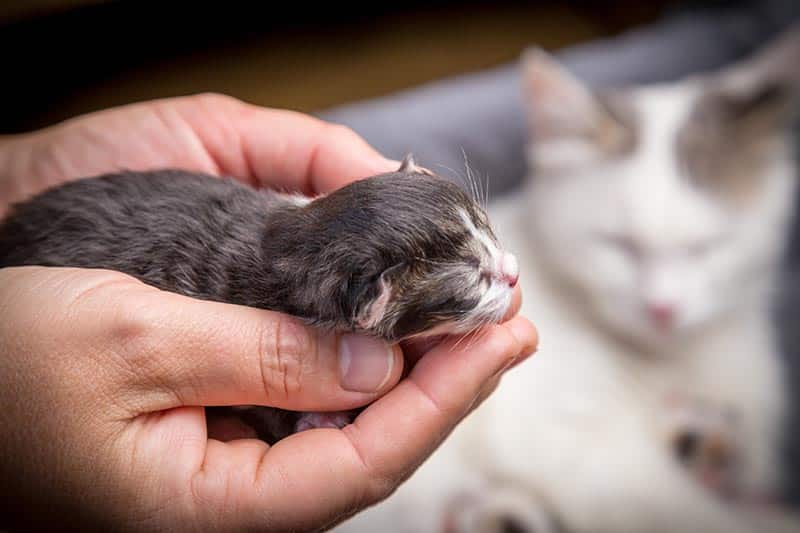
Many of us have some version of this childhood memory: we come across a kitten or kittens in our yard or a park that seem to be on their own. Every adult around us has different ideas on how to help, but likely have different ideas about what is best to do. If you come across this situation, your first thought might be to not touch the kittens for fear that your human smell on their fur will cause the mother to abandon her babies. Is this true or is it something we were all raised to assume?
It is actually very unlikely a mother cat will reject her kittens if they have been touched by people. It is best, however, to leave kittens that you think have been abandoned alone until you know for sure that the mother cat is not coming back. Read on to learn more about how to handle this situation should you ever encounter it in the future.

Finding Kittens Outdoors

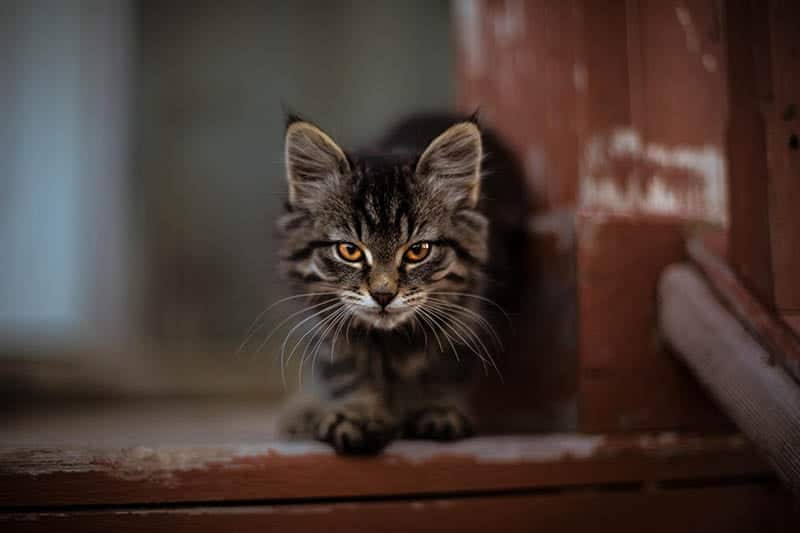
If you find a single kitten on their own that is meowing loudly or looks dirty and skinny, chances are good that this poor baby was either dumped by humans, or the mother cat may have become permanently separated from them through no fault of her own. In this case, you should get the kitten to a vet or rescue facility as soon as possible, or consult with one about taking care of them on your own.
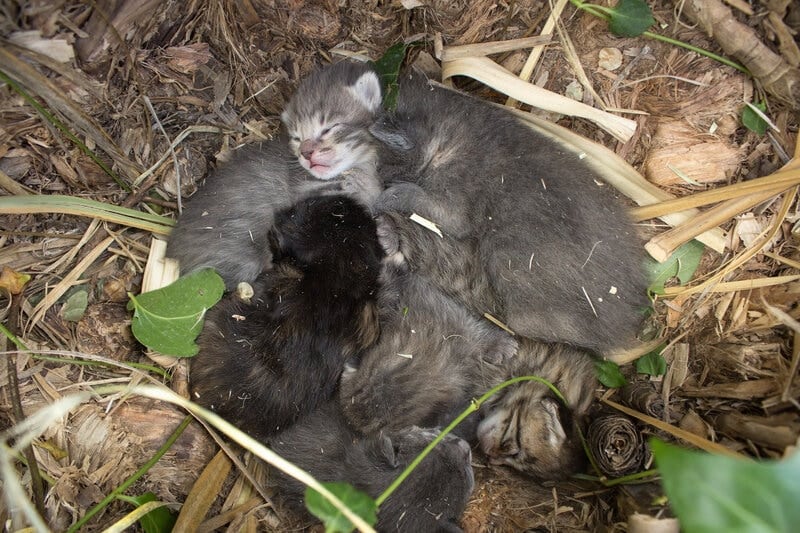
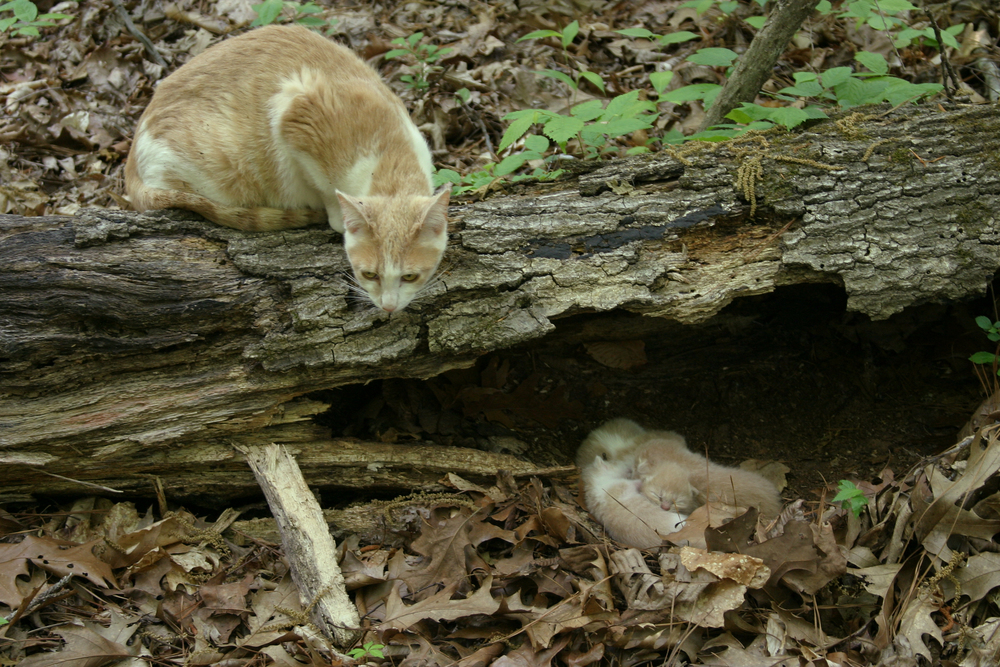
A litter of stray or feral kittens outdoors is a different situation. An outdoor litter is commonly referred to as a nest. Mother cats are very savvy and nurturing; they likely scouted the location they chose for their babies for days beforehand. Even neonatal kittens are designed by nature to be left alone for up to a few hours at a time. This is especially important for stray and feral cats that have to hunt and scavenge for food and water to stay alive.
If you find a nest of kittens on its own, chances are the mother has gone to hunt for food or was startled away unexpectedly and temporarily—possibly by you! It’s likely that she is somewhere nearby, hidden and watching. Of course, it is natural to be concerned about these precious little bundles of fur you’ve come across. Our instincts tell us they need rescuing, but they may be just fine.
Here are some indications that the kittens have not been abandoned and are being well-cared for:
- The area around the nest is clean, as are the kittens. Mother cats keep their nests free of biological waste, because instinct tells them that this isn’t safe for their babies.
- The kittens have firm, round bellies. This indicates that they have recently been nursed and are happy and full.
- The kittens are peacefully snoozing in a pile. This is another indication that they have eaten recently and are generally being well cared for.
If the kittens are cool to the touch, unresponsive when moved or picked up, and/or are covered with waste, it is likely they have been permanently separated from their mother. Another sign is if they have bloated bellies, as very young kittens can’t urinate or pass stool without their mothers, who lick the area under the tail to stimulate them to urinate and defecate. If you notice the kittens exhibiting any of these signs, there’s a good chance that they are in need of your help.

What to Do if You Find a Nest of Kittens
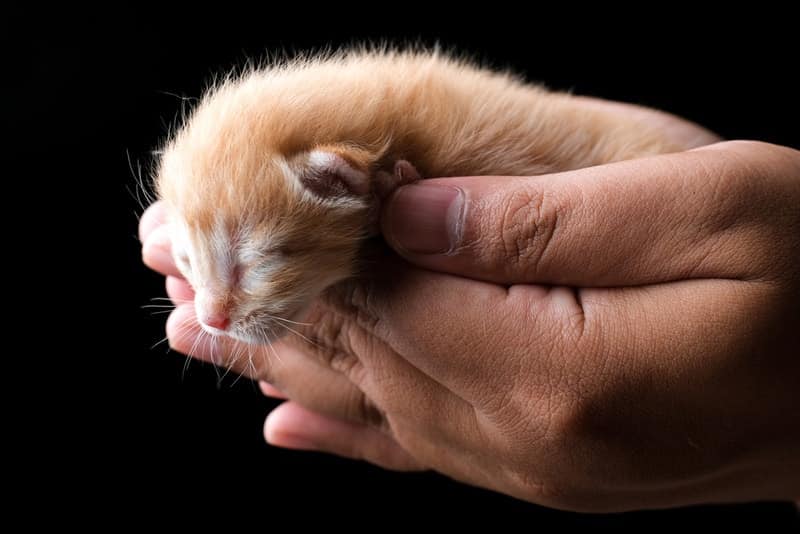
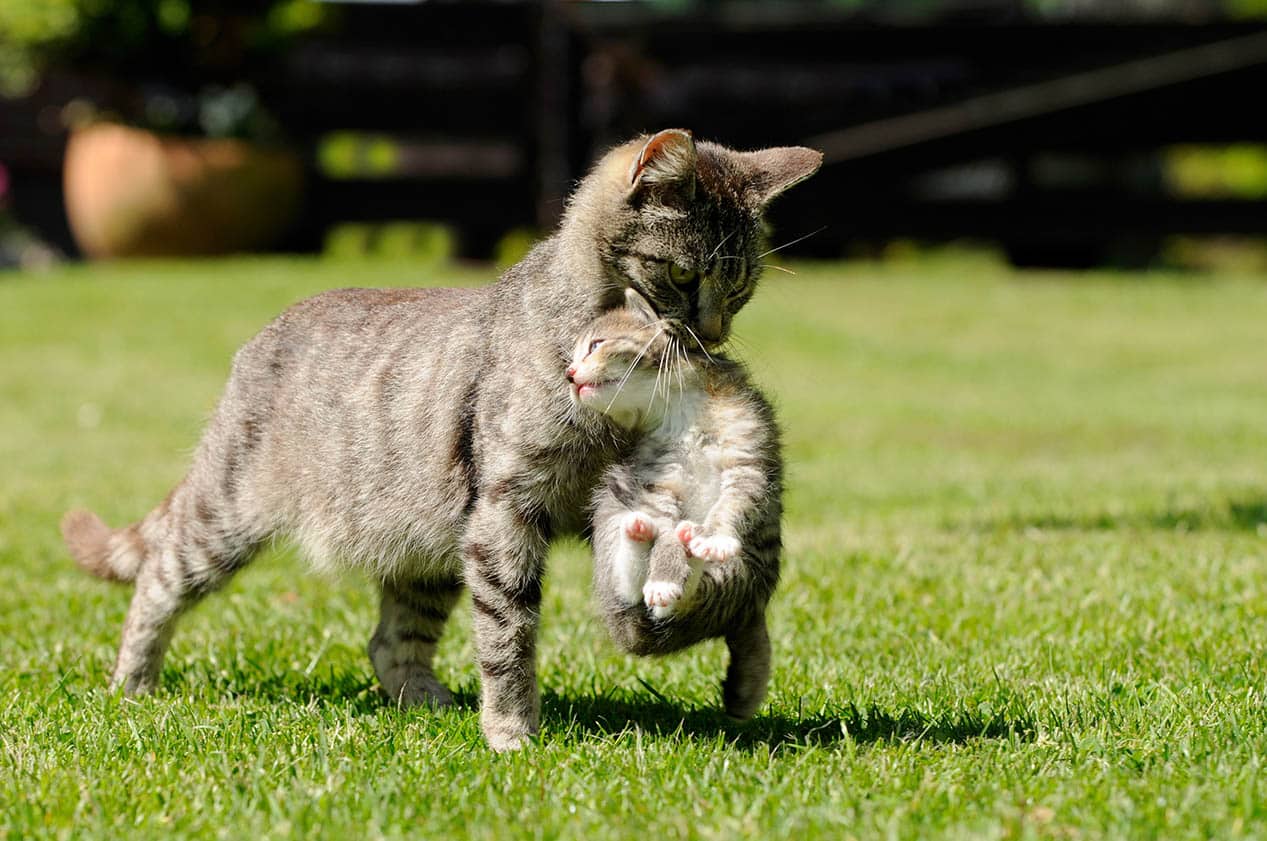
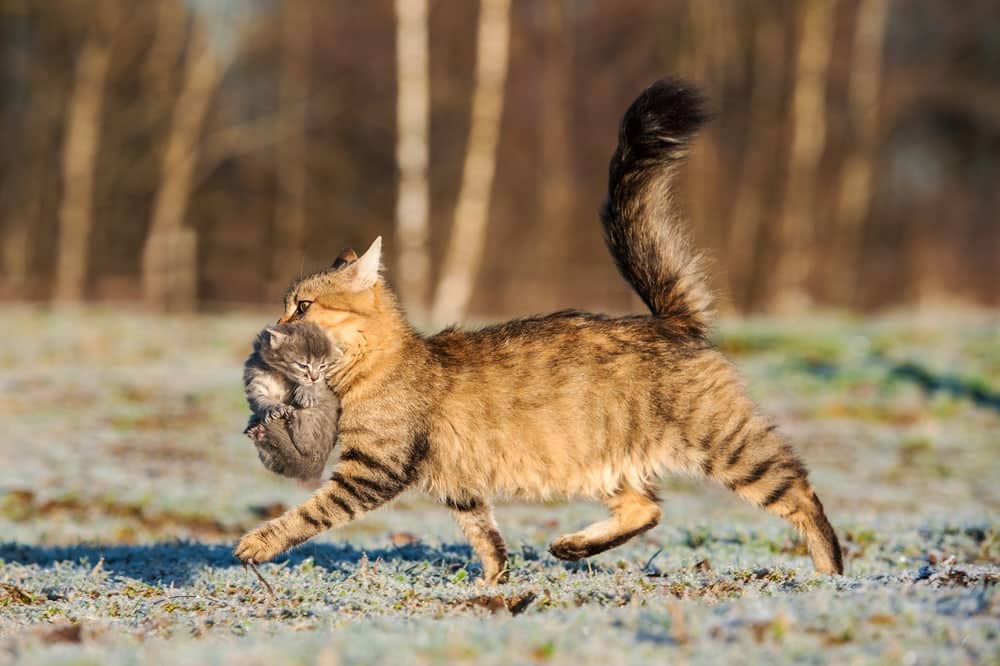
Once you have determined that the kittens are well cared for, or if you’ve seen indications of the mother cat being nearby, it is best to leave them alone (as hard as it is!). If you did pick them up, don’t fret—your smell on their fur and in the immediate area will not cause the mother to abandon or reject them. She might, however, move her kittens to a different spot the next day. While this may be a little bit disappointing (who doesn’t love seeing kittens!), know that this means those kittens have a very attentive and thoughtful mama looking out for them!
If you are unsure whether the mother is nearby, you can quietly return every half an hour until you see her back. If the kittens are alone for 2–3 hours with no sign of the mother, do another welfare check. If they’re still content and sleeping, give it another hour.
If there is still no sign of mom, reach out to a vet or rescue organization about what to do next. Caring for newborn or very young kittens is a very demanding process that requires specific and detailed steps, and it is important to get the proper information first.
Conclusion
Sometimes, a myth has been around for so long that we automatically assume it to be true. One that persists in the circle of animal lovers is that we shouldn’t touch stray kittens we find outdoors because the mother will reject them. Time and observation have determined that this is a very unlikely thing to happen.
While a mother cat might reject and abandon a kitten that is born ill, she will almost certainly continue caring for her kittens, even if a concerned person has pet them or picked them up. Very little, including human interference, will keep a mama cat from caring for her babies.
Featured Image Credit: Sergiy Bykhunenko, Shutterstock

Expert cat care, straight to your inbox
Vet-reviewed advice, behavior tips, and the best of Catster. Free, and you can unsubscribe anytime.
By signing up, you agree to our Terms & Conditions and Privacy & Cookies Policy.
Christian started writing for a local newspaper as a teenager, and he's been involved in the publishing industry for most of his adult life. Combining his love of writing with a passion for animals, he is currently the Director of Editorial at Pangolia and the Editor-in-Chief at Catster.
Christian lives in the Philippines with his wife, son, and four rescue cats: Trixie, Chloe, Sparky, and Chopper.
Join the conversation
Ask a question, share your story, or send private feedback.