Why Does My Cat Lick My Face? 8 Vet-Reviewed Reasons for This Behavior


In this article
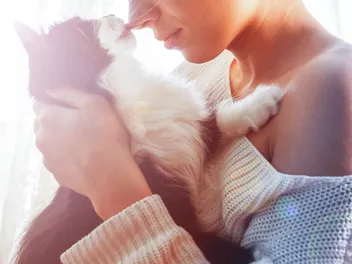
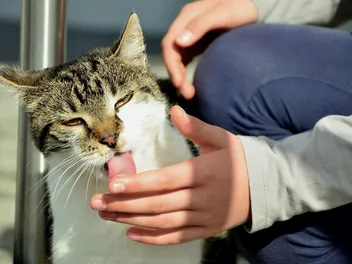
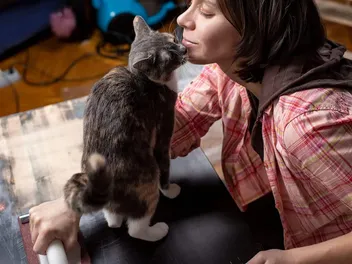
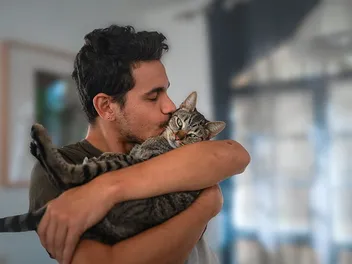
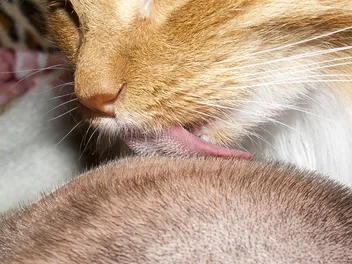
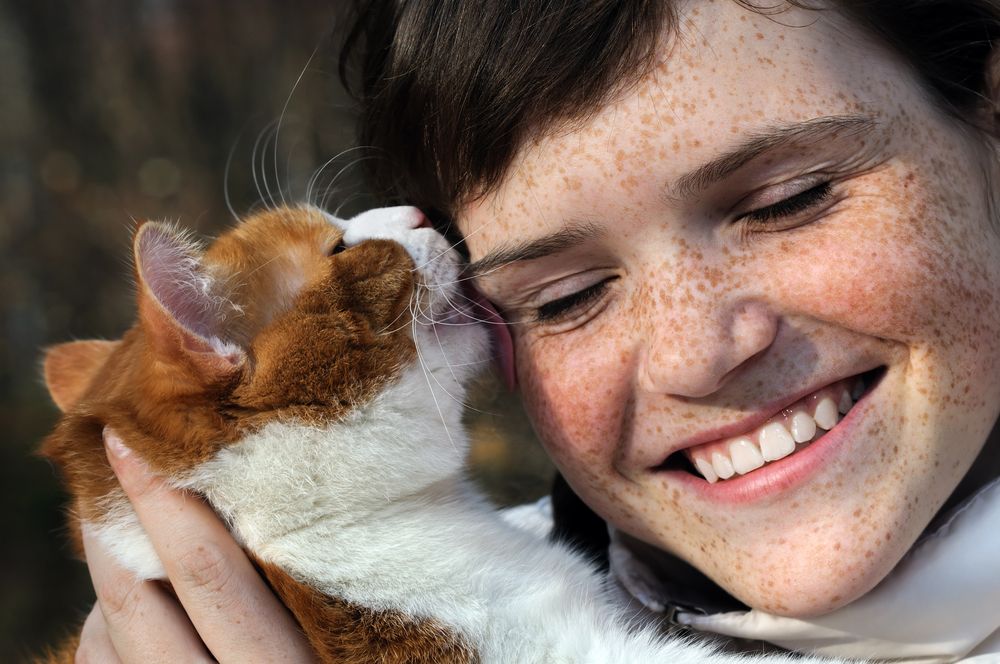
Kitty kisses can be cute and endearing, but being incessantly licked by a tongue that feels like sand can be uncomfortable and irritating to some people. For cats, it’s not always a positive or pleasurable experience, and it may actually have a negative connotation. For cat parents who would like to understand why this behavior occurs and how to manage it, or if it has become excessive or frequent, it’s essential to speak to a vet first.
Here are eight possible reasons why your cat might lick your face. However, science still doesn’t have all the answers to this question, and some of the following are just assumptions for now.

The 8 Reasons Why Your Cat Licks Your Face
1. Fond Family Memories
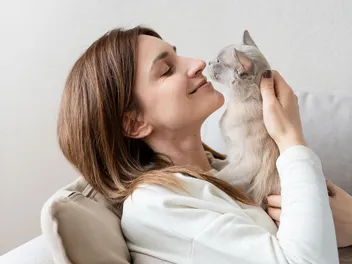
One reason your cat licks your face is that they have accepted you as part of their family and feel entirely at ease in your presence. Mother cats often lick their kittens to make them feel safe and secure. Now, the roles are reversed, and your kitty is showing you affection the best way they know how, by licking your face.
2. They May Be Seeking Attention
If your cat feels bored, frustrated, or lonely, they may start licking you to get attention. Sometimes, the licking means they want to play, be fed, or be petted. This is particularly true if they are used to getting a response from you when they lick you, which they consider a reward. In a way, you may be unknowingly encouraging this behavior. However, in other cases, the obsessive face licking could signify stress or separation anxiety.
Excessive stress-induced licking, like grooming your face, may mean your feline is stressed. If it’s gotten to the point where the licking interferes with day-to-day life or your cat is showing other signs of stress and anxiety, you should schedule a wellness exam with your vet.

3. Mine, Mine, Mine
Cats will lick items to mark them as their own. Leaving their scent on you establishes you as a member of their family. Mama cats will do the same to their kittens. Even cats that aren’t related but get along very well may lick one another to bond socially, establish hierarchy, and avoid aggression.
4. Grooming
When your cat licks your face, they may be trying to clean you. While a bath of cat saliva doesn’t really sound that clean, this grooming may promote bonding.
In the wild, cats in the same community often lick one another to form tighter bonds or to avoid aggression, with the dominant cat being the licker or the groomer. Allogrooming is a means of establishing social hierarchy. The face licking may mean your pet considers you part of their pride.

5. A Human Pacifier
It is suspected that kittens taken away from or abandoned by their mother before they were 8 weeks old may develop an oral fixation, making them susceptible to excessive licking.
Research has shown that cats weaned early, particularly when younger than 8 weeks, are more likely to exhibit not only stereotypical and compulsive behaviors, such as wool sucking and excessive grooming, but also aggressive behaviors.
They didn’t get the appropriate amount of time to learn from their mother and develop social skills, and licking can be a self-soothing substitute for that, giving them some reassurance and comfort.
6. They Find You Tasty
Whether from the salt of your sweat or a spill on your arm, your kitty may be licking you because they enjoy the taste. Make sure not to let your cat lick you if you have applied a skin cream or topical medication, as this may cause irritation to their mouth or toxicity.

7. Underlying Medical Issue
It is also possible that your cat is suffering from pain, discomfort, or nausea, which can lead to excessive licking. This usually manifests as cats licking themselves too much, but it may also display as them licking other objects or even you.
If your cat has suddenly started licking much more than usual, consult a veterinarian, who can rule out any underlying health issues.
8. Anxiety
Licking may also signify anxiety in some cats as a soothing defense mechanism. This is often paired with over-grooming, hiding, and changes in appetite, body language, and demeanor. Observe your cat for signs of anxiety and stress and identify the stressor as soon as possible.
It would be best to predict a stressful event before it happens so you can support your cat with safe and quiet hiding places, enrichment, and pheromone diffusers, particularly if your cat is easily influenced by stress.
This includes mall changes in their routine, such as a changed litter box location, visitors at the house, noise from building work, etc. Speak to a vet about ways to help your cat in managing anxiety.


How to Stop the Constant Licking
Stopping excessive licking from your cat could prove to be difficult. This behavior may sometimes be rooted in love and affection, but more commonly there is an underlying medical or behavioral reason for it, particularly in cats that have been doing it since kitten age or in those who have suddenly started doing it. The best way to prevent licking is to identify the cause with the help of a vet or a feline behaviorist, keeping in mind all of your cat’s background and medical history from an early age. Understanding the root of the issue will allow adequate treatment.
However, if your cat is doing it as a sign of affection or a way to seek your attention, you should be able to redirect your cat’s actions. For example, if your cat goes to lick your face, simply move away or redirect their attention to toys or food and move the attention away from your face or skin. When your cat is next to you and not licking you, then reward them with attention, food, or playtime.
Be careful not to allow your cat to lick your skin if you have any skin wounds or abrasions, as a cat’s mouth does contain bacteria that may cause an infection. Immunosuppressed people are likely to be at more risk.

The Bottom Line on Licking
If you're often wondering "why is my cat licking my face?", it could be because of their deep adoration for you, wanting to mark you as their family and leave a familiar scent on you, or wanting attention. It may also be because of stress, lack of adequate socialization, anxiety, or an underlying medical issue. Contact a vet if you think that is the case or if they have suddenly started licking you more, indicating something has changed in their routine or health.
See Also:
Sources
Featured Image Credit: yuris, Shutterstock
Expert cat care, straight to your inbox
News, insights, and useful advice, delivered to you.

No spam — unsubscribe anytime.
By signing up, you agree to our Terms & Conditions and Privacy & Cookies Policy.
How useful was this post?
Click a star to rate. You can leave written feedback afterwards. (We read all feedback.)
Christian started writing for a local newspaper as a teenager, and he's been involved in the publishing industry for most of his adult life. Combining his love of writing with a passion for animals, he is currently the Director of Editorial at Pangolia and the Editor-in-Chief at Catster.
Christian lives in the Philippines with his wife, son, and four rescue cats: Trixie, Chloe, Sparky, and Chopper.