8 Possible Signs Your Cat Is Protecting You
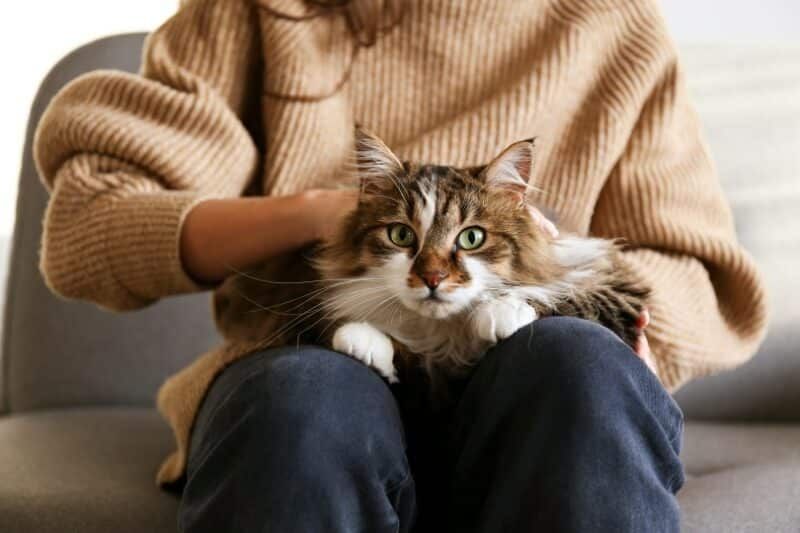
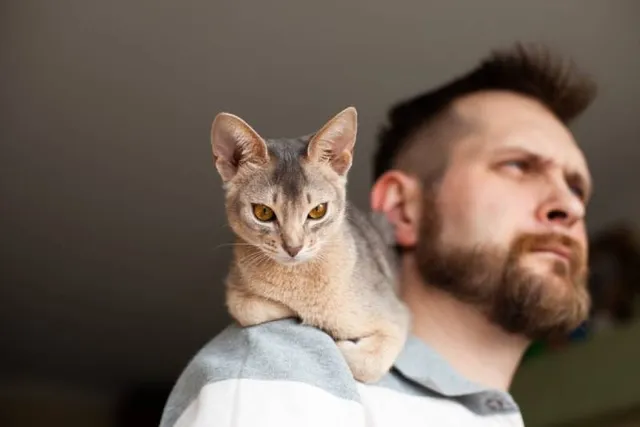
You might be surprised to discover that cats are territorial and spend most of their time guarding their territory, which includes your house and, usually, you! There have even been cases of cats attacking intruders or animals threatening their family members.
If your cat protects you, even if it’s from a roommate or significant other, it means that your cat trusts and loves you. Below, we'll discuss the signs that your cat is most likely in protection mode. We also examine the typical territorial behaviors cats demonstrate, including ones they can display when threatened.

The 8 Signs Your Cat is Protecting You
1. Puffed-out fur
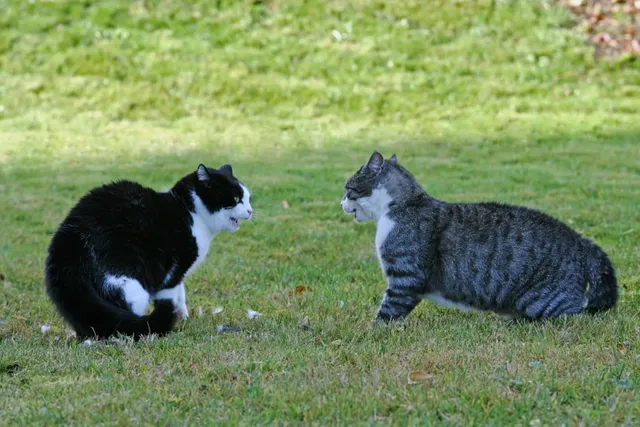
When cats feel threatened and ready to defend themselves or you, they puff out their fur and appear much bigger. You’ll notice the fur being particularly puffy along the spine and on the tail, which is called piloerection. This is a response through the nervous system that occurs due to natural reflexes in reaction to shock, anger, or fright.
2. Arched Back
Cats will use body language to show they are acting defensively. Most cats will arch their backs, stand sideways, do an almost crab-like walk, and hop on stiff legs.
All these signs are designed to make the cat look large and threatening toward the intruder.

3. Tail Movement
When a cat isn't sure where things stand, their tail will be held low to the ground and usually lash back and forth in quick movements. However, the tail might puff up and be kept down with an elevated rear end, like the traditional Halloween cat posture.
This position can be either offensive or defensive. A cat’s tail is an excellent way of reading their mood at a glance.
4. Ear Movement
Initially, their ears will be turned out and alert and potentially swiveling, enabling the cat to stay alert and listen for approaching danger. When a cat is in full attack or protection mode, their ears will usually flatten fully against their head.
A cat taking an aggressive position will position their ears backward without fully flattening them. This helps protect their ears from a potential fight.

5. Eye Pupils
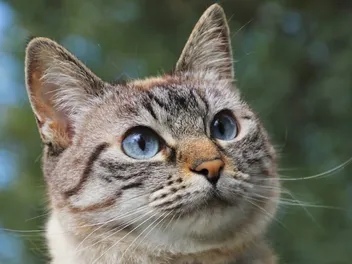
When a cat is dealing with danger, they will make intense eye contact, and the pupils can be either tiny slits or fully dilated. If the cat is in more of a defensive rather than offensive position, the pupils are usually dilated, and the brow is furrowed.
Dilating the eyes gives the cat much wider peripheral vision to better observe approaching dangers. An aggressive cat is likelier to have narrow pupils because it gives them much better depth perception to determine the best attack.
6. Whisker Positions
For a cat that is feeling anxious or afraid, their whiskers will start to move back, usually in conjunction with the ears. The more frightened the cat is, the farther back they will pull their whiskers.
An aggressive cat will immediately pull their whiskers back and flat against their faces as a means of protection.

7. Vocalizations
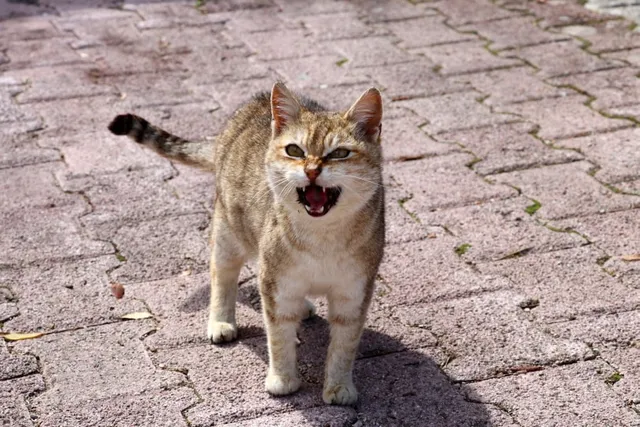
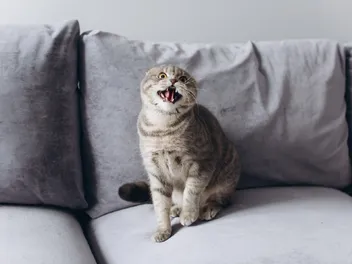
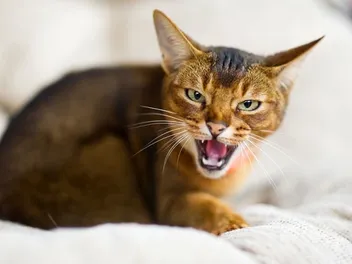
This is where there’s no doubt that your cat is in protection mode! Once your cat starts hissing, spitting, and growling, they are sending out a warning. They are saying that they are angry, annoyed, or afraid and are telling the threat to stay back!
Hissing is also an effective way for cats to show off one of their best weapons: their sharp teeth. Sometimes, the hissing is accompanied by swatting their claws toward the threat. Generally, cats want to avoid confrontation, so their body language, combined with growling and hissing, are warnings that the intruder shouldn’t mess with them.
8. Biting and Scratching
If their warnings are not heeded, cats will go into full-on attack mode. They will use their claws more than their teeth; it’s safer to use them because they don’t need to get as close to the intruder.
There have been several cases of cats attacking people and animals through biting and scratching to protect their loved ones.

Territorial Behaviors
Cats demonstrate several territorial behaviors, primarily through marking. You’ve seen it when your cat rubs their cheeks and body against items in your home, including you and your family. They can also mark by scratching, and unneutered males will spray urine.
Cats also show their territorial nature through aggressiveness. If the neighborhood cat is visiting outside, your cat may start hissing and hitting the windows in the intruder's direction.

Typical Cat Behaviors When Under Threat
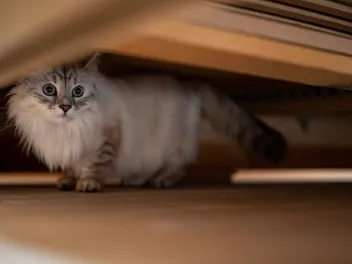
Other than overt aggressive behaviors, cats usually have a flight-or-fight response to danger. They will either fight or run and hide. Sometimes, they might freeze like a deer in headlights.
How a cat reacts in a situation in which there is a direct threat depends on the cat’s temperament and personality. Not all cats will be interested in protecting anyone but themselves, and that’s okay.
Conclusion
Keep in mind that you can’t rely solely on the signs to determine if your cat is protecting you. Different circumstances can make the responses occur, such as a bright light making your cat’s pupils narrow. Usually, when a cat goes into protection mode, most, if not all, of these signs will occur in an escalating manner.
Although many cats will try to protect you in certain circumstances, not every cat will. Some cats are timid and anxious by nature and not as likely to look after you in that way. Enjoy your time with your cat without any expectations, and you'll spend several happy years together.
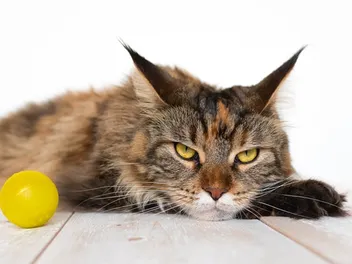
Featured Image Credit: evrymmnt, Shutterstock
Expert cat care, straight to your inbox
News, insights, and useful advice, delivered to you.

No spam — unsubscribe anytime.
By signing up, you agree to our Terms & Conditions and Privacy & Cookies Policy.
How useful was this post?
Click a star to rate. You can leave written feedback afterwards. (We read all feedback.)

Kathryn was a librarian in a previous lifetime and is currently a pet writer. When she was a child, she hoped to work in ZOOs or with wildlife in some way, thanks to her all-consuming love for animals. Sadly, she's not strong in the sciences, so she fills her days with researching and writing about all kinds of animals and spends time playing with her adorable but very naughty tabby cat, Bella. Kathryn is hoping to add to her family in the near future – maybe another cat and a dog.