Catster is reader-supported. When you buy via links on our site, we may earn an affiliate commission at no cost to you. Learn more.

Cat Behavior

Why Do Cats Arch Their Back? 5 Vet-Verified Reasons for this Behavior

By Rachel Giordano · Reviewed & fact-checked by Dr. Amanda CharlesVet Approved
Dr. Amanda Charles
Reviewed & Fact-Checked byDr. Amanda CharlesBVSc MRCVS (Veterinarian)
Dr Amanda Charles qualified as a vet from Liverpool University in 2002 and has been in small animal practice ever since. Amanda enjoys educating pet parents by giving them up-to-date and accurate information and loves the variety that being a vet brings.View authorThe information is current and up-to-date in accordance with the latest veterinarian research. Read about our vets
Share
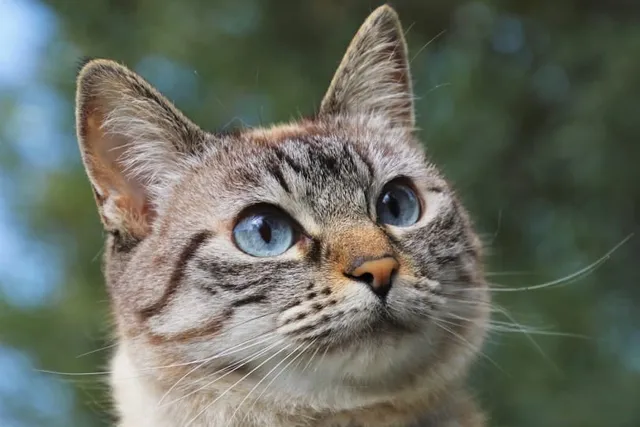
siamese cat arch his back

Cats have limber bodies and can squeeze through the smallest gaps. They can also arch their back in ways that seem impossible, but have you ever wondered why cats arch their backs? Is there a particular reason for the behavior?

Cats arch their backs for various reasons, and you need to put it into context with the rest of their body language to work out what they are trying to tell you. In this post, we will discuss the five common reasons for the behavior so that the next time you see your cat arch their back, you’ll know why.

divider cats oct 2024

The 5 Reasons Why Cats Arch Their Back

1. Your Cat Is Frightened/Threatened

angry-or-frightenedcat-and-dog-in-the-street
Image Credit; Esin Deniz, Shutterstock

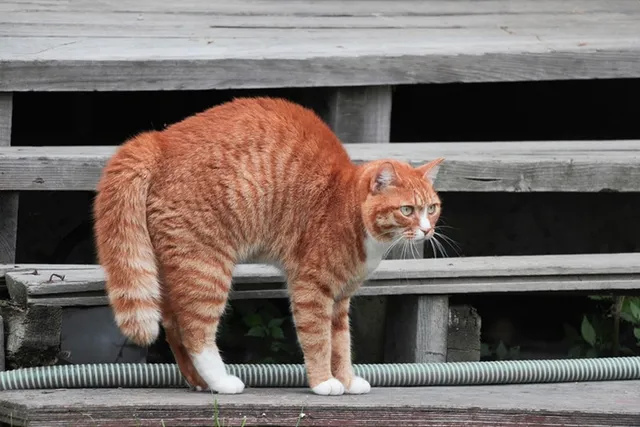
A typical Halloween decoration has a black cat arching their back while hissing or growling. The hair is standing straight up, and the cat looks angry. Cats make this pose if they are frightened to make themselves look bigger. However, this “fear aggression” pose allows the threat to know that the frightened cat is afraid but will defend themselves. Hissing, growling, spitting, and showing teeth often accompany this pose.


2. Your Cat Is Stretching

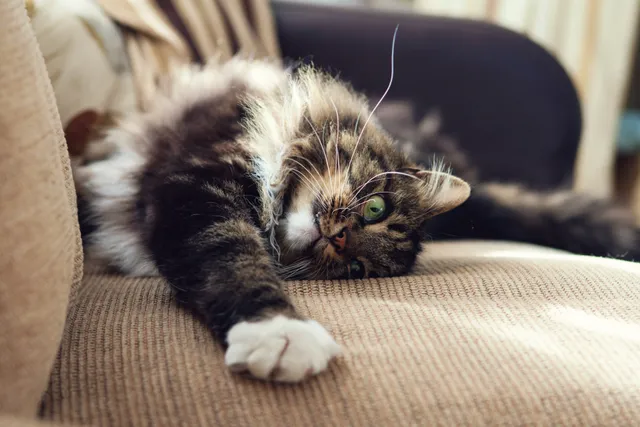
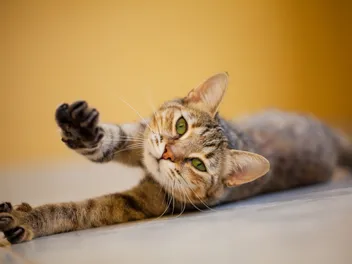
You may notice your cat arching their back after a long nap. A cat’s back is very flexible, allowing them to stretch their muscles in a way we wish we could mimic. Stretching allows for good blood flow and circulation—everyone loves a good stretch, and cats are no different!


3. Your Cat Is Angry

Angry Golden-eyed tuxedo cat hissing and arching back in displeasure
Image Credit: yhelfman, Shutterstock

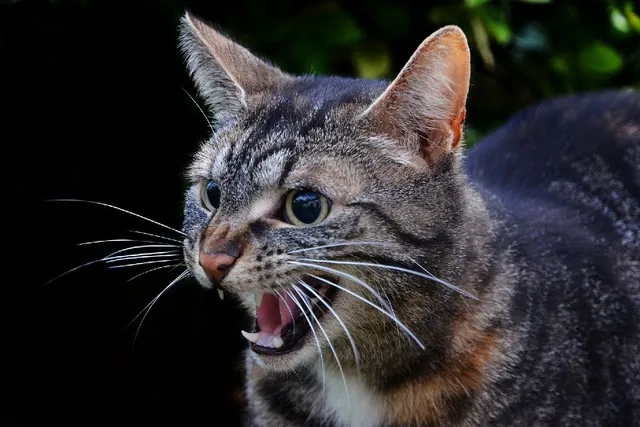
You may see your cat arch their back when other pets approach them. They are telling the other pet to back off. If your cat is angry, they can hiss, growl, and show their teeth to drive the point home. If your cat is angry, don’t provoke them; let them cool down before approaching, or you may feel the wrath of their claws!


4. Your Cat Wants to Play

Cats want to play on their terms, and when your cat is ready for some playtime, they may arch their back. Sometimes, a cat side-steps or jumps sideways while playing with their favorite toy, and most times, their back is arched. This behavior is more common in kittens, but adults do it as well.


5. Your Cat Is Happy

Woman sitting at desk at home and cuddling or petting her cat
Image Credit: Stokkete, Shutterstock

While your cat may seem aloof most of the time, they may arch their back to show their happiness when being petted. If their arched back is accompanied by purring, headbutting, and rubbing around you, it’s usually a sign that they are enjoying the fuss!

divider cats oct 2024

Final Thoughts

All cat owners have seen their cats arch their backs, and many may not have known why. We hope this post gives you insight into why cats do it and contort their body in this strange way. It’s important to look at your cat's other body language signals and what else is going on around them to work out what they're communicating to you. Remember that if you feel your cat is angry or frightened, allow them to calm down before approaching.

Sources

Featured Image Credit: Brenda Carson, Shutterstock

The Catster Newsletter

Expert cat care, straight to your inbox

News, insights, and useful advice, delivered to you.

No spam — unsubscribe anytime.

By signing up, you agree to our Terms & Conditions and Privacy & Cookies Policy.

Click a star to rate. You can leave written feedback afterwards. (We read all feedback.)

Rachel Giordano
Authored by

Rachel Giordano

Leave a Reply

You're very welcome to leave a comment or question. Please know that all comments must meet our community guidelines, and your email address will NOT be published. Let's have a positive and constructive conversation.

How To Read a Cat's Body Language: 5 Vet-Reviewed Moods & Signals

How To Read a Cat's Body Language: 5 Vet-Reviewed Moods & Signals

While cats can't use words to tell us how they're feeling, most are expert communicators who rely on different types of vocalization, body language, and chemic…

Lorre Luther
By Lorre Luther ·
Why Do Cats Roll Around on Their Backs? 7 Vet-Reviewed Reasons (With Infographic)

Why Do Cats Roll Around on Their Backs? 7 Vet-Reviewed Reasons (With Infographic)

Cats are peculiar creatures and usually march to the beat of their own drum. Unlike dogs, cats can be particular, especially regarding their bellies. When a do…

Rachel Giordano
By Rachel Giordano ·
Why Do Cat’s Tails Puff Up? 4 Vet-Approved Reasons

Why Do Cat’s Tails Puff Up? 4 Vet-Approved Reasons

Cats often puff their tails as a form of body language communication. It's technically called piloerection! Felines use body language to communicate with each…

Lorre Luther
By Lorre Luther ·
Why Do Cats Hiss? 5 Vet-Reviewed Reasons for This Behavior

Why Do Cats Hiss? 5 Vet-Reviewed Reasons for This Behavior

Everyone has heard a cat hiss at least once or twice in their lifetime. Cats are well known for hissing, but it can be confusing as to why a cat might be hissi…

Christian Adams
By Christian Adams ·

Do Cats Get Annoyed? 10 Vet-Reviewed Signs & What to Avoid

Cats can get annoyed just like humans, although they usually express it differently than us. Even the most loving and content feline can experience annoyance.…

Sarah Psaradelis
By Sarah Psaradelis ·
Do Cats Get Annoyed? 10 Vet-Reviewed Signs & What to Avoid

Why Do Cats Move Their Ears? Vet Reviewed Science & Meanings Explained

Cats are incredibly expressive animals, and while they can’t mimic human words, they have a wide range of ways to convey feelings through their body language.…

Nicole Cosgrove
By Nicole Cosgrove ·
Why Do Cats Move Their Ears? Vet Reviewed Science & Meanings Explained

Why Do Cats Stretch When They See You? 5 Vet Verified Reasons

Picture this. Walking in your front door after a long, grueling day at work. The house is quiet, but then you hear it in the distance: a sweet chirrup that ann…

Chantelle Fowler
By Chantelle Fowler ·
Why Do Cats Stretch When They See You? 5 Vet Verified Reasons

Cat Ear Communication: Ear Positions & Vet-Verified Meanings

Sometimes, you really want to know what your cat is thinking and feeling. Unfortunately, our favorite felines can’t speak to us to tell us what’s going on in t…

Misty Layne
By Misty Layne ·
Cat Ear Communication: Ear Positions & Vet-Verified Meanings

Are Cats Vengeful or Vindictive? Vet-Verified Facts About Feline Behavior

Cats have an unjustified reputation for holding a grudge. Perhaps it seems like you get the cold shoulder whenever you've been away or when you accidentally st…

Kathryn Copeland
By Kathryn Copeland ·
Are Cats Vengeful or Vindictive? Vet-Verified Facts About Feline Behavior

My Cat Is Aggressive Toward Guests: 5 Reasons Why and How to Stop It (Vet-Reviewed)

Cats are often reluctant to interact with visitors. Some hang back and monitor their environments until they become comfortable enough to join the activities.…

Lorre Luther
By Lorre Luther ·
My Cat Is Aggressive Toward Guests: 5 Reasons Why and How to Stop It (Vet-Reviewed)

Cat Pouncing: Vet-Verified Behavior Explained & Solutions

Cats love to pounce! While it's a normal activity that's linked to their hunting skills, there are times when your cat’s pouncing can become a bit too enthusia…

Lorre Luther
By Lorre Luther ·
Cat Pouncing: Vet-Verified Behavior Explained & Solutions

5 Signs of Aggression in Cats: Vet-Reviewed Behavior Problems to Watch For

Aggression is a relatively common feline behavior problem, and it can have several causes, from pets getting a bit too carried away while playing to pain and f…

Lorre Luther
By Lorre Luther ·
5 Signs of Aggression in Cats: Vet-Reviewed Behavior Problems to Watch For

Love Cats? So Do We! Join the Catster Community

Stay informed with expert cat care insights delivered straight to your inbox! Discover professional guidance on feline behavior, feeding tips, trusted product picks, and much more.

You may opt-out at any time. View our Privacy Policy for more information.

The Catster site on a phone