Is a Humidifier Safe for My Cat? (Potential Risks & Crucial Safety Tips)


In this article
For certain households, using a humidifier is a necessity during the winter months. But maybe you have a new cat or are thinking about purchasing your first humidifier and are not sure if it will be safe with your cat.
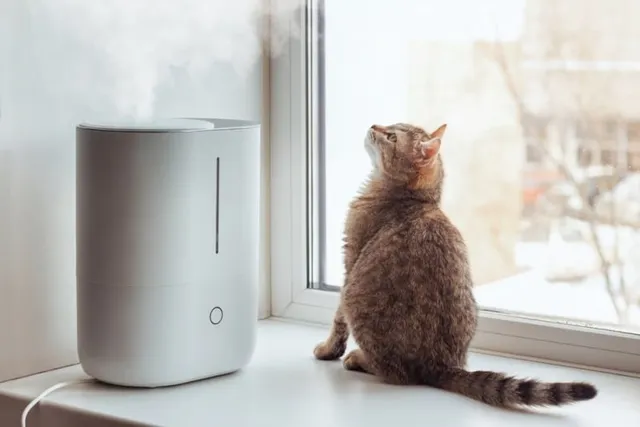
A cool mist humidifier is perfectly safe for use around cats and is even capable of providing a few benefits for them. But there are a few things that you’ll need to consider before using one.
Before you use your old humidifier or buy a new one, you should understand the benefits and the risks of using it around your cat.

What Exactly Are Humidifiers?
Humidity is the water vapor in the air. Humidifiers are particularly popular during the winter months because the air in people’s homes is quite dry due to the lack of humidity in the cold air and in heating systems.1
Humidifiers work by filtering the dry air and sending it back out as a mist. There are several humidifiers to choose from:

Why Use a Humidifier?
Other than preventing those annoying shocks that you get after walking across a carpet, humidifiers help with many other aggravating aspects of dry winter air, like dry sinuses, cracked and dry lips, bloody noses, dry skin, headaches, dry and frizzy hair, etc.
They can also come in handy if you have a cold or a respiratory condition, such as asthma.
Do Humidifiers Benefit Cats?
For the most part, cats can benefit from humidifiers in the same way that they help us. Cats can catch a “cat cold” and suffer from congestion, which can be relieved with a humidifier.
It can also help your cat if they have chronic rhinitis or sinusitis. Rhinitis is inflammation of the nose, and sinusitis is inflammation in the nasal passages. A humidifier can help loosen the mucus inside the nose, enabling the cat to breathe easier.
When a cat has asthma, dry air can trigger asthma attacks, and a humidifier can increase the moisture in the air.
Finally, humidifiers help us with our dry skin and can do the same for cats. If your cat seems to have dandruff and does a fair amount of scratching, it might be because the air is drying out their skin. But first, be sure that it isn’t due to a different health condition.
If your pet is scratching too much or has dandruff, we suggest you speak to a vet.

What Are the Risks of Humidifiers Around Cats?
You should only use a cool mist humidifier, not a warm mist humidifier. The biggest issue with the latter is that it uses boiling water, which can be a hazard if your curious cat accidentally knocks it over. Additionally, warm mist humidifiers are much more likely to be subject to mold and mildew.
But both types require a reservoir of water to work, which can be a hazard if it spills near an electrical outlet. If you have an overly inquisitive and energetic cat that is likely to knock over the humidifier, there could be the possibility of an electrical shock.
The 8 Safety Tips for Using Humidifiers Around Cats
Now that you know that humidifiers are safe for the most part, here are a few safety tips to ensure that you can use them without worrying about your cat.
1. Use Cool Mist Humidifiers Only
You should only use cool mist humidifiers if you have a cat. The same can be said if you have any pets or young children. This way, there's no risk of burns if it gets knocked over.
2. Use Sturdy Humidifiers Only
You’ll want to use a humidifier that can’t easily fall. A curious cat might accidentally tip over a lightweight machine. If your cat won’t be able to leave it alone, consider getting a small humidifier so if it does topple, it won’t hurt your cat.

3. Don’t Use Essential Oils
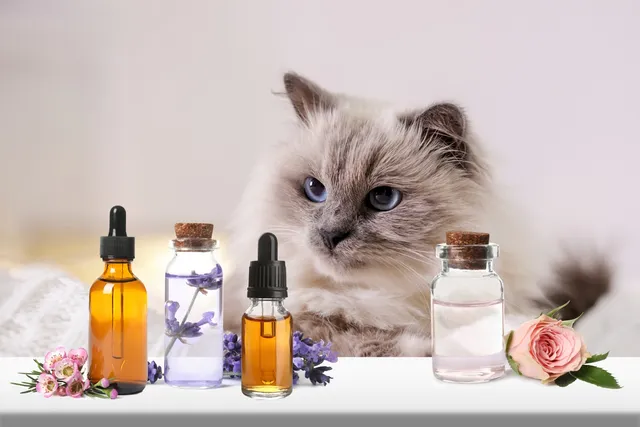
Essential oils are highly toxic to cats. They are easily absorbed through the skin and orally into the body, where then they are processed by the liver, but cats lack the enzyme to process the essential oils, which can lead to liver failure.
Droplets from a diffuser or humidifier can land on the cat’s fur, which they will lick off, or they can inhale them in the air. Never use essential oils around your cat.
4. Use Quiet Humidifiers Only
Cats have extraordinarily sensitive hearing and tend to spook easily when there are unexpected sounds. A noisy humidifier could keep the cat away. This is fine if your cat doesn’t need the humidifier, but if they do, don’t put it near areas that your cat must frequent, such as their food bowls, litter box, and sleeping areas.
5. Keep It Clean
You will need to change the water frequently and clean the reservoir. It’s recommended to change the water every day if possible. If the unit has filters, change or clean them at the same time.
Demineralized or distilled water will have fewer particles and mineral deposits left behind, and these can lead to bacterial growth. Strictly adhere to the manufacturer’s instructions. Remember, whatever is in the reservoir will end up in the air that you and your family will be breathing.

6. Consider Measuring the Humidity
There is such a thing as too much humidity in the air, and it can cause excess condensation in your home, which could produce mold and mildew and promote the growth of bacteria. This can lead to allergies, asthma attacks, and respiratory problems.
You can invest in a hygrometer that measures the moisture in the air so you can make any adjustments.
7. Know That Placement Is Key
If the humidifier is for your cat, you’ll need to find a safe place to put it so your cat won’t constantly be knocking it over.
You also should be careful to place it far enough away from the electrical outlet, so it won’t spill water on the outlet if it does get tipped over. If it's only for you, simply put it out of reach of your cat.
8. Watch Your Cat
When you first plug in the humidifier, watch your cat around it for a while. Do not leave them alone until your cat is accustomed to it and shows no more interest in it.

A Word on Ultrasonic Humidifiers
This humidifier uses ultrasonic vibrations that vibrate and generate droplets of moisture that are dispensed into the air. Since they vibrate at a very high frequency, they produce no sound, but cats can still sense them.
Some cats will likely be okay with this type of humidifier, while others won’t, so you’ll want to test it around your cat. If it bothers them, try returning it for a refund.
Conclusion
Humidifiers are safe for your cat, provided that it is a cool mist unit that is sturdy and can’t easily be knocked over. It can do wonders for your cat’s skin and coat, help with their respiratory issues, and benefit you and your family too.
Speak to a vet if you are considering a humidifier because your cat is exhibiting dry skin or respiratory problems. Humidifiers can help relieve a few of these issues, but they might still need medical intervention.
Overall, aim for a cool mist humidifier that is quiet and strong enough to handle an energetic cat.
“Sources”
Featured Image Credit: Marina Demeshko, Shutterstock
Expert cat care, straight to your inbox
News, insights, and useful advice, delivered to you.

No spam — unsubscribe anytime.
By signing up, you agree to our Terms & Conditions and Privacy & Cookies Policy.
How useful was this post?
Click a star to rate. You can leave written feedback afterwards. (We read all feedback.)
Kathryn was a librarian in a previous lifetime and is currently a pet writer. When she was a child, she hoped to work in ZOOs or with wildlife in some way, thanks to her all-consuming love for animals. Sadly, she's not strong in the sciences, so she fills her days with researching and writing about all kinds of animals and spends time playing with her adorable but very naughty tabby cat, Bella. Kathryn is hoping to add to her family in the near future – maybe another cat and a dog.