How to Discipline a Cat for Biting: 9 Tips & Tricks


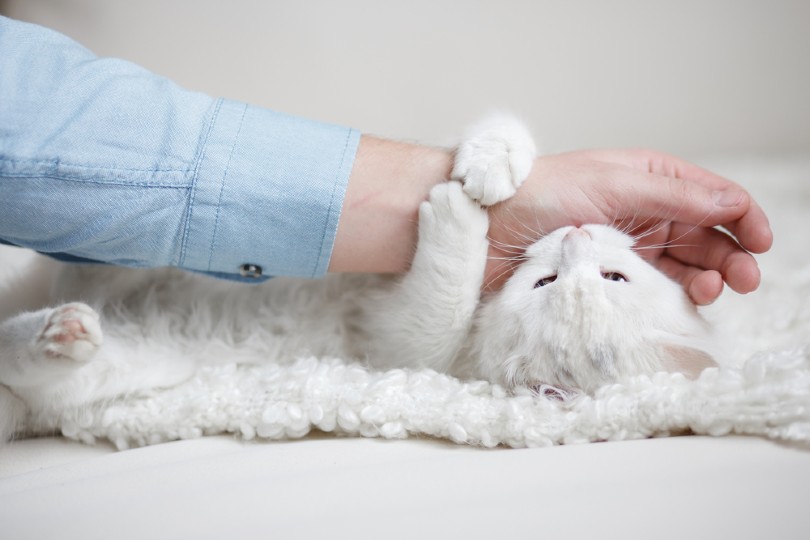
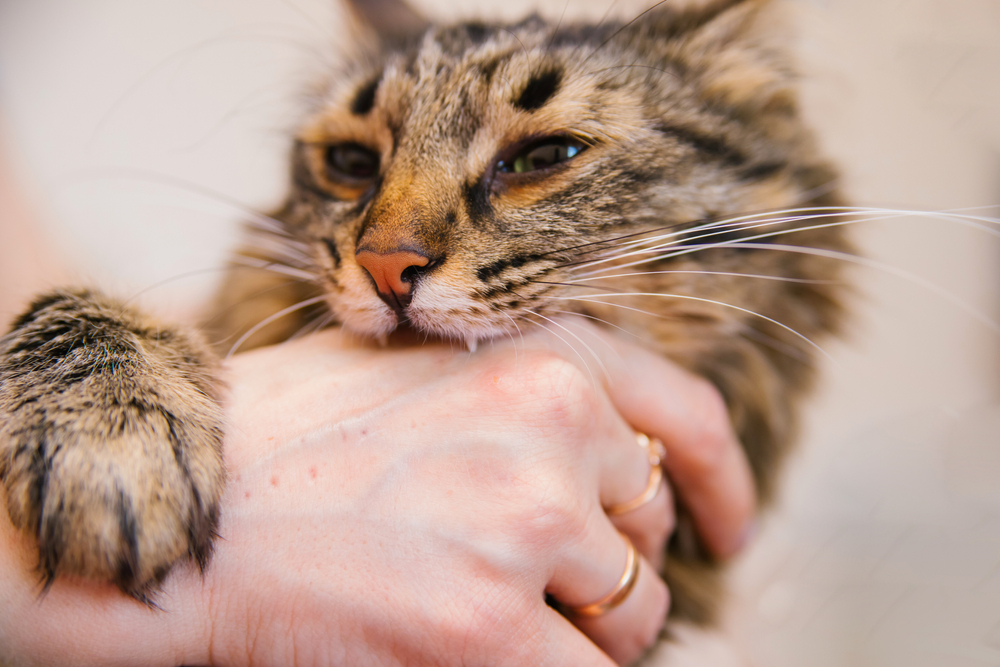
Cats are sweet and cuddly-looking creatures, but that does not mean they cannot have their fair share of behavioral problems. One common behavioral issue among cats is biting.
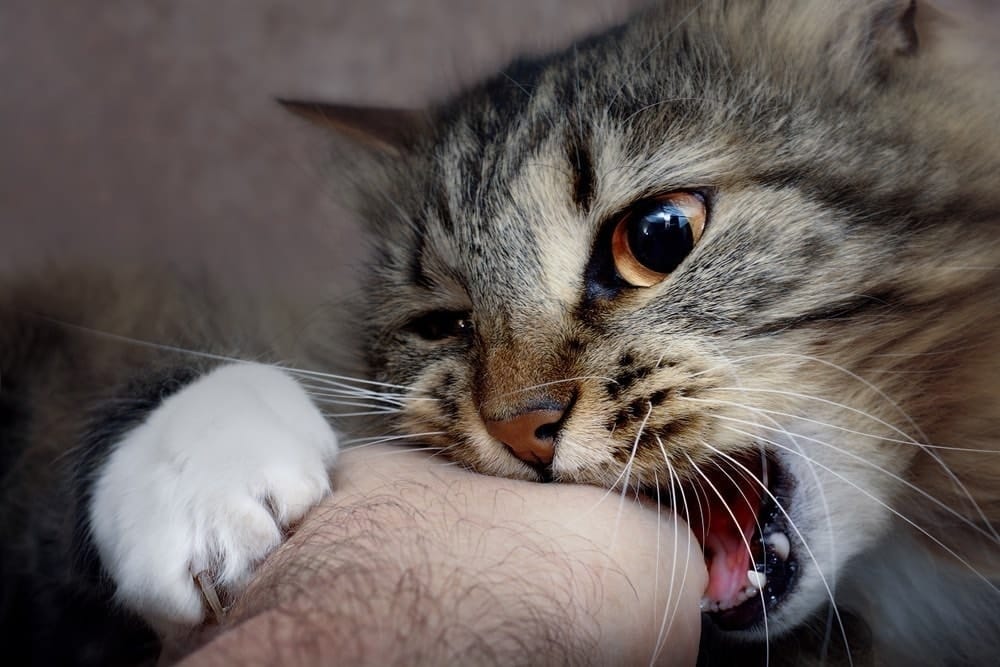
There are many reasons a cat may bite, such as overstimulation, fear, pain, or stress. They may also be biting due to play aggression, which can be cute for kittens and less so for adult cats. But ultimately, biting is a form of communication. Although it is undesirable, your cat is trying to communicate something to you. If you can figure out what that is, you may be able to manage his biting behavior.
There are some steps you can take to prevent your cat from biting. Take a look at the list of tips and tricks we’ve gathered.

How to Discipline a Cat for Biting
1. Establish Calming Routines
Biting can often be a sign of agitation or disturbance. Cats are creatures of comfort and routine, and if your cat does not feel like it has a routine, it may be unsettled and prone to lashing out.
By establishing a soothing routine, you can remove some stress from their life. Basics such as mealtimes and play times should be consistent so that your cat will know when to expect food, excitement, and other moments throughout the day.
Similarly, don’t interrupt your cat’s nap times. Just like humans, cats can be grouchy when their sleeping schedule has been disturbed.

2. Do Not Physically Discipline Your Cat
No matter what your cat does, do not physically punish them. Cats do not respond well to punishment in general, but any physical discipline will irreparably shatter your bond with your cat. They will no longer feel that they can trust you or be safe around you, which will only reinforce their inclinations to lash out, bite, or otherwise be aggressive.
Punishments do not train your cat. Your cat will not understand that the punishment is a result of bad behavior, so you will not teach your cat anything through punishment.
3. Do Not Use a Spray Bottle
As mentioned before, punishments are not effective with cats. That includes spray bottles.
You’ve likely heard that using a spray bottle full of water is a good way to deter your cat from undesirable behavior, but that is not the truth. Your cat likely does not connect their behavior with the consequence of being sprayed with water, so you are not discouraging any behavior. If anything, you are giving your cat more reasons to feel unsettled and feel the need to bite.

4. Redirect Attention
When your cat bites, immediately redirect your attention. Taking action is not always necessary for discipline. At times, ignoring your cat can be far more effective.
If you are petting your cat or playing with them when they bite, remove yourself from the situation right away. Stand up, look away from your cat, and leave the room. This will give your cat time to cool down and will also reinforce the idea that biting leads to a lack of attention.
5. Watch for Signs of Overstimulation
A lot of times, cats bite only after giving us multiple warning signs. When your cat bites, try to look for any preceding subtle signs that they had been feeling overwhelmed. These signs may include a twitching tail, spasming skin, dilated pupils, flattened ears, forward-facing whiskers, and stiffness in the body.
If you notice these signs, disengage from your cat and remove any stressors from their environment, such as loud noises or moving objects. Give them some space to settle down before deciding to approach them again. If you are able to notice these warning signs that your cat is sending you, you can reduce their feelings of overstimulation before they feel the need to bite.

6. Be Aware of Play Aggression
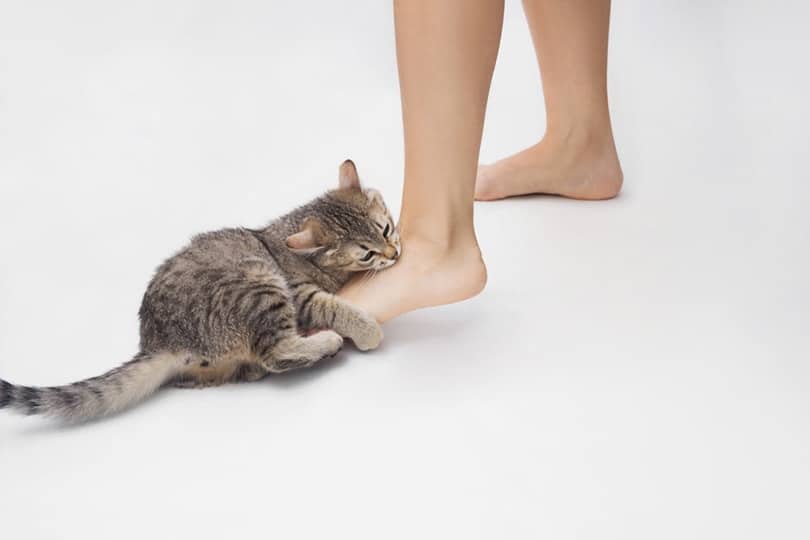
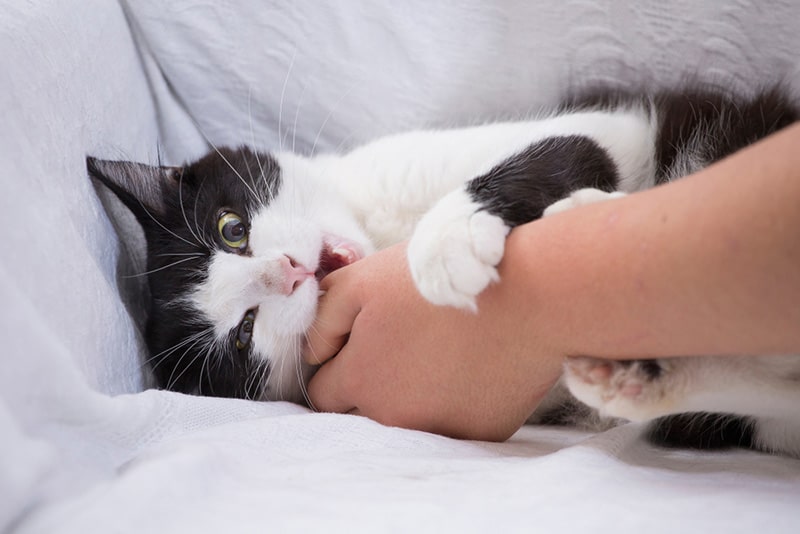
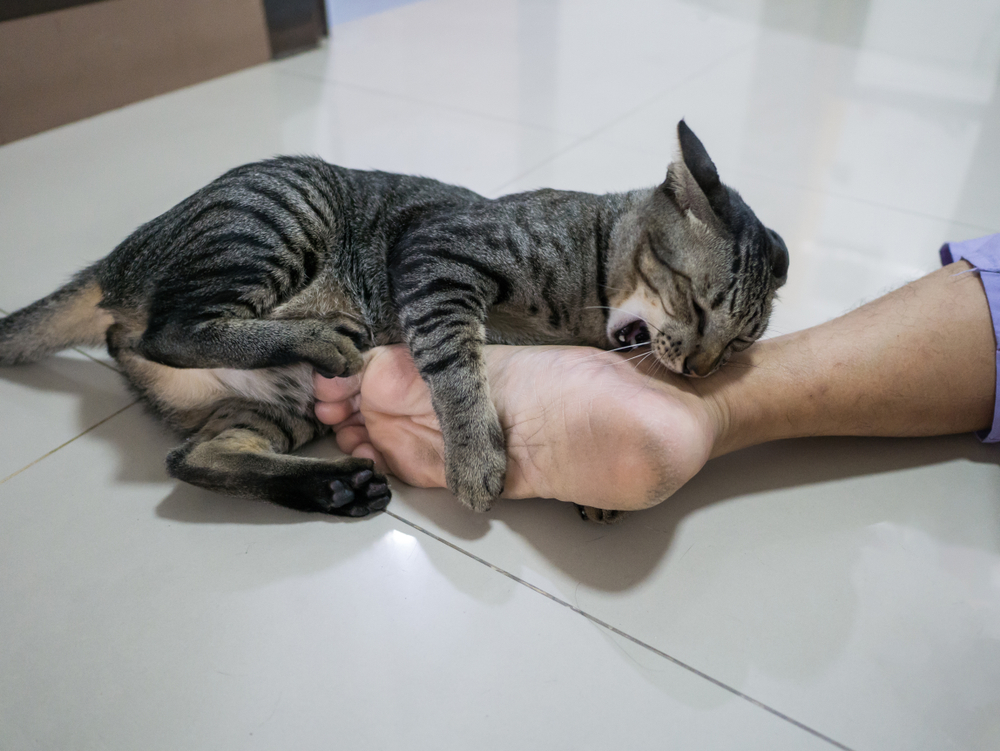
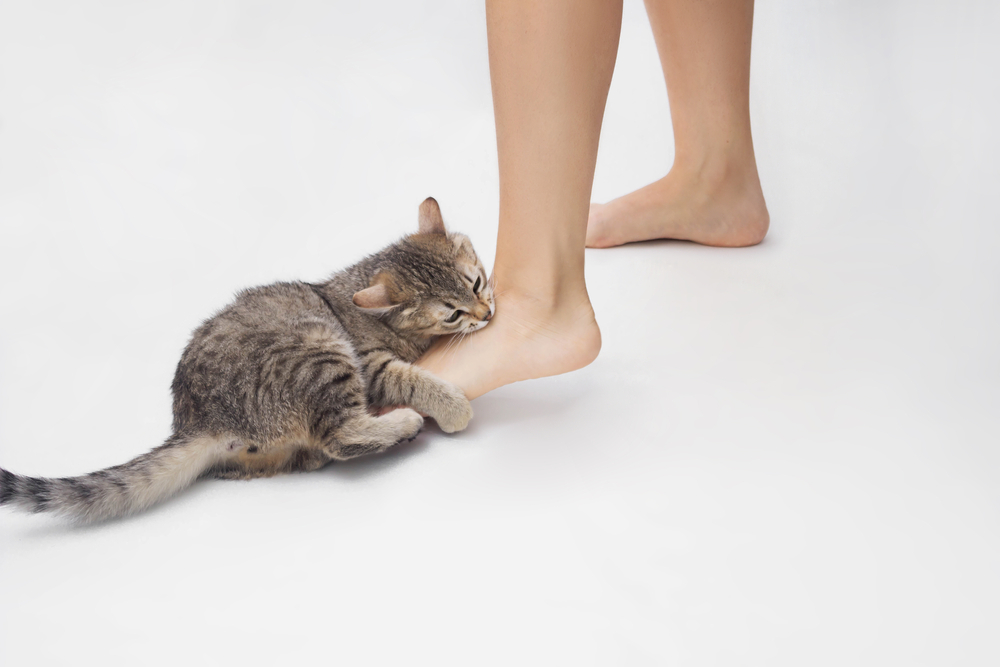
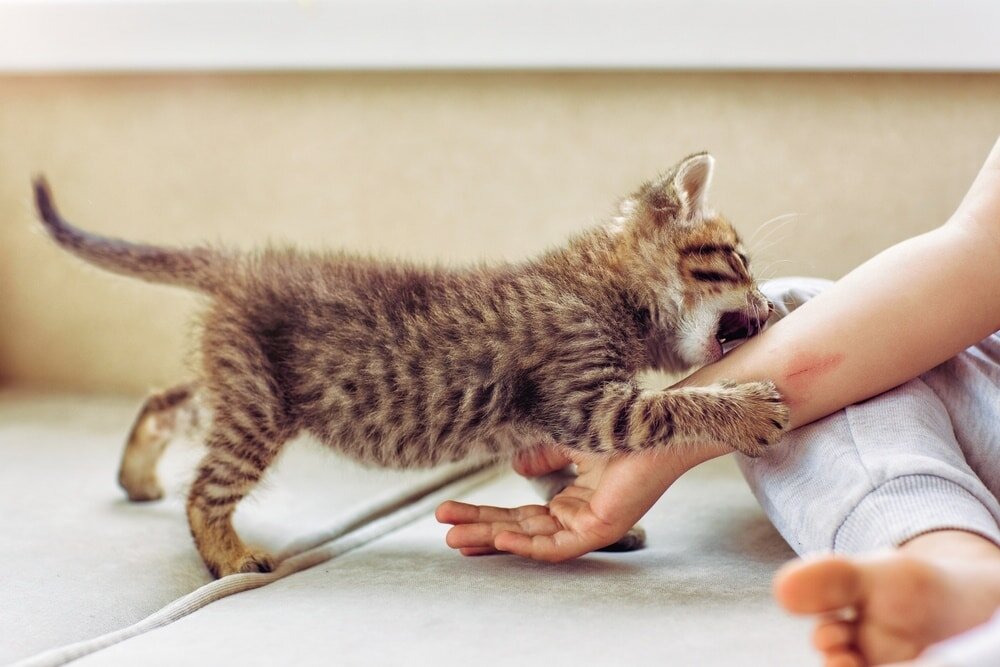
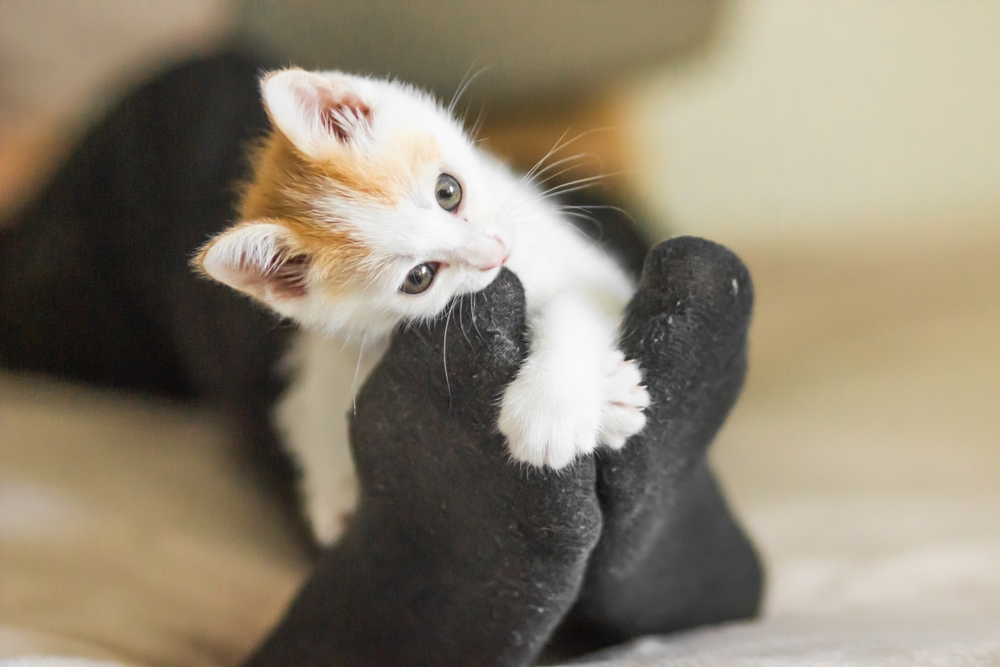
Your cat may be biting due to play aggression. During play aggression, your cat may attack your ankles out of nowhere or latch onto your hand to bite and kick it. Play aggression often develops in cats who were separated from their siblings too early.
While this behavior can be cute in kittens, it is less cute in adult cats. You may feel compelled to indulge your kitten’s play aggression, but that is not advised. Doing so will only serve to reinforce the behavior so that when your kitten grows up, they will continue this habit.
7. Be Aware of What Situations Distress Your Cat
Cats are much more likely to lash out when they are in a stressful situation. The better you know your cat and their stressors, the more you can avoid putting them in situations where they feel overwhelmed.
Sometimes, stressful situations are inevitable, like vet visits. In those instances, it is best to reduce stress in the small things, not necessarily in the event itself. For instance, your cat hates the vet, but they also hate the carrier and the car ride there. If you can help them grow accustomed to either of those things, then the situation will be less stressful. It will still be stressful, of course, but significantly less unpleasant for you and your cat. It can also be very helpful to use feline-specific pheromone sprays or diffusers prior to travel.

8. Rule Out Medical Issues
Before assuming that your cat has a behavioral problem, it is important to rule out potential medical issues. Health complications1 may be the cause of your cat’s aggression, and if you assume that your cat is biting due to behavioral issues, you may entirely miss a grave health concern right under your nose.
If your cat shows any signs of being ill or in pain, reach out to your vet immediately, Also note that cats tend to mask their pain, so you will need to pay close attention to your cat to verify that he is not hiding his pain.
If you're concerned about your cat's health we suggest you speak to a vet.
9. Reinforce Good Behavior
Do not forget to recognize the good things your cat does. While training your cat, always reinforce good behavior. Cats learn best with positive reinforcement, so rewarding your cat for desirable behaviors is the most effective way to teach them not to bite. Reward your cat promptly after the good behavior so they can make the connection between the good behavior and the reward, and this will help to instill the lessons you want to teach.

Conclusion
It can be startling and upsetting to be bitten by your cat, so it is important to curb that behavior as soon as possible. While training your cat, remember that it is likely biting to try and communicate something, such as stress or fear. If you can learn what is causing them to feel so unsettled, you can take great steps toward redirecting your cat’s behavior toward something more desirable.
Featured Image Credit: Vika Hova, Shutterstock

Expert cat care, straight to your inbox
Vet-reviewed advice, behavior tips, and the best of Catster. Free, and you can unsubscribe anytime.
By signing up, you agree to our Terms & Conditions and Privacy & Cookies Policy.
Cats are Jordyn’s passion. Whenever she has the opportunity she loves to learn about animals and share her knowledge with everyone. She is devoted to her sassy tabby cat named Jack and works hard to buy him his favorite treats and toys. Discovering new ways to better care for her cat is always on her to-do list, and she is eager to help pet parents everywhere. In Jordyn's spare time, she loves to write, read, and take long walks. She has a creative spirit, which often helps her to come up with funny cat names.
Join the conversation
Ask a question, share your story, or send private feedback.