Get

In Your Inbox

Catster is reader-supported. When you buy via links on our site, we may earn an affiliate commission at no cost to you. Learn more.

Could Cats Survive in a World Without Humans? Feline Independency Facts

Share

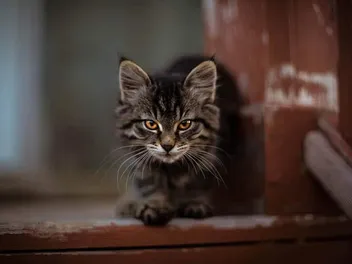
feral cat with ear tip clipped

Cats are highly independent pets that seem to enjoy being around humans, even if they don’t “need” us the way dogs and other pets do.

That’s because, unlike other domesticated pets, cats are more “tame” than truly domesticated. If humans died off tomorrow, most of the cat population would find a way to survive, including your sweet housecat.

divider 3 paws

The Taming of the Cat

When we think of household pets, cats and dogs often come to mind. After all, these are two of the most popular pets in the USA and around the world.

But cats aren’t domesticated in the way dogs are. The latter spent over 30,000 years alongside humans, and though they’re a subspecies of Canis lupus, they show distinct differences from wolves that are the result of their time being shaped by humans.

The same can be said for other animals that have shared lives with humans, but not cats. Their domestication1 is different from other pets and livestock, and they haven’t changed much from their ancestors after spending millennia with humans.

What does that mean, exactly? Cats are more accurately classified as tame, and maybe they don’t need us as much as we need them.

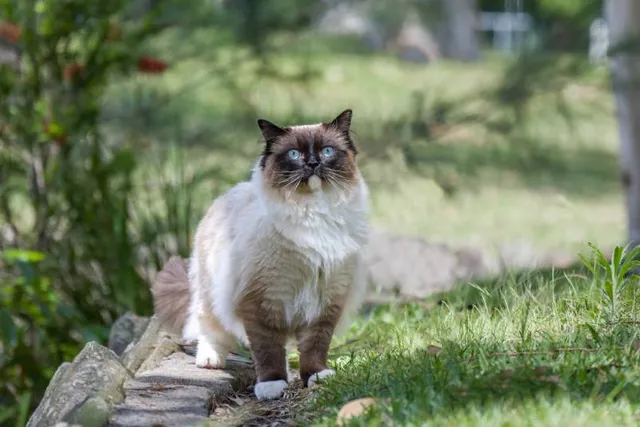
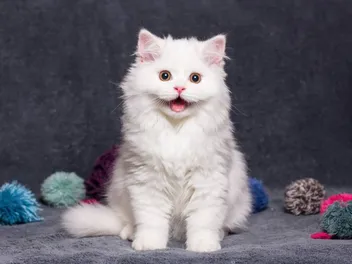
cameo persian cat on grass
Image Credit: slowmotiongli, Shutterstock

divider 3 paws

Can Cats Survive on Their Own?

Cats can certainly enjoy time with their owners. In fact, some breeds are known for being more affectionate and attached to their chosen person. But affection and loyalty don’t equal dependence.

One could argue that dogs need humans for their care. They can survive in feral packs and hunt, but dogs are longer-lived and seem happier in the company of humans. Cats, on the other hand, choose to spend time with humans when they’re perfectly capable of thriving on their own.

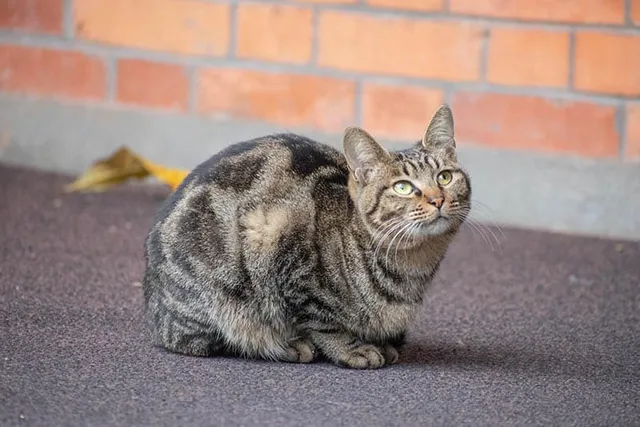
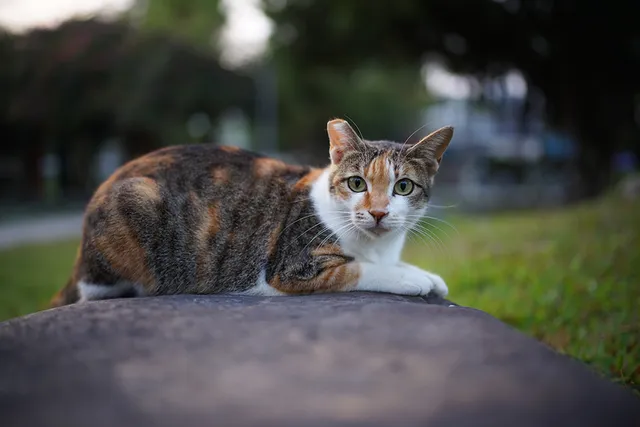
Take, for example, stray and feral cats. There are millions of unowned cats all over the world, some of which were once owned by a human and others that were a product of generations of feral cats. These cats are basically wild.

There’s a key difference between strays and ferals, however. The former may have been part of generations of pet cats and accustomed to receiving care from humans. These cats often count on community caregivers for food and shelter.

The latter, truly feral cats, are quite different. These cats were never pets, weren’t born as pets, in homes, or in shelters, and never relied on humans for their basic needs. They are truly independent, rather than having a strong independent streak like some house cats and are likely to thrive if humans vanished from the earth one day.

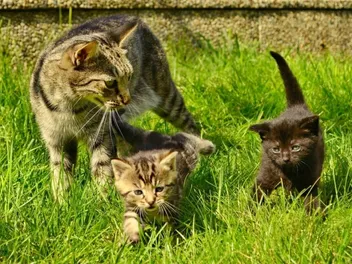
stray cat_Dimitris Vetsikas, Pixabay
Image Credit: Dimitris Vetsikas, Pixabay

How Would Cats Survive Without Humans?

Feral cats are basically wild, which means they’re living in total freedom like other wildlife. They share other traits with wild animals as well, such as a short lifespan and a rough life.

Living on the streets, cats have short lives and often succumb to injuries from human activity or predators, such as dogs, coyotes, and raptors. They may also suffer from malnutrition or starvation if they can’t find prey or have to compete with stronger cats and other predators for the same food sources.

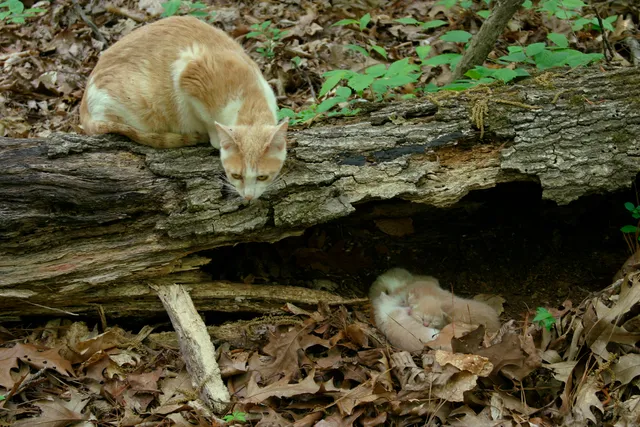
Still, these cats manage to survive long enough to reproduce, which is how feral cats became an invasive species. Even if they only live a few years, feral cats can produce up to 36 kittens in multiple litters each year.

If these kittens reach sexual maturity, they also produce litters leading to a boom of feral cats to sustain the species. Though it may take a few generations, cats have already proven that they can survive without human intervention.

divider 3 paws

Conclusion

At their core, cats are solitary survivalists. Some house cats would struggle to adjust after relying on owners, but if humans disappeared, they’d find a way to continue on without care and support.

It’s heartbreaking, we know! But cats are survivors.


Featured Image Credit: Krishna777, Shutterstock

Want content like this delivered to you?

Sign Up For Our Newsletter

News, insights, expert advice, and everything cat

* By submitting, you agree to our Terms & Conditions and Privacy & Cookies Policy.


How useful was this post?

Click on a star to rate (you can leave written feedback after clicking submit)

Help us improve Catster for pet parents!

Your feedback really matters.

What did you like about this post? Also how can we improve it?

Join the conversation

Leave a Reply

You’re very welcome to leave a comment or question. Please know that all comments must meet our community guidelines, and your email address will NOT be published. Let’s have a positive and constructive conversation.


Catster's Digital Magazine is Back!

Vet-approved health & behavior advice

Real cat stories & community features

Chatting About the Importance of Spaying/Neutering, Cat Retail Shopping Ban & Red-Level Storms | Chatty Cattys, Episode 30

In this episode of Catster’s Chatty Cattys podcast, Nicole and Dr. Karyn are celebrating a major legal win for pets before diving into...

Is Your Cat Happy? Here’s How You Can Tell

Cats have a reputation for being indifferent, even inscrutable. But despite their seemingly ambivalent appearance, cats experience many emotions, including happiness, and they...

Human Brains Age Like Cats – New Study Debunks the 7-Year Rule

If you’ve ever caught your senior cat staring blankly at a wall, wandering the halls at 3 am, calling out for no clear...

Chatting with Devin About Here! Have a Kitten, Fostering, & Why Two Are Better Than One | Chatty Cattys, Episode 29

In this episode of Catster’s Chatty Cattys podcast, Nicole & Dr. Karyn sit down with Devin, the founder and one-woman show behind “Here...

More related

Is Weed Killer Safe for Cats? Vet-Reviewed Facts & FAQ

Weed killers are ideal for keeping your lawn pristine, but are they safe for the kitties passing through? The answer is that it...

10 Sounds Cats Love the Most & Why They Like Them (Vet-Verified)

Cats are able to hear frequencies up to 85,000 Hertz (Hz), while humans can only hear frequencies between about 20 and 20,000 Hz1....

Can You Catch a Cold From a Cat? Vet-Verified Facts & Info

Once cold and flu season hits, most people find themselves feeling pretty crummy at some point. As soon as one person in the...

Is My Cat Pregnant? 9 Vet-Approved Signs to Look For

Have you noticed some unusual behavioral or physical changes in your female cat? You’ve ruled out all potential options, but have you thought...

Keep reading

Cat Ear Language: What Feline Body Language Can Tell You (With Examples)

If you’ve ever spent any time observing your cat’s ears, you’ll already know that you can detect your cat’s feelings by how their ears are positioned. Cats can express many emotions and different moods through their ears, and when taken...

close up ragamuffin beside the window

Why Do Cats Like Rubber Bands? 4 Vet-Approved Reasons

Cats are peculiar beings, and any cat owner knows that cats will entertain themselves with something simple, such as a milk ring, bottle cap, empty box, piece of paper, or even rubber bands. Even if you buy your cat plenty...

rubber bands_evondue_Pixabay

Why Do Cats Like to Be Pet While Eating? 6 Vet-Reviewed Reasons

Cats may have behaviors that are almost “expected” of them, but mealtimes can bring out unusual habits. Some cats love to eat alone, some prefer eating from a raised position, and others want the company of their owners when they...

Two cats being fed cat food from a tin can

Does Laser Therapy for Cats Help With Pain? Vet-Reviewed Facts & FAQ

If your cat experiences persistent pain or discomfort from arthritis, muscular injuries, or other wounds, prescribed medicines are a natural solution. Unfortunately, some cats aren’t compliant when it comes to taking pills, but leaving them in pain is not an...

A vet gives laser therapy to a cat

How To Read a Cat’s Body Language: 5 Vet-Reviewed Moods & Signals

While cats can’t use words to tell us how they’re feeling, most are expert communicators who rely on different types of vocalization, body language, and chemical cues to tell humans and other cats how they feel. Cats use their tails,...

A cat looking at something far away

Hookworms in Cats: Vet Reviewed Causes, Signs & Care

Your cat has just been diagnosed with hookworms, and you’re curious about where they got them, how you are supposed to care for your cat, and how to prevent them from getting hookworms again in the future. Well, hookworms are...

Abyssinian cat check by vet

How Far Away Can Cats Smell Catnip? Vet-Approved Facts & FAQ

Compared to humans, cats have a superior sense of smell, sometimes able to detect scents as far as 1.5 to 4 miles away . In fact, a cat’s sense of smell is 14 times more accurate than our own. However,...

cat smelling catnip

6 Best Fresh Cat Food Delivery Services in the UK in 2026 – Reviews & Top Picks

Most cat foods on supermarket shelves, whether they are dry or wet, tend to be processed and can contain artificial and less-than-ideal ingredients. But preparing fresh food every day for your cat, ensuring that you handle raw ingredients safely, and...

black and white cat eating food from a stainless bowl

Love Cats? So Do We! Join the Catster Community

Stay informed with expert pet care insights delivered straight to your inbox! Discover professional guidance on animal behavior, feeding tips, trusted product picks, and much more.


Sign up for the Catster Email Newsletter

Stay informed with expert pet care insights delivered straight to your inbox! Discover professional guidance on animal behavior, feeding tips, trusted product picks, and much more.