Can Cats Eat Peppermint? Vet-Reviewed Facts & Precautions


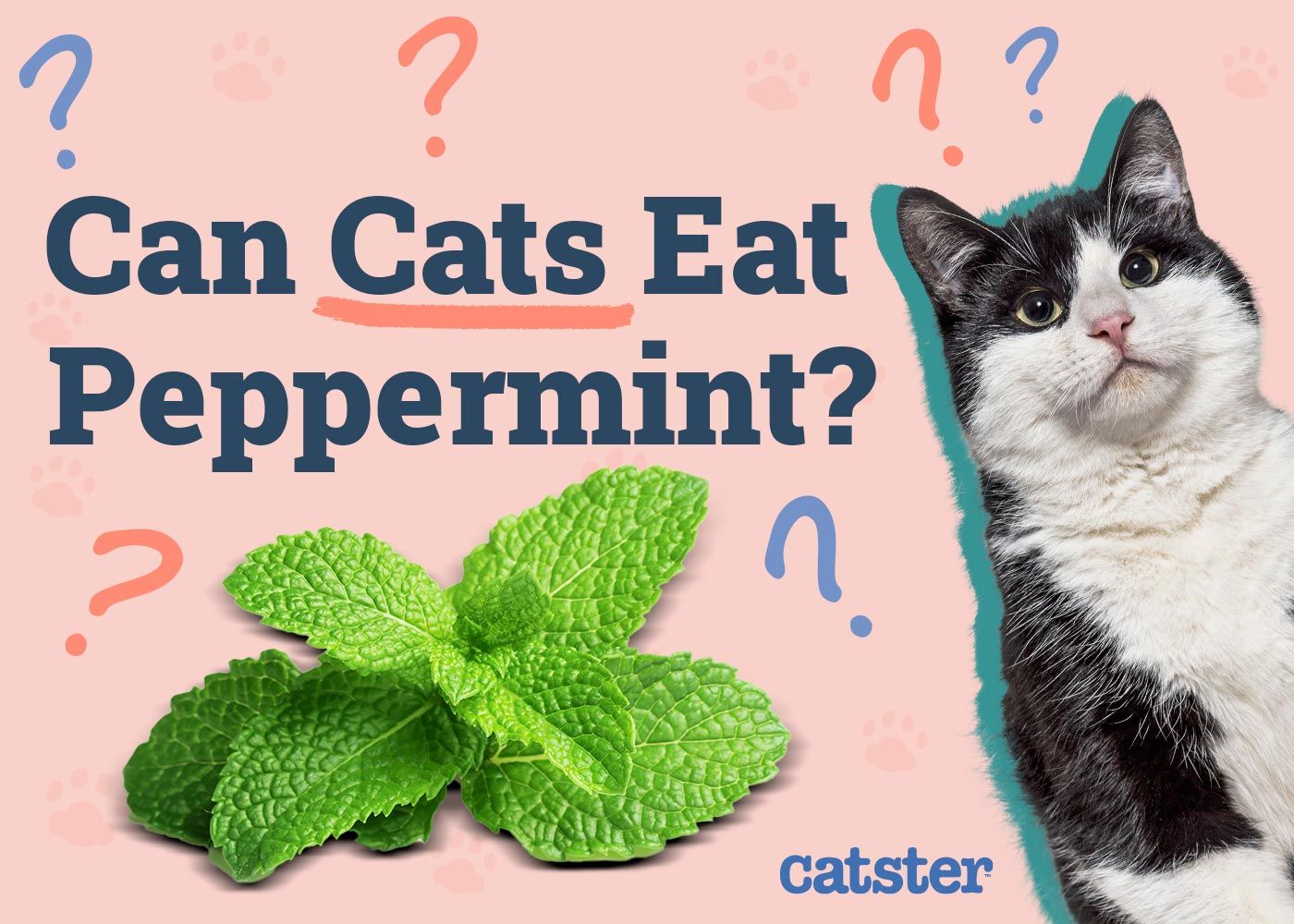
Peppermint is a common ingredient in many things, from food to skincare. It’s not unlikely that your cat will come into contact with peppermint at some point in their life, and if the item seems tasty enough, they might give it a taste. Should you be concerned if your cat eats peppermint, though? Is it safe for cats? Sadly, peppermint is not recommended for cats. Let's look at the details.

Can Cats Eat Peppermint?
Peppermint is not recommended to be fed to cats. In fact, most types of mint plants aren’t recommended for cats, with the exception of catnip, which is a mint cousin. Although it is unlikely to cause issues in small quantities, peppermint leaves contain menthone and methyl salicylate, both of which can lead to digestive upset. Some cats are sensitive to mint and may have a skin reaction from coming into contact with the leaves.
Salicylate is toxic to cats in large quantities, so if your cat eats a couple of mint leaves or something containing peppermint, then there likely won’t be a major issue. However, if your cat makes a habit of snacking on a mint plant every day, they can suffer serious medical issues, including liver and kidney problems.
Peppermint oil is highly toxic to cats, so this essential oil should always be avoided in homes with cats. Don’t diffuse it or use it topically on or around your cat.

Should I Be Concerned if My Cat Eats Peppermint?
This depends entirely on what your cat ate and how much of it they ate. For example, peppermint chewing gum commonly contains xylitol, which is highly toxic to dogs. In cats, the "xylitol jury" is still out, but at present, it should be treated as toxic as well until proven otherwise. Many peppermint foods are also often paired with chocolate, which your cat should not eat.
If your cat consumes a non-food substance containing peppermint, like lotion, then you should contact a pet poison helpline with a list of the ingredients in the substance. If your cat consumes a couple of peppermint leaves, keep an eye out for digestive problems, skin irritation, and poor balance. Mild digestive upset and skin irritation aren’t much of a concern, but any moderate to severe signs of toxicity should be evaluated by a veterinarian.
As previously mentioned, peppermint oil is highly toxic to cats. Under no circumstances should your cat be allowed access to peppermint oil or peppermint extract. Both of these can be exceptionally dangerous for your cat, even leading to severe illness or death. If you diffuse peppermint oil in your home, it’s ideal to contact your vet to ensure your cat doesn’t need to be seen.
Conclusion
While peppermint plant leaves are not likely to cause issues for your cat in small quantities, there are concerns associated with peppermint. It contains compounds that are toxic to cats, especially in large quantities. Don’t allow your cat access to peppermint plants, oils, or extracts.
Some cats may not be attracted to the strong scent of mint, while others may seek it out because of the nepetalactone that it contains. This is the chemical that makes catnip so attractive to cats, and while peppermint only has a small amount of this chemical, all plants in the mint family contain some level of nepetalactone.
Sources
Featured Photo Credit: congerdesign, Pixabay
Expert cat care, straight to your inbox
News, insights, and useful advice, delivered to you.

No spam — unsubscribe anytime.
By signing up, you agree to our Terms & Conditions and Privacy & Cookies Policy.
How useful was this post?
Click a star to rate. You can leave written feedback afterwards. (We read all feedback.)
Brooke Billingsley, a former veterinary assistant for nine years, became a nurse in 2013. She lives in Arkansas with her boyfriend of five years, surrounded by her beloved pets: three dogs, two cats, five fish, and two snails. Brooke has a soft spot for special needs animals, caring for a three-legged senior dog and a widely known cat with acromegaly and cerebellar hypoplasia. She has developed a keen interest in fish keeping and is always learning how to provide the best environment for her aquatic pets. In addition to her passion for animals, Brooke enjoys gardening and maintains a vegetable garden during the summer. She stays active with yoga and received her 200-hour yoga teacher certification in 2020. Brooke also hosts a podcast that delves into folklore and myth, dedicating her spare time to research and writing. She embraces the philosophy that every day is an opportunity for learning and growth, continually working to acquire new skills and knowledge.