7 Best Natural Flea Treatments for Cats in 2026 - Reviews & Top Picks

Many cat owners face an ongoing battle against their tiny foes: fleas. It seems that no matter how careful we are, these little critters always seem to find a way into our houses. Besides being annoying, fleas can impact your cat’s health, so it’s important to take steps to protect your furry friend.
Even if your cat lives indoors, they can still get fleas! Trips to the vet or visitors from a flea-infested house can cause your cat to pick up fleas. While flea treatments using synthetic chemicals are effective, you might be looking for a more natural solution. The good news is that there is plenty of natural flea treatments to choose from. These use a blend of plant-based ingredients, like essential oils, to help deter or kill fleas.
If you’re investing money in a product, you want to know that it works, and many natural flea treatments end up promising more than they can deliver. But don’t worry! Our reviews have rounded up the best and most effective natural flea treatments for you to choose from.
In this article

A Quick Comparison of Our Favorites in 2026
| Rating | Image | Product | Details | |
|---|---|---|---|---|
Best Overall
 |

|
Pet Naturals of Vermont Flea + Tick Spray |
|
Check Price |
Best Value
 |

|
TevraPet Naturals Flea & Tick Topical for Cats |
|
Check Price |
Premium Choice
 |

|
Wondercide Spot On Peppermint Flea & Tick Treatment |
|
Check Price |

|
Earth Animal Nature’s Protection Flea & Tick Herbal Spot-On |
|
Check Price | |

|
Alzoo Plant-Based Flea & Tick Spot-On for Cats |
|
Check Price |
The 7 Best Natural Flea Treatments for Cats
1. Pet Naturals of Vermont Flea + Tick Spray - Best Overall

If you’re looking for the best overall natural flea treatment for cats, then we highly recommend the Pet Naturals of Vermont Flea + Tick Spray. The ingredients include a blend of oils that have been used by the indigenous populations of the Amazon rainforest for centuries. This blend includes lemongrass oil, cinnamon oil, castor oil, and sesame oil. These are blended with purified water and vitamin E as a preservative to create an easy-to-use spray.
While the strong smell of this spray is what deters ticks and fleas, many reviewers enjoy the fresh lemony scent. Unlike flea and tick repellents that use harsh synthetic chemicals, this spray is gentle enough to be used on sensitive kittens. All you need to do is spray this generously over your cat or kitten’s fur, making sure to also cover their stomach and legs. Use your hands to work it into their coat. You can reapply this as often as needed, but every 2-3 days is recommended. Because it’s not waterproof, you’ll need to remember to reapply if your cat happens to get wet.
Pros
- No synthetic chemicals
- Safe for kittens
- Pleasant scent
- Veterinarian formulated
- Made in the U.S.A.
Cons
- Not waterproof
2. TevraPet Naturals Flea & Tick Topical for Cats - Best Value

TevraPet Naturals Flea & Tick Topical is the best natural flea treatment for cats for the money. It is a naturally inspired flea-prevention treatment formulated to repel fleas, ticks, and mosquitoes using essential oil-based ingredients. Designed as a monthly topical treatment, it aims to provide ongoing pest protection without relying entirely on harsher chemical insecticides. The formula is applied directly to the skin and spreads through the coat, creating a protective barrier against pests.
Many cat owners choose this option as a gentler alternative to routine flea management, particularly for indoor cats or households focused on natural care products. The lightweight topical formula is intended to dry quickly and remain easy to apply during monthly maintenance. Like many natural flea products, it may work best when paired with regular cleaning and environmental flea prevention around the home.
Pros
- Natural-inspired flea and tick protection
- Monthly topical application
- Easy to apply
- May suit cats sensitive to stronger chemicals
Cons
- May be less effective in severe infestations
- Essential oil scent may bother some cats
3. Wondercide Spot On Peppermint Flea & Tick Treatment - Premium Choice

Wondercide Spot On Peppermint Flea & Tick Treatment is a plant-powered topical solution designed to help repel and kill fleas and ticks while using naturally derived ingredients, and is our premium choice for the best natural flea treatment for cats. Infused with peppermint oil, the formula is intended to create a protective barrier on your cat’s skin and coat while also offering a fresher scent than some traditional flea medications. The spot-on application is designed for convenience, allowing pet owners to apply it directly to the skin as part of a monthly flea-prevention routine.
Wondercide products are often chosen by pet owners looking to reduce exposure to conventional pesticides while still maintaining regular pest protection. The formula may be especially appealing to indoor cats or to lower-risk flea environments, where owners prefer a more natural approach to prevention. Consistent use alongside household flea management practices can help improve overall effectiveness.
Pros
- Plant-powered flea and tick protection
- Peppermint scent helps freshen the coat
- Easy monthly spot-on application
- Avoids harsher traditional pesticides
Cons
- Peppermint scent may irritate sensitive cats
- May require additional environmental flea control
4. Earth Animal Nature’s Protection Flea & Tick Herbal Spot-On

Earth Animal Nature’s Protection Flea & Tick Herbal Spot-On is next on our list. It is a plant-based topical treatment designed to help repel fleas, ticks, and mosquitoes without relying on traditional chemical pesticides. Made with a blend of essential oils and herbal ingredients, this formula is intended for pet owners seeking a more natural approach to flea prevention. The topical application is designed to spread through your cat’s coat and skin oils, creating a scent barrier that may discourage pests from attaching. Many pet owners appreciate that it avoids harsher synthetic ingredients commonly found in conventional flea treatments, making it appealing for cats with sensitivities or households focused on natural products.
The formula is designed for routine use as part of an overall flea prevention plan, especially in lower-risk environments. Because natural flea preventatives may work differently than chemical treatments, consistent application and environmental flea control are often important for the best results.
Pros
- Plant-based flea and tick prevention
- Avoids traditional chemical pesticides
- Easy topical application
- Made with herbal ingredients
Cons
- May require more frequent application
- May not be sufficient for severe infestations
5. Alzoo Plant-Based Flea & Tick Spot-On for Cats

Alzoo Plant-Based Flea & Tick Spot-On for Cats is a botanical flea prevention treatment formulated with plant-derived active ingredients to help repel fleas, ticks, and mosquitoes. Designed as an alternative to conventional chemical-heavy products, the formula uses essential oil blends and natural extracts to provide ongoing pest protection through topical application. The treatment is applied directly to the skin and is intended to distribute through the coat to help discourage pests from attaching.
Many pet owners appreciate the gentler ingredient profile and the absence of stronger synthetic insecticides, especially for cats living primarily indoors. The formula is designed for regular monthly use and may work best when paired with consistent environmental cleaning and flea prevention practices around the home. Its lightweight application process also makes it convenient for routine flea maintenance without requiring sprays or oral medications.
Pros
- Plant-based flea and tick protection
- Monthly topical application
- Uses botanical ingredients
- Suitable for routine prevention use
Cons
- Natural formulas may act more slowly
- May not be sufficient for severe infestations
6. Only Natural Pet Squeeze-On Flea Treatment

If you’re looking for a premium natural flea treatment, we highly recommend the Only Natural Pet Squeeze-On Flea Treatment. This squeeze-on treatment includes a blend of botanical essential oils, including peppermint, thyme, and geranium. These are combined with almond oil, which creates a soluble base to spread the oils throughout your cat’s coat. This pack contains three squeeze-on tubes, each of which provides up to 4 weeks of protection.
This is effective against adult fleas, as well as ticks and mosquitoes. It doesn’t affect flea eggs or larvae, though, so if you need to clear an infestation, you’ll need separate products to deal with those. It’s also a good idea to treat your cat’s bedding, carpets, and soft furnishings at the same time. The smell is quite strong, which some reviewers like but their cats didn’t enjoy. It’s also a little greasy, but you can use a brush to distribute the oils through your cat’s coat.
Pros
- Easy to apply
- Each tube lasts for 4 weeks
- Also effective against ticks and mosquitoes
- Pleasant smell
Cons
- Not suitable for kittens
- Expensive
7. Natural Care Flea and Tick Spray

Another great option for natural flea and tick spray is the Natural Care Flea and Tick Spray. This spray uses the power of peppermint oil and clove extract (eugenol) to kill fleas, flea eggs, and ticks on contact. Since it is a spray, you can easily spray it on your cat’s bedding and on your furniture and other fabrics.
It can also be sprayed directly on cats as long as they are 12 weeks and older, but we always recommend consulting your veterinarian first since cats lick themselves when grooming and peppermint can be toxic to cats when ingested. This product also smells great and doesn’t leave behind a stain.
It’s affordable considering that you get 14 ounces of product, but it may not be effective for all cats.
Pros
- Pleasant scent
- Won’t leave a stain
- Can use on furniture and fabrics
Cons
- Peppermint is toxic to cats
- May not be effective for all cats
8. Wondercide Flea, Tick, and Mosquito Spray

As the name suggests, Wondercide Spray not only helps to kill and repel fleas and ticks, but also mosquitos! This spray also comes in four scent varieties, but the active ingredient in all of them is cedarwood oil. The regular cedarwood oil scent is the one we recommend the most, though, because lemongrass and peppermint can be toxic to cats when ingested, but cedar oil is safer. There is also a rosemary scent that is safer for cats as well.
It is a little more expensive than some natural sprays, but you can buy this product in four different sizes in order to try a smaller one to make sure it will work for you before you shell out a lot of money. This product can be sprayed on furniture, carpets and rugs, and pet bedding, as well as directly on your pets, but again, we recommend asking your vet before using this product directly on your pet. It can also be used on people, which is great if you have little kids around the house.
Pros
- Different scent and size varieties
- Repels mosquitos as well as fleas and ticks
- Can be used on pets, furniture, and people
Cons
- Pricey
- Some scents are more dangerous for cats
9. Beloved Pets LY-84 Natural Flea Treatment

The Beloved Pets LY-84 Natural Flea Treatment contains a blend of five different essential oils: rosemary, citronella, geranium, lemongrass, and soybean. These help repel fleas and ticks and soothe irritation and itching. This pack contains three spot-on pipettes, all of which offer protection for up to 1 month. It’s easy to apply, but take care to do so in a well-ventilated area, as reviewers do comment that the liquid is incredibly strong smelling.
We can’t find any information as to whether this spot-on flea treatment is waterproof, so you may want to reapply it after your cat has had a bath or otherwise got wet, just to be on the safe side. This treatment also doesn’t affect flea eggs or larvae, so if your cat has a serious infestation, you’ll need to use it alongside another product designed to target those.
Pros
- Each pipette lasts for 1 month
- Suitable for kittens
Cons
- Does not affect flea eggs or larvae
- Strong smelling
10. Vet’s Best Cat Flea & Tick Gentle-Mist Spray

The Vet’s Best Cat Flea & Tick Gentle-Mist Spray is a great choice if your cat doesn’t like the spray from a traditional-style spray bottle. This mist spray will gently coat your cat’s coat, and they’ll hardly even notice it. It can also be used on your cat’s bedding, soft furnishing, carpets, and rugs. This mist contains a blend of the active ingredients of peppermint oil, eugenol, and sodium lauryl sulfate. It also contains the inactive ingredients of water and sodium benzoate.
Unlike many of the natural flea treatments available on the market, this one does kill flea eggs. It’s also made in the U.S.A. with certified ingredients. One downside is that it doesn’t last as long as a traditional spray bottle, so on a cost-per-application basis, it ends up being expensive.
Pros
- Suitable for nervous cats
- Works on adult fleas and flea eggs
- Also repels mosquitoes and ticks
Cons
- Doesn’t affect flea larvae
- Not suitable for kittens
- Doesn’t last long
Buyer's Guide: Finding the Best Natural Flea Treatments for Cats
All cats are susceptible to picking up fleas, even cats that are kept indoors! Besides causing skin irritation from their bites, fleas can also cause bacterial infections, allergic dermatitis, and even tapeworm infestations.
Flea infestations are dangerous for kittens, as the blood loss caused by multiple bites can quickly lead to them developing anemia. Kittens also don’t have such a robust immune system as adult cats, so they can suffer from other health complications. Many flea treatments that use synthetic chemicals aren’t recommended for kittens, so natural alternatives are a better option.
Before buying any new flea treatment, especially for kittens, it’s worth asking your vet so they can advise you on dosage.
Is Natural Better Than Synthetic?
Synthetic flea treatments can contain insecticides, and others can contain insect growth regulators. Both are potent chemicals that can cause a range of side effects.
If you’d prefer not to use synthetic treatments, you may want to look at natural flea treatments instead.
What to Look for in a Natural Flea Treatment
When you’re looking for the best natural flea treatment for your cat or kitten, there are a few things to look for:
What Do Natural Flea Repellents Contain?
There is a range of different plant-based chemicals used in natural flea treatments. These are usually essential oils and include:
- Geraniol
- Clove oil
- Lemongrass
- Sesame oil
- Cedar oil
- Castor oil
- Cinnamon oil
- Peppermint oil
- Thyme oil
- Wintergreen oil
- Rosemary oil
Certain essential oils are toxic to cats, so we wouldn’t recommend trying to blend your own flea treatment using essential oils. Choose the wrong oil or too high a concentration, and it could trigger a toxic reaction, and your cat may need extensive veterinary treatment.
Some of the essential oils used in natural flea treatments can be found on the Pet Poison Helpline’s list of poisonous substances, but the concentrations used have been extensively tested to cause no harm. In fact, these formulations are often veterinary approved. If you’re unsure, though, always ask your vet for advice about the treatment that you’re looking at purchasing.
How Do I Know if My Cat Has Fleas?
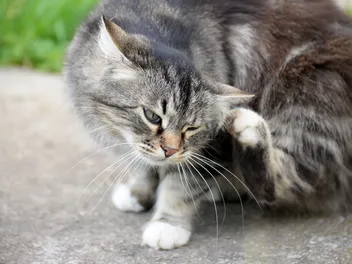
You may see your cat scratching or patches of red and dry irritated skin. You might also notice “flea dirt,” which are small black spots on the skin that do look like dirt. These may be clustered under your cat’s chin or spread throughout their fur. This is actually flea poop and contains blood cells that have been digested and passed.
If you’re not sure if it’s flea dirt or plain old garden dirt, place a few of the spots on a damp piece of paper towel. If the paper towel under the spots turns red, you’ve got a flea infestation on your hands.
Remember to Treat Your Home Too
Once you’ve bought your chosen natural flea treatment and put it on your cat, don’t forget to treat your home as well! Flea eggs can lie dormant for years, so you may find that your cat keeps getting re-infested with fleas unless you deal with the root cause. Flea eggs can collect in your cat’s bedding, carpets, soft furnishings, and anywhere else that your cat goes!
Make sure to wash all fabrics on a hot wash. Regular vacuuming can also help remove flea eggs or larvae from carpets and soft furnishings. You can also buy natural flea treatments that can be sprayed onto things that can’t be washed, like carpets. Get into the habit of regularly treating your house at the same time that you treat your cat, to keep fleas to an absolute minimum.

Our Cats Best Natural Flea Treatments Selection Process
Catster’s dedicated team of writers and editors collaborate with expert veterinarians, considering a wide range of factors when selecting the Best Natural Flea Treatments for Cats. These parameters include customer reviews, brand reputation, veterinary experience, and in some cases, hands-on testing. Of course, our cats have a say in the process, too! We strive to select and review the highest-quality products available, to help you choose the best possible product and make the most informed decision for your and your cat’s needs.
Why Trust Catster?
Catster has been a trusted online brand since 2001, so we know a thing or two about Natural Flea Treatments for Cats. We’re a team of cat-loving writers, editors, and veterinarians dedicated to helping you make the most informed decision for your feline. We deeply believe in providing the best information for cat owners to help their cats live their best life possible. We look at reviews from the most trusted sources available, and this, combined with our veterinary team’s experience and expertise, helps us gather the best options on the market. Our team is invested in the welfare and health of cats around the world, and believe that expert knowledge is one of the best ways to achieve this.
Conclusion
As the best overall natural flea treatment on the market today, the Pet Naturals of Vermont Flea + Tick Spray is a clear winner. It contains a blend of lemongrass oil, cinnamon oil, castor oil, and sesame oil, all designed to repel fleas and keep your cat feeling great.
If value for money is your number-one priority, then the TevraPet Naturals Flea & Tick Topical won’t disappoint. This spray contains a blend of cedar, cinnamon, and clove oils. Besides doing a great job of deterring adult fleas on your cat, it can also be used to freshen up soft furnishings, pet bedding, and carpets.
Choosing the best natural flea treatment for your cat can feel like an uphill battle, especially as some formulations aren’t as effective as you might have hoped. We chose seven treatments that we found to be the most effective and included them in our reviews list. Choosing one of these is a great start for getting rid of those pesky fleas and keeping your house and cat insect-free zones!
Related Reads:
Featured Image Credit: Susan Santa Maria, Shutterstock
Expert cat care, straight to your inbox
News, insights, and useful advice, delivered to you.

No spam — unsubscribe anytime.
By signing up, you agree to our Terms & Conditions and Privacy & Cookies Policy.
How useful was this post?
Click a star to rate. You can leave written feedback afterwards. (We read all feedback.)

Emma is a freelance writer, specializing in writing about pets, outdoor pursuits, and the environment. Originally from the UK, she has lived in Costa Rica and New Zealand before moving to a smallholding in Spain with her husband, their 4-year-old daughter, and their dogs, cats, horses, and poultry. When she's not writing, Emma can be found taking her dogs for walks in the rolling fields around their home...and usually, at least some of the cats come along, too! Emma is passionate about rescuing animals and providing them with a new life after being abandoned or abused. As well as their own four rescue dogs, she also fosters dogs for re-homing, providing them with love and training while searching for their forever homes.