How to Get a Cat to Like a Puppy: 10 Proven Methods

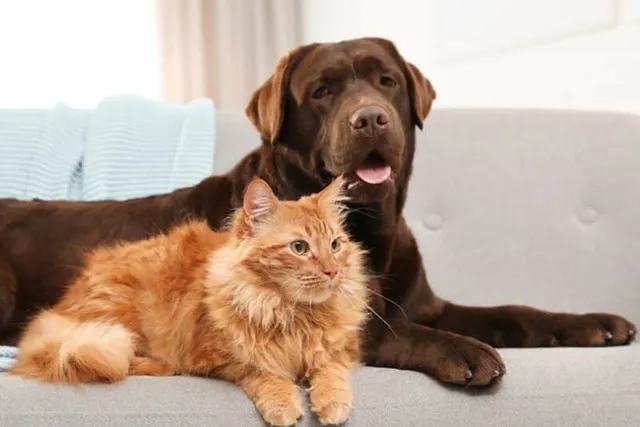
Adding a new puppy to your family can be an exciting time, but there might be one member of your family who’s less impressed than everyone else, and that’s your cat! If your cat hasn’t lived with a dog before, it might take a little time and effort before they’ll accept that your family dynamic has changed.
Cats and dogs can make great friends, and after a while, you may find that your pets get along quite well. Read on for our top 10 tips for how to get your cat to like your new puppy.

How to Get a Cat to Like a Puppy
1. Consider the personality of your cat before getting a new puppy
Once you’ve decided to get a new puppy, the first thing to do is to consider how they’re going to fit into your household. Breed isn’t necessarily as important as personality, and as you won’t know the personality of your new puppy yet, you’ll have to start with your cat. If your cat is outgoing and playful, chances are that they may adapt to any kind of puppy. But if your cat is shy and quiet, they may prefer to share their home with a dog that’s going to be more chilled out once fully grown.
Shelters are a great place to find puppies, and shelter staff will often be able to advise you as to whether their puppies have been tested as suitable for living with cats. If you’re looking at buying from a breeder, ask questions about whether the parent dogs have been used to cats and if the puppies will meet cats before they leave for their new homes. The breeder will also be able to give you information about the general personality of both parent dogs, which can give you clues as to what sort of personalities the puppies are likely to have.
2. Allow each pet their own territory

Cats can be territorial, so it’s important that you make sure that your cat has a clearly defined territory where they can feel safe. Make sure your cat has areas to relax where they know the puppy isn’t allowed access, like the upper floor of your house.
You also want to make sure your cat has places where they can find a safe spot around the home. These could be elevated cat shelves or a comfy cat bed on the top of a bookcase. This way, your cat will start to feel more confident hanging out in rooms that the puppy is also in at the same time, knowing that they can retreat if necessary.
You may have a crate for your puppy, and it’s a good idea to keep this closed when you’re not around to supervise your cat and puppy. Some cats will love the idea of “taking over” the puppy’s territory by hanging out in the crate!
You can also use a feline pheromone diffuser to help reduce any anxiety or stress that your cat may be feeling as they adjust to the new dynamic of sharing their home with a puppy.
3. Introduce smells first
Cats and dogs rely far more on their sense of smell than we do. Before you even let your cat and puppy meet face to face, introduce them to the scent of each other. Place an old towel in each of their beds, and after a few days, place the towel in the area of the house that’s occupied by the opposite pet.
Don’t put the towel in their bed, and then be surprised when they don’t sleep there. Just lay it on the floor somewhere and allow them to investigate the new smells. Some puppies will dive right in and check this out enthusiastically, and some cats might pretend to be uninterested until you’re not looking!
After a week or so of switching scents, you should be ready to move on to face-to-face introductions.
4. Train your puppy

One of the best things about puppies is their enthusiasm for life, but it’s still important to make sure they’re well-trained. Signing up for puppy training classes is a great way to establish a solid training foundation, and you can ask your trainer for specific advice on how to introduce your pets. It’s likely that they’ll recommend waiting to introduce your pets until your puppy has mastered basic commands, like sit and stay.
If your puppy is reactive and can’t resist the urge to eat fallen food when they’ve been told to leave it or to jump on visitors, then they probably don’t have the required level of training for a successful first meeting with your cat.
5. Keep your puppy well exercised
Puppies have a great deal of energy, and if they don’t get enough chances to use up all that physical energy, they’ll be bouncing around and far more likely to chase or play with your cat when they head into the same room. Make sure you schedule regular walks, as well as supervised exercise in the backyard.
Just as important as physical exercise is making sure your puppy gets enough mental stimulation. Training sessions can be a great idea, as is plenty of playtime, food puzzles, and trick or agility training as your puppy starts to mature.
6. Plan the first meeting

Before allowing your puppy and cat to meet for the first time, you want to have a solid plan in place. After you’ve allowed them to get used to the scent of each other, it’s a good idea to allow them into the same room for around 5 minutes. Keep your puppy on the leash and give each pet some food. This will help them build the association that being around each other brings good things, like food, but it will also help distract them for those first few meetings.
Continue this pattern for the first couple of weeks, allowing your pets to meet and eat. Gradually increase the amount of time for each meeting until your pets start to hang out after they’ve finished their food. Even if you’re confident in your puppy’s training, it’s a good idea to keep them on a leash for the first few interactions with your cat.
7. Supervise your pets together
As your pets start to gain confidence around each other, allow them to spend more time together. Always supervise these meetings, and keep your puppy on a leash until you’re confident that they’re not going to scare your cat.
Even once you’re fairly confident that your cat and puppy are getting along well, don’t leave them alone together. It only takes a second for a fight to break out over a toy or a dropped treat, and the damage from that incident will need a great deal of time to undo.
8. Keep food and toys in separate places
Meal times can be a common moment for altercations between your cat and puppy. Your cat may be confident enough to try to eat out of your puppy’s bowl, and your puppy’s first instinct may be to stop the cat from doing so. The same can also happen in reverse.
Avoid the chances of your cat and puppy getting into a fight over their food by keeping to regular meal times and feeding each pet in separate areas of the house. You could consider feeding your cat on a worktop in the garage or utility room, somewhere that your puppy can’t reach.
9. Keep your puppy away from the litter box

Making sure your cat can use their litter box without being pestered by your puppy is vital. If your cat feels threatened or unsafe when using their litter box, they may stop using it and start doing their business somewhere else instead.
Some dogs also develop the unsavory habit of cleaning the litter box of poop by eating it. It’s gross but true! Besides being a bad habit, it can also increase the chances of your puppy getting intestinal worms.
You can either use a baby gate to keep your puppy away from the room where the litter box is kept, install a cat flap, or keep the door closed.
10. Give equal attention to both pets
Even though cats do love to pretend that they don’t need our attention, they can still feel slighted if they notice that you and your family are spending more time with your new puppy than with them. Try to make sure that both pets get alone time with you, and give them roughly the same amount of attention when you’re spending time with them together.

Conclusion
Spending time planning on how to persuade your cat to like your puppy will pay off once those initial meetings take place without any drama or stress.
Some cats will adjust to sharing their home with a puppy quickly, in which case you can speed through our list to the point that you can be confident that they’re happy spending time together. Other cats will take much longer to accept their new four-legged housemate. But with patience (and sometimes plenty of treats and tasty food!), you’ll soon all be enjoying life as a multi-pet household.
Featured Image: rohitink, Pixabay
Expert cat care, straight to your inbox
News, insights, and useful advice, delivered to you.

No spam — unsubscribe anytime.
By signing up, you agree to our Terms & Conditions and Privacy & Cookies Policy.
How useful was this post?
Click a star to rate. You can leave written feedback afterwards. (We read all feedback.)

Emma is a freelance writer, specializing in writing about pets, outdoor pursuits, and the environment. Originally from the UK, she has lived in Costa Rica and New Zealand before moving to a smallholding in Spain with her husband, their 4-year-old daughter, and their dogs, cats, horses, and poultry. When she's not writing, Emma can be found taking her dogs for walks in the rolling fields around their home...and usually, at least some of the cats come along, too! Emma is passionate about rescuing animals and providing them with a new life after being abandoned or abused. As well as their own four rescue dogs, she also fosters dogs for re-homing, providing them with love and training while searching for their forever homes.