Get

In Your Inbox

Catster is reader-supported. When you buy via links on our site, we may earn an affiliate commission at no cost to you. Learn more.

Aural Hematoma in Cats: Vet Reviewed Signs, Causes & Care

Share

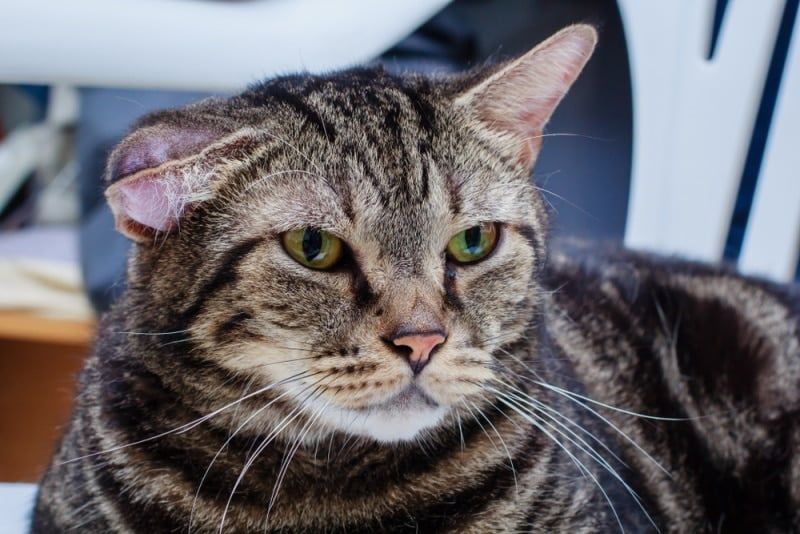
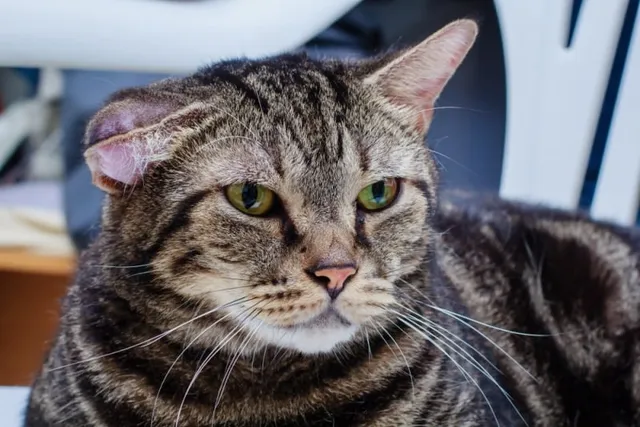
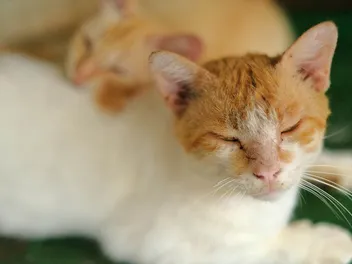
Cat with Aural Hematoma

Your cat’s ears are fascinating parts of their body. They can give you information about how your cat is feeling, and petting, scratching, or massaging them will strengthen your bond. However, various ear problems can occur in cats, one being the development of an aural hematoma.

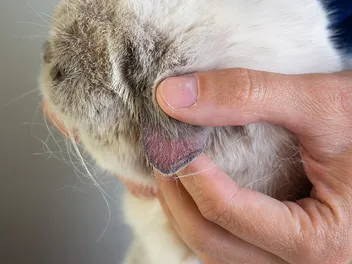
Your cat’s ear flap (also called the pinna, from the Latin meaning wing or feather) has delicate blood vessels. If one ruptures due to trauma, an aural hematoma can develop on the inside of the ear. This is when the blood from the broken vessel collects and causes swelling that can usually be seen on the inside of the ear flap. While it’s possible for some aural hematomas to go away on their own, others will need medical intervention.

The term aural refers to something relating to the ear or the sense of hearing. The term hematoma is defined as a pool of blood that forms in an organ, tissue, or body space. Damage to the blood vessels in your cat’s ears while the skin is still intact can result in such formations.

Sometimes, leaving an aural hematoma untreated can have serious consequences for your cat’s well-being. It’s typically painful, and the discomfort causes cats to scratch, aggravating the problem and increasing the size of the hematoma. Some of these cases might even require surgery.divider 1 paws

What Causes an Aural Hematoma in Cats?

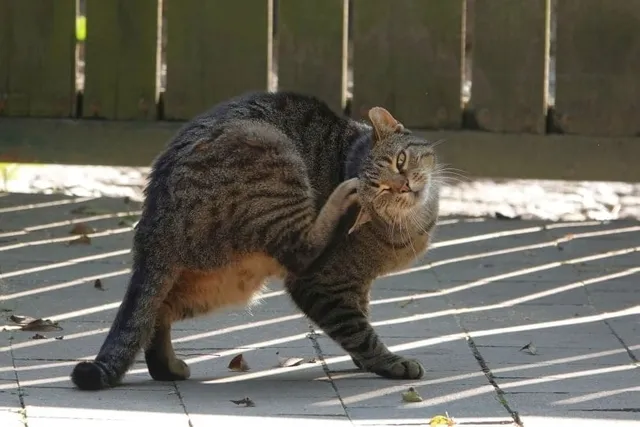
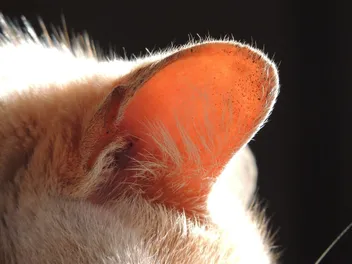
Violent head shaking, scratching, and other types of trauma to the ears can cause blood vessels to burst. This causes blood to collect inside the pinna, between the cartilage and the skin. An aural hematoma can be identified easily as a small fluid-filled lump inside your cat’s ear flap. It’s important to take your cat to the vet if you suspect they have one. Most aural hematomas are secondary to a problem that causes your cat to itch. 

Ignoring an aural hematoma could result in the ear becoming deformed or morphing into a “cauliflower” shape, causing future trouble and worsening your cat’s underlying problem.

Luckily, aural hematomas are fairly rare in cats. Your cat won’t necessarily develop one just from scratching their ears once or twice. However, they can be common secondary issues from problems that cause excessive scratching, including:   

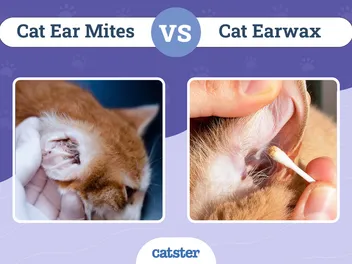
  • Parasites, such as ear mites, fleas, or ticks
  • A foreign object lodged in the ears
  • Ear infections
  • Allergies
  • Polyps or tumors
  • Auto-immune diseases
  • A recent bite
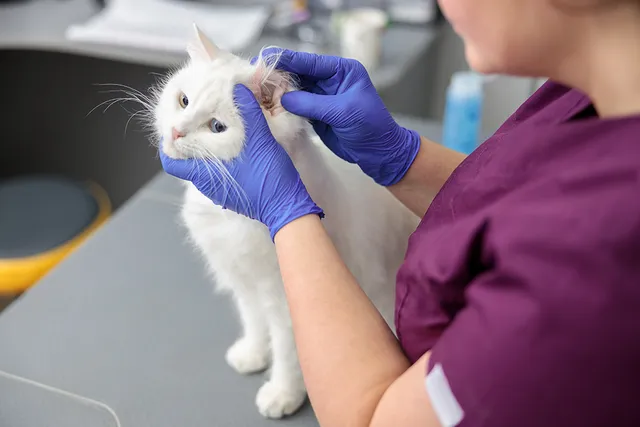
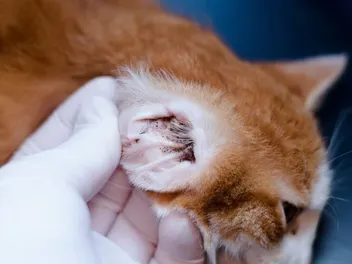
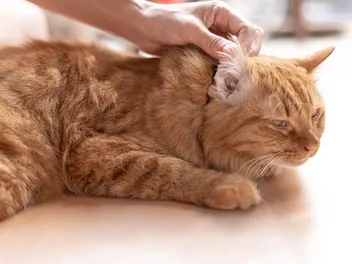
vet checking cat ear
Image Credit: Milles Studio Shutterstock

Signs of an Aural Hematoma

There are some signs that you may observe as an aural hematoma is forming. Observing these can help you quickly ascertain that something might be wrong with your cat. There are important clues to look out for, and if you observe these signs, you should take your cat to the vet for a checkup.

Signs of an aural hematoma:
  • Your cat shakes their head frequently.
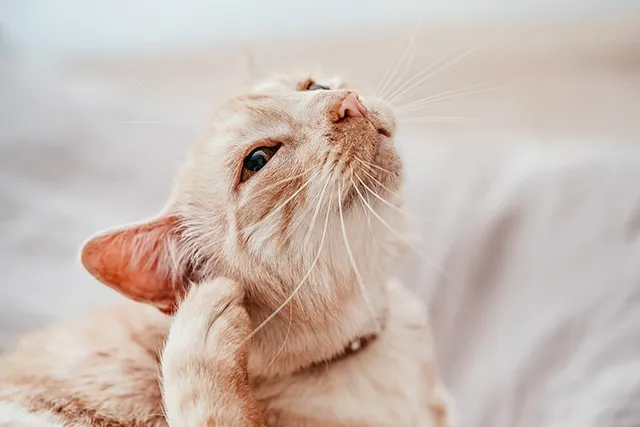
  • Your cat intensely scratches one or both of their ears.
  • There is excessive wax or an odor coming from your cat’s ears.
  • One or both of your cat’s ears feel warm to the touch.
  • One or both of your cat’s ears appear crusty.
  • Your cat seems to be uncomfortable, especially when you try to inspect their ears.
  • There is swelling on or near one or both of your cat’s ears.
  • One of your cat’s ears appears different than the other in some way (it is warmer, thicker, or asymmetrical).
  • You witnessed or suspect that your cat recently got physically hurt, especially near their head (your cat fell down, an unsupervised child pulled your cat’s ear, a dog or another animal bit your cat, etc.)

There is no “ear preference” when it comes to aural hematomas. One or both of your cat’s ears may be affected, and there is no preference between the right or left one. These signs are often associated with other problems involving your cat’s ears, which definitely warrant a trip to your vet.

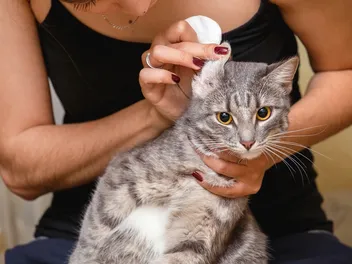
vet checking cat's ear
Image Credit: bmf-foto.de, Shutterstock

How Aural Hematomas Are Treated

Your vet will need to assess if the hematoma is causing your cat pain and determine its size before they know what to do about it. If the swelling is minor, your vet might send you home with the expectation that it’ll resolve itself within a couple of weeks. However, if the swelling is bad enough, the vet might determine that your pet needs surgery.

The medical management of an aural hematoma done by your vet involves one or more of the following:
  • Drainage of the aural hematoma with an appropriate needle
  • Medication that is placed inside your cat’s ear to treat the hematoma
  • Medication that is prescribed to your cat

If your cat has recurring, long-term issues with an aural hematoma, your vet may opt for a surgical procedure appropriate for your cat. This may involve anesthesia, but it may also be accomplished under heavy sedation. The goal of this procedure is to adequately drain the aural hematoma and address any other issues as necessary. This is done on a case-by-case basis, and it’s best to follow your vet’s lead on the best treatment options for your cat.

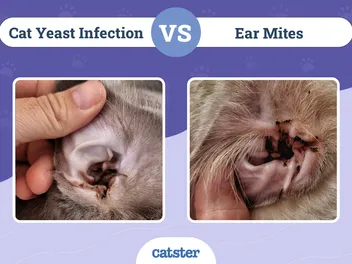
In addition to treating the aural hematoma, your vet will diagnose, offer treatments, and advise you on the underlying causes affecting your cat’s ears and overall health. For example, 50% of otitis in cats is caused by ear mites. The good news is that they respond very well to treatments. Follow any medication and at-home instructions given by your vet to ensure prompt and effective resolution of not just the aural hematoma but also the underlying cause (if there is one).

The prognosis is good to excellent as long as the underlying cause is addressed. The survivability rate is very high, so you typically don’t need to worry as long as you seek treatment quickly. Some cats may have an ear that droops a little after undergoing treatment for an aural hematoma.

divider 1 paws

Conclusion

Aural hematomas can be painful to your pet and require medical attention. Although not all aural hematomas require surgery, it’s important to take your cat to the vet for care because hematomas can be painful and may result in permanent disfiguration of their ear if it isn’t treated quickly or properly. Your vet will also need to figure out what is causing your cat to scratch or shake their head so much if that is the cause. Your cat could need allergy medicine or another long-term treatment once the hematoma has cleared, to prevent it from recurring.

See Also: 


Featured Image Credit: BabyMosquito, Shutterstock

Want content like this delivered to you?

Sign Up For Our Newsletter

News, insights, expert advice, and everything cat

* By submitting, you agree to our Terms & Conditions and Privacy & Cookies Policy.


How useful was this post?

Click on a star to rate (you can leave written feedback after clicking submit)

Help us improve Catster for pet parents!

Your feedback really matters.

What did you like about this post? Also how can we improve it?

Join the conversation

Leave a Reply

You’re very welcome to leave a comment or question. Please know that all comments must meet our community guidelines, and your email address will NOT be published. Let’s have a positive and constructive conversation.


Catster's Digital Magazine is Back!

Vet-approved health & behavior advice

Real cat stories & community features

Weird Cat Behaviors That Actually Make Perfect Sense

We have been sharing our lives with cats for thousands of years, yet we still find ourselves genuinely stumped by what they get...

The Dream of Talking to Cats Just Got Closer to Becoming a Reality

If you’ve ever wished your cat could simply tell you what they wanted, you’re not alone. From the meow that wakes you before...

Kizzy: The Feline Princess With a Purpose

We were first introduced to Miss Kizzy after she won a licky-treat challenge hosted by Professor Fluffovich, our resident feline research specialist. While...

Chatting With Sally About Mission Meow & Helping Cat Rescue Organizations Collaborate | Chatty Cattys, Episode 24

In this episode of Catster’s podcast, Chatty Cattys, Nicole and Dr. Karyn sit down with Sally Williams, the founder of Mission Meow, for...

More related

10 Pet-Friendly Hotels in Santa Barbara (2026 Update)

Whether you’re a Hollywood celebrity or a family traveling on a budget, Santa Barbara welcomes everyone looking for a laidback coastal California vacation....

Does My Cat Need a Veterinary Neurologist? 5 Vet Reviewed Signs

Nothing is more terrifying than having your cat diagnosed with a health condition. It’s tough to see them suffering, whether it’s a minor...

Can Cats Drink Almond Milk? Vet Approved Nutrition Facts

In recent years, there has been a huge movement away from cow’s milk toward other lactose-free options, including almond and soy milk. While...

How to Stay the Same for 10 Million Years – A Cat’s Guide to Evolutionary Success (and Domination)

From baby faces to slicing teeth. Perfection isn’t just genetic – it’s a lifestyle. By Lucifer Fluffovich (as told to his mum, Kirsti...

Keep reading

Why Is My Cat’s Fur Suddenly Matted? 7 Vet-Reviewed Reasons

Cats are famous for keeping themselves clean and looking neat all the time. In fact, some would say that cats are obsessive groomers. It’s safe to assume that if your cat isn’t sleeping, they’re probably grooming instead. That’s why it’s...

combing fur of a maine coon cat

Can Cats Eat Cream? Vet-Reviewed Feeding Facts

Everyone knows the one about the cat that got the cream, but have you ever wondered if cats actually can, or should, eat cream? You might be surprised to learn that although cats would certainly love to devour a saucer...

Can Cats Eat Cream

12 Best Cat Foods in 2026: Vet-Approved Reviews & Guide

Proper nutrition is just as essential for your cat as it is for you. Like with humans, a poor diet for cats can lead to issues like malnutrition, weight gain, and certain diseases. It can also have a negative effect...

siamese kitten eating from a stainless bowl

Are Amaryllis Plants Toxic to Cats? Vet-Reviewed Houseplants Examined

Christmas time is a joyous time for most people, and we have come to associate this cheerful holiday with various plants that we adorn our homes with to celebrate the festivities. However, these plants are not universally safe for cats....

Catster_Are Amaryllis Plants Toxic to Cats

10 Best Dry Cat Foods in the UK in 2026: Reviews & Top Picks

Whether you feed your cat a combination of wet and dry food or just dry food, getting the right kibble is important. It should meet your cat’s nutritional requirements according to their age, health conditions, and, of course, their preferences....

grey cat eating food

When to Euthanize a Cat With Feline Leukemia: Vet-Reviewed Advice

Feline leukemia is a serious disease that can cause a wide range of signs in cats, including anemia, weight loss, and infections. Unfortunately, there is no cure for feline leukemia, and it can be fatal. As such, euthanasia may be...

sick siberian cat

How Long Should a Cat Be Confined After Being Spayed or Neutered? Vet-Approved Recommendations

Spaying and neutering your cat is highly recommended, not only for the prevention of health and behavioral problems, but also to help combat the severe overpopulation of cats. Overpopulation leads to homelessness and the risk of euthanasia. Spays and neuters...

vet putting on surgical suit to a cat after surgery

Can a Cat Climb Down a Tree? Vet-Reviewed Anatomy Facts & Rescue Tips

Saving a cat from a tree is one of those stereotypical tropes you see in many cartoons, but have you ever stopped to think why cats get stuck in trees and are usually reluctant to get down? Cats might be...

ginger cat climbing tre

Love Cats? So Do We! Join the Catster Community

Stay informed with expert pet care insights delivered straight to your inbox! Discover professional guidance on animal behavior, feeding tips, trusted product picks, and much more.


Sign up for the Catster Email Newsletter

Stay informed with expert pet care insights delivered straight to your inbox! Discover professional guidance on animal behavior, feeding tips, trusted product picks, and much more.