Why Do Cats Shake or Vibrate Their Tails? Vet-Verified Reasons Explained


In this article
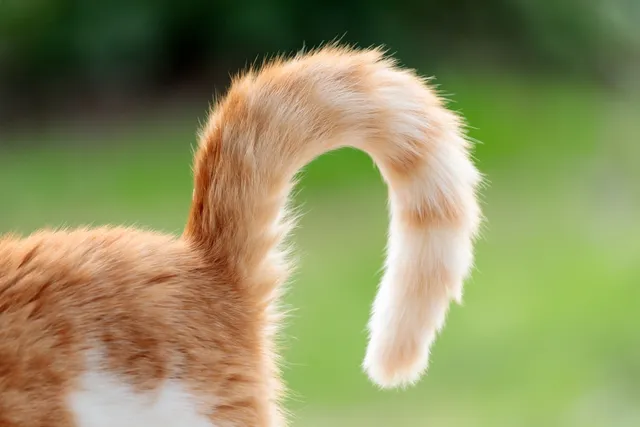
When cats shake their tails it's just one of a series of ways in which your cat communicates with you. It is important to consider context, but his or her tail can swoosh, wag, perk up, or remain motionless. It can also twitch, which is a vibration of the end or through the whole of the tail, and there are various reasons for this particular action.
Below, we have highlighted some of the most likely causes for a cats vibrating tail, whether it should concern you, and what you can do to remedy any potential problems that are causing it.

All About Context
Cats can seem unpredictable. Some are quite wild. But, if you want to know whether something is bothering your cat or what an action or behavior is likely to mean, you should consider the context. What else is happening at the time, and what other behavior is your cat exhibiting?
Determine whether there are any new sounds or motions that might be spooking or upsetting your cat. Cats have incredibly sensitive hearing and other senses, which means they might be able to hear things you cannot. If you notice a cat's vibrating tail, and can’t figure out what might be causing it, read on to determine some likely causes.

Tail and Body Language

Some cats are very vocal. They will meow, purr, hiss, growl, and chirrup. Some of these reactions are instinctive and evolutionary. Some have been learned as cats have adapted to living with humans.
For example, cats only rarely meow at their mothers when they are kittens. It is not a means of communication between adult cats, but domesticated cats meow throughout their lives. They do this as a means of communicating with humans.
So, despite being unable to talk, cats are highly skilled communicators, and as well as their vocabulary of cat noises, they rely heavily on body language and body motions to help communicate messages to other animals and people. Their tail is one of the most expressive areas of the body.

The 4 Reasons Why Cats Shake Their Tails
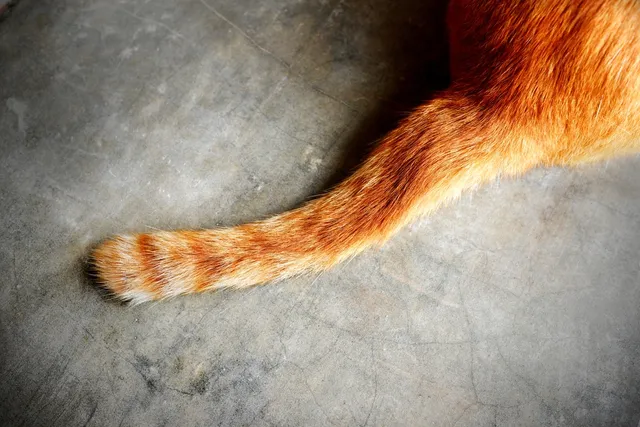
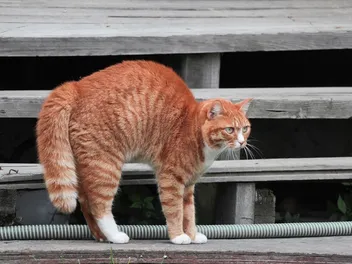
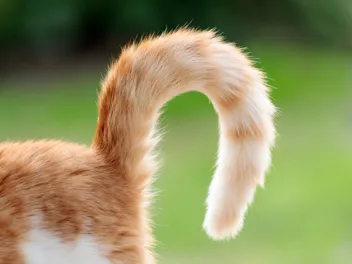
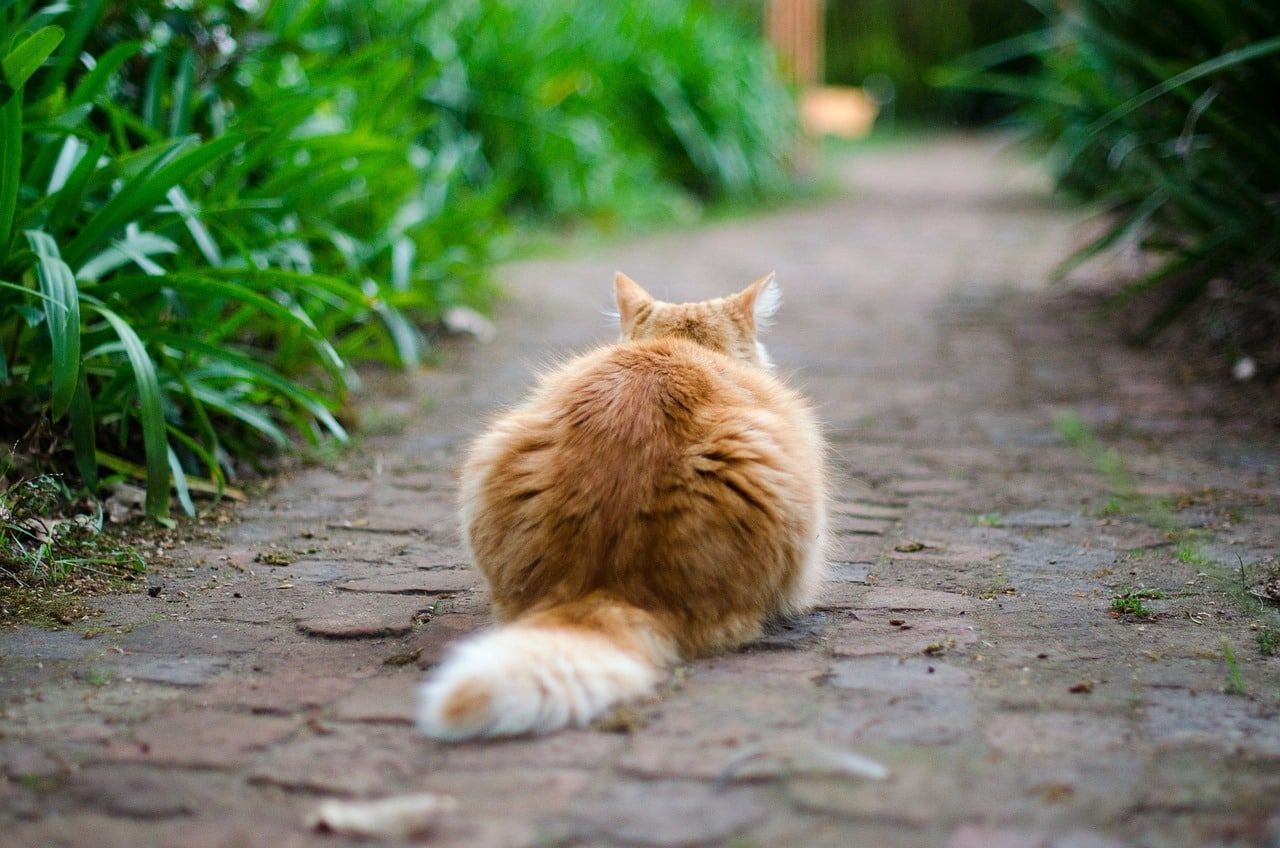
A cat’s tail can quiver or vibrate at the tip or the whole tail. It can be standing upright while quivering, or it can limp. It might be called quivering, twitching, or vibrating, but the basic motion is the same regardless of how it is described. Below are the most common causes of a vibrating tail.
1. Anxiety
Some cats can get very anxious, and if there is no visible sign of something that might be causing this, it is likely to be a noise or a change in surroundings that are causing the anxiety. Barking dogs, cats meowing, and other natural sounds could be the cause, and because of a cat’s acute sense of hearing, you may have to concentrate on hearing it yourself.
Those caring for anxious cats understand the struggles and discomfort that their companions feel on a daily basis. The innovative bowl shape of the Hepper Nest Bed provides nervous pets with support and its high sides offer a sense of security, diminishing stress and worry. To learn about how to the Hepper Nest can provide solace to your cat, click here.

- COMFY KITTY - Your cat or kitten will have an amazingly deep sleep in this self warming, nesting cat bed. The warm, fluffy cat bed lining provides calming stress relief for cats of all ages.
- PRETTY HOME - This round cat bed has a modern and unique design that’s perfect for a sleek indoor look. We don’t think of it as cat furniture but think of the Cat Nest as a “cat home”.
- SPACE SAVER - Reclaim your desk, window sill, or couch from kitten encroachment. This calming nest cat bed has an elevated, space-saving hideout so comfortable your kitty can't resist!
At Catster, we’ve admired Hepper for many years and decided to take a controlling ownership interest so that we could benefit from the outstanding designs of this cool cat company!
2. Impatience
Cats are notoriously impatient animals. And they can turn from being calm and relaxed to impatient in an instant. Reasons for impatience may include you taking too long to feed them, or you may not be playing their favorite game quite right. Impatience is one step away from anger, so look for the signs if you want to avoid it becoming fully blown madness.
3. Anger
Your cat may have a similar reaction when it is angry. Different cats get angry at different actions. You may have spent a few seconds too long stroking your cat, or your cat may not find you blowing in his face quite as funny as you do. If your cat is impatient, it may opt to swipe with a paw. This might be accompanied or preceded by a twitching tail, but if you see the tail twitch, you should probably treat it as a fair warning that your cat is getting angry.

4. Happiness
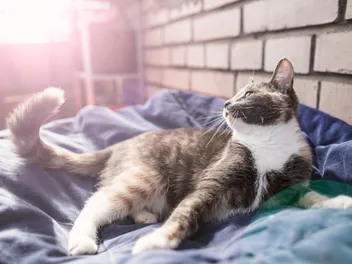
Most times, a vibrating cat tail represents a negative emotion or bad mood. But there are occasions when a twitching tail can represent happiness. It could simply be a sign of contentment. If you’re stroking your cat and he seems to be enjoying it, this is the likely cause of tail vibrations. Your cat could be showing excitement at the food, treat, or toy that you’ve just handed over.
Cats are intriguing animals who sometimes have odd interests and indulge in unusual behavior. Understanding them might be tough but providing a toy that fosters their instinctual needs and curiosities is simple.The Hepper Hi-Lo Cat Scratcher encourages playtime and offers a cat-appropriate place to scratch.
It’s unique 3-position design and cardboard scratch pad allow your cat to explore different levels, improves their health, satisfies natural feline impulses, and deters your cat from delving into places they should not. Show your cat how much you love and appreciate their quirks by gifting them the Hepper Hi-Lo Cat Scratcher.
At Catster, we’ve admired Hepper for many years, and decided to take a controlling ownership interest, so that we could benefit from the outstanding designs of this cool cat company!

How to Stop a Vibrating Tail
If your cat’s tail is twitching or vibrating, you should identify the cause of the movement. If it’s being caused by anxiety or fear, you can remove the cause of this anxiety, which will stop the tail twitching, although it can take some time before your cat is completely calm.
Why Do Cats Flick Their Tails While Lying Down?
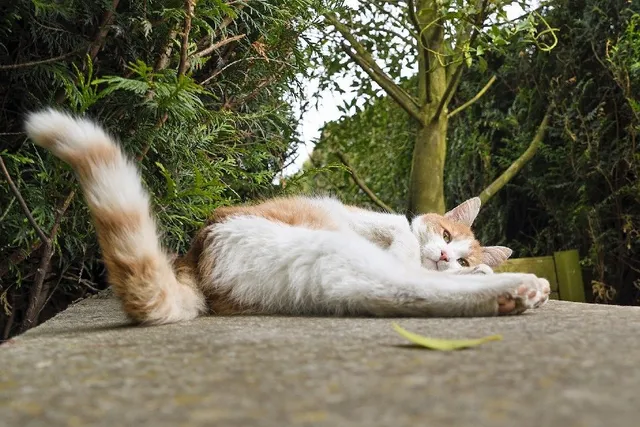
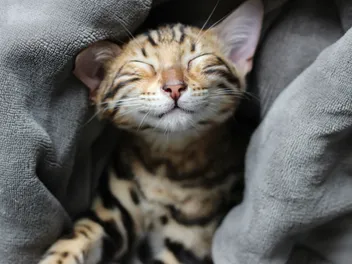
If your cat is sleeping and twitching his tail, he could be dreaming. It is likely to be accompanied by twitching of the eyes, paws, and other parts of the body. It isn’t necessarily a bad dream. They could be dreaming of watching or chasing birds, of being stroked. The truth is that we don’t know what cats dream about, but there’s probably no reason to wake them up.
It is also possible that your cat is awake and twitching their tail because they can hear birds outside, cats or dogs indoors, or because something is irritating and agitating them. Remove the cause of agitation, once your cat has calmed down, the twitching and vibration should stop.

Why Is My Cat’s Body Vibrating?
One of the most common causes of a vibrating cat is that it is purring, which cats usually do when they are happy and content. However, a vibrating body may be a sign of fear or anxiety, especially if other signs of discomfort accompany it.
Additional Information:
Why Do Cats Vibrate Their Tails?
Although cats can be very expressive, they have a limited number of ways to communicate with us. They can vocalize emotions, but they only have a limited range of vocalizations they can make, so they rely on body language and other methods of communicating.
A cat shaking or vibrating its tail is one method that they might adopt. Although it can be a sign of happiness or contentment, it is more likely that this kind of reaction means that a cat is frightened, anxious, or agitated, and you should take steps to remove the cause of agitation to stop the twitching tail.
See Also:
Featured Image Credit: Pixabay
Expert cat care, straight to your inbox
News, insights, and useful advice, delivered to you.

No spam — unsubscribe anytime.
By signing up, you agree to our Terms & Conditions and Privacy & Cookies Policy.
How useful was this post?
Click a star to rate. You can leave written feedback afterwards. (We read all feedback.)
Christian started writing for a local newspaper as a teenager, and he's been involved in the publishing industry for most of his adult life. Combining his love of writing with a passion for animals, he is currently the Director of Editorial at Pangolia and the Editor-in-Chief at Catster.
Christian lives in the Philippines with his wife, son, and four rescue cats: Trixie, Chloe, Sparky, and Chopper.