How to Stop Your Cat Peeing in the House (Without Moving Across the Country)

Hi, I’m Dr. Karyn! Read my introduction to learn more about me and meet my five hilarious cats: Clutch, Cyril, Alex, Zelda, and Zazzles.
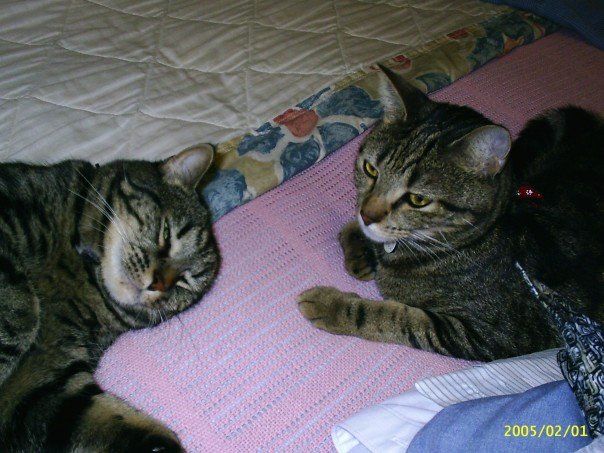
I grew up in Queensland, Australia, then lived in Alice Springs in the Northern Territory for a few years before moving to the UK. And before I had the five felines I share my home with today, there was Gilbert and Sullivan; two adorable female tabbies.
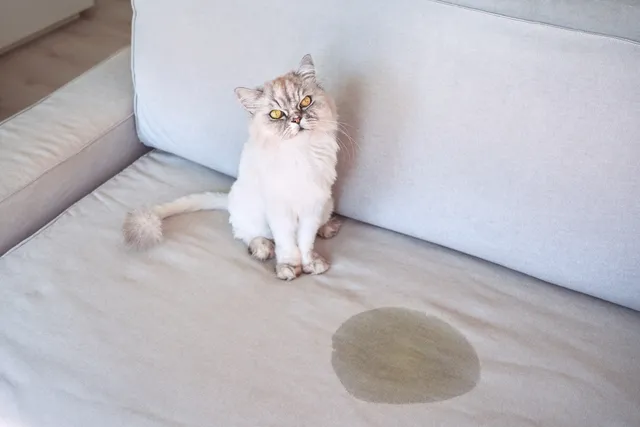
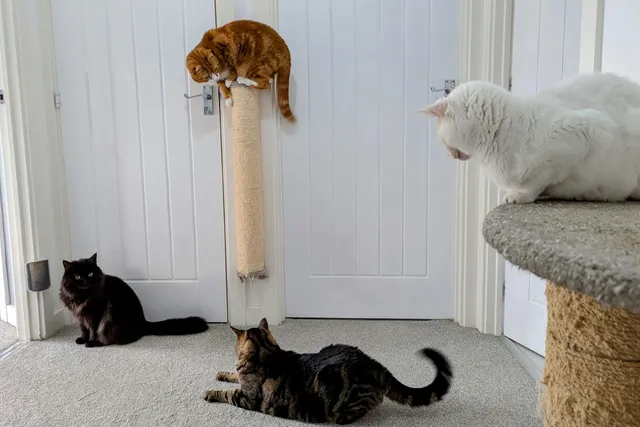
Gilbert was first on the scene, and Sully joined us two years later. They were never the best buddies I had hoped to be, but they seemed to get along without conflict, happy to share space on my bed and different perches on the cat tree. After about a year, however, we began to suspect that all was not well when Sully started peeing in all places that weren’t a litter box.
Sully’s Problematic Peeing
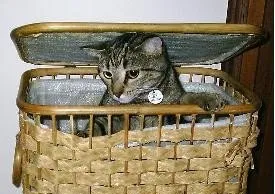
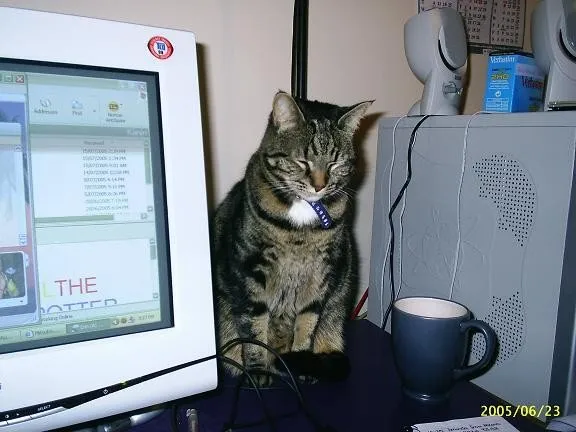
Shopping bags, handbags, and shoes were her favorites - particularly embarrassing when they belonged to guests. There was the occasional incident on my bed, but by far the worst was when she piddled on the steam mop - steaming cat urine is an unforgettable experience. My Dad would argue that the most regrettable urination situation was the one in the fruit bowl, which was only discovered after he’d sliced a banana on his breakfast cereal. At least it was a fruit from which the skin was completely removed before eating!
If you’ve ever had to deal with inappropriate feline urination, you might be familiar with some of the tips, tricks, and techniques we might have employed to tackle our wee problem:
Urinalysis to rule out inflammation, infection, or crystals
Pheromone diffusers and sprays to help her feel settled
Adding an extra litter box to the 3 we already had, in a new location with a different type of litter
Cleaning any soiled surface with an enzymatic cleaner designed specifically for this purpose
Some of these methods helped for a time, but eventually, the urination would return. The places she was piddling suggested that this was territorial behavior, choosing vertical surfaces, my bed, and items that regularly entered and exited the house. The problem was clear: despite appearances, Sully felt threatened by Gilbert and was employing passive-aggressive tactics to try to improve her position in the home.
Sully’s Persistent Problematic Urination
Unfortunately, realizing this was the problem did nothing to help me find a solution, but it did demonstrate that there can be pretty intense friction between cats that appear to be getting along just fine.
This was an ongoing problem for my family and I right up until the time when I moved to Alice Springs, bringing Gilbert and Sully with me. I had prepped the new house with pheromone diffusers and sprays, and placed litter boxes in a few different locations to give them plenty of options. When I first let them out of their travel crates, they spent the first 48 hours huddled together behind the toilet, barely moving an inch. Afterwards, they began to bravely explore their new home, including their newly erected outdoor catio.

And guess what? The entire time we lived in the red center, there was never a single territorial pee. Every urination was contained within the box, and I never had to buy another bottle of urine cleaner.
Lessons from Sully’s Problematic Urination
So what changed?
Well, I have a theory.
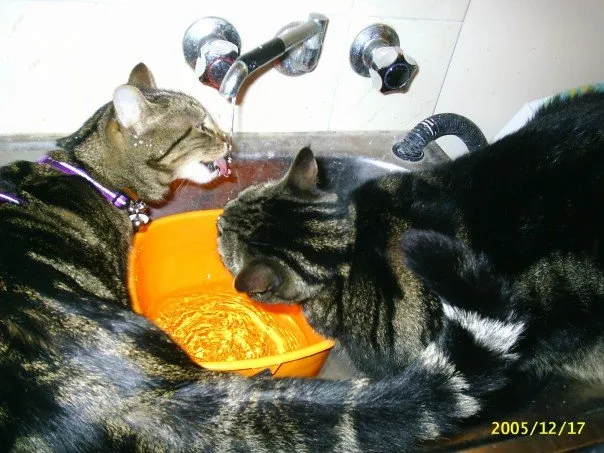
When Sully came into the Queensland house, Gilbert had been there for a couple of years, comfortable and settled in her well-established territory, so Sully employed her pheromonal defense system. When we moved to Alice Springs, they entered the house as equals, sharing in the trauma of relocation and new territory.
So does that mean that you need to move house to stop your cat from marking their territory? Hopefully not! It’s not a particularly economical solution! But, I had a friend employ a version of this method when she was having the same problem with her cats. Like Sully, one of her cats had joined the house later than the others and had taken to urinating on various items and areas. Having tried everything else, she took my advice and sent her three cats to stay at a cattery for a week. While they were gone, she did a thorough clean of the house, furniture, bedding, and clothes, even using a UV lamp to check for traces of pee.
Lo and behold; when the three felines returned home together, the territorial urination stayed away.
It may seem like an extreme way to approach this problem, but if you are dealing with inappropriate urination in a multi-cat household, and you have explored all possible causes and solutions, a week away could be just what you need to keep the cat pee smell away! At least it’s worth a try.

This article is a part of Dr. Karyn's series with her five hilarious cats.
Expert cat care, straight to your inbox
News, insights, and useful advice, delivered to you.

No spam — unsubscribe anytime.
By signing up, you agree to our Terms & Conditions and Privacy & Cookies Policy.
How useful was this post?
Click a star to rate. You can leave written feedback afterwards. (We read all feedback.)
Dr. Karyn Kanowski BVSc MRCVS (Veterinarian)
Dr. Karyn comes from Queensland, Australia, and has lived in the UK for the past 10 years. In 2010, she graduated from The University of Queensland School of Veterinary Science and also has a Bachelor’s degree in Zoology. She is passionate about using evidence, experience, and owner collaboration to provide the best solutions for pets, and believes in making reliable information about animal health accessible to all. Dr. Karyn shares her home with five cats, four dogs, and one husband. When she is not in the scrubs, she spends her time writing, gardening, and cleaning up pet hair!