
What Your Cat Can Teach You About Aging Well
How to recognize the subtle difference between normal aging and cognitive decline, and help your senior cat stay engaged, comfortable, and independent
By Joel Ehrenzweig, DVM, MRCVS
Watch a healthy older cat move through her day.
She may take a little longer to rise from her favorite chair. She may think twice before jumping onto a countertop she once reached without hesitation. She sleeps more, chooses her routines carefully, and has become remarkably skilled at persuading the people around her to bring things closer.
But she is still interested in breakfast. She still appears when a favorite person enters the room. She watches birds through the window, investigates a new cardboard box, and may still insist that 4:57 a.m. is a perfectly reasonable time to discuss breakfast.
Is she simply getting old?
Or is she aging well?
The difference matters, and I learned that the hard way with my own cat.
Houdini was an eighteen-year-old black long-haired male who had never given me reason to worry. Then he started calling out at night, insistent enough that I could not ignore it. It would have been easy to write off as just aging. Old cats do that.
I ran a full workup instead. It showed kidney values just slightly above normal and nothing else. Apart from the calling, he still seemed to be enjoying his life. Between the pattern of the vocalizing and a workup that ruled out anything else driving it, the diagnosis was feline cognitive dysfunction.
I lost Houdini to kidney failure about six months later.
His story is a small, real version of the point this whole article is making. The calling was not eccentricity, and it was not only age. It was cognitive change, arriving quietly, in a cat who by almost every other measure still seemed like himself.
Scientists increasingly distinguish between two ideas: lifespan, how long we live, and healthspan, the years we remain healthy, active, independent, and engaged with life.
It is a concept that applies beautifully to cats.
For a cat, aging well means more than reaching 15, 17, or even 20. It means continuing to move comfortably, use the litter box, groom, sleep peacefully, interact with family, explore familiar surroundings, and remain interested in the world.
And sometimes, the first sign that something is changing is not found in a laboratory.
It happens in the living room.

Normal aging, or something more?

Cats are remarkably good at making gradual change difficult to notice.
A dog that suddenly struggles to climb the stairs tends to make the problem obvious. A cat simply stops going upstairs. The favorite sleeping place moves from the top of the bookcase to the sofa. The cat who once greeted you at the door is always asleep when you come home.
The litter-box accident is blamed on stubbornness. The midnight crying is dismissed as eccentricity. The cat who no longer jumps onto the bed is just getting old.
Some slowing is expected with age. But new or progressive changes should not automatically be dismissed as a normal part of aging.
Changes that may occur with normal aging
An older cat may:
Sleep somewhat more.
Play less vigorously.
Jump less often or choose lower resting places.
Prefer a quieter routine.
Take longer to move after resting.
Need easier access to food, water, litter boxes, or favorite furniture.
Changes to discuss with your veterinarian
Pay closer attention if your cat begins to:
Seem lost or confused in familiar rooms.
Stare at walls or hesitate at familiar doorways.
Wander or vocalize repeatedly at night.
Sleep much of the day but become restless after dark.
Forget familiar routines.
Become unusually withdrawn, clingy, anxious, or irritable.
Stop grooming normally.
Begin eliminating outside the litter box.
Show a marked decline in activity or interest.
Struggle to reach familiar places.
Changes in memory, awareness, sleep, and behavior can occur with feline cognitive dysfunction, the feline counterpart of age-related dementia, but they may also be caused by pain or illness.[1]
Arthritis can make a cat stop jumping. Kidney disease, diabetes, or thyroid disease can change drinking, urination, activity, and sleep. High blood pressure can affect vision and behavior. Pain, hearing loss, and declining eyesight can all make an older cat behave differently.[2]
That is why "she’s just getting old" can be one of the most misleading explanations in senior-cat care. Old age itself is not a disease. Sometimes a subtle behavioral change is the first clue that something treatable is happening.

No one knows your cat’s normal behavior better than you.
You know where she sleeps.
How she asks for food and whether she greets you at the door.
Which chair she prefers and how often she plays.
How she climbs the stairs.
Whether she has always talked at night, or only started recently.
Those ordinary observations are valuable because many age-related changes happen gradually. Once a month, stop and consciously look at your cat as though you had not seen her for several weeks.

A Monthly Senior-Cat Check-In
Ask yourself:
Is she moving the same way?
Is she still jumping to the same places?
Do her back or hindquarters look thinner?
Is she sleeping at the same times?
Has nighttime activity or vocalization changed?
Is she grooming normally?
Is she using the litter box reliably?
Does she still interact with people and other pets in the same way?
Does she ever seem confused in familiar places?
Is she still interested in food, play, windows, smells, and everyday family activity?
Look for change from your cat’s own normal. A 17-year-old cat who has always slept most of the day is very different from a 12-year-old whose sleep pattern suddenly changes.
Your cat is her own best comparison.

Technology can help you see what happens when you are not watching
Owners cannot observe their cats 24 hours a day. A few simple tools can help fill in the gaps.
Some owners use a cat-friendly wearable activity monitor to track movement and rest over time. The value is never one isolated number. It is the pattern, and whether that pattern is shifting from the cat’s own normal.
The simplest tool is your phone. Every few months, record your cat walking, jumping, climbing stairs, playing, or interacting with you. A video from six months ago often reveals gradual change that memory alone smooths over. Senior-cat care guidelines specifically encourage tracking mobility and behavior at home, because subtle changes are otherwise easy to miss.[2]
Muscle may tell you more than the bathroom scale
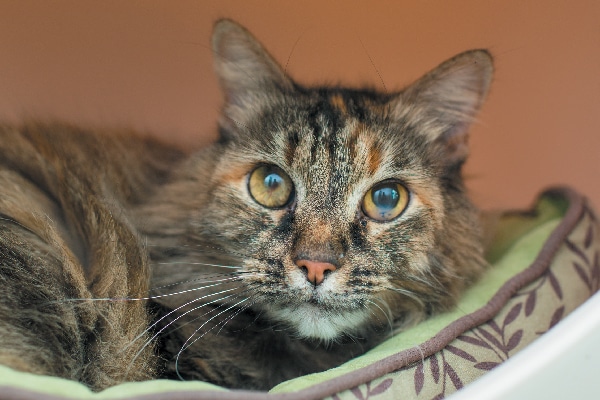
One of the most useful discoveries about feline aging concerns something owners can actually see and feel: muscle.
Researchers who repeatedly examined 209 pet cats, some for as long as seven years, found that muscle condition often began declining between about 7 and 10 years of age and deteriorated more rapidly as cats became older.[3]
Body weight did not always fall at the same time.
That means a cat can appear to maintain roughly the same number on the scale while quietly losing muscle. Muscle that helps an older cat stand, balance, jump, climb into the litter box, groom, and remain independent.
Instead of just asking:
Has she lost weight?
also ask:
Is she losing strength?
Look along the spine, shoulders, hips, and hind legs.
Does she feel bonier?
Are the thighs thinner?
Does she hesitate before jumping?
Does she pull herself onto furniture with her front legs instead of springing upward?
Has she stopped visiting favorite places because they are harder to reach?
These changes deserve attention even when body weight seems stable.
Aging well is not simply about surviving another birthday. It is about preserving the ability to do things.

Sometimes the solution is changing the environment
Cats teach another useful lesson about aging: Independence sometimes depends on accepting help.
A cat who no longer jumps onto the bed may still want to sleep beside you. A small step or ramp can restore that choice.
A cat with painful joints may stop using a litter box not because she has forgotten her training, but because climbing over the side hurts.
A cat who becomes confused at night may do better when furniture stays in familiar places, and the path between sleeping areas, water, food, and litter boxes is simple and predictable.
Simple Ways to Support an Older Cat
Low-entry litter boxes.
Food and water that are easy to reach.
Steps or ramps to favorite furniture.
Warm, supportive sleeping areas.
Rugs or runners on slippery floors.
Consistent placement of important resources.
Night-lights in dark hallways.
Short, gentle play sessions.
Easy access to windows, scents, toys, and other forms of stimulation.
Regular social contact, on the cat’s terms.
The goal is not to make an old cat behave like a young cat. It is to help an old cat do the things that make her life her own.
What cats are teaching scientists about aging
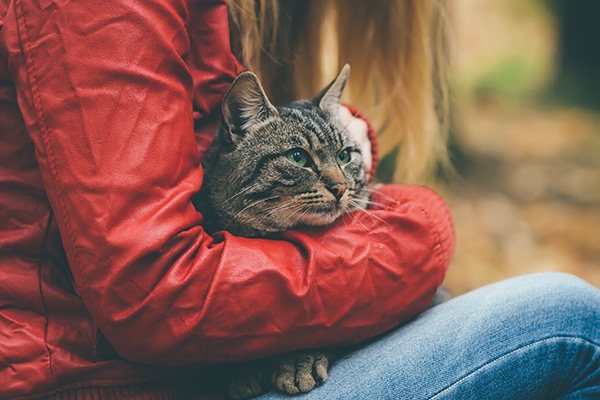
The science behind feline aging has become especially interesting in the past few years. A 2026 study comparing thousands of observations across cats, humans, and other mammals found that cat and human brains age in strikingly similar ways, estimating that a 15-year-old cat is at roughly the same stage of brain aging as an 80-year-old person.[5] That is not a simple cat-years-to-human-years formula, but it does suggest cats experience brain aging in ways surprisingly relevant to us.
Scientists have also found deposits of amyloid-beta, the protein associated with Alzheimer’s disease in people, in the brains of cats that had shown signs of cognitive dysfunction.[6] Cats are not tiny humans, but the overlap is strong enough that naturally aging cats may help researchers understand how brains age in both species.
None of this points to a single cause or a single fix. Muscle, movement, sleep, pain, metabolism, kidney function, and brain health all seem to influence each other in aging cats,[7] which is why healthy aging rarely comes from one supplement or treatment. It is a whole-animal process.
How long can cats live well?
A major 2024 study examining nearly 8,000 cat deaths in the United Kingdom estimated average life expectancy at birth at about 11.7 years, although females lived somewhat longer than males and mixed-breed cats lived longer than purebred cats as groups.[8]
But averages do not predict the future of one individual cat.
One encouraging finding was that a cat who had already reached 15 still had, on average, about 2.7 additional years of expected life in that population.[8]
A 15th birthday does not necessarily mean the end is near.
The better question may be:
How can we make the years ahead good ones?


What your cat may be teaching you
There is something wonderfully symmetrical about all of this.
We are beginning to study cats because they may help us understand how brains and bodies age, and at the same time, they may already be teaching us the larger lesson.
Aging well may not mean remaining unchanged. It may mean adapting while preserving what matters:
• Movement.
• Strength.
• Curiosity.
• Routine.
• Comfort.
• Social connection.
• Choice.
And the desire to remain engaged with the world.
There may even be a benefit flowing in the other direction.
A 2025 study found that cat and dog owners showed a slower decline in some measures of memory and thinking than people who did not own pets. Among cat owners, the association included verbal ability and delayed memory.[9]
The study cannot prove that cats caused the difference, but it offers a delightful possibility:
While we study our cats to understand healthy aging, sharing our lives with them may also be connected with aspects of healthier aging in us.
That is part of why my colleagues and I at Veterinary Health Research Centers developed CATMA, Cats Advancing Toward Mindful Aging, to help owners and veterinarians recognize meaningful change earlier.
Not simply more years. More good years.
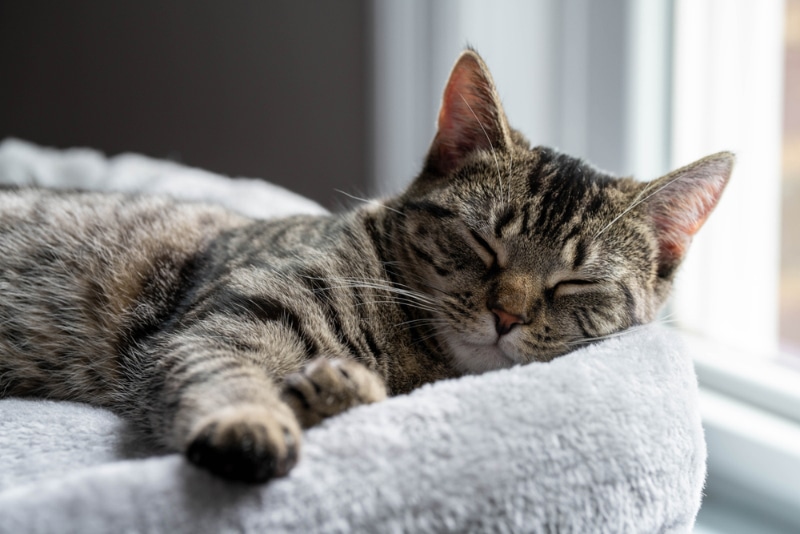
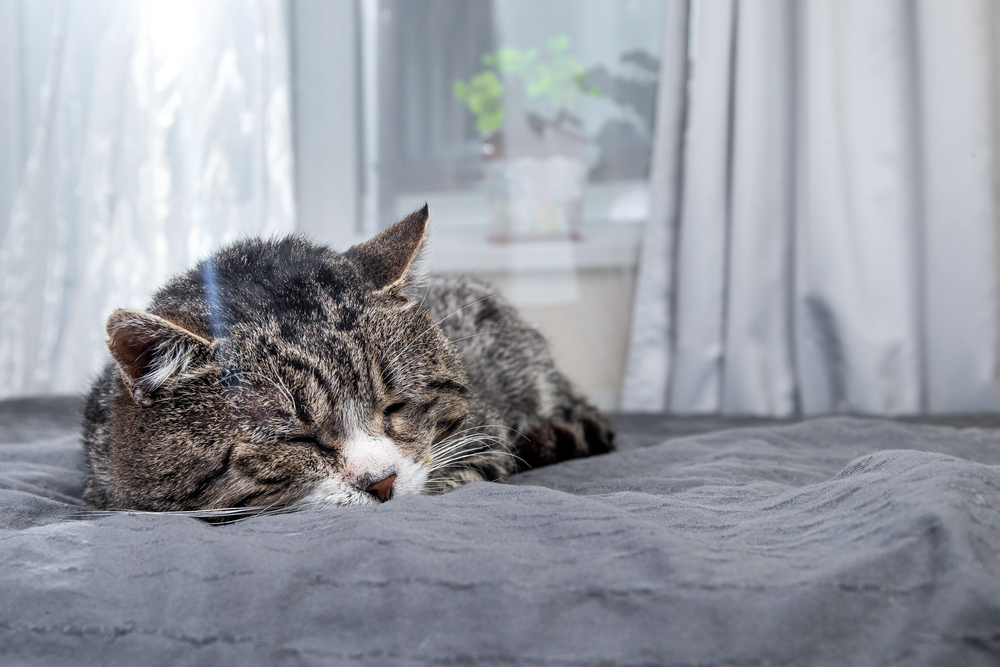
The next time you see your older cat asleep in a patch of sunlight, consider what she may be telling you.
She does not know her age.
She knows whether she can reach her favorite chair.
Whether breakfast tastes good.
Whether the house feels familiar.
Whether her legs carry her where she wants to go.
Whether there are still interesting things to investigate.
Whether someone she trusts is nearby.
Perhaps that is as good a definition of aging well as any of us has found.
Sources
1. Dhaliwal R, Boynton E, Carrera-Justiz S, et al. 2023 AAHA Senior Care Guidelines for Dogs and Cats. J Am Anim Hosp Assoc. 2023;59(1):1-21. doi:10.5326/JAAHA-MS-7343. https://doi.org/10.5326/JAAHA-MS-7343
2. Ray M, Carney HC, Boynton B, et al. 2021 AAFP Feline Senior Care Guidelines. Journal of Feline Medicine and Surgery. 2021;23(7):613–638. https://doi.org/10.1177/1098612X211021538
3. Pye CR, Dowgray NJ, Eyre K, et al. Longitudinal changes in bodyweight, body condition, and muscle condition in ageing pet cats. Frontiers in Veterinary Science. 2025;12:1654002. https://doi.org/10.3389/fvets.2025.1654002
4. Hoummady S, Rameau O, Besegher A, et al. A day in the life of an aged cat—Environment of old domestic cats and welfare implications. Journal of Veterinary Behavior. 2026;83:20–25. https://doi.org/10.1016/j.jveb.2025.11.008
5. Januel C, Morrow E, Gibson R, et al. Cat brains age like humans: translating time shows pet cats live to be natural models for human aging. Biology Open. 2026;15(6). https://doi.org/10.1242/bio.062604
6. McGeachan RI, Ewbank L, Watt M, et al. Amyloid-Beta Pathology Increases Synaptic Engulfment by Glia in Feline Cognitive Dysfunction Syndrome. European Journal of Neuroscience. 2025;62(3). https://doi.org/10.1111/ejn.70180
7. Memoli H, Albertini M, Grader I, et al. Variations in body condition score, inflammatory and metabolic biomarkers predict cognitive changes in clinically healthy senior cats. Frontiers in Aging Neuroscience. 2025;17:1703764. https://doi.org/10.3389/fnagi.2025.1703764
8. Teng KT, Brodbelt DC, Church DB, O’Neill DG. Life tables of annual life expectancy and risk factors for mortality in cats in the UK. Journal of Feline Medicine and Surgery. 2024;26(5). https://doi.org/10.1177/1098612X241234556
9. Rostekova A, Lampraki C, Maurer J, et al. Longitudinal relationships between pet ownership and cognitive functioning in later adulthood across pet types and individuals’ ages. Sci Rep. 2025;15:19066. doi:10.1038/s41598-025-03727-9. https://doi.org/10.1038/s41598-025-03727-9
About the Author
Joel Ehrenzweig, DVM, MRCVS, is a veterinarian, clinical researcher, former multi-site veterinary hospital owner, and founder and CEO of Veterinary Health Research Centers. A former Director at LabCorp, he has worked across clinical practice, pharmaceutical research, biotechnology, and animal health. His peer-reviewed work includes One Health research on canine cognitive decline and its relationship to human Alzheimer’s disease, and he leads CATMA, VHRC’s parallel research initiative in cats. A former travel writer and experienced speaker for public, medical, and surgical audiences, Joel combines science, animal stories, history, travel, and observational humor to give audiences a fresh way to see the animals beside us and the world around us.
Feature Image Credit: MauriceDT, Unsplash
Expert cat care, straight to your inbox
Vet-reviewed advice, behavior tips, and the best of Catster. Free, and you can unsubscribe anytime.
By signing up, you agree to our Terms & Conditions and Privacy & Cookies Policy.

Joel Ehrenzweig, DVM, MRCVS, is a veterinarian, clinical researcher, former multi-site veterinary hospital owner, and founder and CEO of Veterinary Health Research Centers. A former Director at LabCorp, he has worked across clinical practice, pharmaceutical research, biotechnology, and animal health. His peer-reviewed work includes One Health research on canine cognitive decline and its relationship to human Alzheimer’s disease, and he leads CATMA, VHRC’s parallel research initiative in cats. A former travel writer and experienced speaker for public, medical, and surgical audiences, Joel combines science, animal stories, history, travel, and observational humor to give audiences a fresh way to see the animals beside us and the world around us.
Join the conversation
Ask a question, share your story, or send private feedback.