Get

In Your Inbox

Catster is reader-supported. When you buy via links on our site, we may earn an affiliate commission at no cost to you. Learn more.

How Often Should You Wash a Cat’s Bed: Vet-Reviewed Tips & Tricks

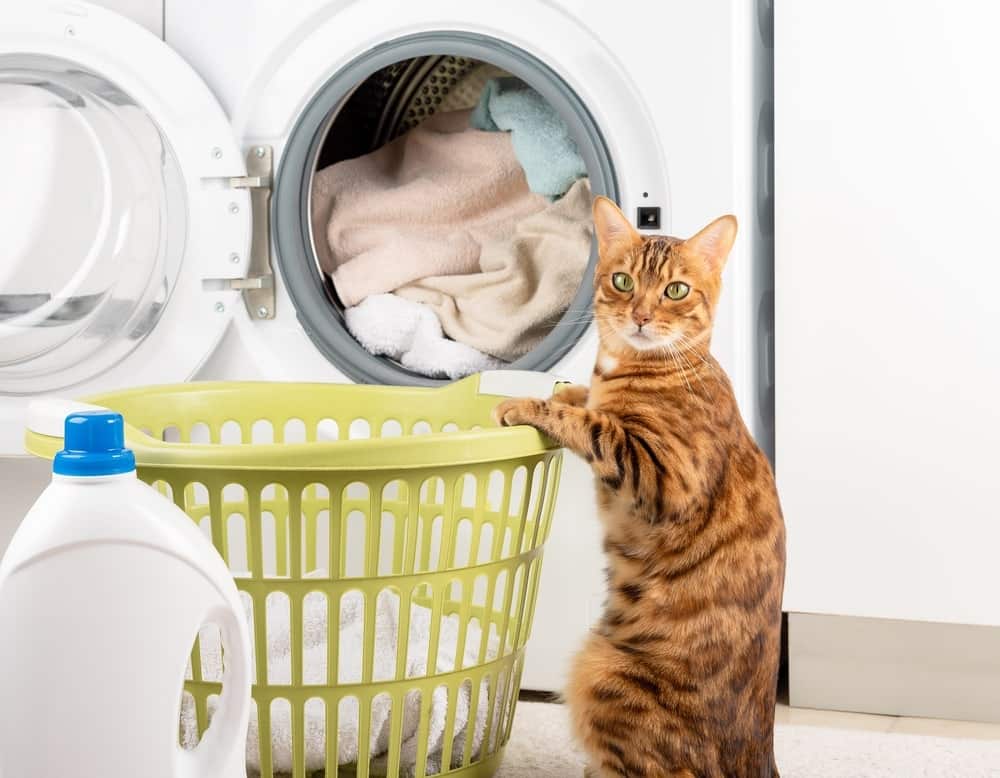
Cat near a Washing Machine

Just like you should wash your bedding every week or two, the same is true for your cat’s bedding. Ideally, you’ll want to wash it once a week, but if they don’t spend all that much time using it, you might be fine with washing it once every 2 weeks.

Taking the time to wash their bedding will keep it smelling nice and fresh, and it can help keep your cat healthy. Just like you enjoy climbing into a bed with fresh, clean sheets, your cat likely will too!

divider 2 cats

Product Recommendation

When cleaning your pet’s bedding, it’s essential to use the right cleaning products that are both pet-friendly and effective at removing stains, odors, and bacteria. An enzyme-based cleaner is a particularly good option for spot-cleaning, especially for urine stains and odors.

Did you know there's an enzyme cleaner that does it all? The Hepper Advanced Bio-Enzyme Pet Stain & Odor Eliminator Spray permanently removes the very worst smells and stains (truly, everything you can imagine!), and they offer a 100% satisfaction guarantee! Click here to get yourself a bottle.

Hepper Advanced Bio-Enzyme Pet Stain & Odor Eliminator Spray
  • ADVANCED ENZYMATIC CLEANER - Penetrates the most stubborn smells and stains at the deepest molecular...
  • FOR ANY MESS, ON ANY SURFACE - This pet odor eliminator cleans your carpets, floors, furniture,...
  • FRESH, NATURAL ODOR - Our unique formulation doesn't rely on dangerous or unpleasant chemical...

At Catster, we’ve admired Hepper for many years, and decided to take a controlling ownership interest so that we could benefit from the outstanding products of this cool cat company!

divider 2 cats

Why You Should Wash Your Cat’s Bed

Just like you need to wash your bedding to keep it clean and smelling fresh, the same is true for your cat’s bedding. But the truth is that there are multiple reasons you need to frequently and consistently wash your cat’s bedding.

These reasons include:
  • Unpleasant odors. It’s not pleasant to have these emanating from your cat’s bed (they could also hint at underlying health issues for your cat)
  • Allergies. If you are allergic to cat dander, you would want to frequently wash their bed, as places where your cat sleeps often harbor a high amount of pet dander.
  • Decontamination. If a harmful aerosol is used near your cat’s bed, it may linger on the bed and harm your cat. For example, essential oil droplets that spread around a room by a diffuser may collect on your cat’s bed. This warrants washing the bed.
  • Parasite eradication. Many parasite control protocols involve treating your pet and thoroughly cleaning their environment too. Fleas and mites may inhabit your cat’s bed, as it offers plenty of dark, cool crevices to hide in and is an area their host (your cat) frequently visits.
  • Urination or defecation. If your cat had an accident in their bed, it would definitely need to be washed. Please note that missing the litter box isn’t normal, and your cat will definitely need veterinary care if you observe them using their bed to relieve themselves.
  • Soiled bed. If the bed is soiled for any other reason (spillage, etc.) you would want to wash it before allowing your pet to reuse it.
  • Skin ailment. Certain skin ailments of cats (such as ringworm) are transmittable to humans. To minimize the risk of zoonosis, thoroughly cleaning their bed is recommended.

It doesn’t take all that much work to clean your cat’s bed, so add it to your list of biweekly chores, and stick with it.

Cat Allergy
Image Credit by: Cat Box, Shutterstock

divider 3 paws

How to Wash Your Cat’s Bed

Now that you know all about how often and why you need to wash your cat’s bed, all that’s left is for you to figure out how to do it. The good news is that it’s a pretty straightforward process, and we’ll walk you through everything you need to know here.

1. Remove the Cover

If your cat bed has a cover, start by removing that. You don’t need to wash the entire bed; you just need to wash the cover your cat is actively using. Of course, once you remove the cover, you need to move the cat bed to a place your cat can’t use until you finish.

If your cat bed doesn’t have a cover, you can skip this step, but you’ll need to be more careful when spot-treating, washing, and drying it.

Remove cat urine and dirty stains
Image Credit by: KanphotoSS, Shutterstock

2. Spot Treat

If the cat bed has noticeable spots with stains, dirt, or grime, it’s best to spot-treat it before moving on to the next step. Follow the directions for the spot cleaner you’re using, and ensure that it’s not going to react adversely with the cat bed. You can always go over it with the vacuum hose a few times!


3. Wash and Dry

Before washing the cat bed, take the time to read the label and follow all the directions. If the label doesn’t have directions or if you can’t find them for any reason, stick with an unscented detergent specifically for pets.

Either wash the bed by hand or on a cold cycle on the lowest available setting. From there, only use a dryer on the lowest possible setting if you’re sure it won’t damage the bed. Otherwise, you’ll need to air-dry the cat bed.

If you are using a dryer, we recommend using an unscented dryer sheet to help remove static and pick up any leftover pet hairs. Of course, always clean out the lint trap in the dryer after each use.

laundry room
Image Credit: Evgeny Atamanenko, Shutterstock

divider 2 cats

Final Thoughts

It’s something many pet owners overlook and neglect, but taking the time to wash your cat’s bedding every week or two goes a long way in keeping them happy, healthy, and smelling great. Even better, it really doesn’t take all that long, so once you get into the routine, it’s not that hard to keep up with!


Featured Image Credit: Svetlana Rey, Shutterstock

Want content like this delivered to you?

Sign Up For Our Newsletter

News, insights, expert advice, and everything cat

* By submitting, you agree to our Terms & Conditions and Privacy & Cookies Policy.

How useful was this post?

Click on a star to rate (you can leave written feedback after clicking submit)

Help us improve Catster for pet parents!

Your feedback really matters.

What did you like about this post? Also how can we improve it?

Join the conversation

Leave a Reply

You’re very welcome to leave a comment or question. Please know that all comments must meet our community guidelines, and your email address will NOT be published. Let’s have a positive and constructive conversation.

Talk With A Vet Online

Peace of mind,
anywhere, anytime

Affordable vet advice

I Can’t Find My Cat Anywhere in the House: What to Do Next & Useful Tips

Not being able to find your cat can be a scary experience, and it’s easy to slip into panic mode, but keeping a...

What If Your Cat Isn’t a Lap Cat? 6 Vet-Approved Reasons They May Not Want to Sit With You

Cats are just so unique! Some cats are super energetic, while others are quite calm. Many cats are standoffish, but just as many...

15 Cat Statistics & Facts All Cat Lovers Should Know (Vet-Verified 2025 Update)

Note: This article’s statistics come from third-party sources and do not represent the opinions of this website. It’s amazing how many cat lovers...

Why Does My Cat Bite My Feet? 6 Vet-Approved Reasons for This Behavior

As cat owners, we know that the price of being owned by a cat also means dealing with a lot of crazy and...

More related

10 Best Grain-Free Cat Foods in 2025 – Reviews & Top Picks

Cats can be picky eaters, making deciding what to buy challenging. Sometimes, it takes trial and error to find a cat food your...

Will My Cat Hate Me After the Vet? 8 Vet-Reviewed Tips to Avoid It

Veterinarian appointments are common events that cat owners dread. After all, it involves putting your kitty into carriers and hauling them into a...

Adopting an Adult Cat: Tips for Bringing Them into Your Home

Bringing an adult cat into your home can be a rewarding experience, but it can also bring its own sets of challenges and...

Why Your Older Cat Is Not Using the Litter Box (7 Likely Reasons)

It can be a bit frustrating when your cat uses the bathroom outside the litter box, but it’s not uncommon for older cats...

Keep reading

Why Do Cats Like Damp Towels? 3 Possible Reasons

Cats can be finicky and tend to dislike many things that we’d like them to interact with, like new toys and beds. Many cats would rather play with or sleep in a cardboard box! So, it might not come as...

Groomer holding down a cat with a towel

Do Cats Have Eyebrows? Vet-Verified Feline Anatomy Explained

There are very few things funnier in this world than seeing a cat with eyebrows drawn onto it. Seeing eyebrows on a cat’s face just feels so out of place, and it adds a certain air of humanness to them....

Himalayan Cat's Face

How Do I Know When My Kitten Needs to Pee or Poop? 5 Vet-Approved Signs to Look For!

One particularity of cats is that felines’ bathroom habits are significantly different from ours. While you may have heard that some cats with great trainers as owners can learn to use an actual human toilet, this does not allow them...

black and white kitten playing

Can Cats Eat Coconut Oil? Vet-Reviewed Nutrition Facts & FAQ

Coconut oil has long been used for cooking, particularly in South Asian cuisines. It appears to have some health benefits, and some studies suggest it may increase fat burning and decrease hunger in some people. But what about cats? Is...

Can Cats Eat Coconut Oil

Is Your Cat a Vertical Pee-er? What to Do & How to Help (Vet-Reviewed)

Cats can develop strange habits that leave us feeling perplexed. One such strange behavior is vertical peeing. Cats can start to pee vertically for a variety of reasons. Sometimes, it has to do with marking their territory, while other times,...

Cat Pee Spray

Basepaws Cat DNA Test Review: Pros, Cons, FAQ & Verdict

Have you ever wondered about the breeds that make up your cat? Or wondered what potential health problems your pet might face in the future? If you have, you’ll be thrilled to learn about the Basepaws at-home cat DNA test!...

Basepaw Cat DNA Test

Young Again Cat Food Review of 2025: Recalls, Pros, & Cons

Review Summary Michael Massie, the founder of Young Again Pet Food, started making pet food to provide quality food for his animal companions. In 1990, with nutritionists and veterinarians’ help, Young Again Cat Food created the first pet food for...

Young Again Cat Food Review

Do Cats Gain Weight After Being Spayed? Vet-Reviewed Facts

Most prospective cat owners look forward to having their cat spayed or neutered. After all, tom cats and queens are significantly more annoying and cause a lot more trouble for their owners than spayed and neutered cats. However, most cat...

cat recovering from spay surgery