Get

In Your Inbox

Catster is reader-supported. When you buy via links on our site, we may earn an affiliate commission at no cost to you. Learn more.

Fever Coat in Kittens: What Is It? Vet Reviewed Science & Facts (With Pictures)


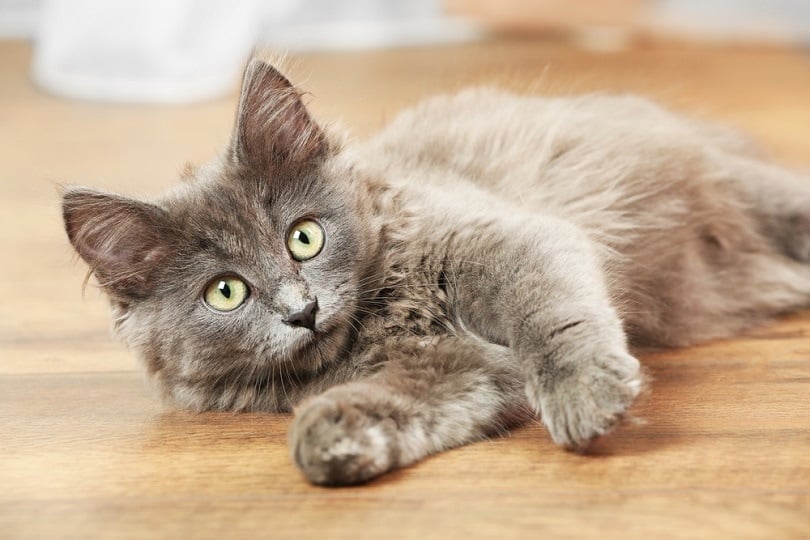
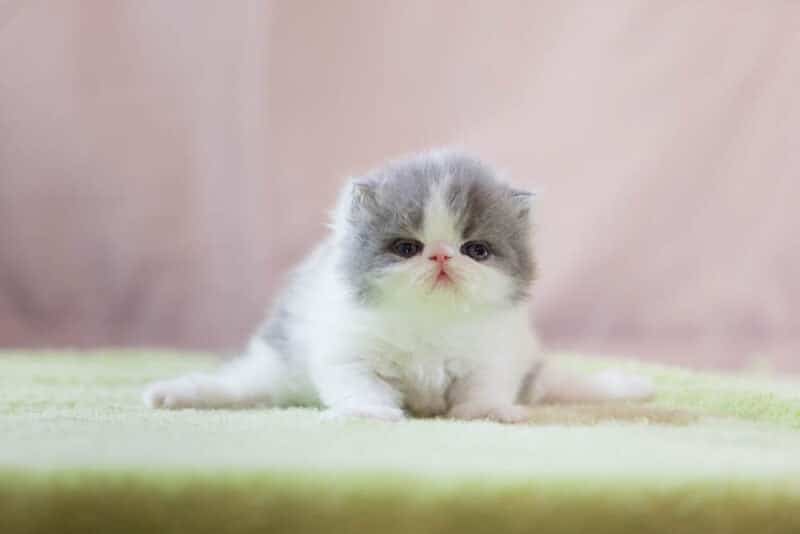
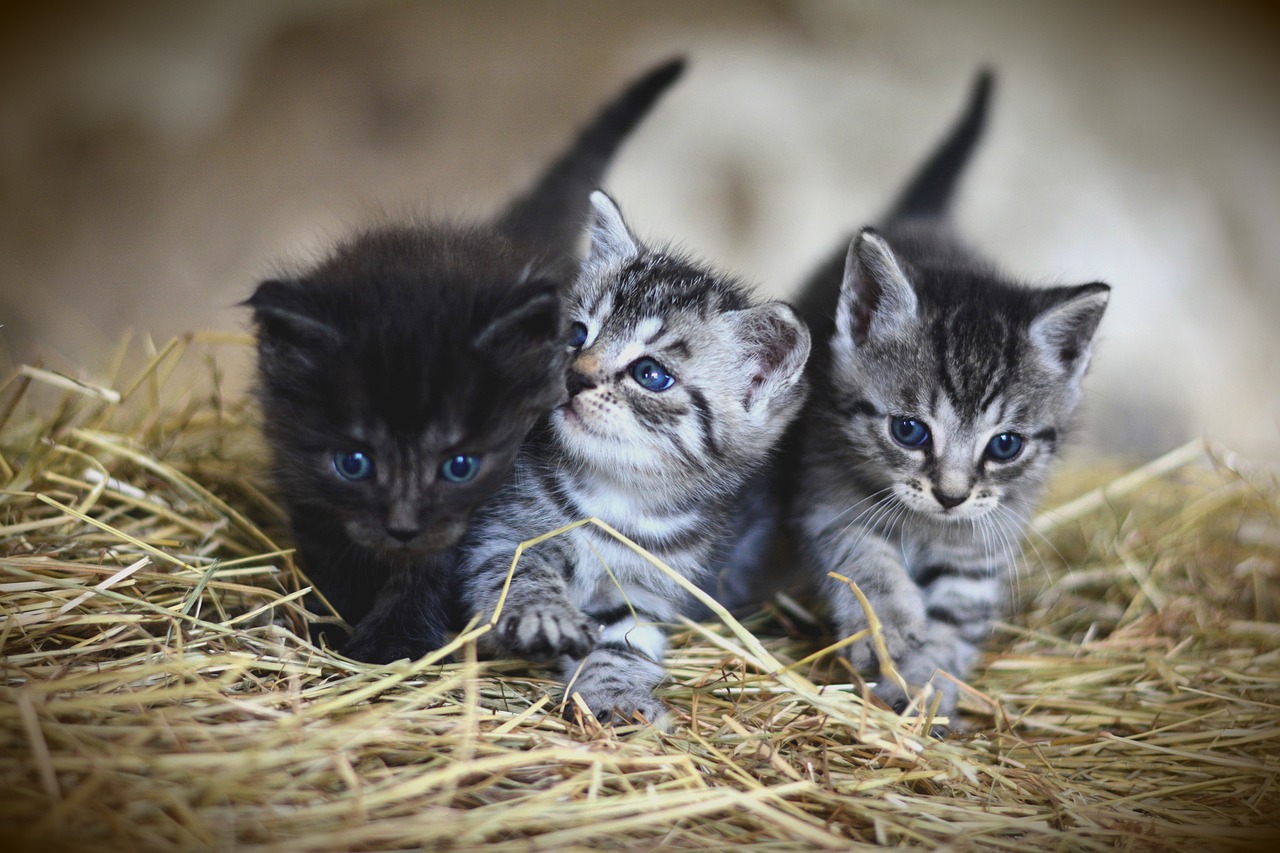
gray kitten plays on floor

Do you have a kitten that seems to have mysteriously changed colors? If so, they may have a fever coat. Although “fever coat” may sound scary, it is nothing to worry about and does not harm your kitten.

Although it’s natural for all kittens to change color slightly as they mature, a fever coat occurs in kittens whose mothers were ill or on medication while pregnant. The increase in temperature in the mother’s womb caused the kitten’s pigment not to develop properly. Below, we’ll take a closer look at fever coats in kittens.

divider cat paws 2 oct 2024

What Is Fever Coat in Kittens?

A fever coat happens whenever a mother cat has fever-inducing infections, extreme stress, or is on certain medications while pregnant (although this is rare). Whenever the mother has extremely high temperatures, the kitten’s coat does not develop properly within the womb. This is simply because feline coat pigmentation is sensitive to heat.

So, these kittens are typically born with cream, frosted silver-grey, or reddish coats. You can expect the coat to change within a few months to a year after the kitten’s birth.

Does Fever Coat Have Any Negative Side Effects?

The fever coat does not lead to genetic abnormalities, health issues, or anything else you should be concerned about. It merely means that the pigment did not fully develop in the womb and that it must develop after the kitten is born.divider cat paws 2 oct 2024

Different Types of Fever Coats

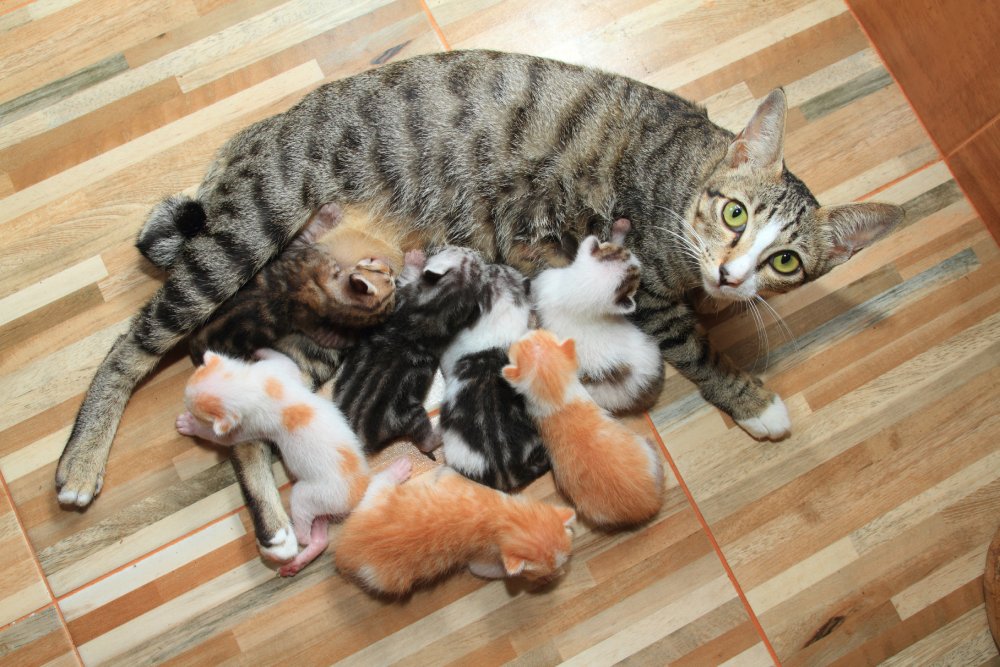
Lynx point Siamese tabby Cat nursing litter of mulit-colored newborn kittens
Image Credit: MW47, Shutterstock

Even though the same occurrence causes fever coats (the increased temperature within the womb), there are different types of manifestations of fever coats. Because of how many fever coat types there are, it can be challenging to identify a fever coat in your kitten. Here are the most common types of fever coats.

  • All-Over Color – An all-over fever coat has a white, red, or silver coloration. At most, there may be a slight pattern underneath the fever coat that indicates the cat’s natural color for when it matures. For example, an orange tabby can have a cream fever coat with pale stripes. As it matures, its orange coat with replace the cream one.
  • Patches – In contrast to all-over color, some fever coats manifest in color patches. Some patches will be the natural color, while others will be the fever coat colors. A brown tabby can have a normal head, paws, and tail, but their belly may be touched with fever coat colorations.
  • Stripes – One of the rare manifestations of fever coats is dorsal stripes. These stripes are typically parallel and colored white, gray, or red on their back. The stripes are similar to a tabby cat’s dorsal stripe pattern, but they go away with age.

divider cat paws 2 oct 2024

Fever Coat vs Color Points

It is essential to point out that fever coats are not the same as undeveloped colors. Siamese, Himalayan and other color-pointed cats have undeveloped colors because of enzymes. These enzymes cause the color to only develop in temperatures below 100 °Fahrenheit (37.8°C), which is less than the womb’s natural temperature. Thus, color-pointed cats are born solid cream with color points at their coolest regions.

In contrast, a fever coat has nothing to do with enzymes and tells you that the mother cat was sick. There is nothing abnormal or wrong with the kitten.

Meet a Kitten with Fever Coat

Do you want to meet some cats with fever coats? Meet Bruce!

Bruce the Cat

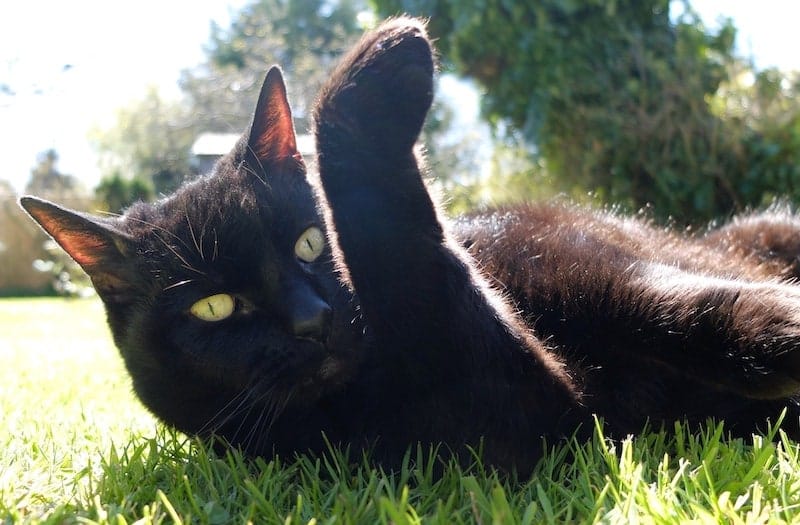
Bruce the Cat is one of the most famous cats with a fever coat. Because of his blog, Bruce is known throughout the internet for his striking good looks and outrageous personality. As you can see, Bruce was born with an all-over gray fever coat. Now that he is mature, he has a stunning jet-black coat instead. He’s still incredibly handsome!divider cat paws 2 oct 2024

Conclusion

A fever coat is a phenomenon where the kitten’s coat does not fully develop in the womb because the kitten’s mother has a fever. Most kittens will shed their fever coat when they are 4 or 5 months old. Beyond this magical color-changing ability, the fever coat has no other effect on the kitten, and they will grow up happy and healthy!


Featured Image Credit: Africa Studio, Shutterstock

Want content like this delivered to you?

Sign Up For Our Newsletter

News, insights, expert advice, and everything cat

* By submitting, you agree to our Terms & Conditions and Privacy & Cookies Policy.


How useful was this post?

Click on a star to rate (you can leave written feedback after clicking submit)

Help us improve Catster for pet parents!

Your feedback really matters.

What did you like about this post? Also how can we improve it?

Join the conversation

Leave a Reply

You’re very welcome to leave a comment or question. Please know that all comments must meet our community guidelines, and your email address will NOT be published. Let’s have a positive and constructive conversation.


Talk With A Vet Online

Peace of mind,
anywhere, anytime

Affordable vet advice

How Can Cats Survive High Falls? Vet-Approved Science & Info

Cats have been wowing humans with their ability to handle high falls with relative ease. Cats have survived falls from great heights, although...

Maine Coon Cat Health Problems: 8 Vet-Reviewed Issues

Maine Coons are beloved felines, and it’s easy to see why. They have gorgeous, full coats and are large, majestic animals that are...

11 Signs to Look for When Inspecting a Cat Boarding Facility (Vet Reviewed)

It can be nerve-wracking to leave your cat when you go out of town, especially if your cat is going to stay somewhere...

9 Best Cat-Proof Trash Cans in 2026 – Reviews & Top Picks

We all adore our cats, but we don’t always adore their behavior. Kitty curiosity can lead to many a perilous situation, including your...

More related

Are Ragdoll Cats Affectionate? The Surprising Answer!

Ragdoll cats are beautiful and intriguing. Their intelligence and docile behavior make them the perfect pet for those looking to maintain a calm...

11 Devon Rex Colors (Common & Unique Varieties)

The inquisitive and friendly Devon Rex is a cat with an unlimited supply of love and loyalty to share with the right people....

Why Do Cats Eat Grass? 5 Vet-Reviewed Reasons Behind the Behavior

Our beloved cats are quirky creatures with some habits that seem rather baffling to cat owners. One of these behaviors is cats chowing...

4 Curly-Haired Cat Breeds (With Info & Pictures)

Curly-haired cats are extremely rare, and the anomaly indicates they are missing at least one layer of their natural hair. Cats have an...

Keep reading

Can Cats Eat Beef? Vet-Reviewed Nutrition Facts & FAQ

Cats need animal protein to meet their nutritional requirements. So, can cats have beef? Although cats would not hunt and eat cows in the wild, beef is considered a good protein source for cats. In general, cats need high amounts...

Can Cats Eat Beef

What Do the PrettyLitter Colors Mean? Explanation with Color Chart

Staying on top of your cat’s health can be difficult, even if you religiously take your pet to the veterinarian for regular checkups and dental care. Urinary tract infections (UTIs) and conditions like kidney tubular acidosis or the presence of...

pretty litter

Do Feral Cats Meow? Vet Reviewed Facts

If you own a cat, you know many are anything but quiet. Cats meow at you for any reason, and some constantly chatter throughout the day. While feral cats may look like regular cats, they behave differently. So do feral...

two-feral-cats

Why Is My Cat Afraid of the Ceiling Fan? – 4 Possible Vet-Reviewed Reasons

Cats, like many other pets (and us), possess unique personalities. Some can be extremely brave and adventurous, while others can be more timid and get scared easily. A cat’s personality can be influenced by several factors, including their genetics, early...

ceiling fan

Do Cats Bleed After Giving Birth? Vet-Approved Facts & FAQ

If you plan to breed your cat or they’ve accidentally become pregnant, you probably have a million questions about what comes next. How long a cat stays pregnant is a good one, but there are many more. One of the...

Mother-cat-and-new-born-baby-kittens-drinking-milk-from-their-mom-breast

Why Is My Cat Scratching the Mirror? Possible Causes & Vet-Reviewed Solutions

There are several possible reasons a cat scratches a mirror. Figuring out the answer largely depends on the context of the behavior. Some cats may be trying to mark their territory since they have scent glands in their paws, and...

How Aggressive Are Tuxedo Cats? Vet-Verified Facts & Info

Do you have a cat with an attitude? Or as many call it, cattitude? If you do, you’re not alone. While some cat owners have kitties in their lives that are sweet, docile, and loving, others have the pleasure of...

Tuxedo cat lying on kitchen counter

Do Cats Like Pillows? Vet-Reviewed Behavior Science & Info

Cats are the queens and kings of sleep. They spend an average of 15 hours a day sleeping and sometimes as much as 20 hours! That means for those particular sleepyheads, they might only be awake about 4 hours every...

a tabby cat sleeping on a pillow

Love Cats? So Do We! Join the Catster Community

Stay informed with expert pet care insights delivered straight to your inbox! Discover professional guidance on animal behavior, feeding tips, trusted product picks, and much more.


Sign up for the Catster Email Newsletter

Stay informed with expert pet care insights delivered straight to your inbox! Discover professional guidance on animal behavior, feeding tips, trusted product picks, and much more.