Get

In Your Inbox

Catster is reader-supported. When you buy via links on our site, we may earn an affiliate commission at no cost to you. Learn more.

Ear Mites in Cats: Signs, Causes & Treatments (Vet Answer)

Share

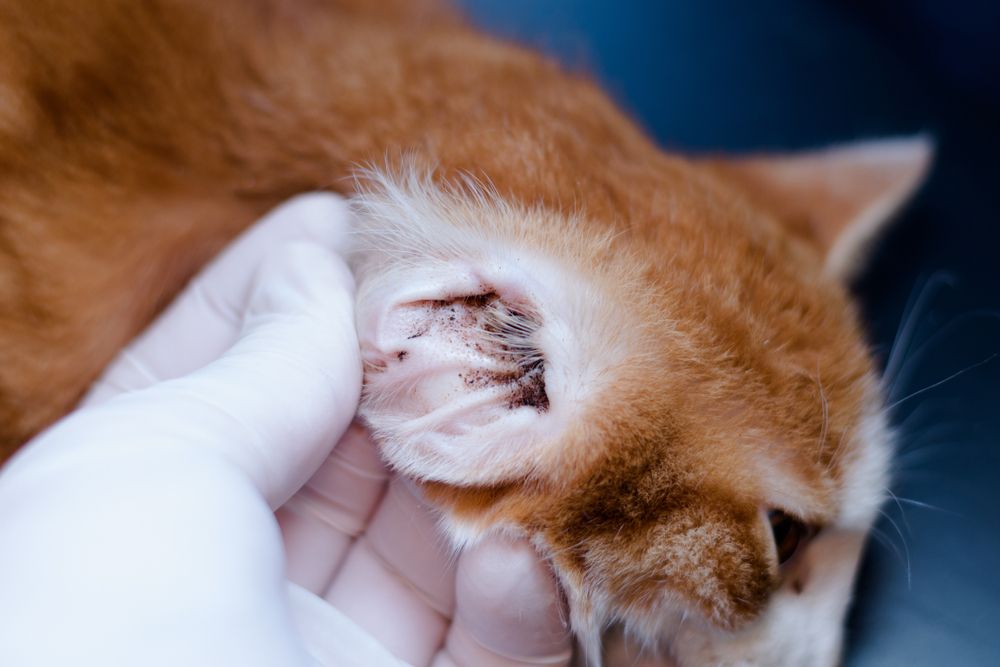
ginger kitten with ear mites

Ear mites may be small in size, but they can cause significant discomfort to your cat. Most people are aware that ear mites exist, and that they are a fairly common cause of ear problems in cats. But for most people, the knowledge stops there.

So, what are ear mites in cats, and why do we need to worry about them?

divider single cat paw oct 2024

What Are Ear Mites in Cats?

The technical name for feline ear mites is Otodectes cynotis. These mites are eight-legged critters that can’t usually be visualized with the naked eye. If you have sharp eyesight, you might notice them as tiny white spots crawling along the surface of your cat’s ear. Vets will often use an otoscope or microscope to identify ear mites.

Ear mites make their home in the cat’s ear canal, on the surface of the skin, feeding on skin oils and ear wax. In the process, they cause significant discomfort and inflammation.

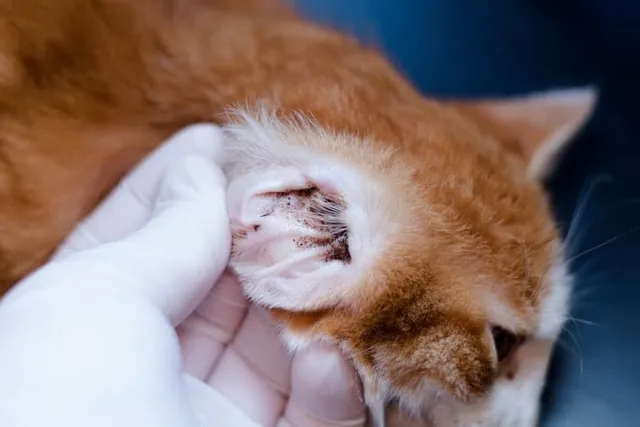
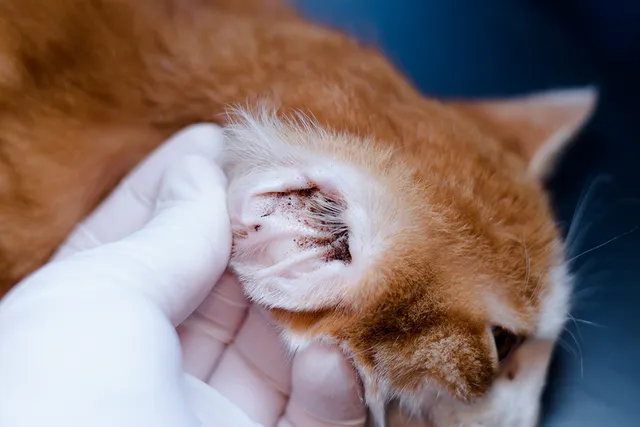
vet checking the ear sore of a cat
Image Credit: Yekatseryna Netuk, Shutterstock

What Are the Signs of Ear Mites in Cats?

You will rarely see the mites themselves as they are so small and can hide in the debris of the ear canal.

Common signs that mites are present include:
  • Hair loss around the ears from excessive scratching
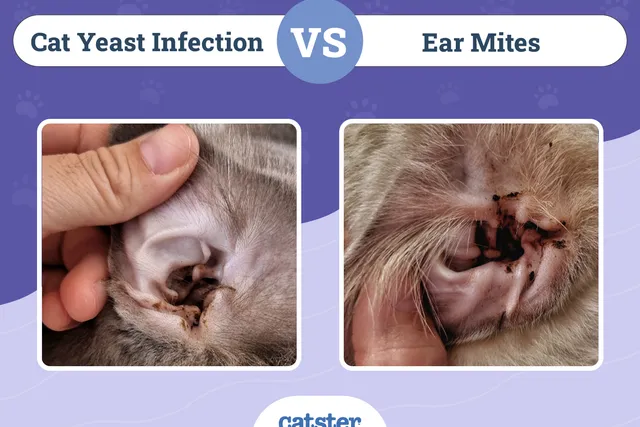
  • Dark crusty discharge from the ears (said to resemble coffee grounds)
  • Scratching at the ears
  • Redness in the ears
  • An unpleasant odor from the ears
  • Head-shaking

What Are the Causes of Ear Mites in Cats?

This part is fairly simple—cats pick up ear mites from other cats. The pesky little mite is highly contagious; when a mite-infected cat plays or socializes with a non-infected cat, the mites will quickly jump across to make a new home in the ears of the non-infected cat. Cats can also pick up ear mites from dogs.

tabby cats sitting on windowsill
Image Credit: Okssi, Shutterstock

How Do I Care for a Cat with Ear Mites?

Thankfully, the old days of treating cats daily for a month, or treating them with multiple injections, appear to be behind us. Several newer products can be applied to the skin between the shoulder blades. If you keep up with these treatments monthly, the ear mites will be killed off and should never return.

If one cat in your house is affected by ear mites, every other cat and dog in the house must also be treated for ear mites. Some cats will suffer secondary bacterial or yeast ear infections, as a result of scratching and traumatizing the ears. These will need to be treated with different topical medications (ear drops) prescribed by your veterinarian.

If you need to speak with a vet but can't get to one, head over to PangoVet. It's an online service where you can talk to a vet online and get the advice you need for your pet — all at an affordable price!

Preventative wellness PGV mention keep cat healthy Preventative wellness PGV mention keep cat healthy mobile

divider single cat paw oct 2024

Frequently Asked Questions (FAQ)

Are Ear Mites Contagious?

Yes. Ear mites are highly contagious among dogs and cats. Chances are, if one of your cats has ear mites, the other cat does too. This is how mites spread—they are rarely picked up from the environment or soil.

Can Ear Mites Spread to People?

No. While there have been reports of ear mites giving people a mild, transient rash, they are not able to colonize the human ear. If your cat has ear mites, you don’t need to worry about having mites in your ears.

What If the Signs Don’t Go Away?

If the signs of ear irritation don’t go away, there could be a few things going on. There are four questions you should ask yourself (and your veterinarian) if this is the case:

  • Was the presence of ear mites confirmed initially?
  • Have secondary bacterial infections been checked for, and treated?
  • Have all pets in the household been treated for ear mites?
  • Was the right product used, at the right dosage?

divider single cat paw oct 2024

Conclusion

Ear mites can be a nuisance to our feline friends. While not life-threatening, they can cause significant discomfort and irritation. Any person who has had an ear infection will tell you just how bothersome ear infections are! Thankfully, ear mites can usually be treated successfully, and there are several safe products on the market.

If your cat is showing signs of an ear problem, do not jump to the conclusion that he or she has ear mites. Always arrange a consultation with your veterinarian to ensure the right diagnosis is reached, and the right treatment commenced. This will lead to the best outcome for your cat.


Featured Image Credit: Todorean-Gabriel, Shutterstock

Want content like this delivered to you?

Sign Up For Our Newsletter

News, insights, expert advice, and everything cat

* By submitting, you agree to our Terms & Conditions and Privacy & Cookies Policy.


How useful was this post?

Click on a star to rate (you can leave written feedback after clicking submit)

Help us improve Catster for pet parents!

Your feedback really matters.

What did you like about this post? Also how can we improve it?

Join the conversation

Leave a Reply

You’re very welcome to leave a comment or question. Please know that all comments must meet our community guidelines, and your email address will NOT be published. Let’s have a positive and constructive conversation.


Talk With A Vet Online

Peace of mind,
anywhere, anytime

Affordable vet advice

Your Cat Ghosted Your Bed: Here’s What Changed

Cats are particular about where they sleep. Not just a little particular, but obsessively, methodically particular. They’ll test seventeen surfaces, circle a spot...

Figure Skater’s Secret: Land Like a Cat – About That Viral Photo Though…

Even if you’re not into sports, you’d have to be keeping well clear of the headlines to have not heard about the 2026...

Ask Dr. Paola – Help! My Cat Chews on Wires! (February 23, 2026)

Welcome to our “Ask Dr. Paola” series, where every Monday we bring expert advice straight from Dr. Paola Cuevas (MVZ) to help our...

Why Cats Pee on Furniture (And How to Make Them Stop)

Cats peeing on furniture isn’t a behavior problem. It’s a communication problem. Your cat can’t tell you their litter box hurts to use,...

More related

5 Best Cat Foods for Feral Cats in 2026 – Reviews & Top Picks

If you are used to feeding feral cats, you probably think of them as your own. After all, it takes a lot of...

How Many Cats Can You Own in Ohio? What Law States

There are typically laws or ordinances in place in certain areas that restrict the number of pets a household can own. As an...

A Bittersweet Farewell: Crystal & Ivy Say Goodbye

Welcome to the Wednesday Cats of Catster! Every week, we share a story from one of our cat-loving Catsters. This week is about...

Why Does My Cat Smell Like Maple Syrup? 3 Vet-Reviewed Reasons

A cat that smells like maple syrup may sound pleasant, but in reality, it could be an indicator of a medical issue. If...

Keep reading

Why Is My Elderly Cat Suddenly Pooping on the Floor? 9 Vet-Reviewed Reasons

Our cats are known to be fastidious creatures, and it can be disconcerting when you find your beloved pet pooping on the floor. Cats are typically good at using their litter boxes, and if your cat is a senior, you...

hand picking up cat poop

Why Do Cats Suck on Blankets? 5 Vet-Verified Reasons & Solutions

If you have had multiple cats throughout your life, you know that they are capable of strange behaviors, such as running around the house for no reason, meowing at birds and squirrels outside the window, and kneading on blankets. One...

grey and white cat under the blanket

Do Outdoor Cats Need a Litter Box? Vet-Reviewed Care Facts

If you have a strictly outdoor or an indoor-outdoor cat, you may wonder if you should provide your pet with a litter box. After all, they likely have many places from which to choose; the world is their toilet! Many...

cat sniffing litter in the box

Cat Nail Biting: 3 Vet-Verified Tips If Your Cat Chews & Pulls Their Claws

For the most part, cats biting nails and chewing claws is a perfectly normal behavior, and if you notice your cat doing this, there is usually nothing to be overly concerned about. Cats are fastidious groomers, constantly licking and cleaning...

brown tabby cat with green eyes lying on the sofa, bites its nails

Can Cats Eat Cockroaches? Vet-Verified Facts, Risks & Tips

It can be hard to believe that cats would be interested in cockroaches. These insects are generally considered an unpleasant nuisance, especially compared to our lovable felines. However, cats find them interesting enough to chase and sometimes even eat. Fortunately,...

Can Cats Eat Cockroaches

Do Flea Collars Work on Cats? Vet-Approved Facts & FAQ

As much as we love our cats, dealing with fleas can be a huge pain. Flea collars are one method of flea prevention that many pet owners opt for, but do they actually work? The answer is yes, but they...

tortie Oriental cat wearing flea collar

Can Cats Eat Gummy Bears? Vet-Reviewed Nutritional Facts

Gummy bears are fun treats when you want to wind down after a long day. They’re chewy, sugary, and adorably tasty. If your cat is the sort to always demand a nibble of whatever you’re eating, you may have considered...

Can Cats Eat Gummy Bears

7 FIV in Cats Vet-Approved Facts You Might Not Know About

Feline immunodeficiency virus (FIV) is a common and serious infection in cats worldwide. This lentivirus, which weakens the cat’s immune system, is similar to the human immunodeficiency virus (HIV) responsible for AIDS in humans 1. Although cats with FIV may...

woman holding her cat in vet clinic

Love Cats? So Do We! Join the Catster Community

Stay informed with expert pet care insights delivered straight to your inbox! Discover professional guidance on animal behavior, feeding tips, trusted product picks, and much more.


Sign up for the Catster Email Newsletter

Stay informed with expert pet care insights delivered straight to your inbox! Discover professional guidance on animal behavior, feeding tips, trusted product picks, and much more.