Get

In Your Inbox

Catster is reader-supported. When you buy via links on our site, we may earn an affiliate commission at no cost to you. Learn more.

Do Cats Have Whiskers on Their Legs? Vet-Reviewed Facts & FAQ

Share

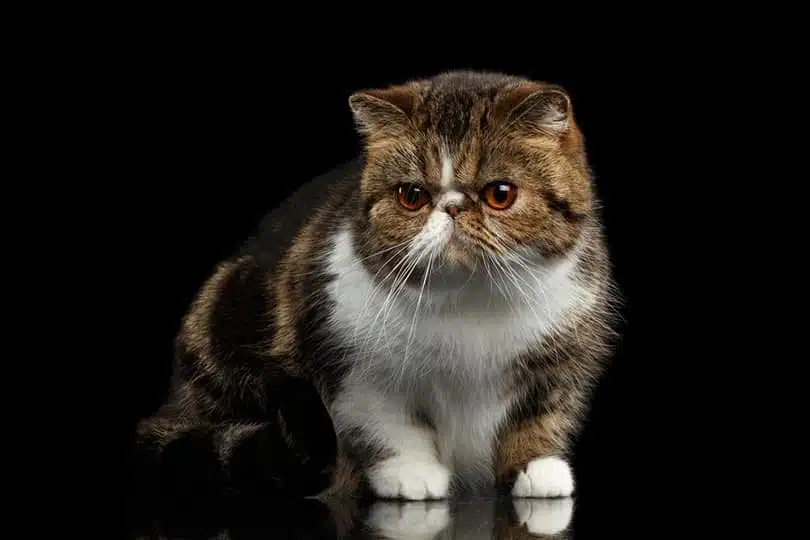
close up of Exotic Shorthair Tabby Cat in black brackground

We are quite familiar with our little kitty’s whiskers. They are one of the most adorable things about their faces. But do cats only have whiskers on their face? How about their legs? It would be absolutely right if you’ve heard a rumor that cats also have whiskers on their legs.

Let’s learn more about whiskers, how they function, and how they help your cat navigate everyday life. And before we even begin, no, the whiskers never need a trim!

divider cat faces 2 oct 2024

What Are Whiskers?

As cat owners, we love our kitty’s whiskers, but most of us probably don’t know much about them. You might’ve heard that if you clip a cat’s whiskers, it causes them to walk sideways. The question is, why? We definitely don’t recommend slicing off your cat’s whiskers to test the theory. We’re just going to tell you to clear up any confusion.

You are free to use this image but we do require you to link back to Catster.com for credit

Whisker Function

Whiskers can tell us so many things about our cats. Your cat’s whiskers can change in movement depending on their mood and what’s happening around them. While these are typically used for tracking and hunting, they also are integrated into a cat’s basic personality and behavior.

Your cat can use their whiskers to indicate fear, anxiousness, aggression, pain, friendliness, and interest.

Whiskers are an important sensory and navigational system for your cat. Interestingly, the whiskers are the very first hairs to develop in the womb. Each whisker is connected to a nerve bundle that signals the body, acting as a series of receptors.

Whiskers help your cat detect even the slightest movements around them, making them incredibly keen to react. Your feline has several distributed throughout their bodies, mostly on the face. Generally speaking, cats have an even number of whiskers on both sides of the face, totaling roughly 24.

In addition to their muzzle whiskers, they also have chin whiskers and eyebrow whiskers. Whiskers control your cat’s balance and keep them keenly aware of what’s happening around their face. Whiskers will vibrate when an object gets close letting them know when an object is near.

  • Superciliary whiskers lie around the eyebrows and detect movement around the eyes to prevent eye injury.
  • Mandibular whiskers are those found on your cat’s chin. They assist your cat a lot during times of hunting, as it allows the cat to close in on its prey or detect whether the prey is still moving.
  • Mystacial whiskers are the most commonly recognized. They are the longest whiskers on the face located on your cat’s muzzle.
  • Carpal whiskers are on the back of your cat’s legs towards the bottom of the paw. Like the other whiskers on their body, they serve a great purpose, helping your cat learn more about its environment.

What’s unique about these particular whiskers is that they help your cat climb trees on other surfaces. Also, when your cat finally catches prey, these whiskers help them determine if the prey is still living.

cat carpal whiskers, cat leg whiskers
Image By: Sahel Fahmi, Shutterstock

Do Carpal Whiskers Also Affect Balance?

Carpal whiskers on the back of your cat’s front legs are to help your cat navigate their path in alignment with the whiskers on its face. While the whiskers on the head detect most of what’s going on around, the ground-level whiskers help your cats ensure their footpath and climb accurately. They are also useful when hunting prey.

All whiskers come together to create a GPS-like system. In combination with other senses, whiskers communicate with your cat’s brain for safety, security, and survival purposes.

Whisker Fatigue: What Does It Mean?

In marketing, you might’ve heard the term whisker fatigue, but do you know what it means? Because cats measure distance with their whiskers, having a food bowl or something else very close to your cat’s whiskers can overstimulate them. That is why you’ll see a lot of marketing that aims to prevent whisker fatigue by providing a shallow cat dish that doesn’t obstruct your cat’s whiskers.

Whiskers can help your cat in a variety of ways. It’s an external guidance system so they can navigate their daily lives without issue.

Often, whiskers help with hunting, but your domesticated cat won’t need to do this for food as a wild cat would. Even though domestic cats don’t need to seek out prey to survive, these instincts are still deeply embedded in your cat’s psyche.

close up of cat whiskers
Image Credit: Annette Meyer, Pixabay

Never Trim Whiskers

So, the whiskers still have a primary function in your cat’s daily life. It is so important to understand that you should never cut a cat’s whiskers under any circumstances. Even though you might cut your facial hair to eliminate scruff, your cat doesn’t need the same treatment.

Not only will it be insanely uncomfortable for your cat, but it’s also incredibly inhumane to perform such an action. If you have come here to educate yourselves before picking up the shares, we are glad you did.

Even the carpal whiskers on the back of the legs survey primary function and should never be tampered with in any way, shape, or form.

divider 3 paws

Final Thoughts

Now you know that it is perfectly normal for your cat to have whiskers on their front legs. It might not seem like that big of a deal, but these little tiny whiskers have huge functions, telling your cat about the environment they’re walking in. This is part of your cat’s overall navigational system.

Again, we must stress never to trim or cut any whiskers on your cat’s body. These are not the same as hairs; they need these wiry projections to get around.


Featured Image Credit By: Seregraff, Shutterstock

Want content like this delivered to you?

Sign Up For Our Newsletter

News, insights, expert advice, and everything cat

* By submitting, you agree to our Terms & Conditions and Privacy & Cookies Policy.


How useful was this post?

Click on a star to rate (you can leave written feedback after clicking submit)

Help us improve Catster for pet parents!

Your feedback really matters.

What did you like about this post? Also how can we improve it?

Join the conversation

Leave a Reply

You’re very welcome to leave a comment or question. Please know that all comments must meet our community guidelines, and your email address will NOT be published. Let’s have a positive and constructive conversation.


Catster's Digital Magazine is Back!

Vet-approved health & behavior advice

Real cat stories & community features

Chatting About Big Cat Tourism, Lion Hunting, and Learning From Our Mistakes | Chatty Cattys, Episode 26

In this episode of Catster’s Chatty Cattys podcast, Nicole and Dr. Karyn dive into the dark side of big cat tourism and the...

Why Cats Sit by the Door (But Don’t Go Through It)

Door-sitting is one of those quirky little habits that almost every cat owner experiences at some point. You know how it goes: a...

Six Legs Are Better Than Three – How A Tripod Dog and Kitten Found Friendship Through Recovery

Sometimes the most meaningful friendships begin in the most unexpected places. At a Maryland veterinary hospital operated by Last Chance Animal Rescue, two...

The Original Space Invaders – Why Zero Respect for Personal Boundaries Is a Good Thing

Cats have a reputation for being independent, and in many ways they are. But anyone who has tried to work at a laptop...

More related

Do Cats Like the Taste of Sweet Things? Vet-Approved Facts & Safety Tips

If you own a dog, you probably already know that chocolate is toxic for them. But what about cats? We don’t see them...

Toronto Humane Society Celebrates Success of Taylor Swift-Inspired Cat Adoption Campaign

The Toronto Humane Society should be celebrating like they’ll never go out of style after a successful Taylor Swift-inspired cat adoption campaign. Launched...

How Far Can Cats Hear? Vet-Reviewed Facts & FAQ

Domestic cats are amazing creatures. They can jump five times their height, tap into the earth’s electromagnetic field to navigate, see minute movements...

Hemolytic Anemia in Cats: Our Vet Explains the Causes, Treatment & FAQs

Many people may have heard the word anemia before, but don’t really understand what it means. Anemia is the term for a low...

Keep reading

How to Treat Ringworm in Cats (6 Vet-Approved Tips)

Ringworm is a common fungal disease in mammals that can cause discomfort and irritation in cats. You can determine if your cat has ringworm by going to a veterinarian and having them complete a physical exam and any testing needed....

scottish fold cat checked by vet

Are Elevated Cat Bowls a Good Idea? Vet-Reviewed Facts & FAQ

Reduced back pain, better digestion, healthier eating—when owners see these big benefits claimed, it’s no wonder they turn towards elevated food and water bowls for their cats. These bowls are usually raised so their bottoms are between 4 and 6...

cat eating on elevated feeding

Are Tapeworms in Cats Contagious? Vet-Reviewed Health Facts

Testing for parasites and deworming are important aspects of pet care, especially in puppies and kittens. There is a relatively high likelihood that any dog or cat will become infested with some type of internal or external parasites, be they...

tapeworm in a cat's stomach

The 6 Best Freeze-Dried Cat Foods of 2026 – Vet-Verified Reviews & Top Picks

Freeze-dried cat food is the easiest way to feed your pet a natural raw diet that reflects what a cat would eat in the wild. Commercial wet or dry foods often contain extra carbohydrate-based fillers that provide bulk and calories...

cat eating food

When to Euthanize a Cat With Seizures: The Difficult Decision & Vet Approved Advice

Seizures in cats can cause a great deal of distress, both to the cat and their human caretakers. Making the decision to euthanize a cat that is suffering from seizures can be one of the most difficult decisions that a...

cat under porch sleeping

Maine Coon Cat Health Problems: 8 Vet-Reviewed Issues

Maine Coons are beloved felines, and it’s easy to see why. They have gorgeous, full coats and are large, majestic animals that are impossible to ignore. Many cat lovers find this breed to be affectionate and fun to have in...

Catster_Health Problems of Maine Coon Cats

9 Best Tartar Control Products for Cats in 2026 – Reviews & Top Picks

Every cat owner knows that their feline companion can spend hours upon hours grooming themselves, but one area they can’t clean is their teeth. Dental hygiene is paramount to the health of your cat, and the smell of your cat’s...

tabby maine coon teeth brushing

Why Is My Cat Panting and Drooling? Vet-Verified Causes & Prevention

Cats are usually fastidious groomers that don’t allow a single hair to fall out of place. However, there are times when cats can drool all over themselves, which is especially concerning when your cat is panting. If a cat is...

Orange cat drooling

Love Cats? So Do We! Join the Catster Community

Stay informed with expert pet care insights delivered straight to your inbox! Discover professional guidance on animal behavior, feeding tips, trusted product picks, and much more.


Sign up for the Catster Email Newsletter

Stay informed with expert pet care insights delivered straight to your inbox! Discover professional guidance on animal behavior, feeding tips, trusted product picks, and much more.