Can You Wash a Cat With Just Water? 6 Vet-Reviewed Tips & FAQs


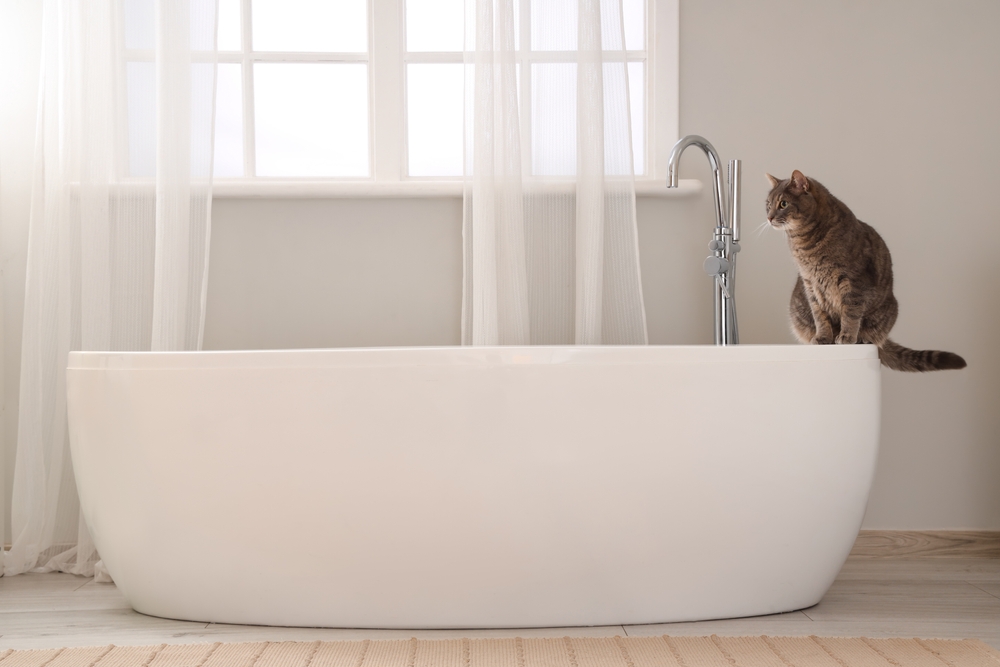
While it’s true that cats spend an excessive amount of time grooming, occasionally, your cat might get into something that their tongue won't be able to handle. For example, a senior cat may not be able to clean themselves as well as a younger cat, and the same can be said for overweight cats. Whatever the situation with your feline, if you need to clean them, you might be wondering whether you can wash a cat with just water (especially if you don’t have any pet shampoo handy). It’s perfectly acceptable and 100% possible to bathe, wash, or spot-clean your cat using only water.
It might even be necessary to spot clean your feline with water. For example, if they get poop stuck to their fur after using a litter box, accidentally soil themselves in other ways, or eat messily (a common issue with kittens), your cat may need spot cleaning. To find out, read on! We have the answers, plus tips, hacks, and advice!

How to Wash a Cat Using Only Water — 6 Tips
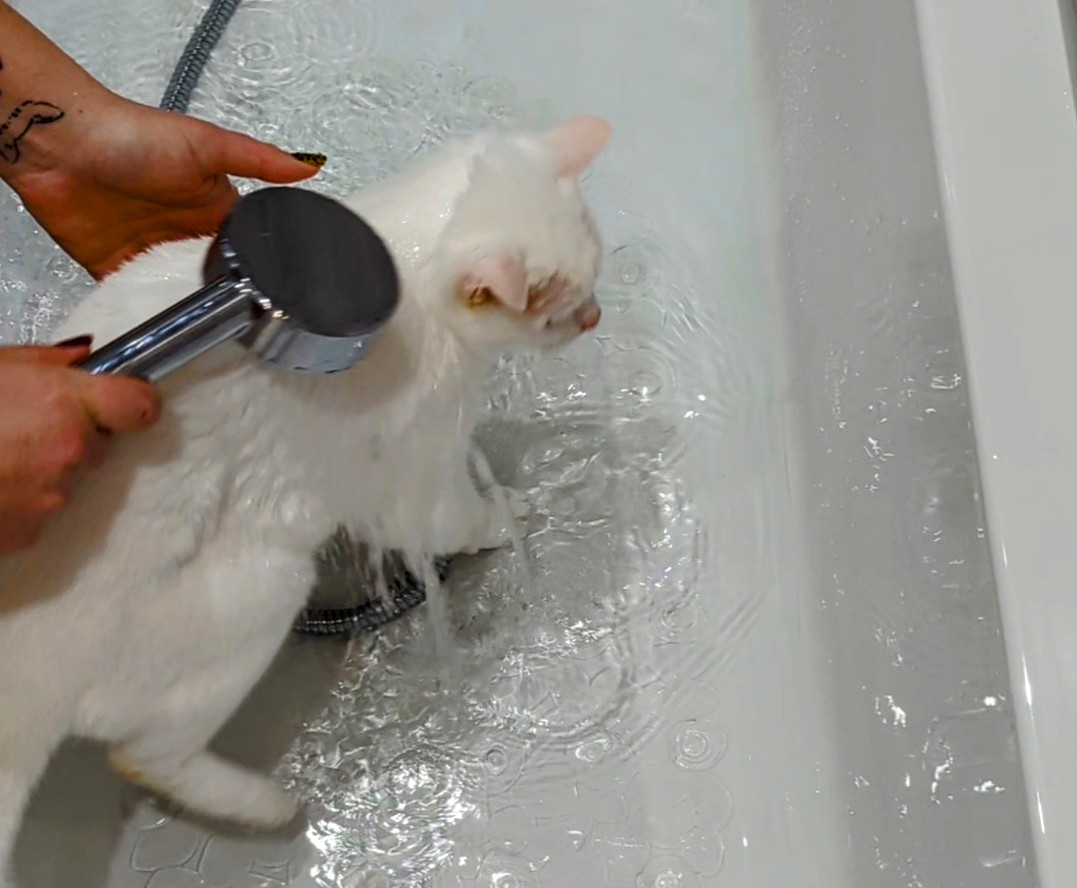
Washing your cat with water doesn’t mean you dunk them in a bathtub and let the water do the rest. It simply means you won't use soap or shampoo. Here are the steps to use if you want to wash your cat with only water.
1. Prepare the Washing Area
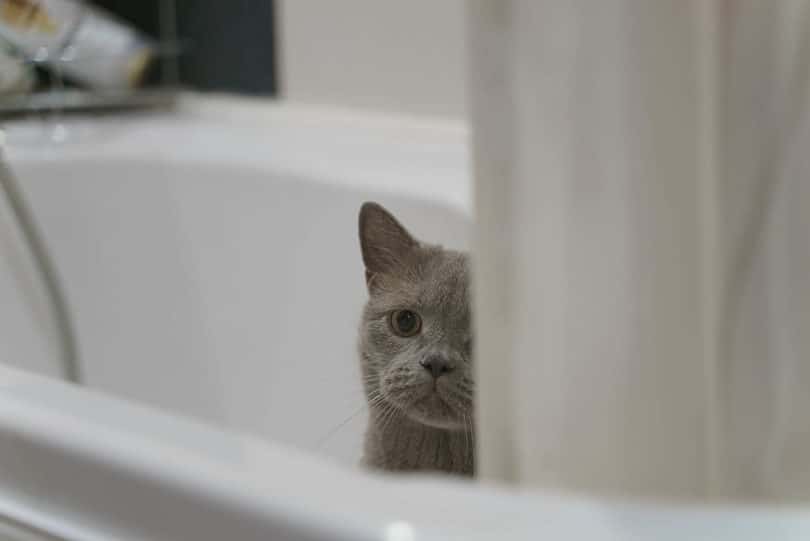
The area where you wash your cat (or bathe them) should be relatively low in height so if your cat ever jumps or attempts to escape, they won't injure themselves. A good idea is to place a towel on the floor that your cat can grip next to a tub or wash basin. They can be restrained on the towel if you apply gentle pressure on their back as they ease into the process.
Alternatively, check to see if your cat is comfortable with the bathtub or shower. Some cats don’t seem to mind bathtubs, and for such cats, a bath or a quick wash can be easier.

2. Check Water Temperature
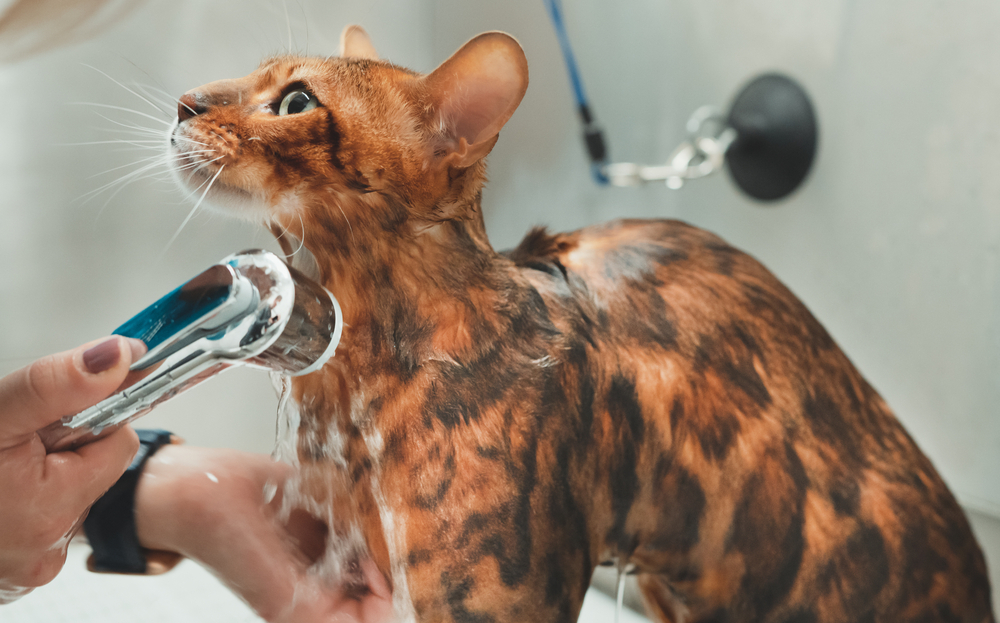
The water that you use to wash your cat shouldn’t be too warm or cold. Cats appreciate room-temperature water.
3. Gently Wet Your Cat
Slowly begin washing your cat. If they need to be washed in their entirety, begin by making their paws wet and then working your way up their legs and eventually, their body. Do not splash your cat’s face with water.
If your cat just needs to be spot-cleaned, focus on that area instead.

4. Hold Your Cat Gently Yet Firmly
The more comfortable and safe they feel, the better. A cat that feels safe will let you do a lot more than a cat that freaks out.
5. Consider Pet Wipes for Spot Cleaning
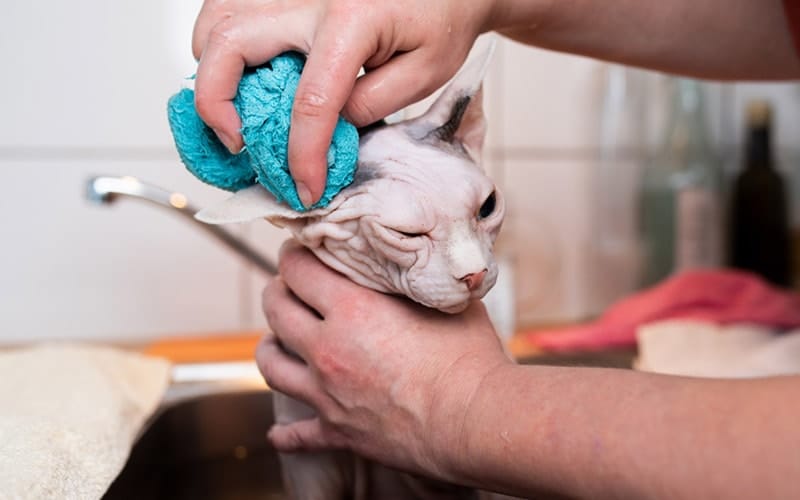
If your cat is just messy in one spot, consider a pet wipe in lieu of water. Wipes are generally more effective, quicker, and less coarse than washcloths or sponges.

- Gentle Care For All Pets - Infused with moisturizing hypoallergenic ingredients & enriched with cucumber & aloe fragrance for healthier fur, coat & skin, the ultimate dog and cat cleaning wipes
- Deep Cleans From Head to Tail - Tackle the toughest dirt & messes with our extra strong pet wipes for dogs, cats and other pets while being gentle on sensitive areas like the face, ears, butt & paws
- Freshness On The Go - Each dog grooming wipes pack contains 30 counts of premium dog wipes that leaves your pets fresh. Packed in resealable packaging, keeping the cat wipes fresh & ready whenever
Cleaning your cat's sensitive areas can be tricky, but high-quality wet wipes can make it much easier. Try a natural, hypoallergenic option like Hepper's Wash Wipes, made with moisturizing ingredients and specifically designed to gently clean your cat's skin and fur. These wipes are as convenient as they are effective!
At Catster, we’ve admired Hepper for many years and decided to take a controlling ownership interest so that we could benefit from the outstanding designs of this cool cat company!
6. Dry Your Cat If Necessary
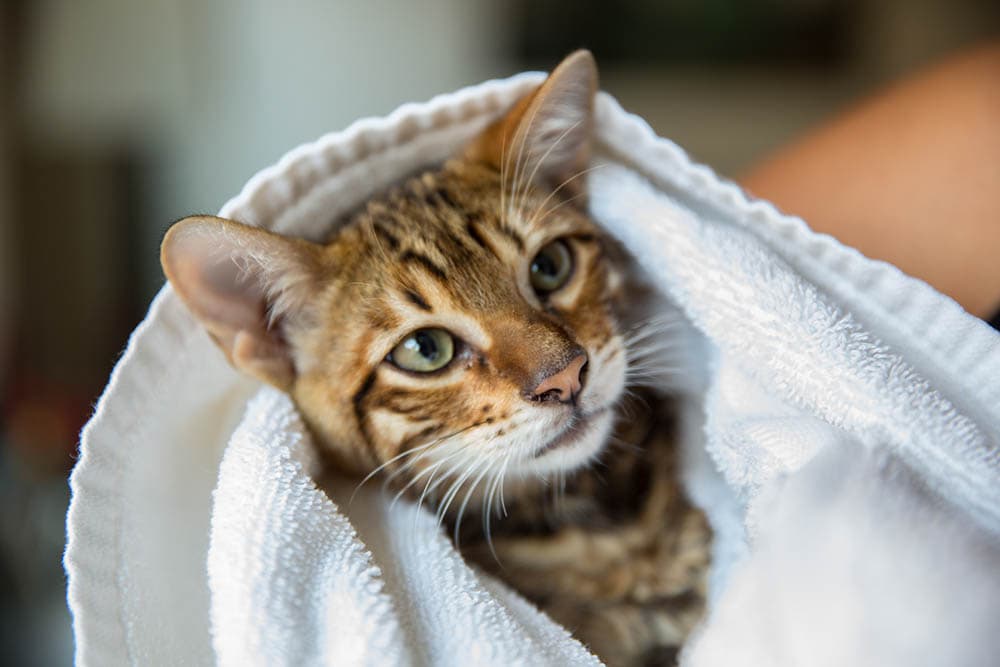
Most cats will not enjoy a hairdryer, even if you use the low setting. Use a soft towel to dry your cat.
7. Dry Your Cat if Necessary
Most cats will not enjoy a hairdryer, even if you use the low setting. Use a soft towel to dry your cat.
FAQ
Can You Use Human Shampoo to Wash a Cat?
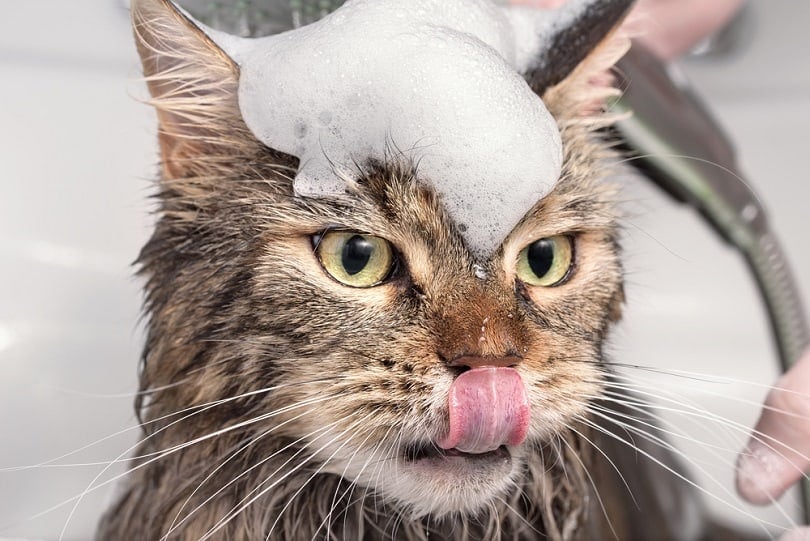
While using human shampoo on your cat won't cause extreme pain, it can cause irritation, rashes, and hotspots on your poor cat’s skin. The main reason human shampoo isn’t recommended for felines is that their skin pH is different from ours. So, it is best to use pet shampoo for your kitty.
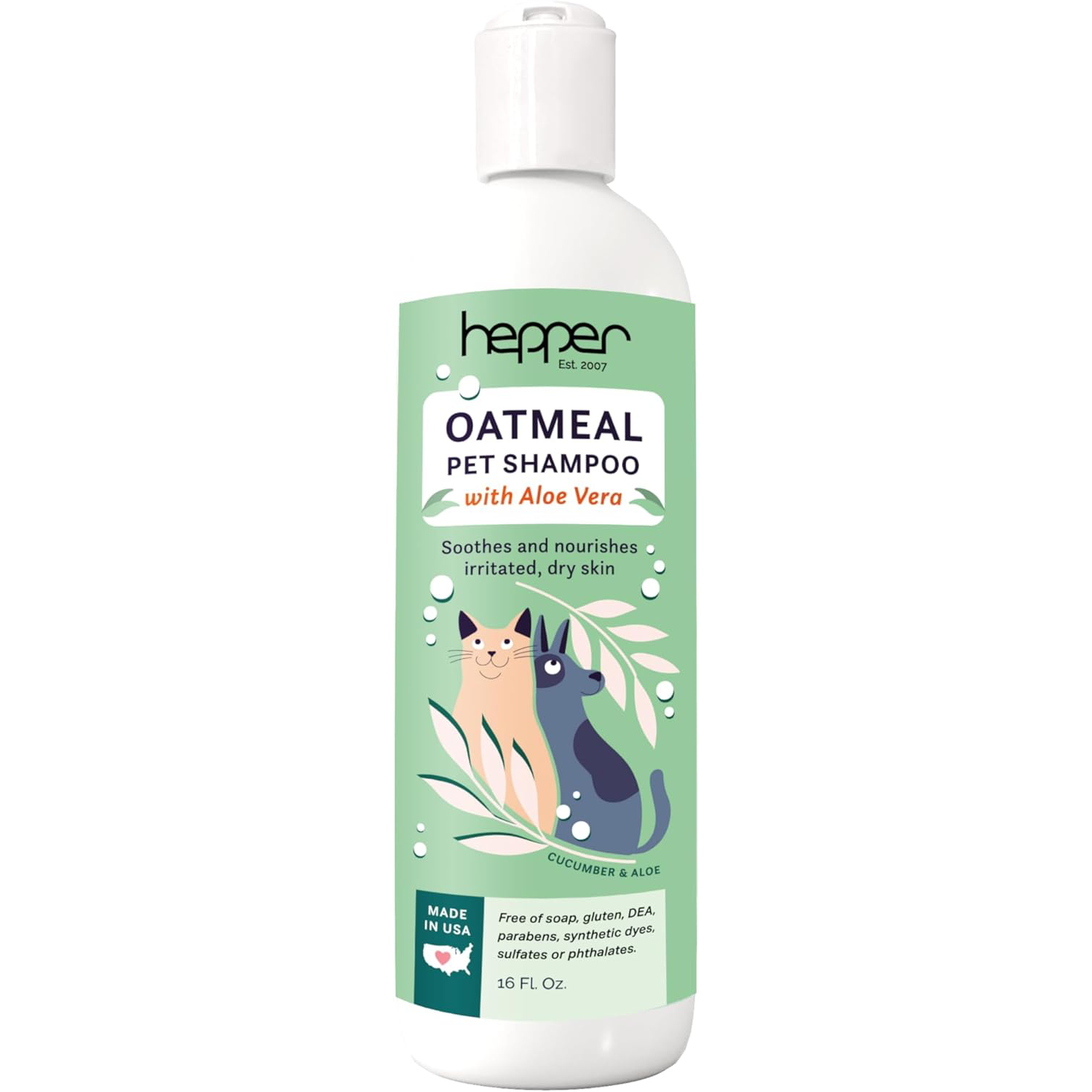
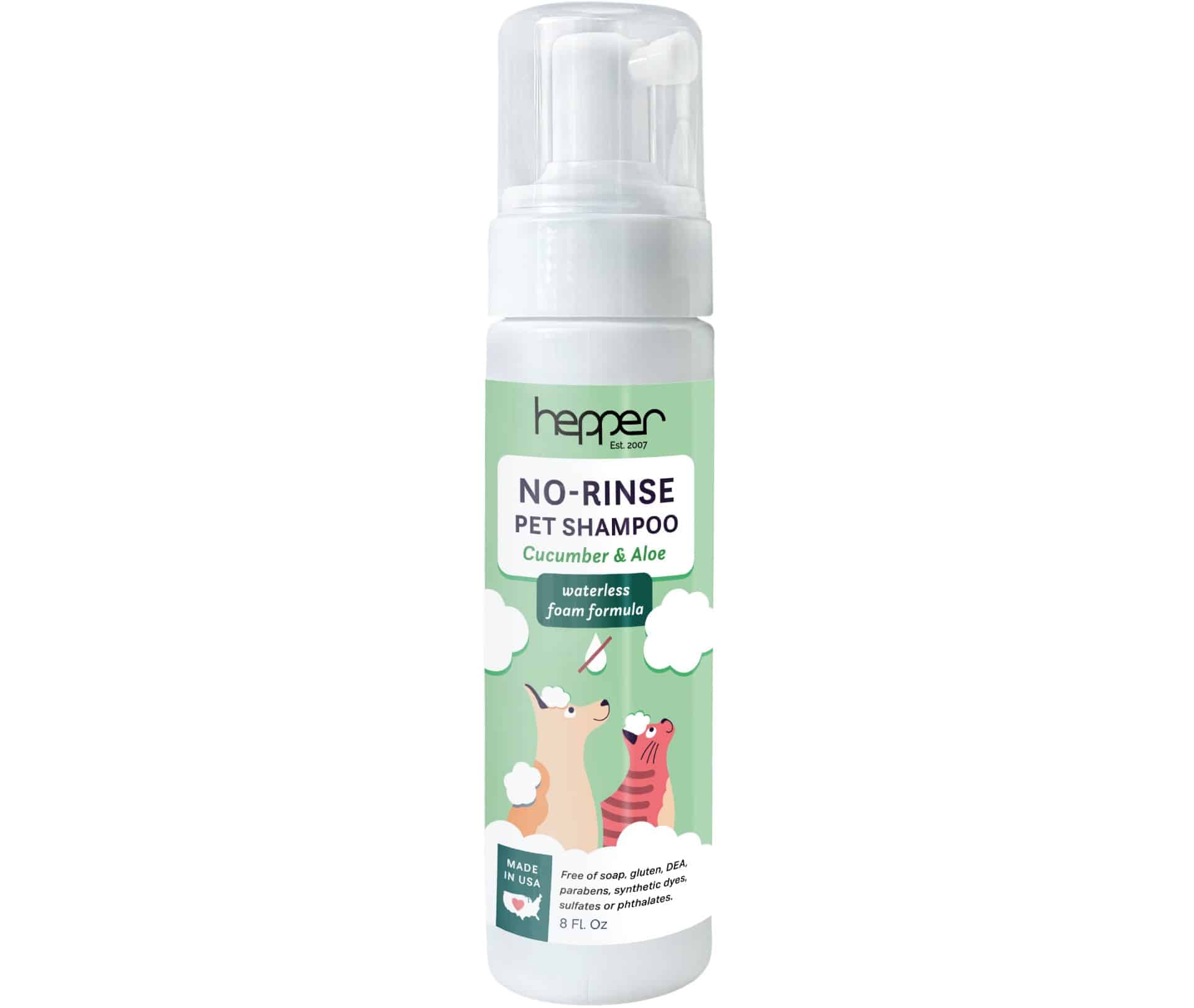
There are lots of pet shampoos to choose from, but some are much better than others. We love these two options created by Hepper, each offering something uniquely different. The Colloidal Oatmeal Pet Shampoo is an excellent choice for cats who require the occasional full bath, and the Waterless No-Rinse Dry Shampoo is perfect for felines that prefer to stay dry! Both are made with all-natural ingredients and pH-balanced formulas designed to gently lift away dirt and debris, leaving your cat's coat and skin soft and hydrated. Find out which is right for you in the table below.
| Image | Product | Details | |
|---|---|---|---|
|
Hepper Colloidal Oatmeal Pet Shampoo |
|
Check Price |
|
Hepper Waterless No Rinse Pet Shampoo |
|
Check Price |
At Catster, we’ve admired Hepper for many years and decided to take a controlling ownership interest so that we could benefit from the outstanding designs of this cool cat company!
Should You Give a Cat a Proper Bath?
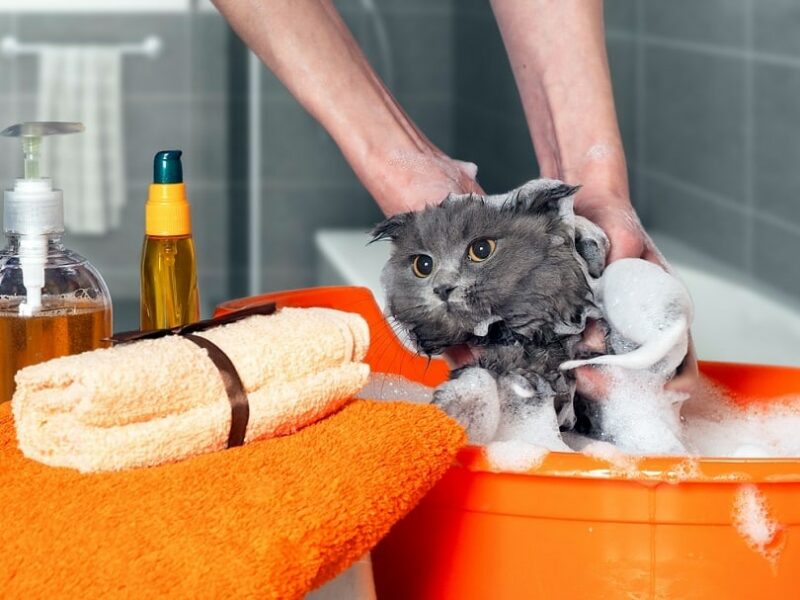
Yes, giving your cat a proper bath with cat shampoo is okay. Some cats, however, do not like baths, and others loathe them. If your cat is out of control in the bathtub, cleaning them with a pet wipe is an alternative. However, if your pet is incredibly dirty, you can visit a professional groomer for assistance.

How Often Should You Give Your Cat a Bath?
This largely depends on your cat, so there’s no one right answer. Cats with short coats that don’t have any skin or health issues and that regularly groom themselves do not need to be given a bath on a schedule.
Hairless cats, such as the Sphynx, often need regular baths to control the level of sebum and oils produced by their skin. Long-haired cats or cats that don’t adequately stay on top of their grooming (which is sometimes a sign of a health issue) may also need bathing assistance on a schedule.

Final Thoughts
At times, your cat might need a quick rinse with water, or they might need to be spot cleaned with a pet wipe. Washing, bathing, or rinsing your cat with water is completely safe and is generally the same as any other cat bath—without, of course, the shampoo component.
Sources
Featured Image Credit: Nils Jacobi, Shutterstock

Expert cat care, straight to your inbox
Vet-reviewed advice, behavior tips, and the best of Catster. Free, and you can unsubscribe anytime.
By signing up, you agree to our Terms & Conditions and Privacy & Cookies Policy.
Gregory Iacono former chiropractor and self-taught writer. Greg has experience in a wide variety of subjects including video script. As a man of clinical experience, Greg has the ability to digest a complex subject and make it accessible to the reader. Greg enjoys traveling and spending time with his two daughters and son.
Join the conversation
Ask a question, share your story, or send private feedback.