How to Help Children & Cats Bond: 9 Vet-Verified Tips


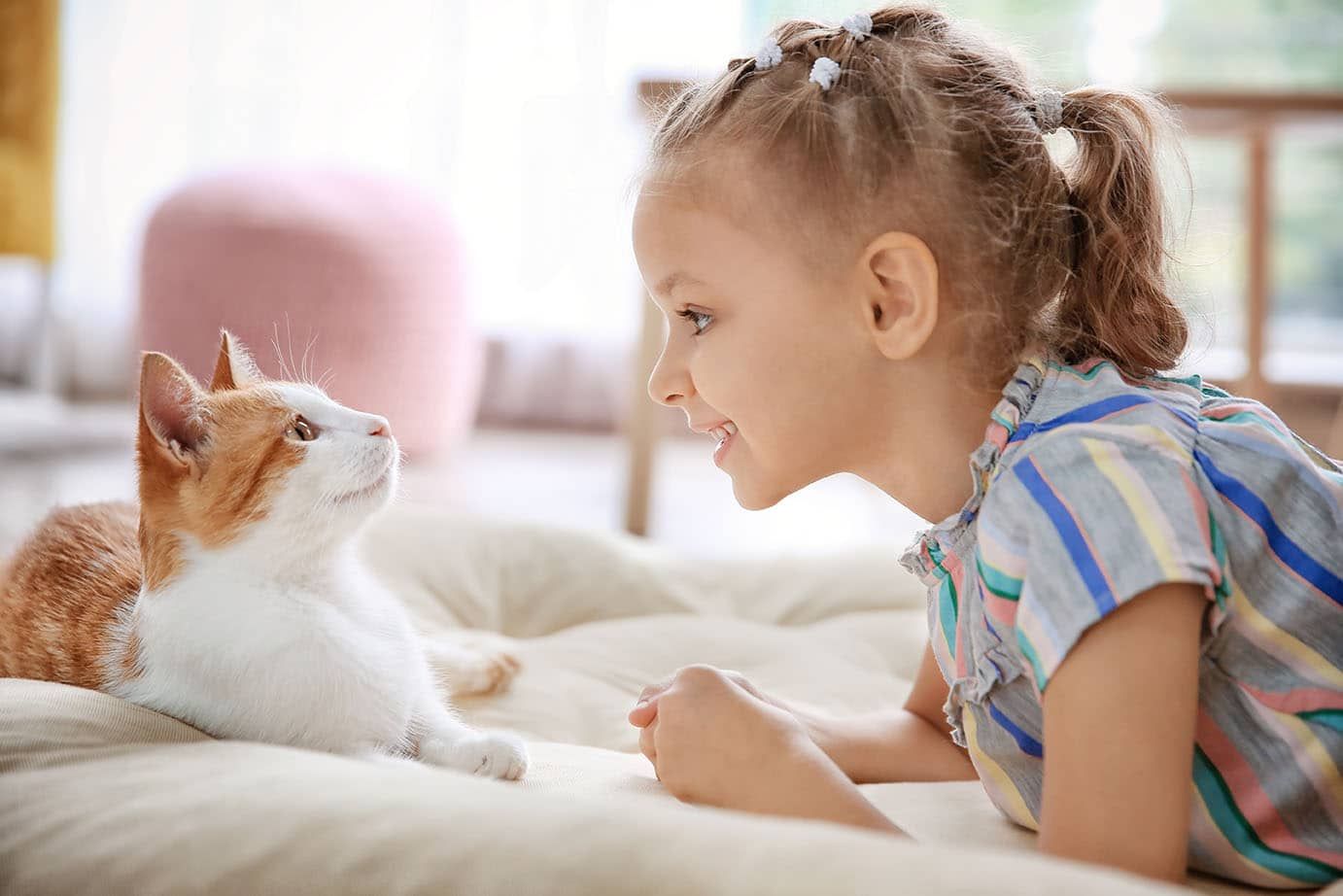
Cats and kids make great companions. Although fostering a healthy friendship can sometimes be challenging, it is much easier when you start by making proper introductions.
Children, especially those with a spirited disposition, can scare the living daylights out of any cat. For understandable reasons, the mere sight of the little rascal could make your kitty defensive and aggressive. You must set some ground rules to remedy the situation and ensure positive experiences during interactions.
A positive relationship with a cat can enhance and promote your child's physical, social, and emotional development. If you want to better the odds of your kid and kitty forming a mutually loving friendship, read on for nine surefire tips.
Let's begin!

The 9 Tips to Help Children & Cats Bond
1. Teach Your Kids How to Handle the Cat
Although infants and toddlers can safely interact with adult cats already in the household (under supervision), experts suggest waiting until a child is 6 years old before getting them a kitten.
Kids can be particularly rough and impatient. Their first instinct when they see a cat is to chase it, grab it, and give it a coerced bear hug. If you are getting a new cat or kitten for an older child, you must set the ground rules before bringing it home.
The first rule is to understand that cats are creatures, not toys. Pulling, hitting, poking, or grabbing them is a big no-no.
Also, your kid must learn the pet's body language to know when to give it some alone time. Even playful cats can get overwhelmed if they don't get enough rest.

2. Do Proper Introductions
A forced introduction is often a recipe for disaster.
Once you bring the new cat home, request your child to give it time to adjust to the new environment. Let it sniff and explore the space and its occupants at its own pace. The surest way to encourage a trusting bond is to allow the initial interactions to be on your cat's terms.
Edible incentives can be helpful if your cat is keen to avoid your child. Use a treat to lure it closer and let the two enjoy contact-free interaction. As the cat warms up, bait it to pick a treat from your kid's palm. You can then graduate to gentle patting and supervised play sessions.
3. Start Slowly
Children live purely in the moment. They barely understand the concept of patience and why they must practice self-control even when they badly want something.
Fortunately, your cat is bound to teach your child the virtue of patience for as long as it takes until the point is home.
Cats are fiercely independent and prone to retaliating if forced to do anything. Although they love interacting with their owners, they don't depend on them for reassurance.
The only way for your child to have amicable interactions with your cat is to let it engage at its own pace. Once it is comfortable, the duo can have a mutually enjoyable bonding session.

4. Establish a Routine
Another practical tip for helping your pet and child bond is creating a routine that works for both. The idea is to make the two a regular part of each other's life.
A proper routine will leave plenty of time for your pet to feed, groom, nap, and have some alone time. It will also designate time for play and cuddle sessions.
If your child is old enough, give them the responsibility of serving the cat at least one meal. The feeding ritual can make bonding easier during play or cuddling sessions. This is because the pet will, over time, learn to associate them with the positive experience of lunch or dinner breaks.
Of course, the time needed for the two to bond depends on your feline's breed and personality.
5. Provide a Safe Space for Your Cat
Cats experience a range of emotions just like humans. Sometimes, they are relaxed and comfortable, while other times, they are distressed, frightened, or anxious. Because a child may not understand the tell-tale signs of these emotions, it is better to ensure your furry friend has a safe space to retreat to if it's moody.
The ideal safe space should be secure and high enough to make it easier for your furry friend to survey its territory. This spot must remain private, and it’s important to ensure that your cat is never disturbed while using it. Encourage your child to resist the urge to drag it out of hiding because it could use its protective reflexes for self-defense. Bonding sessions can resume once the pet has cooled off and is ready to mingle.

6. Teach Your Child to Maintain a Cat-Conducive Environment
Cats hate loud noises, and children are naturally loud and boisterous.
Unfortunately, your rowdy and rambunctious children can quickly scare your furry friend off because it will associate them with a noise it hates. Most cats get distressed, experience panicky behavior, and escape from the scene when kids start shouting.
This can be counterproductive if your child wants to bond with them.
The best way to go about this is to encourage your child to keep the volume down. Teach them an "indoor voice" to use around your furry friend. Being around a pet can teach even a disruptive child to be more gentle, calm, and tranquil.
7. Lead by Example
Leading by example is a surefire tip to help your kid and kitty bond.
Show your child how to care for the cat and demonstrate the appropriate way to handle and play with it. Also, be at the frontline of letting your pet be if it retreats to its safe space or seems not to be in the mood for play and cuddles.
Cats love interacting with humans, although they sometimes have an awkward way of showing it. They form strong attachments and display warm emotions, provided you don't cross the set boundaries. Recognizing boundaries reinforces a solid bond and trains the cat to toe the line if your child is not in the mood for play.

8. Supervise, Supervise, Supervise!
It is imperative to supervise interaction between your kids and their furry friends and make safety a top priority. Keep an eye on the body language of your feline and know when to put a stop to rough play that can trigger aggression.
Cats can cause unintentional harm by scratching or biting if they feel threatened. Because you cannot guarantee your kid will not retaliate by yanking it, make sure you invest in a reliable pet insurance policy. It can provide a financial cushion if something goes amiss and your pet suffers injury.
Supervising play sessions provides an efficient way for you to provide guidance on how your child can encourage positive interactions. Ultimately, this should aid in the two growing into best buddies that require little or no supervision during playtime.
9. Reward Desirable Behavior
Positive reinforcement can go a long way in encouraging amicable interactions. Although felines are not as easy to train as canines, they respond well to reward-based training methods. You can motivate them to act appropriately with your kids by offering a treat if they behave in the desired manner.
Don't forget to recognize your child's efforts and offer a reward as well.
Forming a strong bond also requires plenty of action from your little one. Praise them for speaking in low tones instead of shouting when interacting with the cat. Also, don't forget to add a dollar or two into their home bank each week that they feed the cat daily without fail.


Final Thoughts
Your cat can have a significant impact on your child's social-emotional development. Taking care of it can foster essential characteristics like responsibility, respect, patience, and compassion. The pet can also act as an additional support system for your little ones and help boost their self-esteem and confidence.
Unfortunately, kids aren't always gentle, calm, or quiet. They can be a scary prospect for your cat that will retaliate by hiding or retrieving its claws. Although encouraging a positive relationship can be daunting, its payoffs are worth the effort.
So, is it too late to make reforms if the two got off on the wrong foot? No.
If you implement the above tips, your child and cat can still make an utterly adorable pair. Cats are capable of forgiveness, just not instant empathy!
See also:
Sources
Featured Image Credit: Africa Studio, Shutterstock
Expert cat care, straight to your inbox
News, insights, and useful advice, delivered to you.

No spam — unsubscribe anytime.
By signing up, you agree to our Terms & Conditions and Privacy & Cookies Policy.
How useful was this post?
Click a star to rate. You can leave written feedback afterwards. (We read all feedback.)
Christian started writing for a local newspaper as a teenager, and he's been involved in the publishing industry for most of his adult life. Combining his love of writing with a passion for animals, he is currently the Director of Editorial at Pangolia and the Editor-in-Chief at Catster.
Christian lives in the Philippines with his wife, son, and four rescue cats: Trixie, Chloe, Sparky, and Chopper.