Get

In Your Inbox

Catster is reader-supported. When you buy via links on our site, we may earn an affiliate commission at no cost to you. Learn more.

What Age Do Cats Stop Playing? Vet-Reviewed Tips on How to Keep Yours Young at Heart

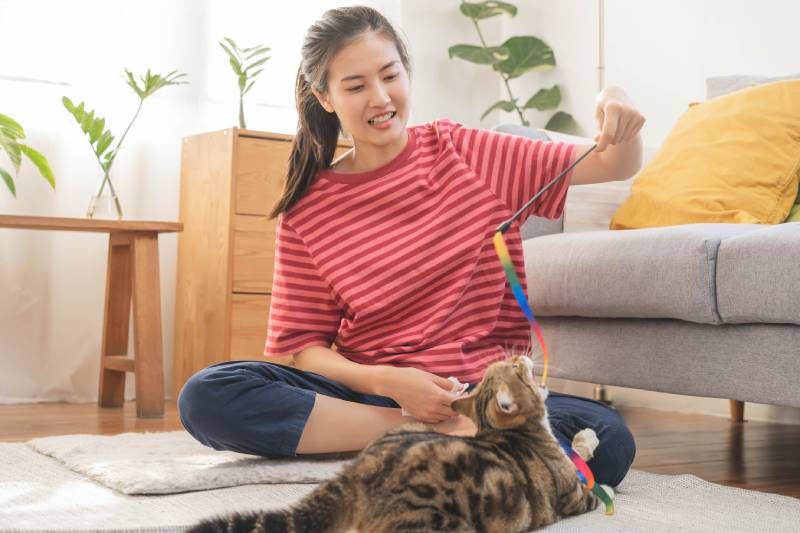
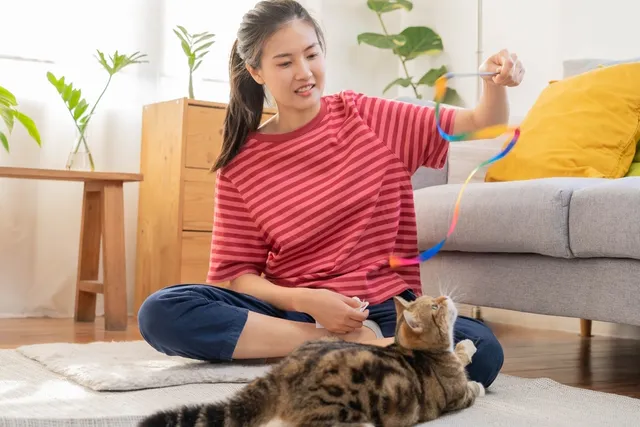
woman playing with her cat

From running after shoelaces to chasing and pouncing on teasers, most cats can’t resist fun activities that trigger their natural hunting instincts. Cats of all ages play, but the amount of time they spend doing so and the rigor with which they engage in their favorite activities usually change over time.

Kittens typically spend lots of time playing and are eager to participate in physical activity, while senior cats prefer to relax and sleep most of the day. Older cats are less interested in chasing, pouncing, and jumping than younger ones, but they still benefit from regular physical activity.

divider 2 cats

How to Keep Your Cat Young at Heart

Kittens, adult cats, and senior kitties have different nutritional, environmental, and physical needs. Ensuring that cats get age-appropriate food and care can go a long way toward keeping them young at heart as they age.

1. Kittens & Juniors

Kittenhood generally lasts until your cat is 6 months old, and from there until they are approximately 2 years of age, they are considered juniors.

  • Nutrition and Veterinary Care

Baby cats need specially formulated kitten food until they’re 6 months old. Kittens require multiple visits to the veterinarian to ensure adequate growth, to receive all their vaccinations and preventative care, and to be spayed or neutered and microchipped.

  • Play Tendencies and Needs

Kittens and junior cats are incredibly active and engage in play-like behavior as they explore. Most enjoy high-octane activities, and several play sessions per day are appreciated.

Young cats don’t have long attention spans, so it’s normal for them to move from toy to toy pretty quickly. Cats don’t react to catnip until they’re around 6 months, and there’s no need to invest in catnip-infused toys right away.

persian kitten playing on carpet
Image Credit: Zarubina_Yuliya, Shutterstock

2. Adult Cats

Cats move past their energetic, youthful periods by the time they reach about 2 years old, and they usually mellow out substantially over the coming years.

  • Nutrition and Veterinary Care

Nutrition remains incredibly important to adult cats. Not only is it critical to provide protein-rich, high-quality food to keep them happy and healthy, but it’s also essential to keep an eye on how much they eat. Obesity is more likely to occur as cats age, which can increase their chances of developing chronic conditions like diabetes and arthritis and have a negative impact on how long and how well they live.

  • Play Tendencies and Needs

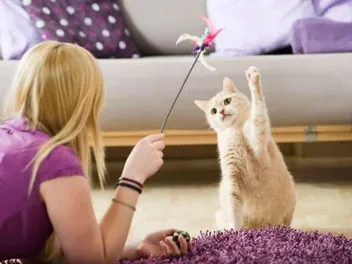
Getting enough exercise plays a massive role in keeping adult cats physically fit and mentally engaged. Cats in this age group often benefit from having access to a wide variety of toys to keep them interested.

Catnip and silvervine sprays can sometimes increase laid-back cats’ interest in exercise. Cats generally prefer to engage in short play sessions a few times during the day.

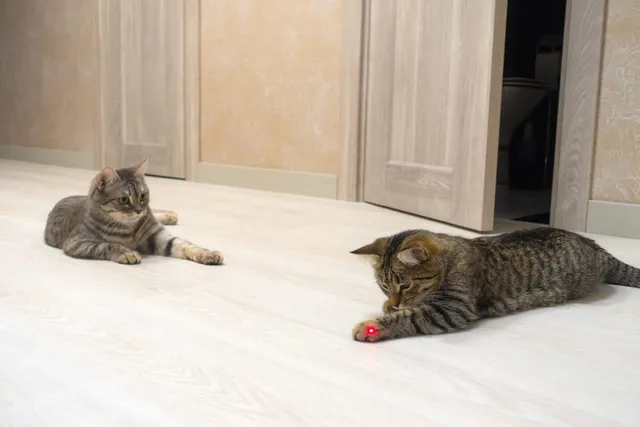
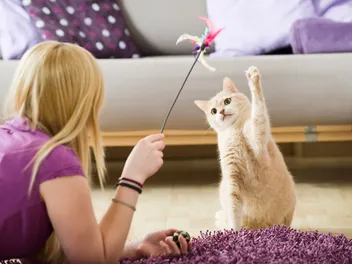
girl-plays-with-a-gray-black-cat
Image Credit: Kutuzova_Svetlana, Shutterstock

3. Senior Cats

Cats usually hit their senior years at some point after they turn 10 or 11, after which it’s normal for them to start slowing down.

  • Nutrition and Veterinary Care

Senior cats need to be seen at least twice a year by the veterinarian to ensure that any heart, liver, thyroid, kidney, and joint issues, among others, are caught as early as possible, which can make chronic conditions easier to control and keep them from progressing as quickly.

Cats sometimes require special diets as they age to help manage certain conditions, such as urinary, kidney, or endocrine issues. Maintaining adequate water intake is essential to manage diseases like kidney disease, diabetes, and hyperthyroidism, all of which cause water loss and require optimal drinking to prevent dehydration.

  • Play Tendencies and Needs

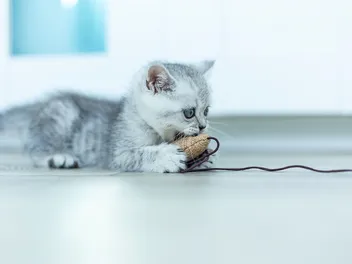
Most healthy senior cats have less interest in jumping from dazzling heights and turning corners at full speed. They bat at and engage with items that don’t require too much effort to get to or energy to chase down.

Exercise is vital for aging cats, but they are better off with short, gentle sessions that don’t demand much running or jumping. Even cats with joint conditions benefit from staying active.

kitten-is-playing-with-a-ball
Image Credit: Chendongshan, Shutterstock

divider 2 cats

Are There Other Ways to Keep Older Cats Happy and Engaged?

Mobility issues tend to be the biggest challenge for older cats, and many begin to have joint issues that can make movement difficult.

Older cats benefit from having warm places to nap that don’t require them to jump to get into or out of. Heated beds can soothe painful joints, and placing several beds in different locations makes it easy for older cats to find cozy places to hang out.

Ramps can help cats reach perches and napping spots that are off the ground. Putting litter boxes with low sides close to areas where cats like to hang out can also make it easier for those that have mobility issues.

divider 2 cats

Conclusion

Cats of all ages love to play, but they’re most active as kittens and become less energetic over time. Adult cats settle down when they’re a few years old, but most have reasonably steady energy levels and still like to play.

Senior cats are less interested in running after teasers and participating in long play sessions, but many enjoy more restrained physical activities. You can keep your cat happy, healthy, and interested in playing as they get older by providing great nutrition, regular medical care, and age-appropriate play activities for them to enjoy.


Featured Image Credit: Kmpzzz, Shutterstock

Want content like this delivered to you?

Sign Up For Our Newsletter

News, insights, expert advice, and everything cat

* By submitting, you agree to our Terms & Conditions and Privacy & Cookies Policy.

How useful was this post?

Click on a star to rate (you can leave written feedback after clicking submit)

Help us improve Catster for pet parents!

Your feedback really matters.

What did you like about this post? Also how can we improve it?

Join the conversation

Leave a Reply

You’re very welcome to leave a comment or question. Please know that all comments must meet our community guidelines, and your email address will NOT be published. Let’s have a positive and constructive conversation.

Talk With A Vet Online

Peace of mind,
anywhere, anytime

Affordable vet advice

A Peaceful Eternity for Pets: We Chat with Dan C. Harberts of Bubbling Well Pet Memorial Park

“We had the most uplifting conversation with a pet mortician.” Words you don’t often get to say when discussing death and pets. But...

How Can I Talk With a Vet When It’s in the Middle of the Night? 5 Ideas & Online Vet Options

Cats are curious animals, and they tend to have active periods at night. This can cause them to get into accidents or get...

The Feline Grimace Scale: How it Works & FAQ (Vet Approved)

Cats are masters at hiding it when they’re not feeling well or in pain, which can make it difficult for pet parents to...

My Cat Brought Me a Mouse, What Should I Do?

If you find yourself in a situation where your cat has brought you a mouse, it’s important not to panic. This is perfectly...

More related

Is Baby’s Breath Toxic to Cats? Vet-Reviewed Houseplants Examined

Baby’s breath is an extremely common flower in arrangements. The small, white flowers are especially useful at bringing out the colors of other...

Jackson Galaxy Offers Home Improvements That Also Improve Your Cat’s Life

Jackson Galaxy built a career via the TV show My Cat From Hell by visiting homes and solving behavior problems between humans and...

Raas Cat: Breed Info, Facts, Pictures & Care

Raas cats are an exotic breed of cat from the Indonesian island of Raas. They’re not a common cat to see outside of...

National Take Your Cat to the Vet Day 2026: When It Is & How to Particiapte

National Take Your Cat to the Vet Day occurs on August 22nd. This national day advertises the importance of taking your cat to...

Keep reading

Why Does My Cat Lick My Face? 8 Vet-Reviewed Reasons for This Behavior

Kitty kisses can be cute and endearing, but being incessantly licked by a tongue that feels like sand can be uncomfortable and irritating to some people. For cats, it’s not always a positive or pleasurable experience, and it may actually...

Cat licking a woman's face

How to Responsibly Rehome a Cat: 9 Vet-Reviewed Considerations & Tips

Giving up an animal may feel bittersweet, like parting ways with a longtime friend. You should only consider rehoming your cat for serious and unpreventable reasons and if both parties benefit. Change is a giant stressor in a feline’s life,...

happy cat with closed eyes hugging owner

How Long Will a Cat With Diabetes Live Without Treatment? Vet-Verified Risks & FAQ

Diabetes is a common and serious disease that affects the health of cats. When left untreated, diabetes can cause life-threatening complications such as diabetic ketoacidosis, neurological disease, and other health problems. Fortunately, most cases of diabetes in cats can be...

owner calming his cat

How Long Does It Take a Domestic Cat to Go Feral? Vet-Reviewed Facts

If you’ve ever had a pet cat that’s gotten lost or stolen, you may wonder what became of them. Did they find a community of other cats and become feral? Are they living happily with another family somewhere? While we...

feral cat with ear tip clipped

Why Do Cats Like Boxes So Much? 6 Vet-Reviewed Reasons Behind the Behavior

How many times have you cut a delivery box open only to turn around and find your cat has already made themself at home inside of it? Probably every time. A cat’s natural curiosity draws them in, and then their...

cat in a cardboard box

How Do I Give CPR to a Cat? Vet-Verified Step-by-Step Guide

Performing a feline cardiopulmonary resuscitation (CPR) is a procedure every veterinarian and technician master, but likely not every cat companion. CPR is used to maintain blood flow and oxygen delivery throughout the body when a cat’s heart stops beating. It...

performing pulmonary rescucitation with an ambu bag on a cat

Does My Cat Need a Cat Bed? Vet-Reviewed Facts & FAQ

If you’re a cat owner, you know how important it is to provide the best possible care for your pet. One way to make sure your cat is comfortable and feels safe and happy is to provide them with an...

tabby cat on bed

Can Cats Eat Tangerines? Vet-Reviewed Diet Facts & FAQ

Tangerines, often known as mandarins, are citrus fruits that people eat as quick, healthy snacks. They are tasty, sweet, and filled with antioxidants. They can provide health benefits to people, including reduced cholesterol, prevention of stomach ulcers and kidney stones,...

Can Cats Eat Tangerines