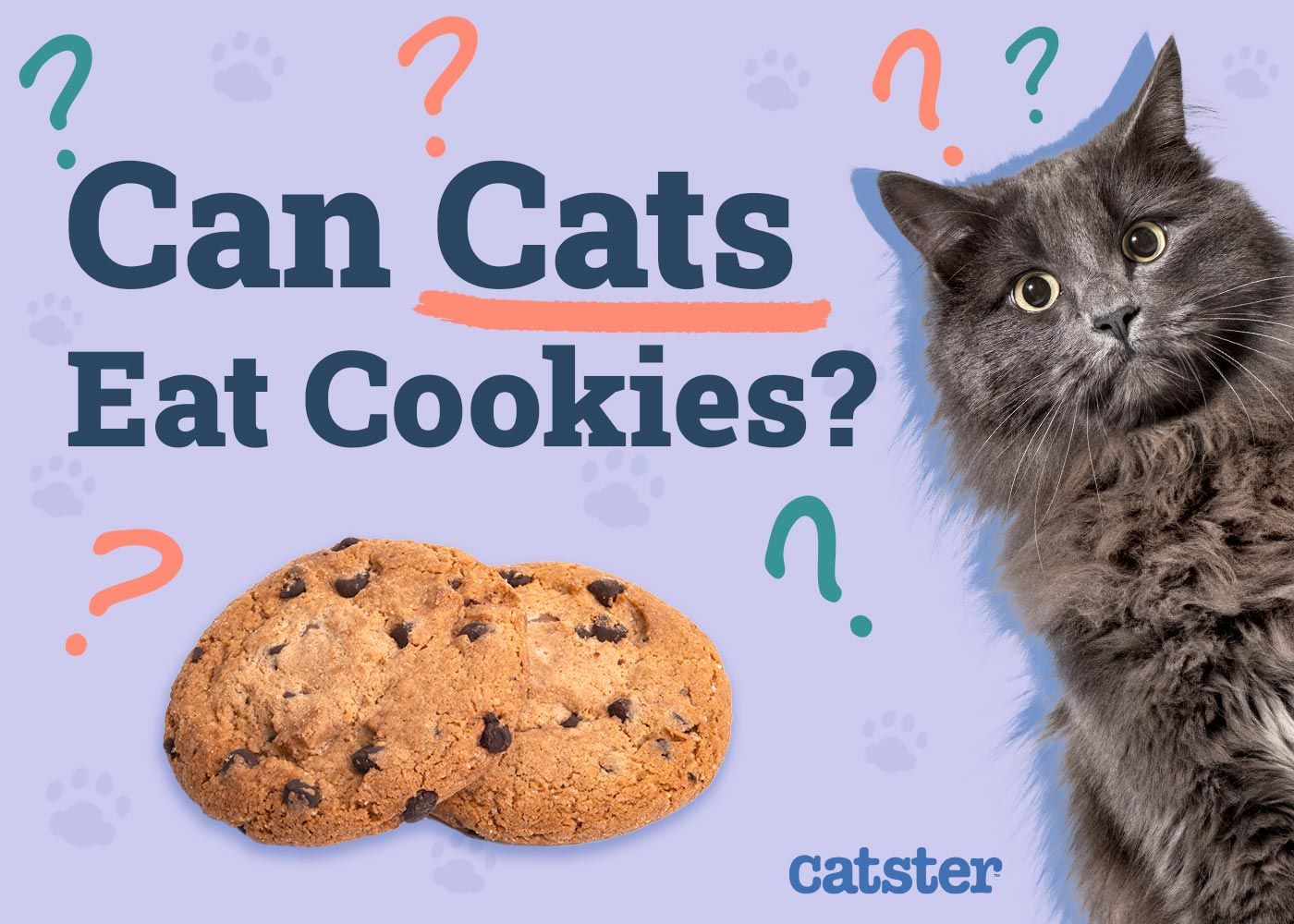
Can Cats Eat Cookies? Vet-Reviewed Facts & FAQ


In this article
While a nibble of your cookie is unlikely to kill your cat, cookies are far from healthy for cats and absolutely should not be fed to your cat regularly. Human sweets are incredibly unhealthy and sometimes very dangerous for cats. So, keep cookies out of reach of your cat to the best of your abilities!

What Can Cats Eat?
Cats are scientifically classified as "obligate carnivores," meaning they eat a wild diet that is made up of at least 70% animal proteins. The cecum stores the bacteria needed to break down cellulose or plant nutritional material in herbivorous animals.
In cats, the cecum is "conspicuously small and relatively undifferentiated" compared to herbivorous animals. This means that the cecum doesn't have the same ability to break down plant material.
In short, cats have reduced physical ability to break down plant material into nutrients like herbivorous and omnivorous animals can do.
However, that hasn't stopped cats from consuming plant material, and they do have some minimal need for plant nutrients. Scientists have theorized that they would meet these needs in the wild by eating partially digested plant material from the stomachs of their prey, getting the benefits of their prey's digestive bacteria like a person taking a Lactaid.
Still, cats are carnivorous at heart. Their primary nutrient needs come in the form of animal proteins that will help build their muscles, sustain their body functions, and keep them feeling complete for the whole day. They do not need fast energy sources like carbohydrates or sugars.
Additionally, cats don't have taste bud receptors for sweet things, meaning they can't taste sweet foods. Most cats will turn their nose up at sweet foods, but a handful of cats are indiscriminate enough to give them a try!

Nutritional Value of Cookies
It's hard to estimate the nutritional value of cookies as a general rule because there are so many different kinds of cookies with other components.
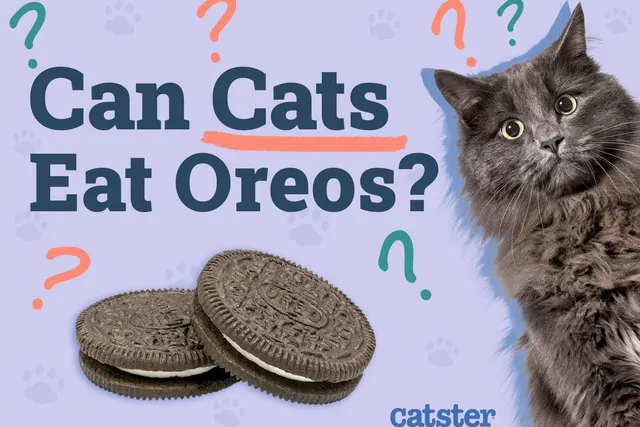
The nutritional value of a serving of Oreo cookies (three cookies) are as follows:
The crux of nutrition in Oreos is carbs, fat, and sugar, all things that cats don't particularly need or want a lot of in their diets.
Oreos don't represent the peak nutritional value for any creature eating them, really. The high sugar, carb, and fat contents mean that they'll leave most people not satisfied for long, and your body will burn through the energy they produce quickly or store it as fat.
The low protein values also mean that your cat isn't getting much from eating cookies, especially since they can't break down the plant material into nutrients the same way humans can.
Can You Safely Feed Your Cat Cookies?
You cannot safely feed your cat cookies intended for human consumption. These cookies contain virtually no nutritional value for cats; they often have components like chocolate which are toxic for cats.
If you want to give your cat a crunchy cookie treat, you'll want to make your cat cookies with ingredients that are safe for cat consumption! Ask the vet to make sure which ones are those.
Cat Cookie Recipes
Tuna & Cornmeal

Cook time
20 min
Total time
20 min
Ingredients
- 170 g of pureed tuna
- 125 g 1 cup of wheat flour
- 125 g 1 cup of cornmeal
- 1 beaten egg
- 80 ml 1/2 cup of water
Instructions
- Combine wheat flour and cornmeal into a bowl
- Add beaten egg, water, and pureed tuna
- Mix the ingredients until the mixture is compact
- Roll it out with a rolling pin and cut the biscuits with a knife or with cookie cutters
- Bake at 180 C for 20 minutes
Notes
Tuna With Catnip
Ingredients
Instructions
Crunchy Tuna With Catnip
Ingredients
Instructions
Why Should You Make Homemade Cat Cookies?
Making personalized treats for your cat is a fun bonding experience that you can share with them. Show them you love them by offering them a specially made treat just for them that they can't get anywhere else!
These recipes are even nutritious for cats. They'll help keep your cat happy and healthy while giving them a tasty treat that they can appreciate on occasion. You can take these recipes and start making cat treat recipes for them to sample and enjoy!

Ingredients to Avoid When Making Cat Treats
There are a handful of ingredients you'll want to avoid when you're making cat treats. These ingredients can be dangerous for cats or other animals in the household.
1. Chocolate
Chocolate should not be included in anything that you feed to your cats. Chocolate, cacao, and cocoa contain theobromine which can be deadly for cats and dogs.
2. Sugar
Cats have no need for sugar in their diets. Sugar is high in calories and low in all other nutritional values. Avoid sugar at all costs.

3. Xylitol
Xylitol isn't thought to be harmful to cats, but it can be deadly for dogs. So, if you have other animals in your household, definitely skip the xylitol. Even for cats, xylitol isn't toxic, but its effects on their health aren't well documented.
4. Milk
While many people grew up with the image of cats drinking milk, cats are actually lactose intolerant and should not be given milk. Cat milks and lactose-free milks are available.
5. Spices
Spices such as cinnamon and nutmeg are amongst the most common spices used in making cookies and are not appropriate for cats.
Final Thoughts
Cats shouldn't be given human cookies. They're bad for their health and even outright dangerous. However, we can make "cookies" with ingredients that our cats can benefit from if they want a little crunch in their life!
As always, if your cat has ingested something and you're worried about their safety, you should call your veterinarian first. They will be able to guide you through caring for your cat and will be able to tell you if they need to be under veterinary supervision.
Expert cat care, straight to your inbox
News, insights, and useful advice, delivered to you.

No spam — unsubscribe anytime.
By signing up, you agree to our Terms & Conditions and Privacy & Cookies Policy.
How useful was this post?
Click a star to rate. You can leave written feedback afterwards. (We read all feedback.)
Luxifa is a freelance writer with a passion for animal science and technology. She loves to share the world of animal science with people to help them make informed decisions for themselves and their pets. Luxifa has worked in professional pet care for over six years and strives to help change the world of pet care by bringing the information people need to them in terms they can understand. Knowledge is power, and Luxifa loves to help everyone become the most informed they can be.