Get

In Your Inbox

Catster is reader-supported. When you buy via links on our site, we may earn an affiliate commission at no cost to you. Learn more.

Are Poinsettias Poisonous to Cats? Vet-Approved Facts & FAQ


Catster_Are Poinsettias Poisonous to Cats

With their crimson leaves, poinsettias are stunning plants, and most people can’t resist having them in their homes.

However, poinsettias have a bad rap; they are said to be poisonous to cats and other pets. It also does not help that their name is eerily similar to “poison.”

So, are poinsettias poisonous to cats? The answer is yes, but they are only mildly toxic to cats (and dogs), usually leading to self-limiting irritation of the mouth, digestive tract, or skin. This means that this plant is unlikely to seriously harm your pet unless consumed in large quantities, which is highly improbable due to its terrible flavor.

Read on to learn everything you need to know about poinsettias, scientific name Euphorbia pulcherrima, and cats.

divider cat faces 2 oct 2024

Why Are Poinsettias Considered Poisonous?

The poinsettia is classified under the banner of toxic plants. However, according to the Pet Poison Helpline, poinsettias are only mildly toxic to cats and other pets, and their poisonous reputation is a great exaggeration.

The fable of poinsettias being an extremely poisonous plant began in 1919 in Hawaii when the young child of an army officer died after allegedly eating poinsettia leaves.1 However, the myth has since been debunked, with studies showing that this plant is unlikely to cause any serious signs, with 96% of exposed patients not needing any treatment and 92% not developing any signs of toxicity.2 The vast majority of these patients were children.

Poinsettia plant
Photo Credit: suju-foto, Pixabay

What Happens When a Cat Eats Poinsettia Leaves?

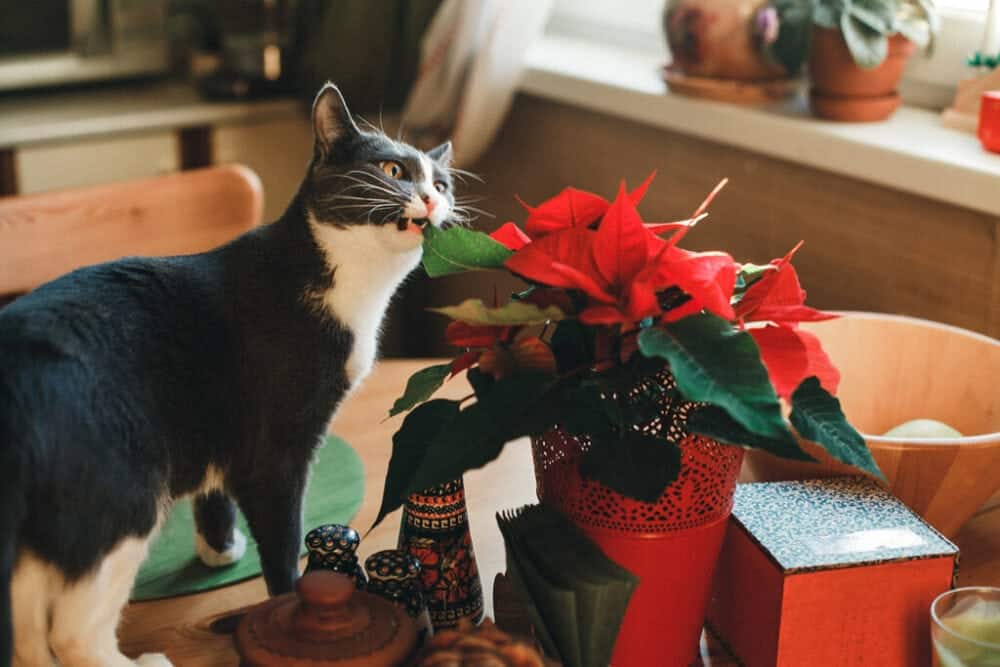
As mentioned, poinsettias are only mildly toxic to cats, meaning that they may cause harm to your cat, but not severely. However, in some cases, a cat might start displaying signs such as drooling, lip smacking, vomiting, and diarrhea. Additionally, the poinsettia’s white sap can cause skin irritation, swelling, itchiness, and redness around the mouth.

Fortunately, these signs are rarely severe enough to warrant medical attention. With that said, sensitive cats or those exposed to larger amounts of the plant might have a more extreme reaction, necessitating a trip to the vet.

If you need to speak with a vet but can't get to one, head over to PangoVet. It's an online service where you can talk to a vet online and get the advice you need for your pet — all at an affordable price!

PangoVet_Mention-in-Content for PangoVet2 save money

Treating Signs of Poinsettia Poisoning

As mentioned, most cats that consume poinsettia leaves or other parts of the plant do not require any medical treatment. In fact, there is no antidote for poinsettia poisoning. However, if the degree of mouth and skin irritation or the stomach upset are not resolving on their own within 1-2 hours or are getting worse, it’s best to contact your vet for advice.

The vet can administer symptomatic treatment to make your cat more comfortable. In most cases, the signs clear up by themselves. Still, do not expect your kitty will have learned their lesson. Keep this and any other potentially harmful plant well away from them so this does not happen again.
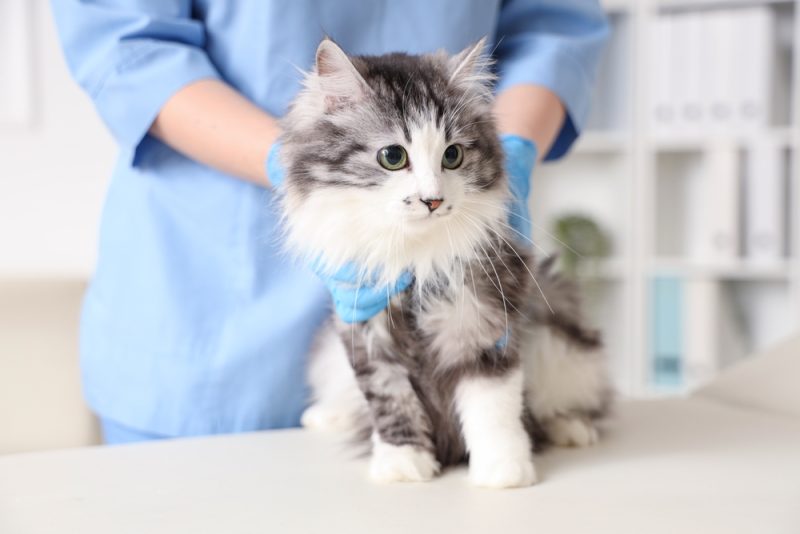
vet examining a cat
Image Credit: Pixel-Shot, Shutterstock

History of Poinsettias in the United States

The poinsettia goes by several names, including the Christmas star, Christmas flower, lobster plant, or the Mexican flameleaf.

This plant was introduced in the United States by the first U.S. ambassador to Mexico, Joel Roberts Poinsett, during the 1820s. As you can tell, the plant was named after the ambassador.

However, in its native home of Mexico and Central America, the poinsettia is known as “Noche Buena,” “la flor de Nochebuena,” or “cuetlaxochitl,” referring to “Christmas Eve” in Spanish, hence the plant’s association with Christmas.

divider cat faces 2 oct 2024

Conclusion

Are poinsettias poisonous to cats? Yes, mildly. The poinsettia’s milky white sap contains compounds that are mildly toxic to cats and dogs. Fortunately, the resulting signs are more of an annoyance to the animal than life-threatening complications.

Moreover, the plant’s bitter taste is more than enough to deter most cats from ever trying to have a bite again. Therefore, you can rest easy knowing that this plant is more or less harmless to your kitty.

See Also:


Featured Image Credit: Gerhard G., Pixabay

Want content like this delivered to you?

Sign Up For Our Newsletter

News, insights, expert advice, and everything cat

* By submitting, you agree to our Terms & Conditions and Privacy & Cookies Policy.

How useful was this post?

Click on a star to rate (you can leave written feedback after clicking submit)

Help us improve Catster for pet parents!

Your feedback really matters.

What did you like about this post? Also how can we improve it?

Join the conversation

Leave a Reply

You’re very welcome to leave a comment or question. Please know that all comments must meet our community guidelines, and your email address will NOT be published. Let’s have a positive and constructive conversation.

Talk With A Vet Online

Peace of mind,
anywhere, anytime

Affordable vet advice

Are Catnip Sticks Safe for Cats? Vet-Reviewed Health & Safety Explored

Catnip is a minty herb that has light-green foliage and lavender-colored flowers. Catnip has unique effects on many cats, and while some become...

Tortoiseshell Munchkin Cat: Info, Pictures, Facts & History

The Tortoiseshell Munchkin cat is a unique and beautiful breed. While their short legs may make them appear dainty, these cats are actually...

Ragdoll Kittens For Sale in Mississippi: Breeders List 2025

Excited Cats advocates for adopting before shopping, though we fully understand there are many reasons for seeking a breeder. So, we encourage it...

Can a Cat Recover From Kidney Failure? Our Vet Explains the Signs, Recovery & Diagnosis

Kidney, or renal failure, in cats is a very common condition. Most cats will suffer from chronic kidney failure, which means that, over...

More related

5 Most Common Cancers in Cats (Vet Answer): Signs, Causes & Treatments

It’s an unfortunate reality that cats are susceptible to cancer, just like humans are. Advances in veterinary medicine and pet care are making...

9 Best Cat Grass in 2025 – Reviews & Top Picks

If you’ve shared your home with cats, you know about those who like to chew your houseplants to smithereens. It’s challenging to deal...

Hypertension In Cats: Vet Reviewed Signs, Causes & Care

Cats are beloved family members that rely on their humans for love, companionship, and care. However, cats that receive love, high-quality food, and...

9 Types of Cat Toys & How to Use Them (With Pictures)

Cats love to play (though they can be picky about what they’ll play with), and for good reason! Play is an integral part...

Keep reading

How to Find an Affordable Vet for Your Cat: 11 Easy Ways

Despite your best intentions, you might not be in the same financial position when you first adopted your cat. Paying for your necessities might be difficult, never mind trying to cover medical care for your cat, especially in an emergency....

vet-and-cat-owner-having-a-consultation-at-the-clinic_H_Ko_Shutterstock

8 Best Cat Foods for Kidney Disease in Canada of 2025: Reviews & Top Picks

Learning that your cat has a chronic condition, such as chronic kidney disease (CKD), can feel scary. Though this condition is not curable or reversible, support and treatment can improve your kitty’s quality of life and help it live longer....

top view of a cream maine coon cat eating dry and wet pet food from feeding dish

Cat Lice vs Fleas: Vet-Reviewed Key Differences

Sooner or later, every pet owner will find tiny bugs crawling on their pet’s skin. But are they fleas or cat lice? It can be hard to tell the difference between the two small pests. Therefore, this article will teach...

Lice VS Fleas

Is Your Cat Constipated? 12 Simple Remedies Vets Recommend Trying at Home

Few things worry cat parents more than when their kitty can’t go. Constipation is one of the most common digestive issues cats face — and one of the most uncomfortable. While some cases are mild and manageable at home, others...

cat outside the litter box

How Does Flea Medicine Work for Cats? Vet Approved Facts & FAQ

Fleas are the most common parasites that cats suffer from. Even if you have an indoor cat, they can get fleas from other pets or rodents that may sneak their way into the house. Regardless of how they get them,...

vet holding magnifying glass searching cat fleas

How to Potty Train a Kitten: Vet-Approved Tips & Tricks

If you’ve landed on this post, odds are that you just added a new kitten to your life. Given that your new bundle of feline joy is a kitten, they will need a little direction from you. When it comes...

cat toilet_kachalkina veronika_shutterstock

Siamese Cat Genetics: Does It Affect Siamese Behavior? Temperament Facts

Talkative, always wanting to be around you, and a bit needy—these are all common traits and behaviors of the Siamese cat. These behaviors don’t apply to every other cat breed, though. Have you ever wondered why cat breeds act in...

applehead siamese cat sitting

Can Cats Get Hemorrhoids? Vet-Approved Explanation

Have you taken a look at your cat’s backside and noticed something unusual? Perhaps it isn’t looking as it normally does. You might be wondering, can cats get hemorrhoids? After all, that could answer the enigma you’re staring at. But...

tired or sick cat lying on bed