Is Cedar Poisonous to Cats? Vet Approved Facts & FAQ


In this article
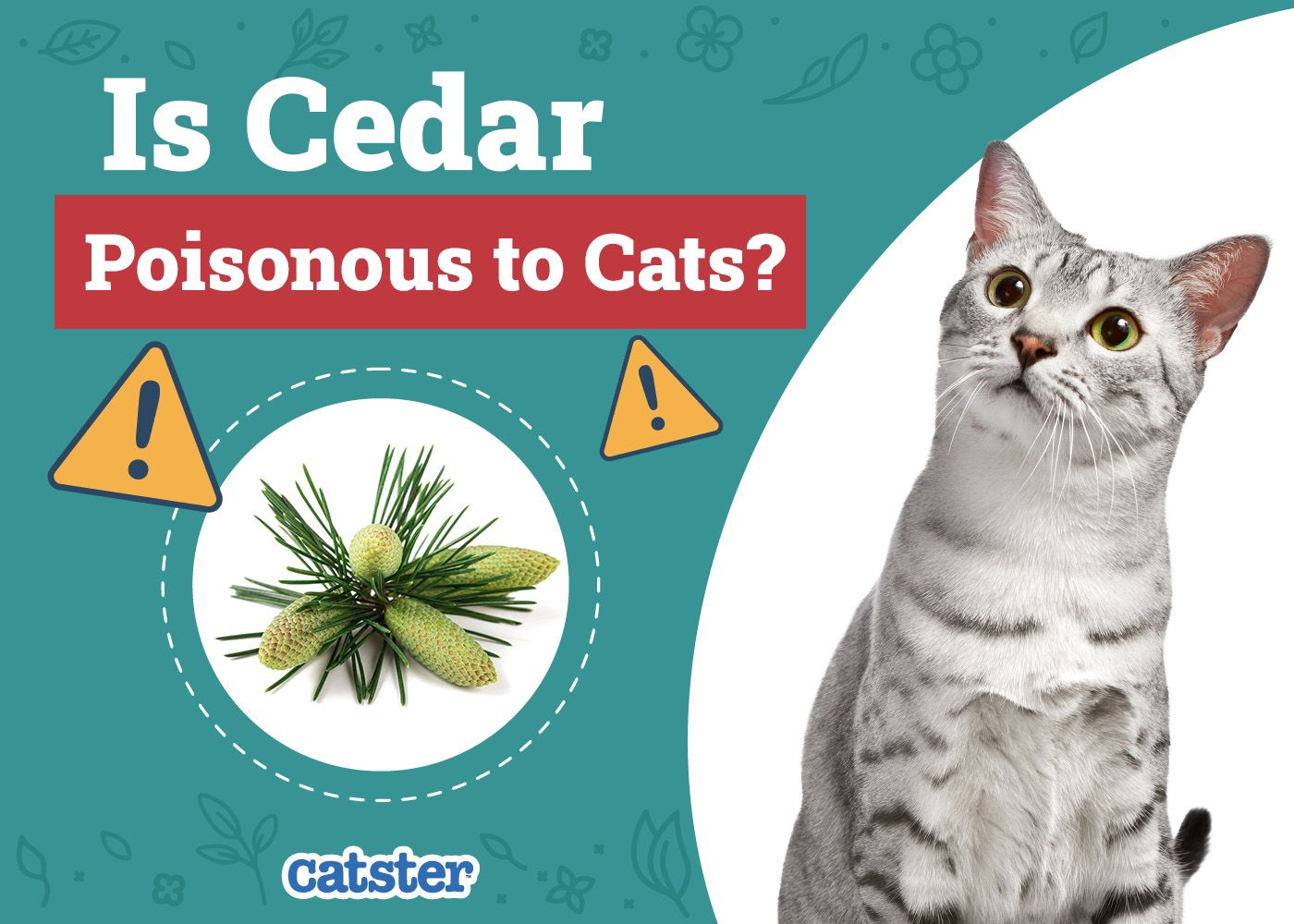
Any loving cat parent wants a heads-up as to which substances or plants can be poisonous to felines. If you’re wondering whether cedar trees are toxic to cats, unfortunately, yes, cedar can be poisonous to cats—some cedar trees are, in fact, highly toxic to cats. In this post, we’ll explore which cedar trees are poisonous to cats and why this is the case.

About Cedar Trees
Cedar trees are coniferous trees of which there are only four true types—Cedrus atlantica, Cedrus brevifolia, Cedrus deodara, and Cedrus libani. They’re native to the Himalayas and Mediterranean countries, and, though there are plenty of ornamental cedars in the US, true cedars are not native to North America. These trees are not listed by the ASPCA as being toxic to cats.
Cedar trees are tall with huge trunks, needles, and a very distinctive, specific scent that can be described as fresh, spicy, and somewhat citrusy. For this reason, cedar is sometimes used in essential oils and candles.
Are Cedar Trees Toxic to Cats?
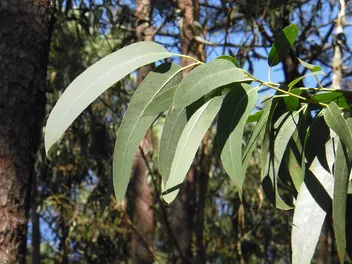
This is where things can get confusing. There are many types of trees from other plant families that are known as cedars and yes, some false cedar varieties are highly toxic to cats. One of the most toxic cedars is white cedar—Melia azedarach (also known as bead tree, chinaberry tree, paradise tree, and Persian lilac among other names), which, according to the ASPCA, is toxic to cats, dogs, and horses and can cause symptoms like drooling, vomiting, diarrhea, and seizures.1
White cedar contains tetranortriterpenes (meliatoxins), a chemical compound toxic to cats. The most toxic parts of white cedar trees are the berries, however, the leaves, flowers, and bark are also toxic.
Another false cedar tree toxic to cats is the Eastern red cedar-Juniperus virginiana, which has poisonous bark, berries, and needles. The Western red cedar—Thuja plicata, can also cause adverse effects in cats but is less dangerous than the Eastern red cedar. These trees are toxic due to the presence of phenols and terpenes.
Though some cedar trees may only cause mild adverse effects like an upset stomach, it’s still a good idea to keep your cat away from cedars just to be safe—especially if your cat is in the habit of pulling bark off trees or nibbling on the fruit or needles that fall from them of if you’re not 100% certain the tree in question is of the safe variety.

What About Cedar Essential Oils?
Many cedar essential oils are formulated without phenols and instead contain non-toxic ingredients. These are usually considered to be safe to use around cats. That said, the ASPCA advises that essential oils in 100% concentrated form can be incredibly dangerous to pets. The ASPCA also points out that essential oils come in various concentrations and contain such a wide variety of ingredients that it’s difficult to ascertain the toxicity levels of different essential oils.
Furthermore, never put essential oils on your cat’s fur or skin or allow them access to the oils. If you have cats it may be best to avoid essential oils altogether.
My Cat Ate Cedar, What Should I Do?
If you suspect that your cat has ingested cedar of any variety or they’re displaying symptoms of poisoning like vomiting, salivating, diarrhea, and difficulty breathing, please contact your vet or pet poison hotline straight away.
If your cat has vomited and you see a piece of the cedar or toxic plant your cat has consumed, keep it to show your vet. This will help your vet identify the plant or tree and therefore speed up diagnosis and treatment.
Try to stay calm—just because a cat has consumed part of a cedar tree does not guarantee that they will become seriously unwell. However, the quicker you act, the quicker your cat gets treatment if they have eaten something toxic.
Conclusion
To sum up, there are many different kinds of trees with cedar in the name and most are not true cedars from the Cedrus family. Some cedar tree varieties typically cause mild effects if ingested, whereas others—like the white cedar tree and the Eastern red cedar—are more toxic in nature.
For this reason, it’s best to exercise caution when it comes to cedar trees just to be on the safe side. If you suspect your cat has consumed part of a cedar tree, please contact your vet or pet poison hotline to find out the next steps.
Sources
Featured Image Credit: Nadya So, Shutterstock
Expert cat care, straight to your inbox
News, insights, and useful advice, delivered to you.

No spam — unsubscribe anytime.
By signing up, you agree to our Terms & Conditions and Privacy & Cookies Policy.
How useful was this post?
Click a star to rate. You can leave written feedback afterwards. (We read all feedback.)
Kit Copson is a freelance writer and lifelong animal lover with a strong interest in animal welfare. She has parented various furry beings over the years and is currently a proud cat mom of two—one very chilled (unless hungry) Siamese and a skittish but adorable Domestic Shorthair—and dog mom of one—an adopted Bichon Poodle cross. When not writing about or spending time with animals, Kit can be found doodling in her sketchpad, reading, or more often than not, drinking tea.