National Foster A Pet Month 2026: When & What Is It?

In this article
National Foster a Pet Month is a month-long celebration in June. This campaign encourages people to open their homes to animals in need. Fostering involves taking care of an animal until a forever home can be found for it. Often, this is done to clear out shelters and provide a place for at-risk pets, such as those with underlying health conditions and very young pets.
Fostering helps shelters find a place for these pets and makes room for more pets looking for homes.

What is National Foster a Pet Month?
This month focuses on the benefits of fostering a pet, which includes:
- Saving a life: Overcrowding in shelters isn’t good for anyone. Even in no-kill shelters, it can increase the risk of diseases and force the shelter to turn pets away. Fostering can help open up more spots at the shelter and decrease disease transmission, especially in at-risk pets.
- Improve socialization: Fostering also helps socialize pets. Kittens do much better in homes where they can be introduced to the world. This improves their friendliness, increasing the odds of them getting adopted. Even older pets can benefit from some practice being in homes.
- Trail run: Fostering a pet can also help you “trial run” many kinds of cats and cats. You can learn what cats work best in your family and which don’t without the extended responsibility of caring for any of them. If you’re interested in owning a pet but don’t want to dive straight in, fostering can be an easy middle-ground.

What Are the Different Types of Foster Care?
There are two main types of foster care: short-term and long-term.
Short-term foster care usually lasts only a few weeks to a few months. Often, these pets are suitable for adoption, and the organization may be readily looking for an adoptee. However, for one reason or another (often because the shelter is filling up), fostering may be better for this animal. These animals often don’t have many special needs or requirements. Often, this is where most fosterers start.
Long-term fostering can last several months or even years. You’ll need to commit to providing long-term care for an animal. In many cases, these animals have health or behavioral risks that make them unadoptable currently. However, with some time, they will become adoptable in the future.
A pregnant cat is a good example of this. A pregnant cat cannot be adopted, but she often does best in a home environment. After giving birth, the pregnant cats and kittens can be adopted once they are old enough. However, the foster owner must commit to several months of care for both the mother and kittens.
Sometimes, senior cats also fall into this category. It is very hard to find someone to adopt senior cats. Therefore, they are often the first to be put into a foster home. In many cases, these cats may not be adopted at all, and they shouldn’t spend their last days in a shelter.
What are the Responsibilities of a Foster Pet Parent?
You’ll have several responsibilities as a pet parent, but different programs work differently. Some may provide all the food your cat needs, while others may require you to purchase it but provide the money to do so. Still, the less money you require from the program, the more cats it can help.
Even if the program provides food, you’ll have to provide water and shelter. Your home has to be big enough for a dog, for instance. You should be able to provide enough outdoor access for the dog, as well.
You’ll also need to take the cat to vet checkups and other medical services. A pregnant cat may need more visits than others, for instance. Often, the not-for-profit will cover the fees of these visits, but you’ll need to take the cat to them.
The main point of fostering is also to teach the animals basic house manners. You should start with some basic training, which can make the cat more adaptable. You should also socialize the animals well. Often, this is the main hiccup for many of these cats being adoptable. Therefore, this should be one of your main focuses when fostering.

How Can I Find Foster Pet Opportunities in My Area?
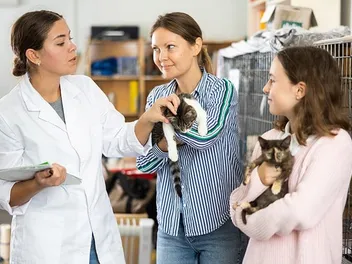
There are a few main ways you can look for fostering options in your area. First, contact your animal shelter. Many of these may have their own foster programs. If they don’t, they likely work with an external organization that does. They can point you to the sign-up or classes you may need to take before fostering.
Local rescue groups are also reliable options. They often rely on fostering, as they don’t have a shelter of their own. They may also work with local shelters to provide fostering and step in when the shelter gets too full.
Once you have found an organization that suits you, you’ll likely have to fill out an application and even be interviewed before they allow you to foster. Some also require training classes, even if they are only online. If approved, you’ll be put on the list of available fosters and will be contacted when an appropriate animal is available.
How Many Animals Are Saved Each Year Through Foster Care?
It is difficult to determine exactly how many animals are saved through foster care, as there is no centralized place that collects data on pet foster care. Furthermore, it can be hard to determine when it was the foster care in particular that caused the animal to be adoptable.
Many shelters do have reports on how many animals they save per year, but these do not go through foster care (all the time).
It’s likely that foster care helps millions of pets per year, though. The number is growing as fostering programs become more and more popular.
Conclusion
Pet Fostering Month provides an opportunity for many animals around the world to get adopted instead of languishing in a shelter. All cats benefit from fostering. However, some cats do benefit from others. Younger cats and cats can be socialized in a fostering setting, while they can’t be socialized in a shelter. Ill and sick cats tend to do well in a home setting, too, especially if they need particular care.
June is a great month to start fostering or at least looking into it. Organizations are always in need of more foster care so that they can help more pets.
Featured Image Credit: U__Photo, Shutterstock
Expert cat care, straight to your inbox
News, insights, and useful advice, delivered to you.

No spam — unsubscribe anytime.
By signing up, you agree to our Terms & Conditions and Privacy & Cookies Policy.
How useful was this post?
Click a star to rate. You can leave written feedback afterwards. (We read all feedback.)

Kristin is passionate about helping pet parents create a fulfilling life with their pets by informing them on the latest scientific research and helping them choose the best products for their pets. She currently resides in Tennessee with four dogs, three cats, two fish, and a lizard, though she has dreams of owning chickens one-day!