Socializing Adult Cats: Vet-Approved Guide & What to Avoid


In this article
Socializing adult cats can be a challenging but rewarding process. It’s important to remember that every cat is different, and what works for one might not work for another.
With patience, understanding, and the right approach, it’s possible to help even the most timid of felines learn to enjoy the company of humans and other animals. Socializing involves getting the cat used to humans by having them become comfortable with being touched and sharing the same spaces. In this step-by-step guide, we explore tips and tricks for socializing adult cats.

Before Your Start: Preparation
Before embarking on the journey of socializing an adult cat, you'll need to gather some essential tools and create a safe space for the cat, such as the following:
Also, set up a quiet room or a designated area for your cat. Felines often search enclosed spaces where they go to feel safe and get away whenever they’re overwhelmed. This safe space will provide a sense of security and comfort for the cat during the socialization process.
Step-by-Step Guide to Socialize an Adult Cat
1. Consider Stress Factors in the Home
Before doing anything else, please take a moment to assess your home environment and identify potential stress factors that could hinder the socialization process. This may include loud noises, excessive foot traffic, or other pets that may not be receptive to the new cat.
Minimize these stressors as much as possible, and create a calm, quiet atmosphere to help the cat feel more at ease. By addressing these factors, you can create a more conducive environment for successful socialization.

2. Establish Trust
Building trust is the foundation of any successful cat socialization. Start by spending time in the same room as the cat without directly interacting with them. Read a book, watch TV, or work on a laptop, allowing the cat to observe and become accustomed to your presence.
Gradually decrease the distance between you and the cat over time while remaining patient and avoiding any sudden movements. In short, let your cat come to you rather than you advancing toward them.
3. Offer Treats
Treats can be a powerful tool when it comes to winning over a cat’s trust. Begin by offering treats from a distance, placing them near the cat but not directly in front of them. Over time, gradually decrease the distance until the cat is comfortable taking treats from your hand.
Offering treats will help create a positive association with your presence and make the cat more receptive to future interactions.

4. Use Toys to Engage
Toys can be a great way to engage with a cat and encourage interaction. Try using a wand toy to initiate playtime. Keep the play sessions short and sweet, gradually increasing the duration as the cat becomes more comfortable.
Be sure to allow the cat to “win” during playtime by catching the toy, as this will boost their confidence and avoid unnecessary frustration.
5. Introduce Touch
Once the cat is comfortable with your presence and engaging in play, it’s time to introduce gentle touch. Start by extending a hand and allowing the cat to sniff it. If the cat seems receptive, gently stroke their head, or scratch their chin.
Always be mindful of their body language and back off if they show signs of discomfort or stress. Over time, you can gradually expand the areas you touch, such as their back and sides.

6. Keep a Consistent Routine
Like many other animals, cats prefer routines and predictability. Therefore, strive to maintain a consistent schedule for eating, playing, and socializing. This will help the cat feel more at ease and make it easier for them to adjust to their new environment.
Additionally, avoid making sudden changes to their environment or routine, as this can cause stress and hinder the socialization process.
7. Introduce Other Pets Gradually
If there are other pets in the household, it’s essential to introduce them gradually and monitor their interactions closely. Begin by allowing the pets to sniff each other’s bedding and toys, then slowly introduce supervised face-to-face meetings in a neutral area.
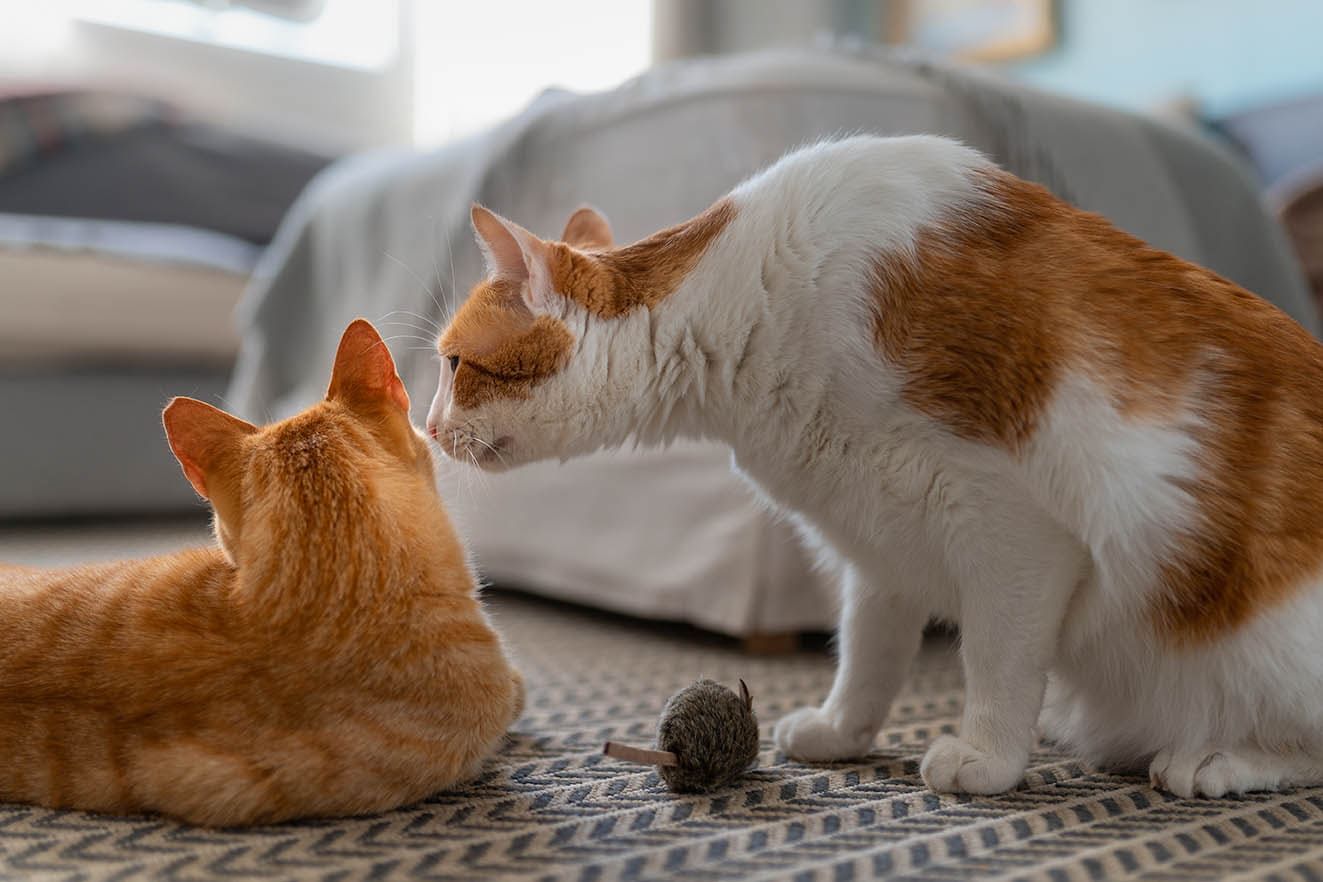
Keep initial interactions short, and separate the pets if any precursors of aggression or signs of stress are observed. It’s a good idea to let your cat make the move to inspect new people or animals. Doing so removes pressure and allows your cat to go at their own pace.
Related Read: How to Introduce Your Cat to a New Cat.

7. Consider Stress Factors in the Home
Take a moment to assess your home environment and identify potential stress factors that could hinder the socialization process. This may include loud noises, excessive foot traffic, or other pets that may not be receptive to the new cat.
Minimize these stressors as much as possible, and create a calm, quiet atmosphere to help the cat feel more at ease. By addressing these factors, you can create a more conducive environment for successful socialization.
Common Mistakes to Avoid When Socializing Cats
When socializing adult cats, it’s important to be aware of common mistakes that can hinder progress or even worsen the cat’s fear and anxiety. By avoiding these pitfalls, you can create a more positive experience for both you and your cat.
What to avoid:
As we’ve explored the steps to successfully socialize adult cats, it’s equally important to be aware of common mistakes that can hinder the process. By avoiding these pitfalls, you can ensure a smoother and more positive experience for both you and your feline friend.
If you need guidance on socializing your cats, we suggest you speak to a vet or professional pet behaviorist.
Conclusion
Socializing an adult cat isn’t always easy, but with the help of the tips and tricks outlined in this guide, you can help your cat learn to trust and enjoy the company of humans and other animals.
Remember that every cat is different, and progress may be slower for some than others. Be mindful that some cats never get to that stage, and that is still fine. An adult cat’s ability to socialize depends not only on how well you do it but also on their genetics, personality, life as a kitten, and general previous experiences. Stay consistent, celebrate small victories, and be prepared to adapt your approach as needed to help your cat become a more confident and sociable companion.
Sources
Featured Image Credit: Magui RF, Shutterstock
Expert cat care, straight to your inbox
News, insights, and useful advice, delivered to you.

No spam — unsubscribe anytime.
By signing up, you agree to our Terms & Conditions and Privacy & Cookies Policy.
How useful was this post?
Click a star to rate. You can leave written feedback afterwards. (We read all feedback.)
Christian started writing for a local newspaper as a teenager, and he's been involved in the publishing industry for most of his adult life. Combining his love of writing with a passion for animals, he is currently the Director of Editorial at Pangolia and the Editor-in-Chief at Catster.
Christian lives in the Philippines with his wife, son, and four rescue cats: Trixie, Chloe, Sparky, and Chopper.