


In this article
How and when you feed your cat is almost as important as what you feed them. Indeed, your cat relies on you to determine when, what, and how they eat, which impacts their well-being and health on many levels. For example, obesity is a common problem in indoor cats, and this condition, although multifactorial, may be linked to the way they are fed.
But figuring out how to feed your feline companion can be a real headache. Is free feeding the way to go, or should you stick to giving out meals at set times? There is no one-size-fits-all answer, as each cat has their own distinct preferences and needs. That said, it’s best to know the good and bad sides of each feeding method so you can make an informed decision.
In this article, we’ll outline the pros and cons of the free feeding method, as well as portion controlled feeding, and give you some tips along the way to keep your feline friend as healthy and happy as can be.

Is the Free Feeding Method the Best?
Many experts express varying opinions on the free feeding method. While some argue that it can be suitable for certain cats, others caution against it due to the risk of obesity and potential behavioral problems in multi-cat households. This is why you should consult with a vet to get personalized advice based on your cat’s specific needs, lifestyle, and circumstances.
A veterinarian should be able to provide you with valuable insights into whether free feeding aligns with your cat’s health goals and how to mitigate associated risks if you choose this approach.
Need veterinary advice but can't get to the clinic? Catster recommends PangoVet, our online veterinary service. Talk to a vet online and get the answers and advice you need for your cat without having to leave your living room — all at an affordable price!

With that in mind, let’s dive into the pros and cons of the free feeding method.

Pros of Free Feeding
The free feeding method, also known as ad libitum feeding, simply means that you fill their bowl with food and leave it available all day. Only dry foods should be fed this way, for obvious reasons: wet foods can spoil quickly if left out throughout the day. This way of feeding may be particularly appealing to busy owners and to cats who do not have any particular health problems.
Let’s see the advantages of this method in more detail:
1. Convenience for Busy Cat Parents
Free feeding allows cat parents to skip a strict feeding schedule. This flexibility may be particularly appealing to those with busy lifestyles or unpredictable work schedules. Your cat can eat several small meals per day on their schedule, which also tends to align with a cat’s natural preferences. Either way, the key to free feeding success is placing the correct amount of dry food for just one day at a time in the bowl.
2. Cats Seem to Prefer This Method
When given the choice, most cats tend to choose to eat several small meals per day, at their own pace. Although cats are not typically considered “grazers”, some studies suggest that allowing your cat to graze and eat many small, frequent meals throughout the day allows them to eat in a manner closest to what is natural to them 1.

Cons of Free Feeding
Despite the evident time-saving perks and alignment with cat preferences, the free feeding method comes with significant drawbacks:
1. Risk of Obesity
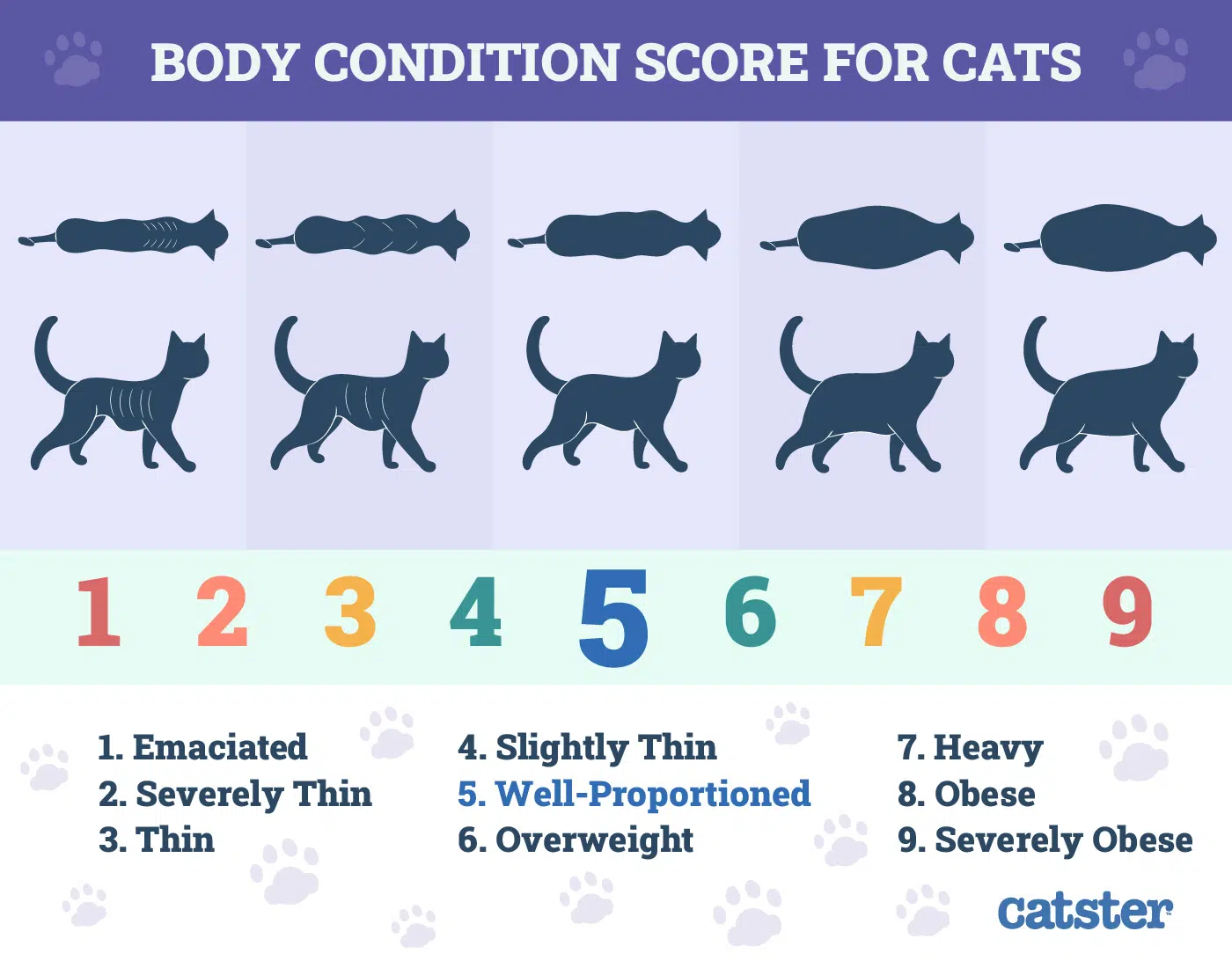
One of the main concerns associated with the free feeding method is the risk of your cat gaining weight or even becoming obese. Indeed, the problem with free feeding is that it is difficult to monitor portions and effectively regulate your cat’s food intake. Even if you measure their daily portion correctly, your cat may gulp it all down in the morning and then complain all day because their bowl is empty, potentially coaxing more food from you!
Besides, it can be difficult to gauge changes in your cat’s appetite, especially if you have multiple cats to keep track of. That said, not all free-fed cats automatically become overweight. Cats that are at a healthy weight may be able to graze all day without gaining excess weight, particularly if you monitor their body condition.
It is also possible to reduce the risk of obesity by giving your cat many opportunities to exercise, which can be done through enrichment of their environment.
A great tool for understanding how many calories per day your cat needs based on activity, weight and age is a calorie calculator like the one below.
The exact amount of calories an individual animal needs to maintain a healthy weight is variable and influenced by many factors including genetics, age, breed, and activity level. This tool is meant to be used only as a guideline for healthy individuals and does not substitute veterinary advice
2. Increased Anxiety
Like us, cats find comfort in routine. Feeding your feline companion at set, regular times is a good way to help them feel safe and comfortable, which in turn can help reduce their stress and anxiety. Conversely, the free feeding method is a little more “chaotic” in the sense that the cat does what they want and manages their own feeding schedule.
This may be perfect for some more independent cats, but anxious kitties may benefit from the security and predictability of a set-time meal routine.
3. Difficulty Monitoring Health Issues
Scheduled feeding may allow pet owners to monitor their cat’s eating habits closely. Changes in appetite, frequency of consumption, or the sudden refusal of food can be early indicators of health issues. With free feeding, these signs may go unnoticed for a longer period.

4. Increased Risk of Food Spoilage
Leaving food out for long periods increases the risk of spoilage, especially during hot, humid summer days. This risk is reduced by avoiding giving your cat wet food, but even dry food can end up becoming unappetizing after a while.
5. May Increase Conflict and Aggression in Multi-Cat Households
In multi-cat homes, more dominant cats may bully the others and eat all the food. And unless you have cameras to help you monitor what’s going on with your cats when you’re not home, it can be hard to know if all your cats are eating well.
Portion Controlled Feeding

Portion-controlled feeding is basically the opposite of free feeding. It means you give your cat food only at specific mealtimes during the day. Both wet and dry foods can be served this way.
- Fill their bowl and remove it after about 20 minutes
- Measure out a portion of food at each meal and let your cat eat at their own pace
Pros of Portion Controlled Feeding
With portion controlled feeding, food intake can be closely monitored, meaning it will be easy to tell if your cat has a change in appetite. In addition, it may reduce the risk of aggression and conflicts in households with multiple cats.
This feeding method is also mandatory for cats who must follow a special diet or who need to take medication at mealtimes.
Cons of Portion-Controlled Feeding
Some more greedy cats may start meowing and begging for food between meals. This can lead some cat parents to give them more food because they think their cat is hungry.
Therefore, it is strongly recommended to discuss with a veterinarian a feeding plan adapted to the specific needs of your feline friend. This way you ensure that your adorable but gluttonous cat gets the right amount of food every day.

Tips for Implementing the Best Feeding Method for Your Cat
First, talk to your veterinarian for suggestions based on your cat’s age, breed, and lifestyle. Then, you should base your decision on your cat’s health, not just your convenience.
- Take note of your cat’s eating habits and preferences. Some cats thrive on a structured routine and may prefer scheduled meals, while others enjoy the freedom to graze freely throughout the day, while still maintaining a healthy weight. Observing your cat’s natural tendencies can help you determine which feeding method is best for them.
- Keep an eye on your cat’s body condition. Run your hands over their body regularly to feel for any changes in weight or body shape. If you notice any weight loss or gain, adjust their diet accordingly and consult your veterinarian.
- Encourage your cat’s natural behaviors, such as predation, foraging, and play, by incorporating puzzle feeders into their routine.
- Consider setting up separate feeding stations, if you have more than one cat to minimize the risk of conflict.
- Be sure to keep your cat’s food bowls clean, regardless of the feeding method you choose. The accumulation of saliva and crumbs can create an unappealing mix for your feline friend, while also creating an inviting environment for bacteria and microbes.
Conclusion
The best feeding method for your cat is one that suits their individual needs and lifestyle. Some cats manage to regulate their food intake without problem, while others may wolf down the entire contents in one sitting. Each method has its pros and cons, and the ideal approach depends largely on your cat’s personality, overall health, and lifestyle.
By paying attention to your cat’s signals and working with your vet, you will be able to create an ideal feeding routine that will allow your feline friend not only to eat well but also to thrive in all aspects.
Featured Image Credit: Roman Samsonov, Shutterstock







