Norwegian Forest Cat vs Siberian Cat: What’s the Difference (With Pictures)


In this article
When looking for a new cat to bring into your home, it’s hard to choose between breeds. This is especially true when it comes to breeds with numerous similarities, like those between the Norwegian Forest cat and Siberian cat. They're both long-haired, hardy, and beautiful. Coming from some of the coldest parts of the world, the cats have adapted to frigid temperatures.
Now, they are becoming more popular inside our homes and in our hearts. We'll discuss the two breeds so you can learn more about each one and make one of the hardest decisions ever—choosing which feline is best for you.

Visual Differences

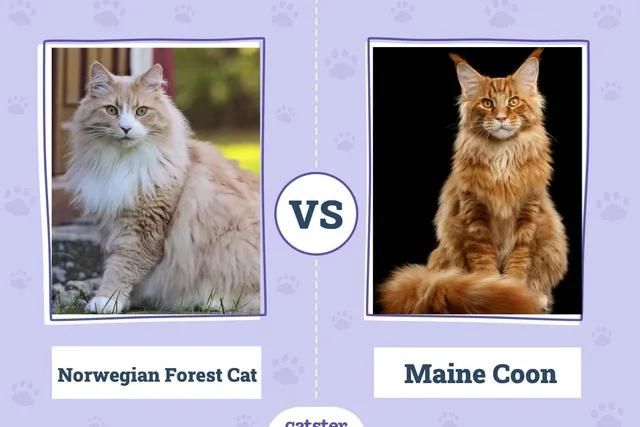
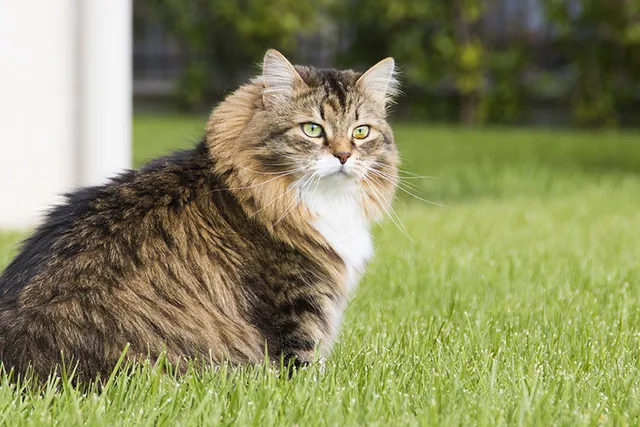
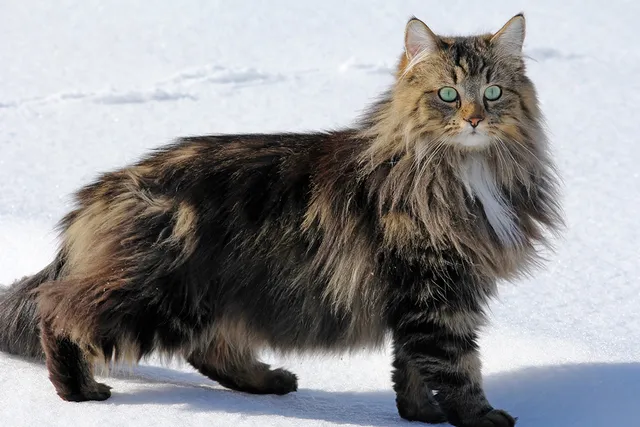
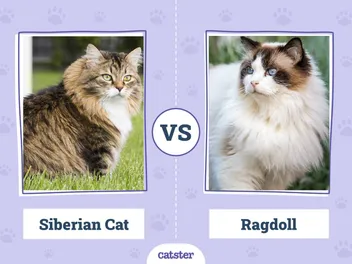
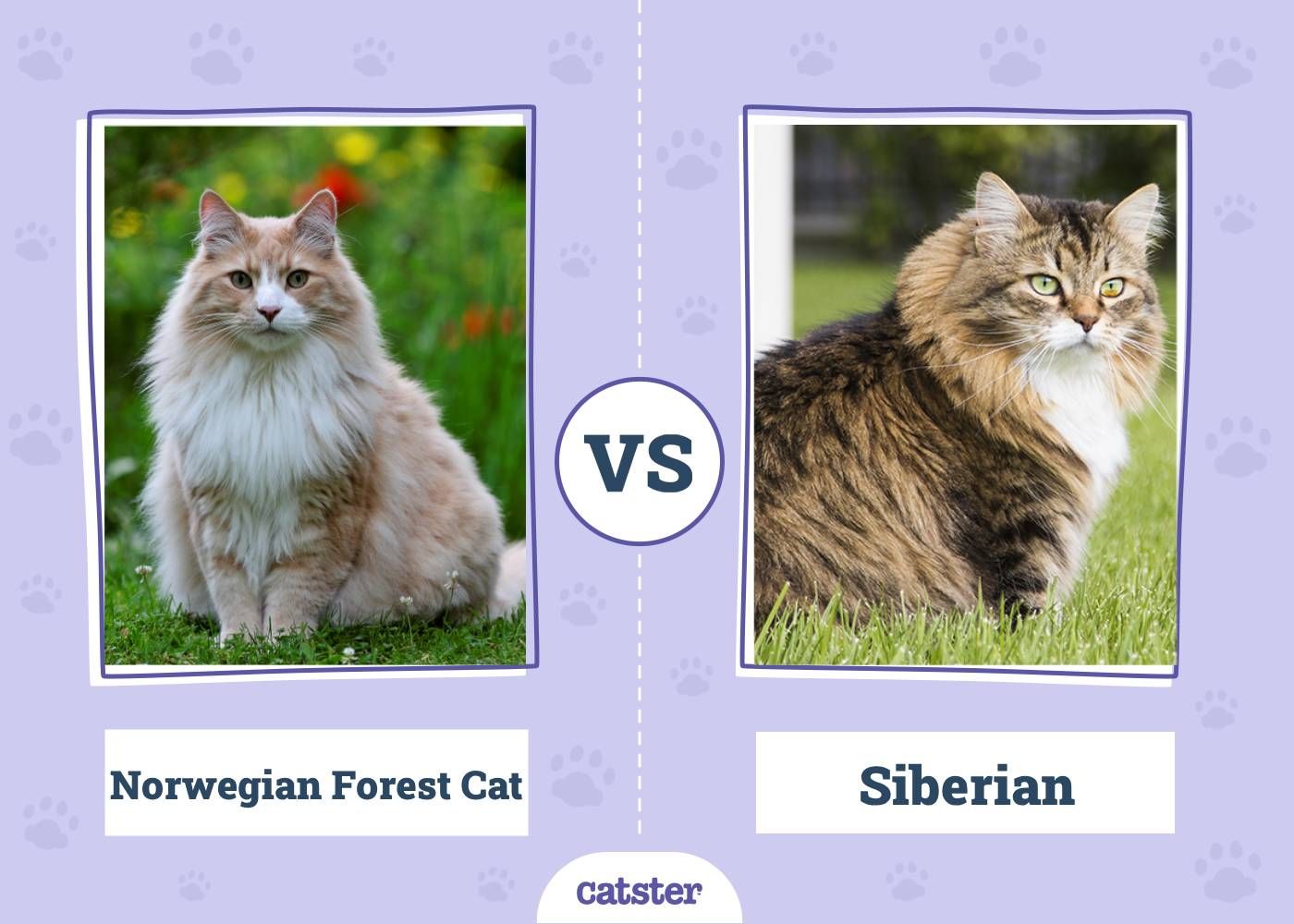
At first glance, it is not always easy to tell the differences between these cats. The Siberian cat is generally slightly larger than the Norwegian. You’ll also notice the coat of the Siberian is dense and triple-layered, with a water-resistant outer coat, while the Norwegian’s coat also has a dense undercoat but a smoother, more glossy outer layer. A Siberian has thick bones to endure the cold climates of their country of origin. They sport prominent cheekbones and chins that set them off from the Norwegians.
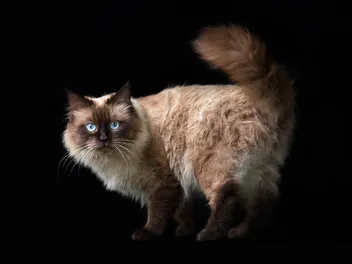
When it comes to colors and patterns, both of these breeds present a wide variety of coat colors and patterns, with the exception of the colorpoint pattern only being available in the Siberian, specifically the Neva Masquerade variety, and is absent in the Norwegian. Both of these breeds also sport cute tufts of hair at the top of their ears, and they are broad-chested and stout.
At a Glance
Norwegian Forest Cat Overview

Considered an ancient breed, the Norwegian Forest cat developed in Scandinavia without the interference of humans. That is why they're known for their independence and intelligence. They can easily keep themselves entertained or take part in what’s going on around the house. They are content no matter the situation.
While the Norwegian Forest cat is beautiful, there is a lot more to them to admire. Let’s take a deeper look into what makes the Norwegian so beloved and why they could be a great addition to any home.
Personality
The Norwegian Forest cat is a mellow kitty. They enjoy being around humans and are often noted for following them throughout the house. They also love napping near their pet parents. Don’t be surprised if a Norwegian makes your feet their personal pillow. Another thing to remember about the Norwegian is their need to play.
This cat loves spending time climbing and exploring, where they use their strong legs and sharp claws to climb trees and exercise their natural athleticism. They are also very intelligent and love working out puzzles. When buying toys for a Norwegian, those that challenge them intellectually are the best. Interactive play and vertical spaces indoors can also help meet their climbing instincts, keeping them happy inside the home.

Health & Care
The Norwegian Forest cat is considered a healthy breed. While there are illnesses all cats are susceptible to, if you bring a Norwegian home, there are a few issues you should keep an eye out for and speak with your vet about. Glycogen storage disease IV, hip dysplasia, and hypertrophic cardiomyopathy are all illnesses Norwegian Forest cats can suffer from throughout their lifetimes.
Caring for your Norwegian Forest cat is similar to what you’d do for any other long-haired cat. Brushing is required to keep their coat lush and free of tangles. As we’ve mentioned, they have thick, sharp nails. They need to be trimmed routinely, especially if you have children in the house who play with your Norwegian.
Suitable for:
The Norwegian Forest cat is suitable for anyone who can keep up with their exercise and attention requirements. They're fun-loving and enjoy playing.
They do well in homes with small children as long as the children are gentle and taught how to interact with cats. Older adults can keep Norwegians happy by allowing them time outside to play, going on walks, and buying kitty toys that keep their intelligent minds occupied.
Siberian Cat Overview

The Siberian cat is Russia's national cat. While the breed may be gaining popularity in the US, they have existed in Russia for several centuries and were first formally recorded in the late 19th century. The first mention of long-haired Russian cats dates back to early literature, but the standardized Siberian breed emerged in the 1980s.
The Siberian is an affectionate sweetheart that is beautiful and majestic, and we'll examine their temperament and healthcare requirements below.
Personality
When it comes to personality, the Siberian has plenty of it. They're more affectionate than their Norwegian counterparts and love spending time with their families. They are playful, outgoing, and love being the center of attention. They associate well with other pets when introduced early and properly. Siberians also like to play.
While they may not need as much exercise as the Norwegians, toys and interactive play are ideal to help them burn off any extra energy they may have.

Health and Care
The Siberian cat is generally a healthy breed thanks to the lack of inbreeding throughout their history. While Siberians may experience basic cat health issues, they can also be predisposed to hypertrophic cardiomyopathy, which should be screened for by responsible breeders.
Siberian cats are considered hypoallergenic. While no cat is truly hypoallergenic, research shows that Siberians produce less of the Fel D1 compound. The compound is what triggers cat allergies. This means some people with mild allergies may tolerate individual Siberians better, but reactions vary widely. Brushing their coats a few times a week and keeping their nails trimmed properly is all they require.
Suitable for:
The Siberian is suitable for any home or family, including those suffering from mild cat allergies. They get along well with children and love to play. They also enjoy cuddling with their family and won’t mind being a lap cat from time to time.
Which Breed Is Right For You?

As you can see, the Norwegian Forest cat and Siberian cat share a lot of traits that make them ideal cats for the home. Both breeds do well with kids, adults, seniors, and other pets. If you want a cat that shows abundant affection, the Siberian may be for you. For those who prefer their kitties to have a bit of independence but still enjoy a cuddle occasionally, the Norwegian Forest cat could be the ideal pet. Regardless of the breed you choose, you’ll have a great kitty to make the newest member of your family.
Featured Image Credit: Left - Elisa Putti, Shutterstock | Right - Massimo Cattaneo, Shutterstock
Expert cat care, straight to your inbox
News, insights, and useful advice, delivered to you.

No spam — unsubscribe anytime.
By signing up, you agree to our Terms & Conditions and Privacy & Cookies Policy.
How useful was this post?
Click a star to rate. You can leave written feedback afterwards. (We read all feedback.)
Christian started writing for a local newspaper as a teenager, and he's been involved in the publishing industry for most of his adult life. Combining his love of writing with a passion for animals, he is currently the Director of Editorial at Pangolia and the Editor-in-Chief at Catster.
Christian lives in the Philippines with his wife, son, and four rescue cats: Trixie, Chloe, Sparky, and Chopper.