Maine Coon vs. Ragdoll: The Differences (With Pictures)


In this article
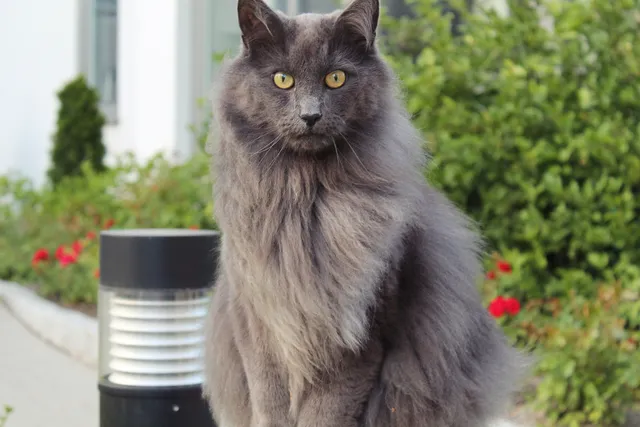
Maine Coons and Ragdolls share several similarities; they're extremely large kitties with gorgeous thick coats. Maine Coons have long coats, and Ragdolls sport medium-length soft fur. Maine Coons are a bit larger than Ragdolls. Large male Maine Coons can weigh as much as 25 pounds, but 20 pounds is the limit for most Ragdoll cats.
There are a few other differences between Maine Coons and Ragdolls, including their temperament and lifespan. Maine Coons are more curious than Ragdolls, but Ragdolls prefer somewhat calmer pursuits than Maine Coons enjoy. But both breeds are incredibly social and enjoy being right in the middle of family activities.
Ragdolls are generally quiet and don't vocalize much, and Maine Coons are famous for their chirps and love of water! Maine Coons typically live for 12 to 15 years, while Ragdoll cats can often make it well into their 20s.

Visual Differences

At a Glance

Maine Coon Cat Breed Overview
Maine Coons are sweet, gentle, large cats known for their adaptability and curiosity. Most live for anywhere from 12 to 15 years. As a people-oriented breed, Maine Coons are easy to train and can even learn to walk on leashes.

Personality / Character
Maine Coon cats are known as wonderful family pets that are great with kids and other companion animals. Most are devoted and loving without being clingy, and they're not very loud but often make adorable chirping sounds. Although they have playful sides, most prefer to spend the day lounging, napping, and generally taking it easy.
Maine Coons are serious climbers who prefer surveying the world from above and love splashing around in and playing with water! They often travel well, making them good choices for those who enjoy exploring with pets.
Exercise 🐈
Maine Coons require at least 10 to 20 minutes of daily physical activity. These natural hunters often have playful natures and enjoy activities that allow them to stalk, pounce, and hunt. Most can't get enough climbing, so have a few sturdy cat trees or well-installed cat shelves available if you bring home one of these athletic cats. They often benefit from regular physical activity as they're prone to weight gain, which can lead to adverse health consequences, such as the development of conditions such as osteoarthritis and heart disease.

Training 🧶
Maine Coons are generally smart and easy to train. Because they're curious, happy to go with the flow, and eager to please, Maine Coon Cats enjoy learning tricks. It's relatively simple to teach most Main Coons to come when their name is called and to play fetch. You can keep things positive to ensure your cat stays motivated and stick with reward-based training techniques, but make sure to limit the treats since Maine Coons tend to pack on the pounds. Short training sessions work best since many cats lose interest after 10 or 15 minutes.
Health & Care
Maine Coon Cats don't have any special nutritional or dietary requirements. Like all cats, they do best when eating cat food that delivers all the nutrients they require to thrive. You can look for brands that meet the American Association of Feed Control Officials (AAFCO) nutritional guidelines. Maine Coons suffer from some breed-specific conditions, including hypertrophic cardiomyopathy (HCM), spinal muscular atrophy, polycystic kidney disease (PKD), and hip dysplasia.
Their long, thick coats require brushing a few times weekly to prevent tangles from becoming problematic. Most only require bathing as needed, but they enjoy hanging out in the tub.

Suitable For:
A Maine Coon may be a good choice if you're searching for a large, dog-like feline companion. They're playful, curious, and very social. Since they're adaptable and laid-back, most Main Coons are happy to take things as they come. They're great pets for active families with kids and individuals as well. Although they're quite large, most aren't very loud, but they may make chirping sounds when hungry. Most are simple to train and can learn to walk on leashes.
Ragdoll Cat Breed Overview
Ragdolls are incredibly popular for several good reasons! They're extraordinarily beautiful and adorably sweet. They don't have outsized exercise needs and generally live nice, long, healthy lives.

Personality / Character
Ragdoll cats are extraordinarily sweet kitties that thrive when surrounded by loving companions. They're mellow yet curious and are excellent pets for active families and individuals looking for a loving cat to form deep bonds with. Most are happiest when being social and included in household activities. They get along with children, dogs, and other cats.
Unlike Maine Coons, Ragdolls prefer to keep all four feet nicely on the floor, and they're not known for being adventurous climbers. Because they're friendly to strangers, Ragdolls are safer as indoor pets.
Exercise 🐈
Ragdolls require about 20 to 45 minutes of daily exercise. However, they're perfectly happy just relaxing on the couch, and some require a bit of motivation to get moving. Getting them moving generally involves play sessions encouraging them to get busy naturally, like jumping, chasing, and pouncing. Most enjoy a nice mix of toys, including some they can play with alone and others that allow human-feline interaction, including teasers, interactive toys, and catnip-infused plush toys. Even cats that regularly entertain themselves benefit from dedicated playtime with their humans; it's a fantastic bonding opportunity.
- Our Recommendation: Best Cat Toys – Catster's Reviews & Top Picks

Training 🧶
Ragdolls love interacting with people; they're incredibly social creatures that are relatively easy to train, particularly when the right motivating factors, such as treats and snuggles, are involved. Most can learn to respond to their names and come when called. They can even be taught to play interactive games such as fetch. Clicker training often works well with Ragdolls as it makes it easy for them to identify desired behaviors. While many Ragdolls enjoy training, it's usually best to keep sessions short to ensure they stay interested and motivated.
Health & Care
Ragdolls are relatively low-maintenance companions and don't require special diets. They're generally fine as long as they eat high-quality cat food that follows AAFCO nutritional guidelines.
Ragdoll cats are generally healthy, and it's not unheard of for them to live 15 to 25 years. However, they suffer from a few breed-specific health conditions, including hypertrophic cardiomyopathy (HCM), joint conditions, and bladder problems. Ragdolls often gain weight easily, which can lead to obesity and an increased risk of developing chronic diseases, such as high blood pressure and diabetes.

Suitable For:
Ragdolls make great pets for families or singles interested in including a calm feline companion in their daily activities. They're great pets if you're looking for a buddy who loves spending time with people and is happy to tag along with you in a backpack. Their easy-going and adaptable personalities make them ideal for homes with kids and other pets. They make lovely apartment cats since they don't have high activity needs and are relatively restrained when it comes to vocalization. Due to their medium-length coats and shedding levels, they're not considered great pets for allergy sufferers.
Which Breed Is Right for You?

Maine Coons and Ragdolls are massive felines with stunning medium to semi-long fur. They're easy-going, adaptable cats that get along well with just about everyone, including kids and dogs. However, a few differences could affect your decision, including size, temperament, and longevity. Maine Coons are bigger than Ragdolls and can outweigh them by 5 pounds or more. Maine Coons are described as dog-like because they follow people around. They're curious, intelligent felines that enjoy climbing and hanging out in high places. Like Maine Coons, Ragdolls are incredibly social and love spending time with their family. They're true lap cats with hearts of gold and patience galore. Most are fantastic with kids and accepting of other pets, and they often exhibit moments of kitten-like exuberance well into adulthood. If you're looking for a friendly lap cat that doesn't require a cat tree to be happy, the Ragdoll is ideal, but if an adventurous kitty that acts like a canine is more your style, the Maine Coon is perfect for you. See also:
Norwegian Forest Cat vs. Maine Coon: The Differences (With Pictures)
Egyptian Mau Cat vs Maine Coon Cat: Key Differences (With Pictures)
Sources
Featured Image Credit: Left - Seregraff, Shutterstock | Right - Serita Vossen, Shutterstock
Expert cat care, straight to your inbox
News, insights, and useful advice, delivered to you.

No spam — unsubscribe anytime.
By signing up, you agree to our Terms & Conditions and Privacy & Cookies Policy.
How useful was this post?
Click a star to rate. You can leave written feedback afterwards. (We read all feedback.)
Lorre Luther is a writer who is firmly convinced that cats are smarter than humans. She left her law career in the United States and moved to the Netherlands to follow her dream of becoming a writer. Lorre currently lives in Rotterdam, she enjoys traveling and greatly appreciates the beauty of nature. Lorre has a spot for animals and admires the intelligence of cats.