Ask Dr. Paola – Help! My Cat Has Bizarre Eating Habits! (April 20, 2026)

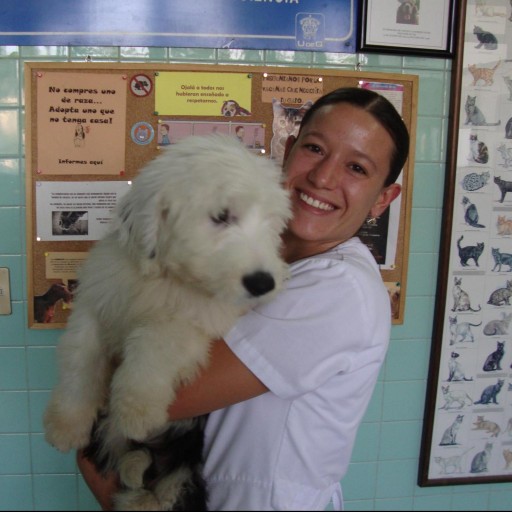
Welcome to our "Ask Dr. Paola" series, where every Monday we bring expert advice straight from Dr. Paola Cuevas (MVZ) to help our readers better understand their cat's health and well-being.
Whether you're a new pet parent or a seasoned cat lover, Dr. Paola is here to provide answers to your most pressing questions. From nutrition tips and preventive care to troubleshooting common behavioral issues, Dr. Paola is ready to offer insights that will keep your kitty happy, healthy, and feline fine. Stay tuned for expert guidance on a range of topics that matter most to you and your cat, so you can make informed decisions and provide the best possible care for your furry companion.
Have a question? Send it in here!

Help! My Cat's Skin Turned Black!
"Hello, Dr. Paola.
Maylee is 16 and an indoor house cat. She developed a fairly large area where her skin pigment turned from creamy white to black, and all the hair fell out in that area. It runs from a little near the neck and spine and gets bigger as it runs down towards her tummy.
She scratched it so that there were sores in 2 smaller areas. I immediately called the Dr and took her in. I told him that I had never seen anything like that on her. She has never been sick except for some serious scratching, thanks, I think, to our SC pine pollen, for which I gave her some homeopathic drops, which seemed to help. Anyway, He gave her two shots, an antihistamine and an antibiotic. He gave me a topical cream, Animax nystatin-neomycin sulfate, to apply twice a day.
Two weeks later, the same thing happened, but I asked for a blood panel to be done. She has always refused to drink water (so I added water to every meal) until just recently, I praised her every time she went near her water bowl, so I was worried about her kidneys. Dr said he wasn't worried because the sores went away. She had stopped scratching because I was lubricating the area twice a day. What could this be?"- Kathleen
Hi Kathleen,
Thank you for describing everything so carefully. It really helps build a clear picture. In an older cat like Maylee, a large patch of hair loss with darkened skin often reflects chronic inflammation of the skin rather than a primary “pigment disease.” When the skin is irritated over time, it can thicken and produce more pigment, much like how human skin darkens after repeated friction. The most common underlying causes we consider are allergic skin disease, external parasites such as mites or fleas, even in indoor cats, and, less commonly, fungal infections. The fact that she was scratching enough to create sores supports itch as a driver, and the improvement with the topical and injections suggests inflammation and possibly secondary infection were part of the problem, but not necessarily the root cause.
At 16, we also widen our perspective. Conditions like hyperthyroidism or early kidney disease can subtly change skin and coat quality, and older cats can develop paraneoplastic skin changes, although these are less common. Your instinct to request bloodwork was very appropriate, as a basic panel and thyroid testing help rule out systemic contributors. Another important step, if not already done, would be simple skin diagnostics such as cytology, skin scrapings, and possibly a fungal culture. These are low-stress tests that can identify infections or mites that are not visible to the eye.
Since she is currently stable and not actively self-traumatizing, this is a good moment to take a step back and investigate rather than just suppress the signs. Continuing the topical as directed is reasonable, but I would be cautious about long-term steroid-containing creams on fragile senior skin. The key now is to identify the underlying trigger so her skin can truly recover, rather than just keeping the surface calm. I hope this helps!
Kind regards,
- Dr. Paola

Help! My Rescue Has Bizarre Eating Habits!
"Hi Dr. Paola,
I just got Gypsy from the SPCA two weeks ago, and she has just about stopped hiding and is getting closer to me. One habit she has puzzles me. She eats her soft food with her right paw, i.e., she dips it in her food and then licks it and keeps doing that until she has eaten half her bowl. Then later she eats normally. Apart from that, she is not fussy. She eats any flavors I have given her, and she has a good appetite. Have you ever heard of such quirky behaviour?" - Colette
Hey Colette,
Gypsy sounds like she is settling in beautifully, and what you are seeing is actually a fairly common, if charming, feline quirk. Some cats use their paw to eat as a way of feeling more in control of their environment, especially after a recent change like adoption. Think of it like someone testing the temperature of water with their fingers before fully stepping in. It can be linked to caution, past competition for food, or even simple preference. The fact that she finishes eating normally later and has a good appetite is very reassuring.
There are also a few practical factors that can encourage this habit. Cats with sensitive whiskers sometimes dislike deep or narrow bowls, so they “fish” food out instead. A wide, shallow dish can reduce that. Occasionally, mild oral discomfort can lead a cat to avoid putting their face fully into the bowl, although this is less likely given her normal appetite and behavior. Still, at her next routine check, it is reasonable to have her mouth assessed, just to be thorough.
Overall, this is much more of a personality trait than a medical concern. As she continues to feel safe and predictable in her new home, you may notice the behavior fade or become less frequent. For now, it is simply part of her adjustment process and individuality, like a little ritual that helps her feel secure while she learns to trust her new world.
Kind regards,
- Dr. Paola

Help! My Cat Has Suddenly Started Hissing & Growling!
"Dear Dr. Paola,
Juno is a spayed female. DOB 06/22/22. No new animals, no changes in the household.
She has been checked by the vet. X-rays, blood work, and urinalysis. She was put on Gabapentin, as there was a possibility she was in some pain. Also, to calm her. Out of the blue, she has started hissing and growling whenever I pass by her in the kitchen/dining room. I'm walking around on eggshells. I've been told by some people that it's because she's Siamese. She is part Siamese.I am the one who feeds her, cleans her litter, and does everything when it comes to her needs. She will climb into my lap and purr and sleep and be sweet and affectionate and then jump down sometimes after being on my lap for more than an hour, walk into the dining room, and if I walk past, she will growl and hiss. I'm so upset, I'm sure she's picking up the tension from me. The vet has suggested Prozac. I would really like your opinion." - Colleen
Dear Colleen,
I completely understand why this feels so upsetting, especially with that sudden shift between affection and defensive behavior. What you are describing still fits very well with a context-specific emotional response, where Juno feels safe in close, predictable interactions like lap time, but becomes uncertain or threatened when there is movement in the kitchen or dining area. It is less about her being part Siamese and more about how her brain is interpreting that environment. Lineage alone does not cause this type of behavioral change. Cats can form very specific associations, almost like linking a certain room with a certain feeling, even when we cannot immediately identify the trigger.
From a medical perspective, it is reassuring that her imaging, blood work, and urinalysis were unremarkable. Pain can still be subtle in cats, but since gabapentin has not resolved the behavior, it makes sense to look more closely at emotional processing. Think of it like a misfiring alarm system; her brain may be reacting as though something unsafe is happening in that moment. In cases like this, fluoxetine, commonly known as Prozac, can be very helpful because it lowers baseline anxiety and improves impulse control rather than sedating the cat. It is not a last resort, but a tool that can help her brain relearn that those everyday movements are safe. When paired with behavior modification, such as avoiding direct approaches in that area, using gentle arcs instead of straight lines when walking past, and reinforcing calm moments with treats tossed from a distance, outcomes are often much better.
Reinforcing an incompatible behavior can also be very effective. The goal is to give Juno a different, safe behavior to perform instead of hissing or growling. For example, placing a high resting shelf or perch in that area can give her a greater sense of control and distance, which often helps reduce defensive responses. You can then reinforce calm behavior on that perch with small, high-value treats, helping the kitchen become a place where she chooses to settle rather than react. Another helpful strategy is to redirect her before the trigger moment by tossing a toy or starting a brief play interaction as you approach or pass by, so her focus shifts from feeling the need to defend herself to engaging in something positive. It is a bit like channeling nervous energy into a safer outlet. If you would like additional support in putting these exercises into practice, at Pangovet, we can be a helpful complement to your veterinarian’s plan and offer guidance on timing and technique to help manage her behavior.
Best wishes,
- Dr. Paola
This article is a part of our weekly Ask Dr. Paola series

Expert cat care, straight to your inbox
Vet-reviewed advice, behavior tips, and the best of Catster. Free, and you can unsubscribe anytime.
By signing up, you agree to our Terms & Conditions and Privacy & Cookies Policy.
Catster is a cat magazine and cat website where cat lovers come together and get expert advice about cat behavior, cat health and cat news.
Join the conversation
Ask a question, share your story, or send private feedback.