Get

In Your Inbox

Catster is reader-supported. When you buy via links on our site, we may earn an affiliate commission at no cost to you. Learn more.

Can Cats Be Trained Like Dogs? Vet-Approved Tips & Tricks


Share

young woman training cat in the kitchen

Cats are independent creatures that like to do things on their own terms. However, they are also highly intelligent and can learn to do many things that we want to teach them. But can cats be trained like dogs can? Not exactly. Dogs are typically not as independent or stubborn as cats are, which makes them easier to train.

Dogs also tend to be able to learn many more tricks and actions through training than cats. That said, cats can learn myriad actions with a bit of patience and commitment on your part. Here are a few things that you should know before you start training your cat to do anything.

divider single cat paw oct 2024

Why Are Cats Harder to Train Than Dogs?

There are a few different reasons that cats can be tougher to train than dogs. First, they do not recognize a hierarchy in their packs. They do not see their human companions as leaders, so they do not seem to respond as well to directives.

Second, cats are sometimes harder to read than dogs. While it is easy to tell when a dog is being attentive or when their excitement is building, cats do not usually show signs of these things. No matter how well you know them, a cat may never clue you into how they are feeling or what they are thinking. Therefore, it can be hard to interact with them during training and figure out what is and isn’t working.

Another thing to keep in mind is that cats do not have the same attention spans as dogs. They tend to pay attention in short spurts, which can be frustrating when you are in the middle of a training session. Unfortunately, there is not much that we can do to make a cat pay attention to us if they don’t want to, and a treat will only go so far. No animal should ever be punished, but it is well-known that felines in particular do not respond well to punishment.

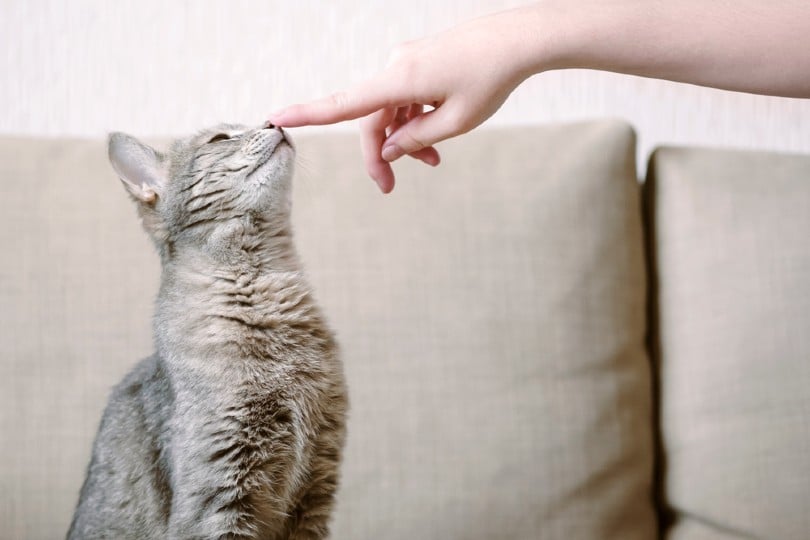
cat sits on a sofa and sniffs owner finger
Image by: Soloveva Kseniia, Shutterstock

What Can Cats Learn Through Training?

Even though cats are not as easy to train as dogs are, it is possible to train them to do multiple different things. For example, cats can learn how to sit on command—with plenty of practice. Cats can also learn how to give you a high-five or shake your hand with their paw. Here are a few other things that you may be able to teach your cat to do:

  • Walk inside and outside on a leash
  • Go to a specific location on command
  • Jump onto and through objects
  • Roll over
  • Seek out items
  • Come when called

Taking your cat for a walk may sound challenging, but the right harness and leash can make all the difference! We recommend Hepper's Cat Harness & Leash Set because it combines important safety features with stylish and comfortable design elements.

Hepper Cat Harness and Leash Escape Proof Set
  • Escape Proof - Cat leashes and harnesses for walking aren't all equally secure. Our double aluminium...
  • Superior Comfort - Our cat harnesses are lightweight, made with premium velvet fabric, breathable...
  • Free Extra Strength Leash - You don't need to worry about your cat escaping this harness. This cat...

From the highly adjustable, machine-washable velvet harness to the sturdy nylon climbing rope leash, this set has everything you'll need to start adventuring.

>At Catster, we’ve admired Hepper for many years and decided to take a controlling ownership interest so that we could benefit from the outstanding designs of this cool cat company!

Some cats are better at training than others, depending on things such as their breed, age, temperament, and intelligence. A cat may not be interested in learning anything more than to come when they are called, while another cat will be happy to learn many things, like how to seek out toys and put them back in a toy basket.

divider 1 paws

Tips and Tricks for a Successful Training Experience

Cat training is a great deal of hard work, but the process is usually worth the effort. However, it is always a good idea to consult with a professional trainer before starting any training sessions with your cat to gain expert guidance and advice. It is also best to start training during kittenhood, when they are still learning about how the world around them works. Here are a few other tips and tricks that you can use to make training successful and rewarding for both you and your cat.

Have Patience

It is important to have patience when working with a cat to teach them new skills. While it might take only one training session to get a dog to understand what they are supposed to do, it can take three or more training sessions for a cat. So, expect it to take longer for your cat to learn a new trick or skill than you think that it will. Even if you think that you have low expectations, your cat might not want to meet any expectations right away. Take your time, and give your cat a bit slack, and eventually, they will come around to the training.

high five with an orange tabby cat
Image Credit: Svetlana Rey, Shutterstock

Start With Activities That Cats Naturally Like to Do

Make training easier on you and your cat by starting with an activity that they already have a natural inclination to do. For example, if your cat seems to like reaching out for objects and items with their paws, they are a good candidate for learning how to high-five or shake. If your kitty enjoys chasing after toys, they may be great at learning how to play fetch. Once you have accomplished basic training, you can move on to other activities that your kitty may not be naturally inclined to do.


Use Treats

Rewarding your kitty cat with a treat when they accomplish a training goal is an effective way to positively reinforce the behavior so they will want to keep completing the trick or action that you train them to do. Every time your cat follows directions and does something that you want them to do during training, give them a special treat. Continue the process every time you train your cat. Whatever treats you use during training should be reserved just for that time. Use variability in treat numbers or sizes to mark when they did something extra well. This will make training time special for your cat and give them more incentive to follow directions throughout the session. Remember that your cat should get a maximum of 10% of their diet in treats, so choose low-calorie treats, and use them wisely. Alternatively, you can use parts of their food portions as reinforcements offered between their favorite treats.

calico cat having treats
Image Credit: Andriy Blokhin, Shutterstock

divider 1 paws

A Final Recap

Cats can be trained to do many things, even stuff that dogs get trained to do. However, it takes more patience and overall work to train a cat than it does a dog. If you are committed to the process, though, you can have your cat walking on a leash, coming when they are called, staying in place when asked to, and even fetching toys in the living room.


Featured Image Credit: DimaBerlin, Shutterstock

Want content like this delivered to you?

Sign Up For Our Newsletter

News, insights, expert advice, and everything cat

* By submitting, you agree to our Terms & Conditions and Privacy & Cookies Policy.


How useful was this post?

Click on a star to rate (you can leave written feedback after clicking submit)

Help us improve Catster for pet parents!

Your feedback really matters.

What did you like about this post? Also how can we improve it?

Join the conversation

Leave a Reply

You’re very welcome to leave a comment or question. Please know that all comments must meet our community guidelines, and your email address will NOT be published. Let’s have a positive and constructive conversation.


Catster's Digital Magazine is Back!

Vet-approved health & behavior advice

Real cat stories & community features

The Surprisingly Simple Ways to Help a Cat With Hairballs

Cats spend an astonishing amount of time grooming. It is part hygiene routine, part comfort ritual, and part instinct that traces back generations....

What a CATastrophe! A Tire-ing Ordeal For a Pony in the UK

As you would expect, our weekly news updates are usually centered around feline topics – we are a cat care website after all...

Ask Dr. Paola – Help! My Cat Has Stopped Eat His Wet Food! (June 1, 2026)

Welcome to our “Ask Dr. Paola” series, where every Monday we bring expert advice straight from Dr. Paola Cuevas (MVZ) to help our...

Chatting About Fake News in the Pet World, AI Again, and New Age Journalism | Chatty Cattys, Episode 23

Navigating the modern digital landscape requires a sharp eye to distinguish fact from fiction. In this episode of Catster’s podcast, Chatty Cattys, Nicole...

More related

How Odd Behavior Defines Felines: Olga’s Strange Ways

Hi, I’m Christopher! Read my introduction to learn more about me and my silly Russian Blue cat, Olga. After spending too much time...

Do Cats Know When You’re on Your Period? Vet-Verified Facts & FAQ

You spend a lot of time with your favorite feline, so they’ve seen you in all kinds of states. From exhausted to joyous...

My Cat Is Suddenly Pooping a Lot: Our Vet Discusses What’s Normal

Monitoring your cat’s poops is one way to do a quick audit of their health. You have probably noticed that poop questions will...

12 Vet-Verified Burmese Cat Facts That All Cat Lovers Should Know!

Burmese cats are a beautiful breed with a lot to offer their owners. Their fantastic origin story and unique personality traits set them...

Keep reading

Why Does My Cat Bite My Ear? 10 Vet-Verified Reasons

Cats have long intrigued us with strange behaviors. One of the more unusual and often perplexing behaviors that some cats exhibit is the act of biting their owner’s ears. While cats are known for their enigmatic nature and instinctive habits,...

cat on woman's shoulder by head bite hair

How to Feed Cats Properly: Vet-Verified Methods & Tips

Feeding your cat is simply a part of your daily routine, but did you know that some of us maybe aren’t doing it in the best way possible? If you’re confused about the different ways to feed a cat, you’re...

cat eating from feeding bowl

Do Kittens Sleep a Lot? Vet-Reviewed Facts & FAQ

There’s nothing quite like the angelic and innocent sight of a sleeping kitten. Kittens of all breeds spend their days learning, growing, playing, eating, and snoozing, and they’ll spend the rest of their lives doing these same activities even as...

kittens sleeping

Can Cats Eat Feta Cheese? Vet-Approved Risks & Alternatives

It’s a common scenario: you’re enjoying a delicious snack or meal, and your feline friend gazes up at you with those pleading eyes (or reaches up with a desperate paw!). If your treat of choice is feta cheese, you might...

Can Cats Eat Feta Cheese

Can You Brush Your Cat Too Much? Vet-Reviewed Facts & FAQ

Every cat has a different coat, and finding the best coat care routine can take some trial and error. Whether you’ve got a low-shedding shorthair or a luxurious longhair, your cat could use occasional help with brushing. But did you...

owner brushing tabby cat

Can Cats Eat Cockroaches? Vet-Verified Facts, Risks & Tips

It can be hard to believe that cats would be interested in cockroaches. These insects are generally considered an unpleasant nuisance, especially compared to our lovable felines. However, cats find them interesting enough to chase and sometimes even eat. Fortunately,...

Can Cats Eat Cockroaches

Is Ivy Toxic to Cats? Vet-Reviewed Houseplants Examined

Plants can make for a wonderful addition to any home or yard. Not only do they add to the aesthetic, but they also come with other benefits, such as increasing oxygen and humidity and even cleansing the air around us....

Catster_Is Ivy Toxic to Cats

Can Cats Eat Bugs & Insects? Vet-Approved Health & Safety Facts

Your kitten locks eyes on an unassuming fly. They wiggle their tail and slightly raise their hind legs in anticipation. Then suddenly, when the fly least expects it, they pounce and pin it down between their paws—snack time! At least,...

Catster_Can Cats Eat Bugs & Insects_v1_Dec 3 2024

Love Cats? So Do We! Join the Catster Community

Stay informed with expert pet care insights delivered straight to your inbox! Discover professional guidance on animal behavior, feeding tips, trusted product picks, and much more.


Sign up for the Catster Email Newsletter

Stay informed with expert pet care insights delivered straight to your inbox! Discover professional guidance on animal behavior, feeding tips, trusted product picks, and much more.