Is Lidocaine Safe For Cats? Our Vet Discusses Safety & Risks


In this article
Even though cats typically aren’t as vocal or outwardly expressive of their pain as canines, they do still experience pain, leading veterinarians to look for safe and effective pain management medications. One that you may be wondering about is lidocaine. Is it safe for cats? The answer is yes, only when it’s used at the proper dosage and route of administration by a veterinary professional, but it still may not be the best choice for your feline friend. Here’s what you need to know about lidocaine use in cats.

What Is Lidocaine?
Lidocaine, also known under the brand name Xylocaine, has many potential uses in veterinary medicine. It is a local anesthetic, meaning it blocks pain responses to an area without affecting consciousness. It is commonly used for minor surgeries, such as removing small growths, setting up nerve blocks or epidurals for pain management or surgery, or controlling local pain. It’s mainly used in combination with other pain killers, sedatives, or general anesthetics.
Lidocaine also affects the heart and can be used to treat certain arrhythmias or abnormal heart rhythms, although it’s rarely used in cats for this purpose.1 In felines, it is typically used to desensitize the larynx before inserting an endotracheal tube when they are undergoing general anesthesia.
Even though lidocaine is useful for many uses in animals, it needs to be used with caution in cats because they seem to be more sensitive to it, with reported variable toxic doses depending on the route of administration.

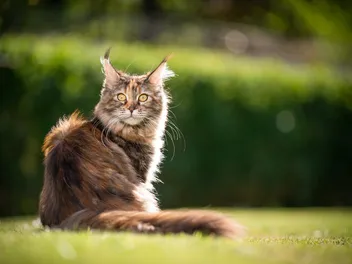
Image By: luchschenF, Shutterstock
How Is Lidocaine Given?
You’ll likely not run across lidocaine except perhaps in human topical ointments or sprays. Remember, don’t use any human medications on your cat without a veterinary prescription. Instead, any interactions with lidocaine will likely be when it is used on your cat by your veterinarian in the clinic.
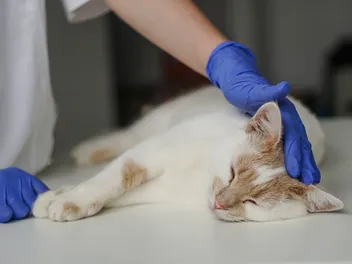
Lidocaine can be injected into the skin to desensitize a painful area or one that needs to be worked on, such as suturing up a wound or taking a biopsy. It may also be injected around nerves to prevent pain, which can be used in diagnostics and surgeries. It may be used in epidurals to decrease the amount of general anesthesia needed for certain surgeries and may be sprayed down a cat’s throat before intubating them for surgery.
For animals with heart arrhythmias, lidocaine may be given intravenously to help regulate those rhythms, or it may be applied on the skin via an ointment, spray, or patch to help control pain.
While lidocaine has been proven to be extremely useful, it can also be toxic to cats at fairly low doses, so your vet will use it with caution or choose a different medication instead.
Potential Side Effects of Lidocaine in Cats
A cat’s body doesn’t handle lidocaine the same way that a dog’s does. Instead, they start to exhibit signs related to the central nervous system, even when used at low doses.
These may include:
Less-noticeable signs include:
Keep in mind that most reactions are fairly mild when lidocaine is given as a local anesthetic or topically by a veterinary professional, but they can be worse if it’s given intravenously, especially in high amounts, or epidurally. That said, as long as your vet prescribes lidocaine at the proper dose for your cat, you likely won’t see any of these signs at home.


Frequently Asked Questions (FAQ)
Can I Use Lidocaine on My Cat?
Most applications of lidocaine will be done in a veterinary clinic rather than at home, but there may be times when your vet prescribes a lidocaine ointment, spray, or patch to help control your kitty’s pain. If this is the case, follow their directions specifically, and don’t use it otherwise unless directed by your veterinarian.
Never use a human ointment or cream containing lidocaine on your cat, and make sure your cat is not around you if you need to apply it yourself. Avoid your cat getting into contact with the spray or cream, or an area on your body where the cream has been applied, and don’t let them lick it off.
What Is Lidocaine Used For in Animals?
The most common use of lidocaine is as a local anesthetic for diagnostics or minor surgeries, including suturing wounds or biopsies. It may also be used to block specific nerves, such as for a tooth extraction. In felines, it may be used to desensitize the throat to ease intubation for general anesthesia, and it can be given intravenously to treat cardiac arrhythmias.
In cats, lidocaine must be used with caution, with vets needing to pay particular attention to doses when using it intravenously or epidurally.
How Can You Treat a Cat’s Pain at Home?
There may be times when your cat is in pain and you want to give them something at home to help them. However, you shouldn’t give your cat anything that hasn’t been prescribed to them for the specific condition that you are trying to treat. There are too many unsafe medications out there, and you may end up hurting your cat more.
Instead, consult your veterinarian to get a proper diagnosis and treatment for whatever it is that’s causing your cat pain. They may be able to recommend various types of pain management and get your cat to feel better safely.

Conclusion
Lidocaine is considered safe for cats at the proper doses and for certain conditions by a veterinary professional or under their guidance. It is most commonly used as a local anesthetic for minor procedures or pain, or as a nerve block for things like extracting teeth. You likely won’t see it given intravenously for heart arrhythmias, like you might in dogs, or given epidurally for specific procedures. Your vet may prescribe topical lidocaine to help manage your cat’s pain in the form of ointments or a patch. Just be sure to follow the instructions and keep your cat from eating the product.
Sources
Featured Image Credit: luchschenF, Shutterstock
Expert cat care, straight to your inbox
News, insights, and useful advice, delivered to you.

No spam — unsubscribe anytime.
By signing up, you agree to our Terms & Conditions and Privacy & Cookies Policy.
How useful was this post?
Click a star to rate. You can leave written feedback afterwards. (We read all feedback.)
Dr. Chyrle Bonk DVM (Veterinarian)
On top of healing animals and writing for veterinary publications, Dr. Chyrle Bonk owns a small cattle herd! When she’s not busy with those things, she can be found somewhere in the Idaho outdoors with her husband and two kids.
Chyrle has practiced in a mixed animal clinic for over 10 years. She also writes for various veterinary websites and magazines, like Catster!
Dr. Chyrle Bonk received her Doctor of Veterinary Medicine (DVM) from Oregon State University in 2010.