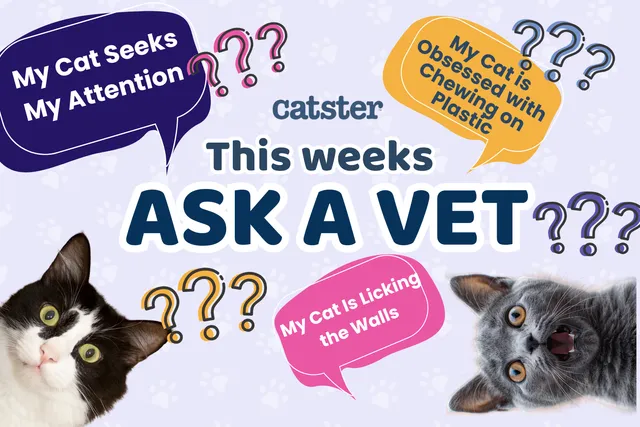
Ask Dr. Paola – Toxic Ingredients, Wall Licking & Kisses (October 27, 2025)

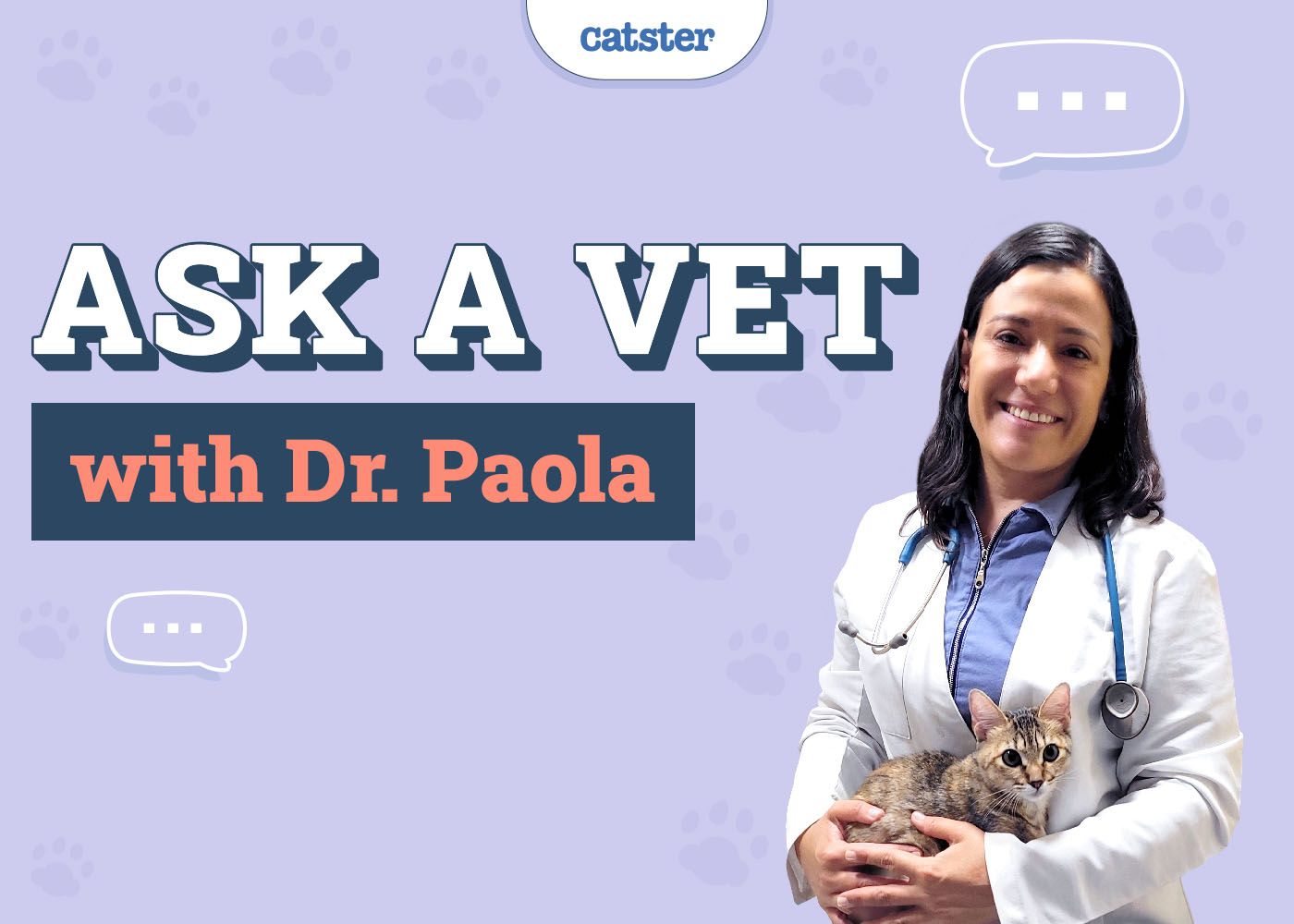
Welcome to our "Ask Dr. Paola" series, where every Monday we bring expert advice straight from Dr. Paola Cuevas (MVZ) to help our readers better understand their cat's health and well-being.
Whether you're a new pet parent or a seasoned cat lover, Dr. Paola is here to provide answers to your most pressing questions. From nutrition tips and preventive care to troubleshooting common behavioral issues, Dr. Paola is ready to offer insights that will keep your kitty happy, healthy, and feline fine. Stay tuned for expert guidance on a range of topics that matter most to you and your cat, so you can make informed decisions and provide the best possible care for your furry companion.
Have a question? Send it in here!

Help! I Am Worried About Toxic Ingredients!
"I'm a bit cautious of products containing certain ingredients. These products are just for me, but I'm a bit worried they might be toxic to my cat, Karlsson. Prunus Armeniaca Kernel Oil (abrikoskerneolie), and little amounts of Rosmarinus Officinalis Leaf Oil. Thanks!" - Daniel
Hi Daniel,
You are absolutely right to be cautious, as many everyday products that are harmless to us can pose risks to cats. Apricot kernel oil (Prunus armeniaca kernel oil) in cosmetic or skincare products is generally not toxic to cats. The concern with apricot kernels themselves is amygdalin, a compound that can release cyanide, but cosmetic-grade oils are purified and safe for topical use. Unless Karlsson were to directly ingest a large quantity of the oil, the risk from incidental exposure is very low.
Rosemary essential oil (Rosmarinus officinalis leaf oil) requires more care. Rosemary, as a herb, is considered safe, but the essential oil is highly concentrated. Cats lack some of the liver enzymes needed to metabolize compounds in essential oils, so exposures beyond simple contact can lead not only to local irritation but, in higher doses, to more serious effects such as drooling, vomiting, tremors, or even liver injury. In cosmetic products for human use, the amounts are typically very small and unlikely to cause harm unless Karlsson licks the product directly from your skin. The greatest risk comes from undiluted oils, diffusers, or if such products are applied directly to a pet.
The safest approach is to continue using your products yourself but avoid letting Karlsson lick or groom areas where the product has been applied, and ensure he has access to well-ventilated spaces. If you ever notice signs such as drooling, unsteadiness, or vomiting after possible exposure, seek veterinary attention right away. For everyday peace of mind, teletriage veterinary services can be a useful resource to help assess risks quickly in non-emergency situations.
Best,
Dr. Paola

Help! My Cat Licks the Walls?
"Skittles loves to lick our walls. This doesn’t happen all the time, but mainly when I groom her, since I do this on a table that is next to a wall. What does this mean?" - Marilyn
Hi Marilyn,
It sounds like Skittles has developed a little grooming routine of her own during your brushing sessions. Cats often explore textures and surfaces with their tongues, and in many cases, wall licking is simply a displacement behavior, similar to how some people hum or fidget when they are being groomed or handled. The table and wall might be creating a small corner where she feels secure, and licking could be her way of self-soothing in that setting.
That said, it is always worth considering possible medical and environmental factors. Sometimes licking unusual surfaces, called pica, can be linked to nutritional imbalances, gastrointestinal discomfort, or even dental disease. If it happens only in that specific context and not at other times, it is more likely to be a behavioral rather than a health concern. To be safe, make sure your grooming area is free of residues like cleaning agents or paint flakes, as ingesting those can be harmful. You might also try redirecting her attention with a grooming mat or a lick mat with a safe treat nearby, so she has something more appropriate to focus on while you brush her.
If you begin to notice Skittles licking walls or other non-food objects frequently outside of grooming sessions, it would be wise to mention this to your veterinarian so they can rule out medical causes. For now, keeping the grooming area safe and offering her a more suitable outlet is a gentle and effective way to manage the behavior. I hope this helps!
Best,
- Dr. Paola

Do My Cats Know They Are Loved?
"My cats Darwin and Breebree are my babies. I am handicapped. They are the main souls that care for and love me. They kiss me. I would like to know, when I kiss them — which is frequent — do they know they are being kissed? Do they feel and understand my loving kisses? " - Michael
Dear Michael,
It’s very touching to hear how much Darwin and Breebree mean to you. Cats may not understand the human concept of a “kiss” in the same way we do, but they are very sensitive to the intention behind our actions. When you lean in close, speak softly, and give them a gentle kiss, they pick up on your tone of voice, body language, and the warmth of your touch. These cues communicate safety, affection, and trust, which cats absolutely recognize and value.
Many cats come to associate kisses with comfort, much like they understand petting or being spoken to in a loving voice. Some even respond with slow blinks or rubbing against you, both feline ways of showing affection and trust. So while they may not interpret a kiss in the exact human sense, Darwin and Breebree are very likely experiencing your kisses as expressions of love. In their own way, by seeking you out, showing affection, and returning those moments of closeness, they are telling you they feel deeply bonded to you, too. And, as I am sure you know well, there is no better feeling than that!
Sincerely,
- Dr. Paola
This article is a part of our weekly Ask Dr. Paola series
Expert cat care, straight to your inbox
News, insights, and useful advice, delivered to you.

No spam — unsubscribe anytime.
By signing up, you agree to our Terms & Conditions and Privacy & Cookies Policy.
How useful was this post?
Click a star to rate. You can leave written feedback afterwards. (We read all feedback.)
Dr. Paola Cuevas MVZ (Veterinarian)
Dr. Paola Cuevas is the Senior In-House Veterinarian at Pangolia, the parent company of Catster. She has over 18 years of experience as a veterinarian and animal behaviorist. Paola's focus is on preventive medicine and animal welfare. Paola has a large range of skills in from diagnostic imaging to nutrition and clinical pathology. Paola enjoys sharing her extensive knowledge of animal training with our Catster readers and is always happy to answer reader questions as our in-house veterinarian.