Ask Dr. Paola - White Foam Pukes & Managing Aggression (March 31, 2025)

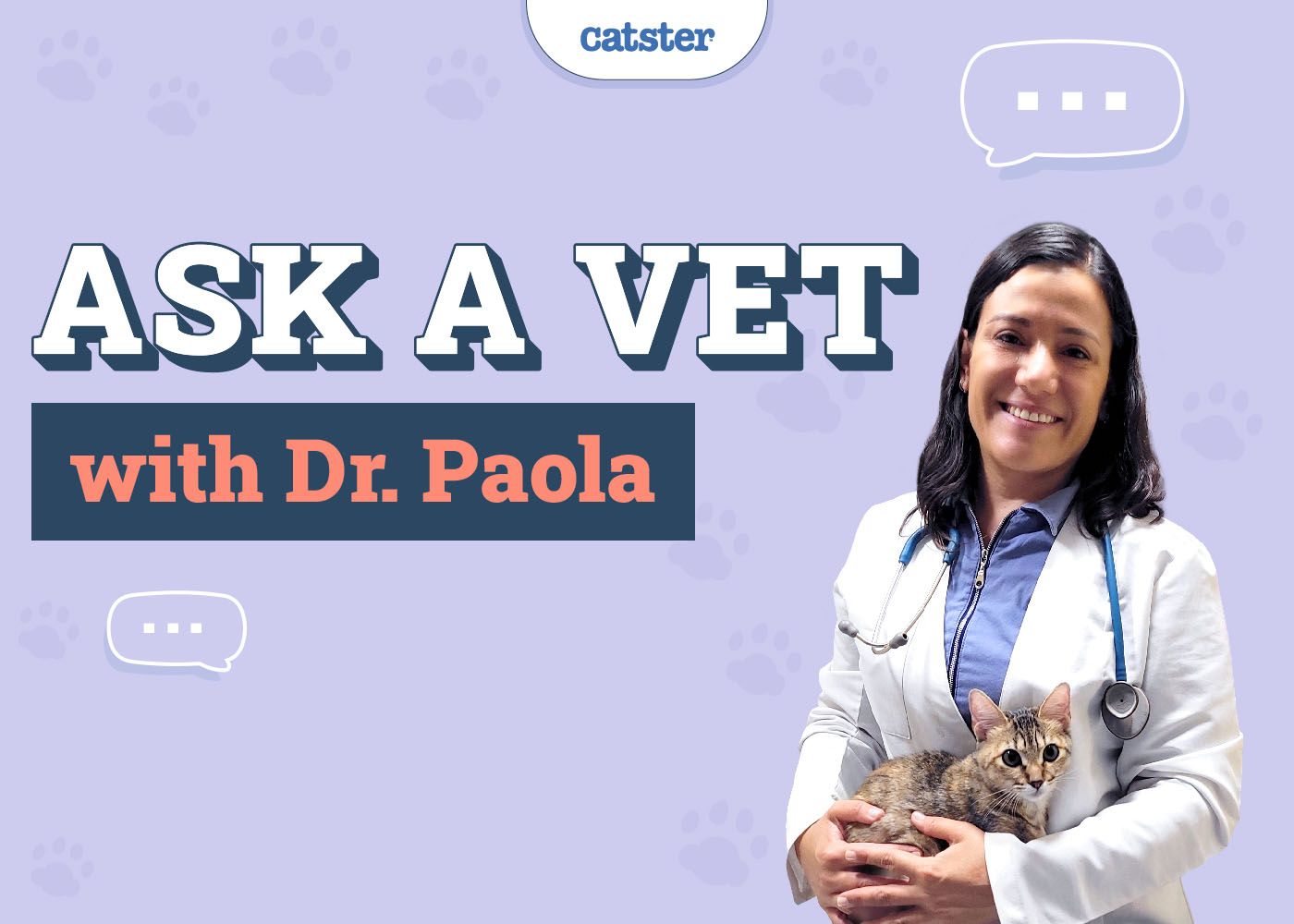
Welcome to our "Ask Dr. Paola" series, where every Monday we bring expert advice straight from Dr. Paola Cuevas (MVZ) to help our readers better understand their cat's health and well-being.
Whether you're a new pet parent or a seasoned cat lover, Dr. Paola is here to provide answers to your most pressing questions. From nutrition tips and preventive care to troubleshooting common behavioral issues, Dr. Paola is ready to offer insights that will keep your kitty happy, healthy, and feline fine. Stay tuned for expert guidance on a range of topics that matter most to you and your cat, so you can make informed decisions and provide the best possible care for your furry companion.
Have a question? Send it in here!

Help! My Cat Threw Up White Foam!
“Dear Dr. Paola,
My cat, Mirabella, threw up more white foam. One of the posts on Catster shared what to look out for in different cat vomit, so I’m very concerned. I have spoken to the vet office that I take my cat to, but I’m still stressed. Can you help? - Catherine
Hi Catherine,
I completely understand why you’re feeling stressed—seeing Mirabella vomit, especially white foam, can be unsettling. Vomiting in cats can have many causes, ranging from mild to serious. White foam often suggests that the stomach is empty, which can happen if a cat goes too long without eating, has mild gastritis (stomach irritation), or is experiencing an underlying issue like acid reflux. However, frequent vomiting, lethargy, decreased appetite, or any other changes in behavior could indicate a more concerning condition, such as an obstruction, pancreatitis, or an underlying illness.
Since you’ve already reached out to your vet, that’s an excellent step. If Mirabella continues to vomit, seems uncomfortable, refuses food, or develops any other concerning signs, she should be seen promptly. In the meantime, offering small, bland meals like plain boiled chicken or a sensitive stomach diet in tiny amounts may help settle her stomach. Keeping her hydrated and monitoring for any changes are important. I know this is stressful, but you’re doing the right thing by being attentive. If her vomiting persists or worsens, following up with your vet for a more thorough evaluation would be best. Mirabella is lucky to have you looking out for her!
I hope she gets better soon,
Dr. Paola


Help! I Have to Keep My Cats Separate!
"Hi Dr Paola!
I have three cats. My 12-year-old cat (Jinx) and a 2-year-old cat (Sherbert) were in the house together and got along great. Then Rocky showed up on our porch. I fell in love and brought him into the fold. Jinx is the goofiest lovebug you will ever meet—EXCEPT when he sees Rocky. He immediately starts growling and hissing, and then Rocky gets defensive, and they have even attacked each other. Nothing I have done seems to help. They still hate each other. So for over 2 years, we have kept them apart. Rocky sleeps in my room and stays there all morning. Then the other two go in, and Rocky gets free-range house time until bedtime. It’s so hard, and I feel so bad, but I can’t let any of them go. Our house is tiny, and I work full time, so it’s hard for me to do any of the tips I find online. Do you have ANY advice at all? My heart breaks every day to keep them like this. " - Carrie
Hi Carrie, I can truly feel how much love and dedication you have for all three of your cats. Managing a household where two cats don’t get along is incredibly tough, especially in a small space, but the fact that you’ve found a way to keep everyone safe and comfortable for over two years is a testament to your patience and care. It’s completely understandable to feel heartbroken, but please know that you are already doing so much to make the best of a difficult situation.
Since Jinx and Rocky have an ingrained hostility toward each other, a full reset might be the only way to try and rebuild their relationship. This would mean starting from scratch with a slow and structured reintroduction process, as if they had never met. However, given your full-time work schedule and the limited space, that may not be a realistic option. In that case, the best way to ease tensions might be indirect positive associations. Try swapping their bedding frequently so they get used to each other’s scent in a non-threatening way. Using a multi-cat pheromone diffuser in common areas can also promote a calmer atmosphere. Additionally, if you have time, engaging in parallel play—where you play with each cat separately but in sight of each other (even through a baby gate or a cracked door)—can help them associate each other with positive experiences.
Some cats, like Jinx and Rocky, may never be best friends, and that’s okay. If full integration isn’t possible, optimizing the separate living arrangement to reduce stress is a perfectly valid and loving approach. If there’s any way to create even vertical separation, like opposite sides of wall-mounted shelves or tall cat trees, it could help them coexist in the same room without feeling directly threatened. You’re not failing them, Carrie; you’re giving them a home where they are safe and loved. And that is everything. Likewise, if you would more information, you can speak with one of our vets. We have an online televet service, PangoVet, where you can speak face-to-face and get behavioral and training advice from one of our experienced veterinarians.
Best of luck,
Dr. Paola

Help! My Cats No Longer Get Along!
“Dear Dr. Paola,
Our cats have been separated for two-and-a-half years. Mari became aggressive when Katia came back from having her teeth cleaned. They now will eat together on either side of a baby gate. Mari is on medication for anxiety, and we use Feliway diffusers. We would like to reunite the cats, but we are worried about Mari’s tendency to be territorial. They are also both attached to me, and I am afraid that Mari will attack Katia if I am holding her. " – Eileen
Hi Eileen,
It’s wonderful that you’ve been so patient and dedicated to helping Mari and Katia feel more comfortable around each other. The fact that they can now eat calmly on either side of a baby gate is a huge step it means they can share a space positively, even if there’s still a barrier. Given Mari’s territorial nature and her strong attachment to you, a careful and gradual approach will be key to making their reunion as smooth as possible.
Since Mari’s aggression was triggered by a change in Katia’s scent after the dental procedure, continuing scent swapping can help maintain familiarity. Rubbing a soft cloth on Katia and placing it in Mari’s resting areas (and vice versa) can further reinforce positive associations. You might also try short, supervised interactions while engaging them in a shared, enjoyable activity, such as playtime with a wand toy or positive reinforcement training. The goal is to keep them focused on something positive while gradually normalizing each other’s presence.
Your concern about Mari’s reaction when you’re holding Katia is valid. Cats can become possessive over their favorite human, and being physically elevated can make Katia more vulnerable. Instead of holding her during early interactions, try being present in a neutral, open space where both cats can move freely. It is very important to be observant of their body language. If you notice tension or even precursors of aggression, calmly redirect their focus with toys or a gentle distraction rather than intervening physically, which could escalate stress. Since Mari is already on medication for anxiety, discussing the transition with your vet may be helpful to ensure her current treatment is optimized for this process. You’re making thoughtful choices for their well-being, and with patience, they may be able to share space again—even if they never become best friends, cats can learn to tolerate each other, and coexisting peacefully is a realistic and worthwhile goal as long as each has their own territory.
Good luck,
Dr. Paola
This article is a part of our weekly Ask Dr. Paola series
Expert cat care, straight to your inbox
News, insights, and useful advice, delivered to you.

No spam — unsubscribe anytime.
By signing up, you agree to our Terms & Conditions and Privacy & Cookies Policy.
How useful was this post?
Click a star to rate. You can leave written feedback afterwards. (We read all feedback.)
Dr. Paola Cuevas MVZ (Veterinarian)
Dr. Paola Cuevas is the Senior In-House Veterinarian at Pangolia, the parent company of Catster. She has over 18 years of experience as a veterinarian and animal behaviorist. Paola's focus is on preventive medicine and animal welfare. Paola has a large range of skills in from diagnostic imaging to nutrition and clinical pathology. Paola enjoys sharing her extensive knowledge of animal training with our Catster readers and is always happy to answer reader questions as our in-house veterinarian.