Ask Dr. Paola - Sudden Weight Loss, Sadness & Counter Sitting (March 24, 2025)

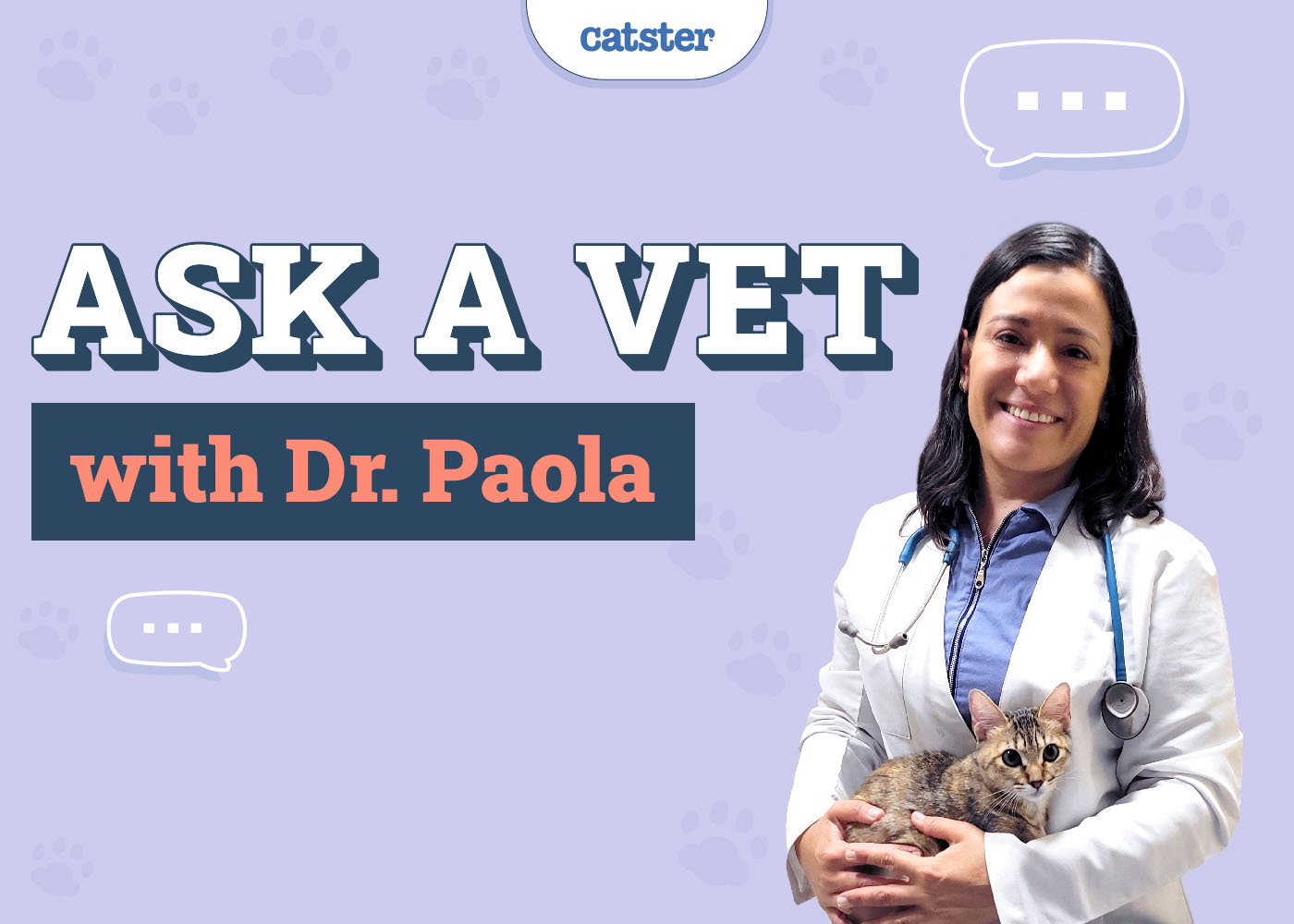
Welcome to our "Ask Dr. Paola" series, where every Monday we bring expert advice straight from Dr. Paola Cuevas (MVZ) to help our readers better understand their cat's health and well-being.
Whether you're a new pet parent or a seasoned cat lover, Dr. Paola is here to provide answers to your most pressing questions. From nutrition tips and preventive care to troubleshooting common behavioral issues, Dr. Paola is ready to offer insights that will keep your kitty happy, healthy, and feline fine. Stay tuned for expert guidance on a range of topics that matter most to you and your cat, so you can make informed decisions and provide the best possible care for your furry companion.
Have a question? Send it in here!

Help! My Cat is Drastically Losing Weight!
“Dear Dr. Paola,
I have a 14-year-old domestic longhair called Nila who has been with me since shortly after birth. Until 2 years ago, she had a 'step sister' who was approximately a year older. She knew her place as number 2, as the alpha reminded her periodically. Since the alpha's passing, Nila has come to love being the one and only and I love that for her.
Over the last month or so, her weight has dropped drastically, despite an increased appetite, periodic vomiting, and normal stools the blood and urine tests all came back within normal ranges. I have tried multiple foods, both wet and dry, yet she is shrinking away. She's hungry, eats hungrily multiple times a day in small amounts to avoid vomiting, vomits still on average once a day at some point, and continues to lose weight. Any ideas what is going on here? I also noticed her just staring at the food like she wants to eat but doesn't want to vomit. She is really slowing down and I feel like I am about to lose her. " - Lisa
Lisa, I can feel how deeply you love Nila, and I know how heartbreaking it must be to watch her lose weight despite her strong appetite. Given her age, her history, and the concerning weight loss despite normal lab work, there are a few possible explanations for what’s happening.
One of the most common causes of weight loss with increased appetite in older cats is hyperthyroidism, even if initial bloodwork appeared normal. Sometimes, early cases or fluctuating thyroid hormone levels can make diagnosis tricky. If hyperthyroidism has been ruled out, other possibilities include gastrointestinal disorders such as inflammatory bowel disease (IBD), small-cell lymphoma, or exocrine pancreatic insufficiency, where the pancreas isn’t producing enough digestive enzymes to absorb nutrients properly. Another concern is diabetes, but that typically comes with increased thirst and urination, which you haven’t mentioned.
The fact that she stares at her food as if hesitant to eat and vomits daily raises a red flag for nausea, which could stem from chronic kidney disease (even if early bloodwork was normal), pancreatitis, or even a gastrointestinal motility disorder. A deeper diagnostic approach, including a specialized GI panel, which includes more specialized tests that don’t get checked on routine bloodwork, and an abdominal ultrasound, could help clarify what’s going on.
You could try offering highly digestible, calorie-dense wet food and possibly adding a bit of water or bone broth to prevent dehydration. However, her condition sounds quite serious, I strongly recommend further veterinary evaluation as soon as possible; perhaps even ask your vet to refer you to a veterinary internist if her condition continues to decline. You are doing everything you can, and she is lucky to have you looking after her.
I wish you the best!
Dr. Paola


Help! My Cat Seems Sad!
"Hi Dr Paola!
My 14-year-old cat, Tilly, started meowing all of the time after I had to put Isis, my 24-year-old cat to sleep. They were not close to each other. Tilly is now the alpha cat (Isis was before) in my 2-cat household. She is not close with my other 14-year-old cat, who was close to Isis. I'm not sure what she wants. She seems bored but does not want to play with toys. Any suggestions? Thank you. " - Penny
Hi Penny, I’m so sorry for your loss. Losing a beloved cat, especially one who shared your life for 24 years, is incredibly difficult. Even though Tilly and Isis weren’t particularly close, Isis’s absence has still changed the dynamic of your household, and Tilly is likely reacting to that shift. You did not mention when this happened but I am assuming recently. Her increased vocalization could be a way of expressing uncertainty, seeking reassurance, or even adjusting to the silence left behind. Cats thrive on routine and familiarity, so even subtle changes. The absence of Isis’s presence, movements, or scent can feel unsettling.
It’s interesting that you mentioned Tilly taking on the “alpha” role. Domestic cats' social structure is mostly about territory, resource access, and personal comfort. Some cats are naturally more confident and assertive, while others are more passive. Isis may have been the most influential cat in your home, guiding routines in her own way, and now that she’s gone, Tilly might be feeling a mix of uncertainty and responsibility. Her vocalization could be her way of processing the change, checking in with you, or simply trying to redefine her routine.
Since she seems restless but uninterested in toys, try engaging her in other ways. Clicker training, puzzle feeders, or even simply adding environmental enrichment. Add a new perch, a cozy hideaway, or a window seat for birdwatching. Some cats also respond well to calming pheromone diffusers. Just make sure you get the multicat formula, which can provide extra comfort during social interactions and structure transitions. She may need extra reassurance from you right now, so gentle attention, talking to her, or offering her a lap to sit on (if she enjoys that) could help her adjust. You know her best, offer her opportunities for happiness. With time, she’ll find her balance again, and her vocalization may settle as she regains confidence in her new household dynamic.
Best wishes!
Dr. Paola


Help! I Can't Keep My Cat Off the Counters!
“Dear Dr. Paola,
We adopted Aiden from the local shelter. He is about nine months old and until the end of January, he was mostly in a cage. The problem is, now we can not keep him off the counters, table, or out of the garbage can. We are at our wit's end to find a solution because so far nothing has worked. We do not know what to do, can you please help us find a solution?" – Cynthia
Hi Cynthia,
First, I want to say how wonderful it is that you adopted Aiden and gave him a fresh start and the opportunity to feel loved. Since he spent much of his young life in a cage, his world was very limited, and now that he has freedom, he is naturally exploring everything. His behavior is not about disobedience; it’s curiosity, instinct, and a learned need to seek resources wherever possible. Cats are natural climbers, and confined cats often develop strong food-seeking behaviors because they have little else to do in their previous environment.
To redirect Aiden, think of it as guiding a child away from trouble rather than just saying "no." He needs alternative outlets that are more rewarding than the counters and trash. Provide tall cat trees or wall-mounted shelves near areas he tries to climb so he has “allowed” places to explore. Use interactive feeding puzzles or scatter his meals in different places so he learns that food comes from appropriate locations, not the trash. To deter him, use double-sided tape or motion-activated air deterrents on surfaces you want to keep him off. Keep the garbage out of reach; secure trash cans with lids. You should also make sure counters are unappealing by removing food temptations and cleaning surfaces well to eliminate enticing smells. You may also want to try some of the other tips and tricks mentioned in this post. When he chooses his cat tree or another approved space, reward him with treats or play so he makes the right associations.
Patience is key, and Aiden will learn with consistent redirection. He’s still adjusting to his new home, and with time and positive reinforcement, he’ll settle into better habits. If you need additional support, an online televet service like our own PangoVet.com could provide tailored advice for his specific needs. You're doing a great thing for Aiden, and with a little structure, he’ll soon feel secure and thrive in his new home!
Sincerely,
Dr. Paola
This article is a part of our weekly Ask Dr. Paola series

Expert cat care, straight to your inbox
Vet-reviewed advice, behavior tips, and the best of Catster. Free, and you can unsubscribe anytime.
By signing up, you agree to our Terms & Conditions and Privacy & Cookies Policy.
Catster is a cat magazine and cat website where cat lovers come together and get expert advice about cat behavior, cat health and cat news.
Join the conversation
Ask a question, share your story, or send private feedback.