Rodent Ulcers in Cats: Our Vet Explains Causes, Signs, & Treatments

In this article
Your cat has a raised, red sore on their lip. A quick Google search reveals that it may be a rodent ulcer. But what is that? Let's dive into what causes these "rodent ulcer" lesions and what you can do for your cat.

What Is a Rodent Ulcer?
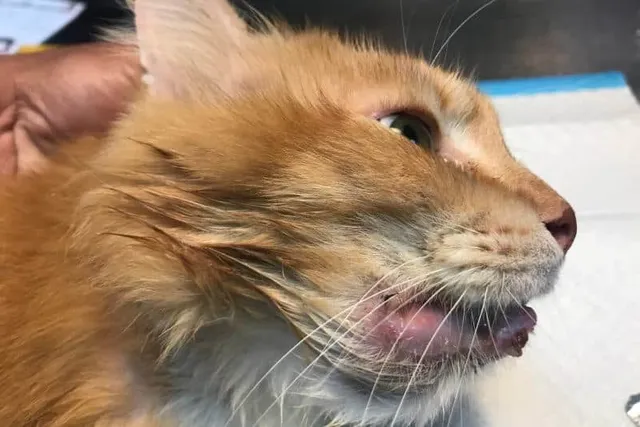
A rodent ulcer is also known as a feline eosinophilic granuloma. They are called indolent ulcers as well. They generally occur near the mucocutaneous junction at the upper or lower lip, but cats can also develop eosinophilic granulomas in places like their belly and the inside of their legs.
Unfortunately, researchers are not entirely sure what causes rodent ulcers. Because the tissue tends to have a lot of eosinophils, a type of white blood cell, they are believed to result from a hypersensitivity reaction.

What Are the Signs of Rodent Ulcers in Cats?
Rodent ulcers usually form on the lips, but cats can develop them inside their mouths. They may be small or large, and some cats will develop swollen skin at the site. They are reddened and raised, and they're often ulcerated.
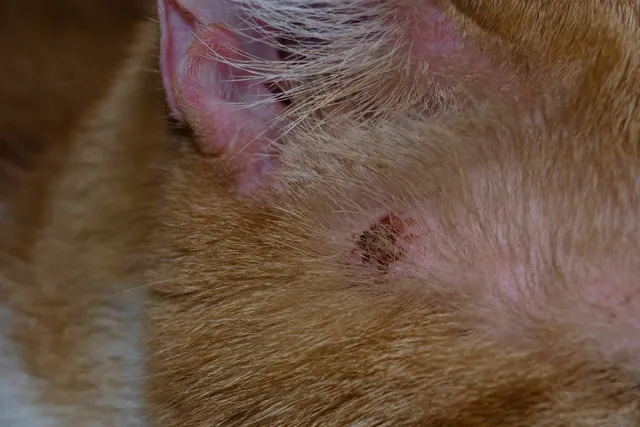
If they form on other body parts, the skin is red and raised, with hair loss. Often, these sites have a small amount of sticky discharge. While they're typically smaller on the lips rather than encompassing the whole face, they can become quite prominent on the body, and your cat may attempt to kick them frequently because they itch.
What Are the Causes of Rodent Ulcers in Cats?
You might not be able to pinpoint the exact cause of a rodent ulcer, but it's typically caused by things that trigger a hypersensitivity reaction. According to the Cornell Feline Health Center, the most common cause is allergic reactions to flea, mosquito, or mite bites.1 Other causes can be:
- Foods
- Antibiotics
- Some cardiac medication
- Plastics
- Environmental allergens

Diagnosing a Rodent Ulcer in Your Cat
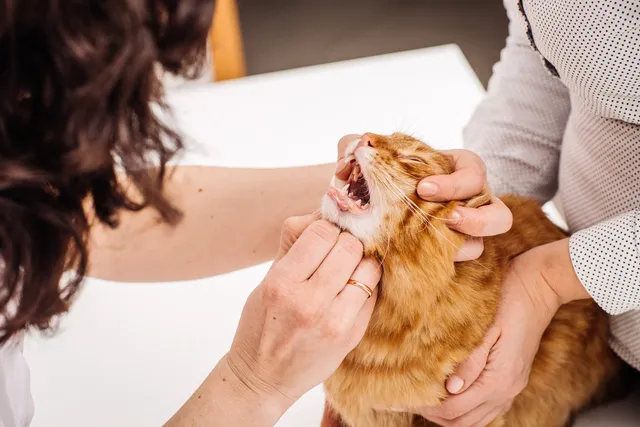
If you notice a red, raised lesion on your cat, you should take them to be examined by a veterinarian. If these ulcers last for an extended period, they can ultimately erode the skin and cause scarring and deformities.
The appearance of an eosinophilic granuloma is often pretty consistent, and the veterinarian will suspect it during their exam and history-taking. They may need to do testing.
Two common tests are a fine needle aspirate and a skin impression. With a fine needle aspirate, they use a needle to collect cells from the site and then spread them on a slide. With a skin impression, the veterinarian will carefully press a microscope slide to your cat's lesion and remove it. They'll be checking for eosinophils, as well as microscopic organisms like bacteria.
Less commonly, the veterinarian might need to biopsy the area. They'll take a tissue sample and submit it to a pathologist for evaluation.

How Do I Care for a Cat With Rodent Ulcers?
How to Treat Rodent Ulcers in Cats at Home
Check your cat for external parasites like fleas at the first sign of a rodent ulcer. Did you remember to put on their monthly flea prevention? If not, consider doing that now, but make sure you don't put the prevention on the site of the ulcer.
Contact a veterinarian for an appointment. Meanwhile, check the dishes your cat uses. Did a plastic bowl slip in there? Swap all glass dishes for water and food, and make sure you wash them regularly.
Consider the food you're feeding. Have you changed brands or flavors recently? You might want to switch to a high-quality diet. The veterinarian might even suggest a hydrolyzed or novel protein diet, one where the protein source isn't one that your cat has had before.
You can use a medicated cleaner, such as Vetericyn wound care products, to clean the site. Colloidal silver is sometimes applied as a natural antibiotic. Remember that hydrogen peroxide can damage healthy cells and delay wound healing. (Plus, if ingested, it can cause vomiting in pets.)

Medication for Rodent Ulcers in Cats
The veterinarian may prescribe steroids to decrease the inflammation. They might utilize oral or injectable steroids. While steroids can help with the ulcer, they have the potential for significant side effects in cats, including diabetes and heart failure.
If your cat does not respond to steroids or has an issue that makes using them undesirable, the veterinarian may prescribe Atopica, a special pet formulation of cyclosporine. It is an immunosuppressant. If the rodent ulcer appears infected, the veterinarian may prescribe antibiotics. Commonly used medications include Convenia and Clavamox.

Frequently Asked Questions (FAQ)
Are rodent ulcers in cats contagious?
The good news is that rodent ulcers are not contagious to people, other cats, or other animals. That said, the underlying cause for the ulcers could trigger a similar response in different cats. As a whole, these lesions are not common, so multiple cats in the house affected would be highly unlikely.
Will a rodent ulcer go away on its own?
In some cases, if the stimulus for the ulcer goes away, the ulcer itself will go away. It's important to understand that this is not always the case. Some rodent ulcers can last for years and may erode the skin, causing a lifelong deformity of the lip.
Conclusion
Rodents do not cause rodent ulcers, but you should investigate and treat them as soon as they are noted. Some cats will be intensely itchy, and they can become infected. A veterinarian will help you develop a game plan, including parasite control, a diet trial, and immunosuppressive medications.
Sources
Featured Image Credit: PRESSLAB, Shutterstock
Expert cat care, straight to your inbox
News, insights, and useful advice, delivered to you.

No spam — unsubscribe anytime.
By signing up, you agree to our Terms & Conditions and Privacy & Cookies Policy.
How useful was this post?
Click a star to rate. You can leave written feedback afterwards. (We read all feedback.)
Dr. Samantha Devine DVM (Veterinarian)
Samantha Devine is a practicing veterinarian who loves to share her experience with animal species and their health. Whether it's a guinea pig question or a pressing matter about something your cat ingested, she strives to provide clear answers. She is passionate about preventative care and firmly believes in the old adage, "An ounce of prevention is worth a pound of cure."
Dr. Devine has been practicing veterinary medicine for over 12 years and has spent a great deal of that time writing online to educate pet owners. In addition to general practice small animal medicine, she has worked with horses. zoo animals and aquatic species. She enjoys all aspects of preventative medicine, from nutrition to vaccines.
Dr. Devine received her degree from the Virginia Maryland Regional College of Veterinary Medicine.