Rare Cat Diseases: 10 Illnesses & What to Watch For (Vet Answer)

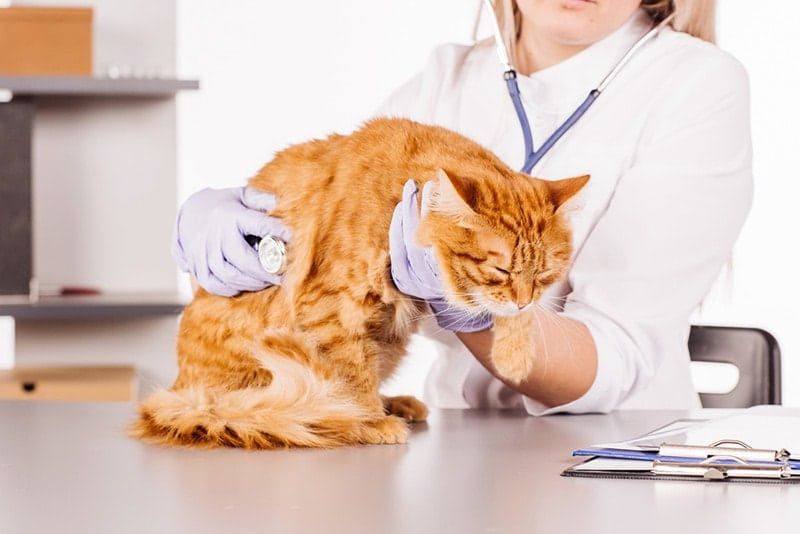
When you’re owned by a cat, you want to make sure you know all there is to know about their grooming, feeding, preventative health care, and potential illnesses and ailments. In your quest for knowledge, you will no doubt come across the most common feline diseases—hyperthyroidism, diabetes, kidney disease, abscesses, to name a few—but there are some conditions that you won’t see too often. In fact, many vets will go through their whole careers without seeing some of these diseases, but it doesn’t mean we should forget about them.
We are going to look at some of the more unusual illnesses that can affect cats and learn about how they are diagnosed, treated, and what they might be mistaken for.

The 10 Rarest Cat Diseases
1. Hyperadrenocorticism (aka Cushing’s Disease)
Cushing’s Syndrome is a relatively common affliction seen in dogs, but very rarely affects cats. It is an endocrine disease (hormonally-based disease) that results from the overproduction of the steroid hormone, cortisol, by one or both adrenal glands. It is caused by either a functional adenoma on the pituitary gland or an adenoma or adenocarcinoma on the adrenal gland.
Cortisol is normally produced in response to stress on the body, and in the case of Cushing’s disease, cortisol is continually produced at an elevated level, putting strain on multiple organ systems. Some of the clinical signs of Cushing’s include:
- Polyuria (increased urination) and Polydipsia (increased thirst)
- Change in weight distribution
- Thin, fragile skin
- Poor coat quality and thinning hair
- Increased appetite
- Lethargy
- Respiratory infections
- Skin infections
- Comedones (blackheads)
- Enlarged liver
Many of these signs are also seen in cats with more common conditions like diabetes, kidney disease, or hyperthyroidism, which will need to be ruled out with blood tests. Hyperadrenocorticism can be managed with medication but will ultimately reduce life expectancy.

2. Acromegaly
Acromegaly or hypersomatotropism, is also caused by a pituitary adenoma, but in this case, it triggers an overproduction of growth hormone. It is most commonly seen in older, male cats, and is usually associated with the onset of diabetes mellitus. The most distinctive feature of acromegaly is the increased size of the extremities, or acral features, most notably the jaw, skull, and feet.
Apart from the signs associated with diabetes (increased polydipsia/polyuria and weight loss with a normal to increased appetite), cats with acromegaly often have organomegaly—increased size of the heart, liver, and kidneys. Diagnosis is made using blood tests for growth hormone, insulin-like growth factor, plus an MRI to identify the pituitary mass. The most effective treatment for acromegaly is radiation therapy, which carries a high rate of success, but this condition is often left untreated. Even with management of the diabetes, cats with untreated acromegaly will eventually succumb to heart or kidney failure.
There is little information regarding the response of diabetes to successful treatment of acromegaly, but in human cases, the diabetes resolved once the levels of growth hormone normalized.
3. Tularemia
Caused by infection with the bacteria Francisella tularensis, tularemia most commonly affects rabbits and other rodents, and is often referred to as “rabbit fever”. Cats can become infected by ingesting infected prey, drinking contaminated water, or through a tick or insect bite. The clinical signs of tularemia are fairly vague, including fever, lethargy, lymph node enlargement, abdominal pain, and jaundice. Left untreated, the infection will eventually lead to organ failure and death.
The good news is that tularemia responds well to treatment with the right antibiotics. However, being a rare and unusual infection for cats, it is often left undiagnosed, or diagnosed too late for the treatment to be successful. This is why it is useful to be familiar with even the uncommon diseases that can affect cats, particularly if you have a hunting feline or live in an area where insect and tick bites are common.

4. Hypervitaminosis A
Vitamins are usually thought of as a healthy component of the diet, but too much of a good thing can be problematic. Vitamin A, in healthy doses, supports vision, healthy skin, and the immune system. If cats ingest too much vitamin A, it can lead to a variety of clinical signs, including:
- Muscle pain, particularly around the head and neck
- Bony proliferations on the cervical vertebrae and long bones
- Weakness and weight loss
- Poor skin and coat condition
- Constipation
Hypervitaminosis A is usually the result of cats being fed large amounts of liver, which is the storage organ for this vitamin. This condition was more common in the past, when cats would commonly be fed on scraps and offal but is rarely seen today. However, with the increased popularity of raw diets, it is worth being mindful of.
With the exception of the bony growths, clinical signs of this syndrome generally resolve once the vitamin A levels are corrected.
Seek veterinary advice if you’re concerned about your pet’s well-being.
5. Taurine-deficiency Dilated Cardiomyopathy and Retinopathy
Like hypervitaminosis A, taurine deficiency is much less common today than it was in the past. Taurine is an amino acid that is vital for normal vision, digestion, and heart muscle function, and also helps support immunity and fetal development. It is an essential nutrient for cats, as they are unable to synthesize this amino acid themselves. Taurine is found in animal protein, which is why cats need to consume meat.
When commercial diets started to be produced, the importance of taurine had not been identified, and foods that contained higher amounts of ‘supplemental’ ingredients such as cereals and grains, resulted in taurine deficiencies, the most prominent syndromes being dilated cardiomyopathy (DCM) and feline central retinal degeneration (FCRD).
DCM is the progressive thinning of the heart muscle, leading to cardiac insufficiency, hypotension (low blood pressure), weakness, collapse, and eventually death. If diagnosed early enough, the effects of taurine-deficiency DCM can be reversed through the supplementation of taurine.
In the case of FCRD, the taurine deficiency causes degeneration of retinal cells, leading to impaired vision and eventual blindness. Taurine supplementation can stop the progress of this condition, but the damage that has already occurred is irreversible.
Taurine deficiency is easily avoided by feeding your cat an appropriately balanced diet that contains a suitable amount of animal protein. Certain meat sources are richer in taurine than others, and unlike vitamin A, there appear to be no problems associated with consuming too much taurine.

6. Feline Orofacial Pain Syndrome (FOPS)
This is a particularly unpleasant condition that appears to cause facial discomfort and pain, and results in the affected cats chewing and mutilating their own tongues. The disease is not well understood at this stage but is believed to be an inherited condition involving the trigeminal nerve (the 5th cranial nerve), with Burmese cats most affected.
The difficulty with diagnosing and treating FOPS is that the clinical signs are often intermittent, and the pain does not respond well to most analgesics. Diagnosis is made by excluding all other potential causes of facial and oral pain, as there is no specific test for it. Scientists are working on DNA sequencing in order to identify the problematic genes to allow affected cats to be excluded from breeding.
Euthanasia is not uncommon in cases where the pain cannot be managed.
7. Cytauxzoonosis
Also known as Bobcat fever, this is a nasty infection caused by the protozoa, Cytauzoon felis. This organism is transmitted to domestic cats by ticks, most commonly the Lone Star tick (Amblyomma americanum). Cases are limited to certain geographical areas in the US but have gradually been spreading further afield. The natural host of C. felis is the bobcat (Lynx rufus), which has evolved something of a resistance to the harmful effects of the protozoa, presumably due to chronic exposure.
When the bobcat is infected with C. felis, they have a brief subclinical infection period, and then become reservoirs for the organism. Domestic cats that survive infection can also become reservoir hosts.
Clinical signs of infection with C. felis include:
- Depression, lethargy
- Inappetence and dehydration
- Fevers of up to 106°F (41°C)
- Enlarged organs (spleen & liver) and lymph nodes
- Pulmonary edema
Without treatment, most cats die within 2–3 days of spiking a fever. More recently, combination therapy using two antibiotics, Antovaquone and Azithromycin, along with intravenous fluid therapy and supportive care, have proven successful in over 60% of cases, but this treatment is very expensive. The best way to avoid this devastating disease is by keeping cats indoors and using preventive tick treatments in areas known to harbor bobcat fever.

8. Feline Papillomatosis
Papillomas are very similar to warts and are caused by the papillomavirus. It is not unusual to see these little lesions appearing on the head, ears, limbs, and bodies of dogs, but they are much less common in cats. Feline papillomatosis (FcaPV) produces oral papillomas, viral skin plaques, squamous cell carcinoma, and a type of skin cancer called Bowenoid in situ carcinoma. Squamous cell carcinoma is the most common form of skin and oral cancer in cats, and it has been hypothesized that FcaPV may have a significant role in their development.
Cutaneous lumps and lesions are far less common in cats than in dogs, so any new or unusual growths should always be checked by your vet.
9. Feline Gastrointestinal Eosinophilic Sclerosing Fibroplasia (FGESF)
This is quite a recently discovered condition and one which has most likely been previously diagnosed as chronic inflammatory bowel disease (IBD), feline eosinophilic chronic enteritis, and even intestinal lymphoma. These are all conditions that require histological examination of biopsy samples to diagnose, and this is not always performed, mostly due to the fact that there is little variation between the treatments for each disease.
In the case of FGESF, the most remarkable feature is the formation of thickened collagen layers or plaques within the intestinal walls, which can only be diagnosed with immunohistochemistry and histopathology. The importance of making a specific diagnosis in these cases is that, unlike the other three intestinal diseases, FGESF does not respond well to immunosuppressive medication, and may need surgical intervention.
This is a disease that is still being studied, but an important one to be aware of when it comes to cats with chronic vomiting, diarrhea, and weight loss.

10. Capillariasis
Rounding out our list of rare cat diseases is Capillariasis. Capillaria are tiny worms, very similar to intestinal worms, that can live in different parts of the body. There are several species of Capillaria worms that can affect cats.
- Pearsonema spp. which infects the kidneys and bladder, aka Bladder Worms
- Eucoleus spp. which infects the respiratory tissues
Cats can become infected with Capillaria worms by ingesting eggs directly from the environment (e.g. eggs shed in urine or feces, picked up on feet or coat and licked) or from ingesting infected earthworms.
In the majority of cases, infection with Capillaria worms is asymptomatic. When cats do exhibit clinical signs, they will reflect the type of species involved. Pearsonema infections will cause urinary signs such as blood in the urine, inappropriate urination, or straining to urinate. Infection with Eucoleus species will present with sneezing, coughing, or wheezing.
Because Capillaria infection is quite rare in cats, the clinical signs produced are often mistaken for other, more common diseases. Diagnosis can also be tricky, as the eggs of these worms are shed intermittently, so fecal tests or urinalysis may be clear at the time of testing.
Fortunately, Capillaria is readily treated with most routine worming treatments.
Final Thoughts
There is a commonly used phrase in medicine: “When you hear hoofbeats, think horses, not zebras”, because most of the time, it will be horses. However, every now and then, our cats can be affected by more unusual disorders or diseases, and that’s when it’s useful to also be aware of the zebras.
Your vet will have extensive knowledge and experience with the more common problems that affect our cats, but it’s impossible to remember each and every disease and diagnosis. By becoming familiar with some of the rarer feline illnesses, especially those that are more prevalent where you live, you could even save your cat’s life.
See Also:
Sources
Featured Image Credit: PRESSLAB, Shutterstock
Expert cat care, straight to your inbox
News, insights, and useful advice, delivered to you.

No spam — unsubscribe anytime.
By signing up, you agree to our Terms & Conditions and Privacy & Cookies Policy.
How useful was this post?
Click a star to rate. You can leave written feedback afterwards. (We read all feedback.)
Dr. Karyn Kanowski BVSc MRCVS (Veterinarian)
Dr. Karyn comes from Queensland, Australia, and has lived in the UK for the past 10 years. In 2010, she graduated from The University of Queensland School of Veterinary Science and also has a Bachelor’s degree in Zoology. She is passionate about using evidence, experience, and owner collaboration to provide the best solutions for pets, and believes in making reliable information about animal health accessible to all. Dr. Karyn shares her home with five cats, four dogs, and one husband. When she is not in the scrubs, she spends her time writing, gardening, and cleaning up pet hair!