Three Cats, One Rabies Outbreak: What Happens Next?
Every time the topic of vaccines comes up, there’s always someone who questions whether our pets really need them. Asking questions about medical care is perfectly reasonable (in fact, informed pet parents should!), but dismissing vaccination without understanding the risks is another story.
Rabies is a perfect example. This is not some historical disease or something that only affects animals in remote areas or underdeveloped countries. It can infect mammals, including our own cats, dogs, and even us. What’s even scarier is that once the clinical signs appear, rabies is almost always fatal, making prevention essential.
Recent events in Quebec offer a timely reminder. Amid an emerging wildlife outbreak, three domestic cats tested positive for raccoon-strain rabies in 2026. Although these numbers pale in comparison to the number of infected wildlife recorded since December 20241, it demonstrates how a disease circulating in wild animals can reach our pets.
And this isn't just a Canadian concern. Rabies variants and wildlife risks differ by region, but keeping pets appropriately vaccinated is a responsibility shared by pet parents everywhere.
Wildlife Rabies Hits Closer to Home
Despite its name, raccoon-strain rabies isn't exclusive to raccoons; they are simply the reservoir species of this particular variant of the rabies virus. Skunks and other mammals – including cats – can also become infected.
Rabies attacks the central nervous system. It spreads mainly through the bite of an infected animal, when virus-containing saliva enters the body. Saliva can also transmit the virus if it reaches an open wound, the eyes, nose, or mouth.
Raccoon rabies had been eliminated in Quebec following an outbreak between 2006 and 2009, but the virus resurfaced in 2024. Since then, more outbreaks have appeared, and case numbers have climbed sharply in 2026, particularly in Montérégie. By October 29, 328 animals had tested positive for raccoon-strain rabies across the province. The three infected cats are examples of how a virus circulating in wildlife can also reach our pets, even though cats are not the main reservoir responsible for spreading this variant.

Cats Will Be Cats
Cats are naturally curious, territorial predators. They investigate unfamiliar scents, watch moving animals, explore hidden spaces, and sometimes pursue creatures that would be better left alone. These behaviors are normal expressions of feline biology, not evidence that a cat is being reckless.
Unfortunately, wildlife encounters can turn dangerous very quickly. A raccoon searching for food near a house may cross paths with an outdoor cat. A skunk hiding beneath a shed may be investigated by a curious feline. Even a sick or disoriented wild animal can catch a cat's attention, and one of the hallmarks of rabies infection in wild animals is a reduced fear of humans and predators as the infection attacks the nervous system. And cats being cats, curiosity can get them into trouble! These encounters don't just happen deep in the woods. A backyard, garage, or garden fence can be enough.
One of the infected cats was believed to have contracted rabies after contact with a wild animal. Another case led to three people receiving preventive treatment following possible exposure.
Rabies doesn't always turn an animal into a movie villain, either. Early signs can be subtle, which is why recognizing unusual behavior and reporting possible exposure is so important.

Rabies: The Many Faces of the Disease
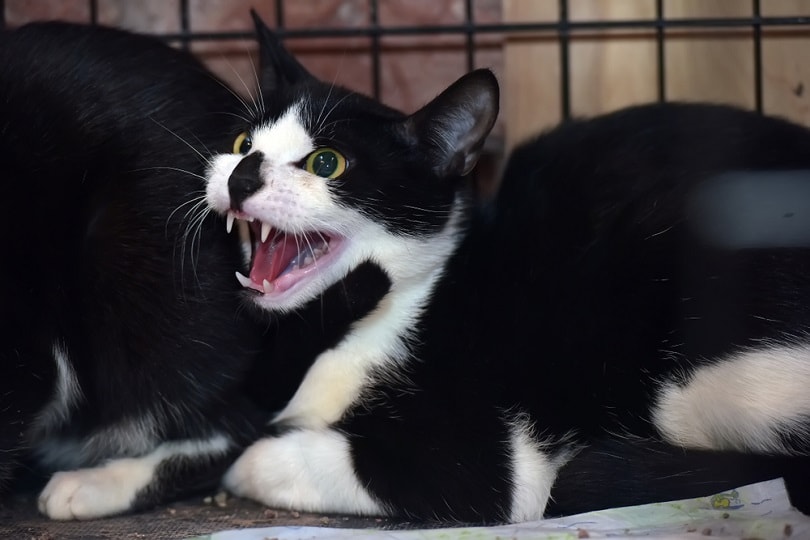
When people think of rabies, they often picture a snarling animal, dripping saliva, and attacking everything in sight. Hollywood certainly loves that version! Unfortunately, rabies doesn't always come with such obvious special effects.
In cats, the first signs can be surprisingly subtle. A normally friendly kitty may suddenly become grumpy, hide more than usual, vocalize differently, lose interest in food, or behave in ways that seem completely out of character. Since cats are already experts at keeping their humans guessing, a sudden behavior change can sometimes be easy to dismiss. But when a cat starts acting noticeably different from their usual, wonderfully weird self, it's worth paying attention.
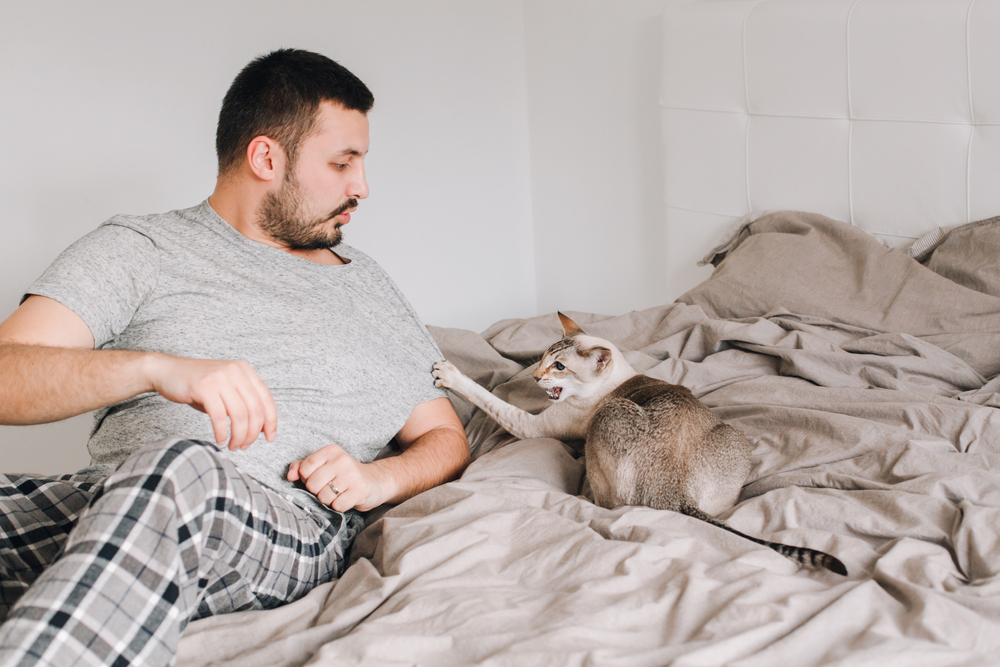
As the disease progresses, neurological signs become more apparent. Affected cats may become disoriented, walk unsteadily, have difficulty swallowing, drool excessively, develop weakness, or eventually become paralyzed. Some become unusually aggressive or sensitive to touch, sounds, and light.
There is also a less dramatic presentation called paralytic rabies, sometimes referred to as ‘dumb rabies’. Instead of becoming aggressive, affected animals may become unusually quiet, weak, or withdrawn. Difficulty swallowing, a drooping jaw, and progressive paralysis can follow. So no, a rabid animal doesn't necessarily look like it's auditioning for a horror movie.
Of course, these signs can also occur with other neurological conditions, injuries, and intoxications. Nobody should attempt to diagnose rabies based on behavior alone. A cat showing sudden, unexplained neurological changes needs prompt veterinary attention, particularly if wildlife exposure is possible.
Here's another catch: rabies can take weeks, sometimes even months, to show itself. A cat may seem perfectly fine after an encounter with an infected animal, but that doesn't mean the virus isn't already in its body. So if a possible exposure happens, don't wait for your cat to look sick before calling the vet. By then, it may be too late.
Sadly, once rabies reaches the clinical stage, there is no cure, and the outcome is almost always fatal. That's why a suspected exposure should never be a wait-and-see situation. Don't wait for signs to appear; contact your veterinarian right away. With rabies, prevention isn't just better than treatment; it's our best chance to protect our cats in the first place.

Vaccination Is Not Just for Cats Who Go Outdoors
Think your indoor cat doesn't need a rabies vaccine? Think again! Indoor cats have fewer opportunities to encounter wildlife, but escapes happen, doors get left open, and sometimes wildlife finds its way indoors. Nobody plans these little adventures, least of all the cat!
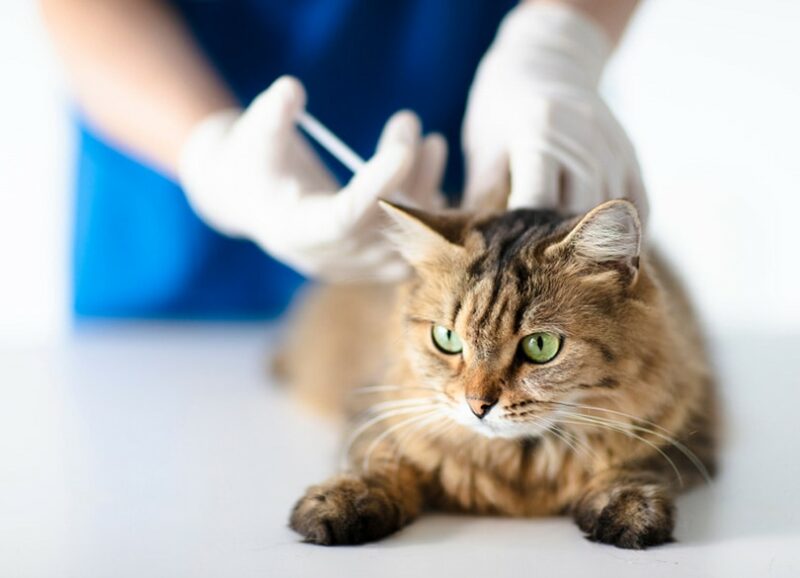
Rabies vaccination is also required by law for cats in many countries and jurisdictions. Even where it isn't mandatory, keeping your cat vaccinated is an important part of preventive care. Ask your veterinarian about the appropriate schedule for your cat.
And remember, vaccination doesn't mean ignoring a possible exposure. If your vaccinated cat is bitten by a potentially rabid animal, contact your veterinarian right away.

What to Do After a Possible Exposure
If your cat is bitten or scratched by a wild animal, contact your veterinarian immediately, even if your cat seems perfectly fine. Bite wounds can hide beneath all that lovely fur, and waiting for signs to appear is not an option.
Keep your cat away from other animals and don't try to catch or handle the wild animal. Report suspicious wildlife to local authorities and let trained professionals deal with it.
If a person is bitten or scratched, or infected saliva enters an open wound or contacts the eyes, nose, or mouth, wash the area thoroughly with soap and running water for 15 minutes and seek medical attention immediately. Post-exposure treatment can prevent rabies from developing, so don't delay.
And please, leave dead wildlife alone. No bare-handed investigations or impromptu rescue missions!
Quebec is also fighting the outbreak through wildlife surveillance and vaccination campaigns using vaccine baits. These efforts help protect wild animals and reduce further spread.
Cats will be cats. A rustling bush can become the most fascinating thing in the universe, and a passing raccoon may look like an invitation to investigate. We can't blame them for being curious. We can give them safer ways to enjoy their adventures.
Feature Image Credit: Shutterstock
Expert cat care, straight to your inbox
Vet-reviewed advice, behavior tips, and the best of Catster. Free, and you can unsubscribe anytime.
By signing up, you agree to our Terms & Conditions and Privacy & Cookies Policy.
Dr. Paola Cuevas MVZ (Veterinarian)
Dr. Paola Cuevas is the Senior In-House Veterinarian at Pangolia, the parent company of Catster. She has over 18 years of experience as a veterinarian and animal behaviorist. Paola's focus is on preventive medicine and animal welfare. Paola has a large range of skills in from diagnostic imaging to nutrition and clinical pathology. Paola enjoys sharing her extensive knowledge of animal training with our Catster readers and is always happy to answer reader questions as our in-house veterinarian.
Join the conversation
Ask a question, share your story, or send private feedback.