Scientists May Have Found the Missing Piece in Feline Kidney Disease
One of the most upsetting parts of caring for an elderly cat is the knowledge that there is a very high chance that your feline friend will eventually develop kidney problems; with an incidence of around 80% in geriatric cats, it is less a question of “if” but “when.” And one of the most disheartening parts of being a veterinarian is feeling powerless to prevent or eliminate this inevitable progression in our feline patients. However, a recent article published in Frontiers of Veterinary Science by a group of researchers from the School of Veterinary Medicine & Science at the University of Nottingham, UK, has revealed that a previously overlooked feature of feline urine and kidneys may hold the key to understanding why this species is almost destined to succumb to renal failure, and provide the first meaningful target for the prevention and treatment of this debilitating disease.1

What Is Chronic Kidney Disease?
When we talk about kidney (or renal) disease in cats, we are usually referring to Chronic Kidney Disease (CKD), a progressive condition where the functional units of the kidney, called nephrons, are depleted. The remaining nephrons compensate for this loss for a time, but eventually, even with adjustments to the diet, fluid intake, and electrolyte balance, the kidney loses its ability to adequately remove waste products from the blood. This is known as renal failure. In humans, this is the point at which dialysis and kidney transplants would be implemented, but for cats, this stage of kidney disease is invariably fatal.
Cats can also suffer from acute kidney disease as a result of trauma, dehydration, toxins, infection, or urethral obstruction, and depending on the cause, they can recover from such an illness. However, any form of renal disease is likely to cause a loss of nephrons, which may lead to or speed up the onset of chronic kidney disease.
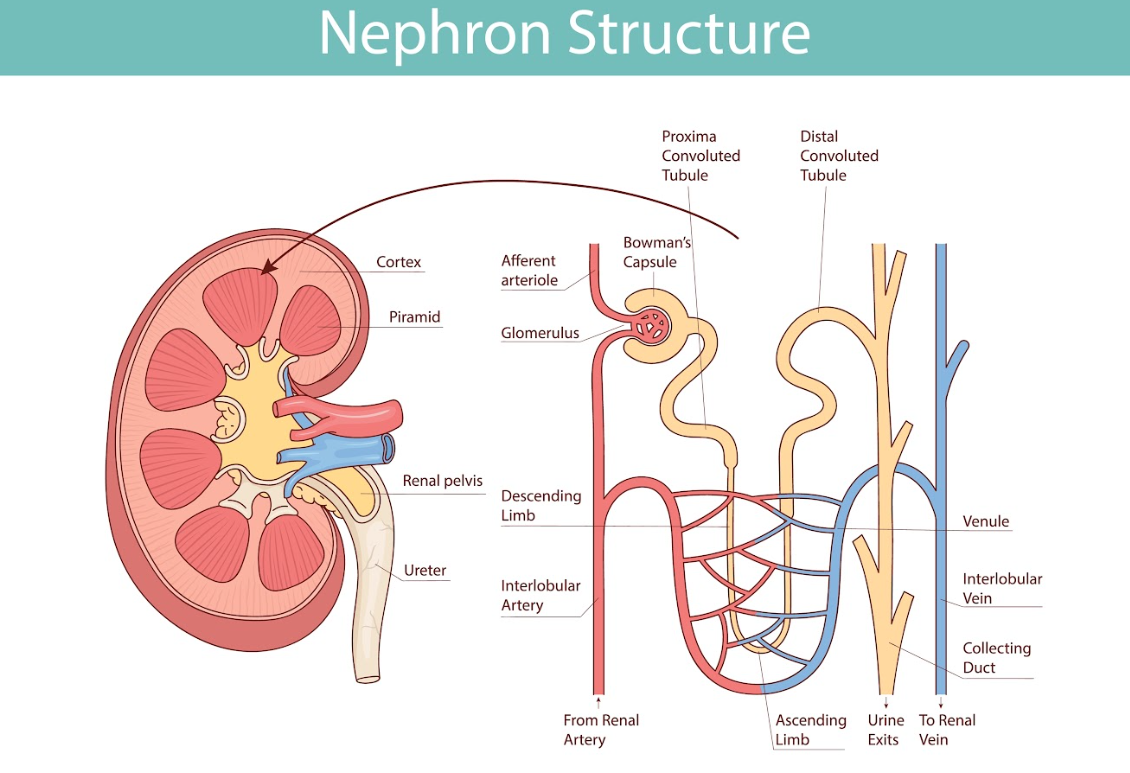
There have been a number of hypotheses put forward to explain why cats are more susceptible to renal disease than other species, including:
- Cats have fewer nephrons compared with other species2
- As obligate carnivores, cats consume a higher concentration of protein compared to other species, putting a higher strain on the nephrons
- Domestic cats are often fed on dry kibble, predisposing them to chronic, subclinical dehydration
- Due to improved healthcare and husbandry, cats are living longer, making their kidneys more susceptible to the effects of aging
- The selective breeding of cats has led to an increase in congenital and genetic renal dysfunction
some or all of which may be true.
But according to the University of Nottingham researchers, the answers may lie in fat droplets.

Lipid Droplets in Felid Kidneys
Apart from the love of a long nap and a tasty meal, something that humans and cats have in common is that we are both known to exhibit lipid (fat) droplets in the renal tubules and lipiduria (fatty material in the urine). However, unlike in humans, where the presence of these lipid deposits is known to be associated with some severe kidney disease and dysfunction, lipiduria and renal lipid droplets have been historically dismissed as an incidental and inconsequential finding in cats.3 But according to the new study from the University of Nottingham, this assumption may prove to have been a costly one.
In hindsight, the fact that cats producing lipiduria also had significantly reduced renal cortical density (where the nephrons are located) would obviously point to diminished renal function, so why has it taken so long for this link to be confirmed?
It would appear that, until now, the exact properties of the lipid droplets found in feline kidneys had not been discovered. In the University of Nottingham study, several lipidomic approaches, including chromatography, fatty acid characterization, and mass spectrometry, allowed researchers to characterize these lipid droplets more accurately than ever before.
What Are The Implications?
Before we start celebrating the end of kidney disease, that’s not quite what this means. However, in an ongoing quest for greater understanding of the hows and whys of feline CKD, this may prove to be a significant moment. Unlike many of the factors that may contribute to the high incidence of kidney failure in cats, which are largely unchangeable, the early identification of those cats with lipid droplets in the renal tubules could provide vets and scientists with a tangible problem to solve. It might not be a cure, but it would appear to be one step closer to it.
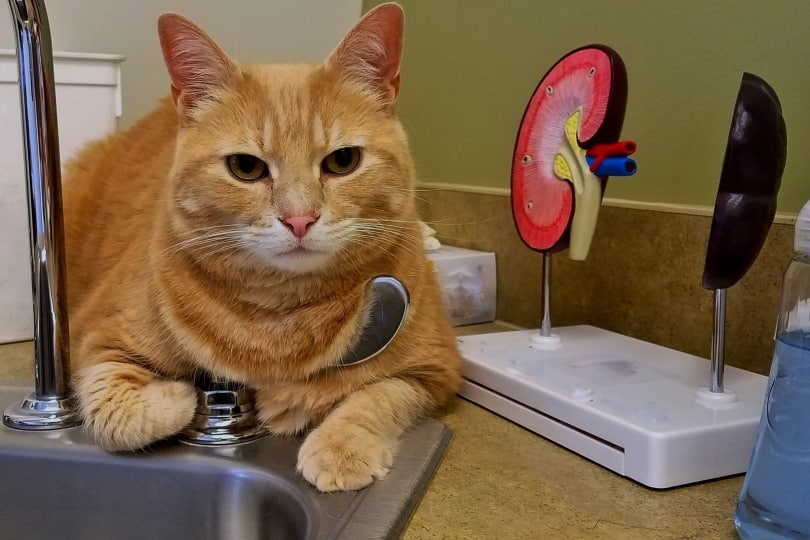
Feature Image Credit: Elpisterra, Shutterstock
Did You Know?
- Our brand-new posts are rounded up and included in our weekly emails. Don't miss out on the latest - sign up for our newsletter below!

Expert cat care, straight to your inbox
Vet-reviewed advice, behavior tips, and the best of Catster. Free, and you can unsubscribe anytime.
By signing up, you agree to our Terms & Conditions and Privacy & Cookies Policy.

Dr. Karyn Kanowski BVSc MRCVS (Veterinarian)
Dr. Karyn comes from Queensland, Australia, and has lived in the UK for the past 10 years. In 2010, she graduated from The University of Queensland School of Veterinary Science and also has a Bachelor’s degree in Zoology. She is passionate about using evidence, experience, and owner collaboration to provide the best solutions for pets, and believes in making reliable information about animal health accessible to all. Dr. Karyn shares her home with five cats, four dogs, and one husband. When she is not in the scrubs, she spends her time writing, gardening, and cleaning up pet hair!
Join the conversation
Ask a question, share your story, or send private feedback.