Get

In Your Inbox

Catster is reader-supported. When you buy via links on our site, we may earn an affiliate commission at no cost to you. Learn more.

How to Brush Your Cat’s Teeth: 7 Vet-Approved Steps With Video

Share

Vet Cat Toothbrush

Dental disease is incredibly common in domestic cats, with experts estimating that between 50%–90% of cats over the age of 4 years old have some kind of dental disease. The good news is that most of these diseases are preventable by keeping up a regular routine of brushing your cat’s teeth.

If you’re not sure how to start keeping your cat’s teeth clean, check out our step-by-step guide with videos!

divider 3 paws

What You’ll Need

Before you start brushing your cat’s teeth, make sure you have everything that you need, including:

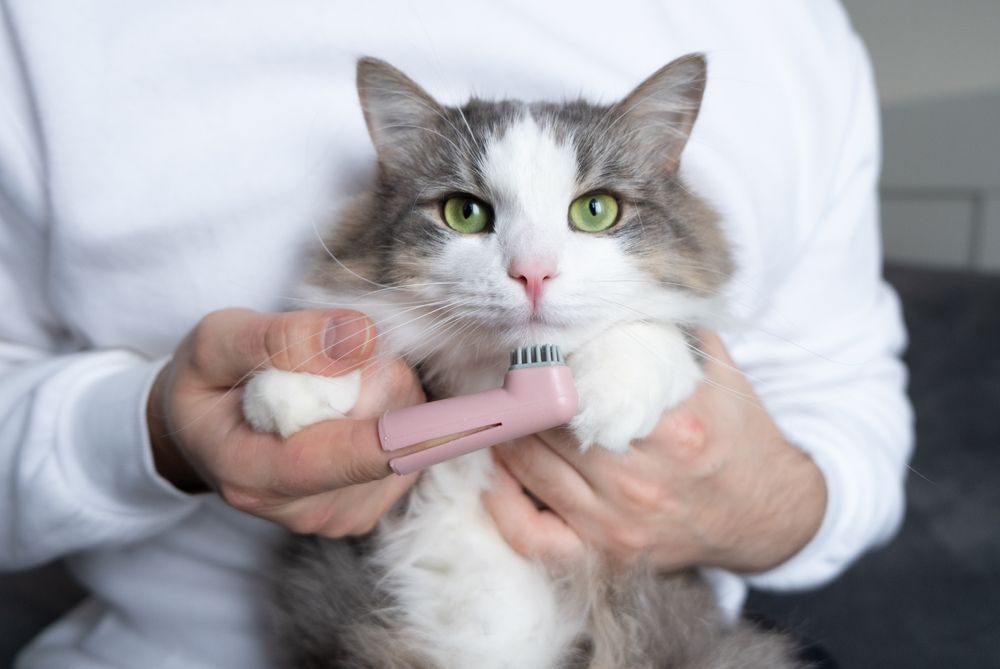
  • These come in a variety of different options, including finger brushes, regular toothbrushes, and dual-ended toothbrushes. You may need to experiment with a few different options to see which one suits your cat best. Always remember to use a separate toothbrush for each cat to avoid cross-infection.
  • Toothpastes for cats are available in a range of different flavors, including poultry, beef, and seafood. Again, you may need to experiment to see which one your cat prefers.
  • Dental treats. Some cats will love getting a few treats after they’ve had their teeth brushed, and this is a great way to reward them for good behavior. Using a dental treat means you’re helping their teeth stay healthy and clean at the same time!

divider 3 paws

The 7 Important Steps for Brushing Your Cat’s Teeth

1. Start as young as possible

The earlier that you train your kitten to accept having their teeth brushed, the easier it will be to build this into their regular routine. The following steps can be used with cats of any age, though!


2. Get your cat used to the toothpaste

The first thing to do is to acclimatize your cat to the taste of the toothpaste. Place a small amount of toothpaste, about ¼ of a centimeter, on your finger and allow your cat to sniff it. Most will be attracted by the scent of the toothpaste and will happily lick it off your finger. If they’re not sure, put a tiny amount on your cat’s nose, and they should give it a lick. This stage is simply getting your cat used to the flavor of the toothpaste.


3. Start Desensitizing Your Cat to Allow Handling

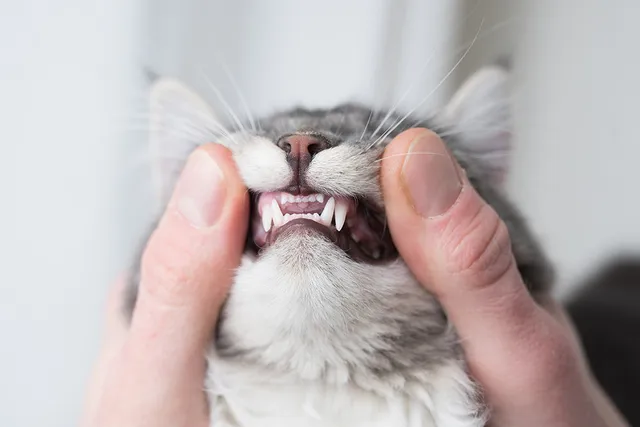
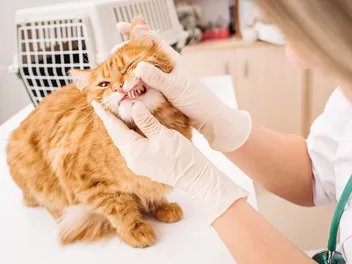
It’s best to start practicing this step while your cat is relaxed and make sure you avoid startling them. Start standing or sitting behind your cat, and place your hand on the top of your cat’s head. Move your fingers and thumb so they sit gently on your cat’s cheekbones, just behind their eyes. See if you can tilt your cat’s head back and pull their upper lip on one side upward with your thumb. With your free hand, pull down their lower lip so you can see all their teeth.

You may need to build up to this in stages, depending on your cat’s temperament. Remember to give them plenty of treats and praise!

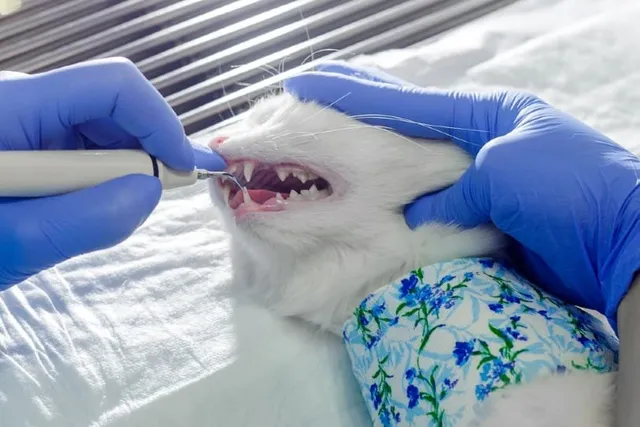
cat brushing teeth
Photo Credit: cynoclub, Shutterstock

4. Add a small amount of toothpaste

Next, you’re going to work on adding cat specific toothpaste, but without a brush. Use a cotton bud to place a small amount of toothpaste on your cat’s teeth and rub it in. Hold their head and pull their lips back, like you’ve been practicing.

You may need someone to hold your cat’s front paws or wrap your cat in a blanket. If they resist, simply keep repeating Step 3 until they’re completely comfortable.


5. Start using the toothbrush

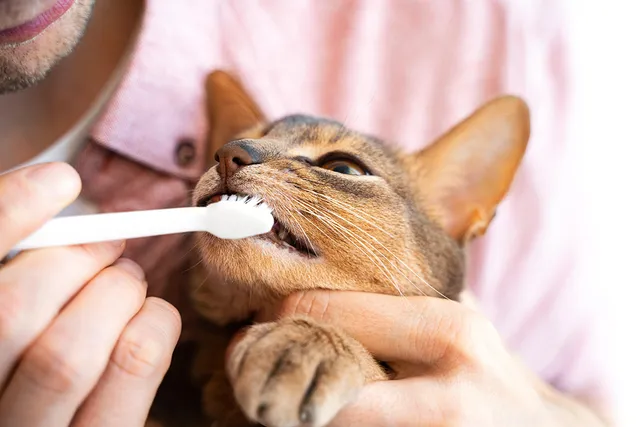
Once your cat is comfortable with Step 4, you can add in using the toothbrush instead of the cotton bud. Start brushing for just a couple of seconds on each side, and then gradually work up to longer sessions until you can get all their teeth brushed on each side.

This video can help you figure out how to brush your cat’s teeth:


6. Ask a vet for help

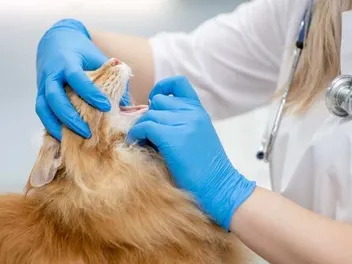
If, at any point, you’re having trouble or your cat is resisting, ask if you can bring your cat to the vet clinic. Seeing your vet demonstrate how to clean your cat’s teeth may help you work out the best techniques to use.

If you need to speak with a vet but can't get to one, head over to PangoVet. It's an online service where you can talk to a vet online and get the advice you need for your pet — all at an affordable price!

Preventative wellness PGV mention keep cat healthy Preventative wellness PGV mention keep cat healthy mobile

7. Repeat!

Aim to work up to brushing your cat’s teeth once per day. You may start with just one session a week and build up to daily sessions.

divider 3 paws

Don’t Forget Professional Teeth Cleaning Too!

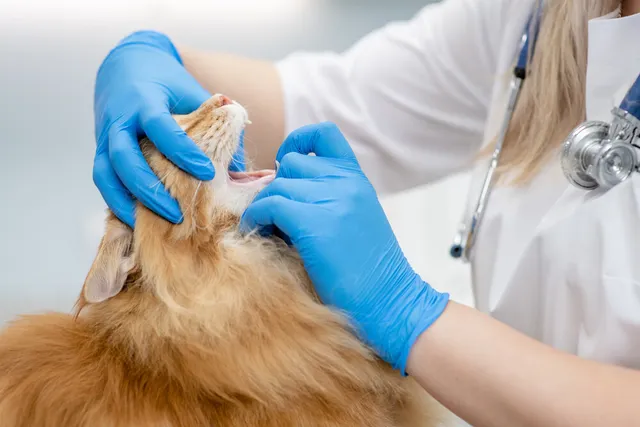
Even if you do the best job brushing your cat’s teeth at home, they may still need a professional cleaning once a year. Your vet will do this under anesthesia. After excessive plaque is removed, it’s much easier to maintain your cat’s teeth at home.

Related Reads:


Featured Image Credit: Kashaeva Irina, Shutterstock

Want content like this delivered to you?

Sign Up For Our Newsletter

News, insights, expert advice, and everything cat

* By submitting, you agree to our Terms & Conditions and Privacy & Cookies Policy.


How useful was this post?

Click on a star to rate (you can leave written feedback after clicking submit)

Help us improve Catster for pet parents!

Your feedback really matters.

What did you like about this post? Also how can we improve it?

Join the conversation

Leave a Reply

You’re very welcome to leave a comment or question. Please know that all comments must meet our community guidelines, and your email address will NOT be published. Let’s have a positive and constructive conversation.


Talk With A Vet Online

Peace of mind,
anywhere, anytime

Affordable vet advice

Why Chicken Bones Are More Dangerous for Cats Than Most Parents Realize

Chicken bones seem harmless enough, but for cats, they can cause serious damage quickly. Whether your cat swiped a piece off the counter...

Fantastic Pet Pantries and Where to Find Them

Let’s face it: times are really tough right now, and those of us in the 99% are struggling with the cost of just...

Ask Dr. Paola – Help! My Cat Refuses to Drink Water! (April 13, 2026)

Welcome to our “Ask Dr. Paola” series, where every Monday we bring expert advice straight from Dr. Paola Cuevas (MVZ) to help our...

Why Healthy Cats Still Vomit Sometimes (And How to Respond)

A cat that just vomited needs a specific kind of care, and the feeding decisions you make in the next few hours actually...

More related

Guts to Feel Good: A Healthy Inside Leads to a Healthy Outside

Founded in 2016, AnimalBiome is an emerging start-up company that offers a novel approach to companion animal health – rooted in the science...

Why Do Kittens Get Worms? How & Treatment Options

Oh no, you’ve recently acquired an adorable kitten, but they have worms! Now, what do you do? Worms are an unfortunate and relatively...

Where Do I Put Cat Food & Water Bowls? 6 Vet-Reviewed Options

Though the placement of your cat’s food and water bowls may seem like a minor consideration, it is a lot more important than...

Why Do Cats Loaf? 5 Vet-Reviewed Reasons

The “loaf” position has become quite popular on social media. If you own a cat, you’ve likely seen your cat in this position....

Keep reading

Does Massage Help Constipation in Cats? Vet-Verified Facts & Treatments

Constipation in cats is not that uncommon, but that doesn’t mean it should be treated lightly. Massage therapy is among the remedies that have been evaluated in numerous clinical studies—in humans.1 But does it truly help with constipation in cats?...

cat-massage

Are Pepper Plants Poisonous to Cats? Vet-Reviewed Houseplants Examined

If you’re a cat owner, you may be wondering if pepper plants are poisonous to cats. It’s always best to make sure any plant around your home is safe for your cat, especially if your feline likes to roam in...

Catster_Are Pepper Plants Poisonous to Cats

Do Outdoor Cats Need a Litter Box? Vet-Reviewed Care Facts

If you have a strictly outdoor or an indoor-outdoor cat, you may wonder if you should provide your pet with a litter box. After all, they likely have many places from which to choose; the world is their toilet! Many...

cat sniffing litter in the box

7 Vet-Reviewed Tips for an Attention-Seeking Cat in a Multi-Cat Household

It’s no secret that our cats have very different personalities. If you are the owner of more than one kitty, you know just how different their love languages and attention requirements can be. So, if you have a cat that...

cat rubbing its head against the owner's legs

Is Human Lotion Safe for Cats? Vet-Reviewed Safety & Toxicity Explained 

If your cat has dry skin, you may be wondering if you can apply a bit of your own lotion to ease their discomfort. As much as you want to help your cat, human lotion and other personal care items...

Catster_Is Human Lotion Safe for Cats

Why Does My Cat Have Diarrhea? 8 Vet-Reviewed Reasons

Cat owners know how aloof their feline companions can be, and we can sometimes miss signs telling us that something is off, so it is important to pay attention to your cat’s energy levels, eating, and toilet routine. Feline diarrhea...

orange cat pooping on the grass

Can Cats Eat Almonds? Vet-Approved Facts & FAQ

Of the many questions asked about cats’ diets, one that keeps coming up is: Can cats eat almonds? There is significant confusion about this topic because the not-so-simple answer is yes and no. It depends on the type of almond,...

Can Cats Eat Almonds

How to Make Dry Cat Foods Soft: 6 Vet-Approved Methods That Work

Some owners prefer to feed their cats dry food, whether as a solitary source of food or in addition to wet food meals. Because kibble is dehydrated, cats on a kibble diet should be drinking water to prevent dehydration. However,...

orange cat eating wet food

Love Cats? So Do We! Join the Catster Community

Stay informed with expert pet care insights delivered straight to your inbox! Discover professional guidance on animal behavior, feeding tips, trusted product picks, and much more.


Sign up for the Catster Email Newsletter

Stay informed with expert pet care insights delivered straight to your inbox! Discover professional guidance on animal behavior, feeding tips, trusted product picks, and much more.