Get

In Your Inbox

Catster is reader-supported. When you buy via links on our site, we may earn an affiliate commission at no cost to you. Learn more.

How Much Do Bengal Cats Purr? What You Need to Know
Share

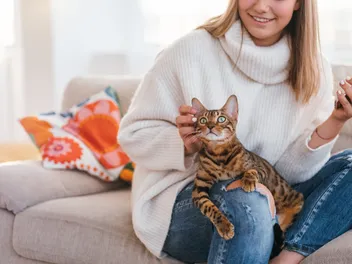
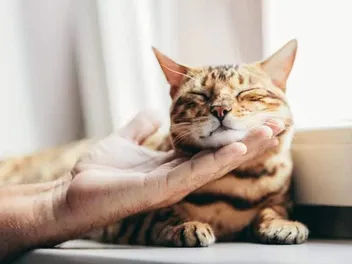
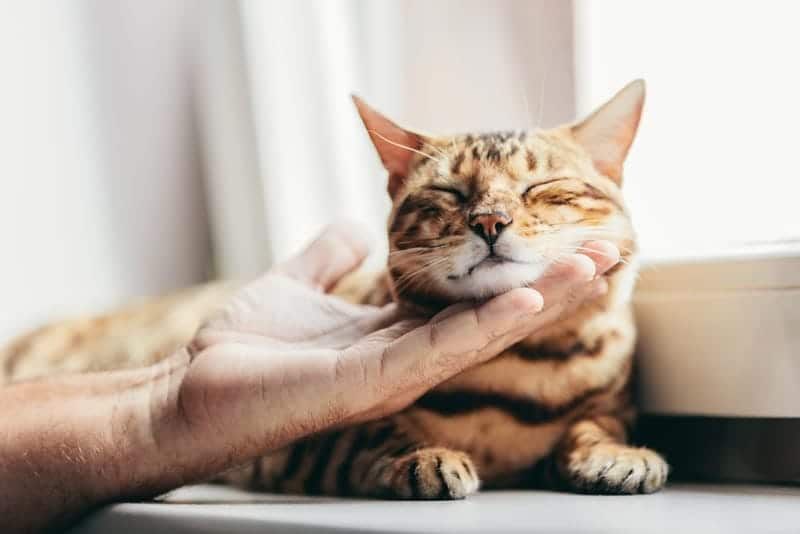
bengal cat being stroked by man's hand and purring

Bengal cats usually purr just as much as other cats. However, they often purr very loudly; some will be more vocal than others, and the breed is known for being very communicative. Bengal cats are expressive and often use purring and other sounds like chirrups, meows, and chirps to let their owners know exactly how they feel. Bengal cats are also known to be very affectionate as a breed, which means they may very well purr a lot more in the presence of their owners than they do on their own.

Siamese cats also share these talkative traits, and it’s thought that intelligence also plays a role in how much your Bengal will purr or meow. Much like all cats, Bengals will purr when they are particularly happy. They’ll purr if they’re being scratched in the right place and feel relaxed and content in their surroundings. However, there are specific reasons why your Bengal may be purring that aren’t quite as nice.

divider 1 paws

Why Do Bengal Cats Purr?

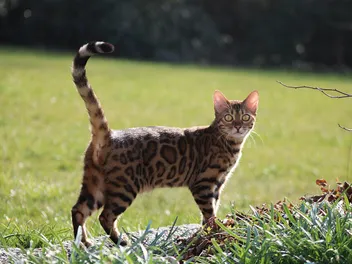
Bengal cat sitting on the bed
Image Credit: Shvaygert Ekaterina, Shutterstock

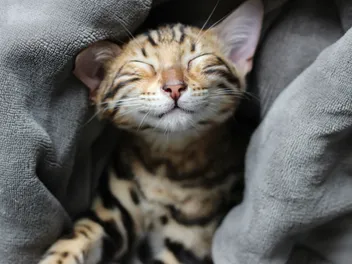
Cats will purr for various reasons, and the same is true for the Bengal. While they may purr more often than other cats (and purr more loudly), they usually purr for the same reasons. For example, Bengal cats can purr because they are happy, content, excited, or looking forward to something (usually food) or if they are stressed or in pain.

The cat’s purr is rather mysterious. It was first thought to have something to do with the blood and how it runs through the veins, but scientists have recently discovered that cats use their diaphragms and larynx (voice box) to pull air through and create the deep, rumbling purr we associate with happiness.

This purr continues when the cat breathes in and out in one continuous noise, and because we’re still studying feline communication, we know only a few things about why cats purr. It’s thought that cats purr as a reaction. For example, if you scratch your Bengal on their back or stroke along the top of their head, they might purr to let you know they like what you’re doing and to keep doing it!

If they’re happy and contented, the Bengal will purr quite often. It’s a good sign and is not loud, but it can be louder if interspersed with happy little trills and chirps. They’ll often rub up against their people, purring, chattering, and generally communicating happily with them, which means they can be pretty noisy. The Bengal cat breed originated from Egyptian Maus, a short-haired breed hailing from Egypt and known for their musical and chortling voices.

But observations have been made of cats, including Bengals, that are very sick or even dying who purr to themselves with no one else around them. This is thought to be a self-soothing or pain-relieving response, as a cat’s purr can promote bone and tissue healing. Cats purr at a range between 20Hz to 100Hz, which has been proven to be the exact range of sound thought to be beneficial to healing.

Bengals are often thought of as creatures of emotion that will let you know how they feel. Cats are known to purr when anxious, so this may be another reason Bengals will purr more often than other cat breeds, as they tend to suffer separation anxiety if left alone for long periods.

divider 1 paws

Final Thoughts

Your Bengal may purr more than other cats as they are known for being talkative and are always happy to convey their thoughts and feelings to their owners. Bengals usually purr loudly as their voices must be heard! But this will usually be interspersed with chirrups and chirps, meows, or little head bumps to let you know how they feel and check that you are listening to them.


Featured Image Credit: PHOTOCREO Michal Bednarek, Shutterstock

Want content like this delivered to you?

Sign Up For Our Newsletter

News, insights, expert advice, and everything cat

* By submitting, you agree to our Terms & Conditions and Privacy & Cookies Policy.



How useful was this post?

Click on a star to rate (you can leave written feedback after clicking submit)

Help us improve Catster for pet parents!

Your feedback really matters.

What did you like about this post? Also how can we improve it?

Join the conversation

Leave a Reply

You’re very welcome to leave a comment or question. Please know that all comments must meet our community guidelines, and your email address will NOT be published. Let’s have a positive and constructive conversation.


Catster's Digital Magazine is Back!

Vet-approved health & behavior advice

Real cat stories & community features

Chatting With Dr. Matt McGlasson About Special Needs Kitties, Social Media Fame, and Rating Cat Toe Beans | Chatty Cattys, Episode 32

In this episode of Catster’s Chatty Cattys podcast, Dr. Karyn and Nicole sit down with a very special guest: veterinarian and social media...

Does Your Cat Need A Friend? How to Tell If Your Cat Is Lonely

Cats have a reputation for being perfectly happy on their own – independent, self-sufficient, and solitary. But, like many stereotypes, this one does...

Proof That Moving Cats Indoors Is Easier Than You Think

We know that indoor cats live longer and have significantly lower rates of illness and injury than those that spend part or all...

Why Cats Love To Get High

If you’re trying to find a cat in any home, the search almost always ends by looking up. They’ll be on top of...

More related

Are Oriental Shorthair Cats Friendly? Vet-Verified Facts & Info

Cats have a reputation for being extra independent, and sometimes even loners—but this is not always true. There are certain cat breeds out...

Grey Persian Cat Breed: Info, Pictures, Care & More

The Grey Persian is a popular color of Persian cat, officially known as a Blue Persian. The grey color can range from a...

Does Catnip Help a Cat in Heat? Vet-Reviewed Facts & FAQ

There are a lot of old wives’ tales out there about how to deal with a cat in heat. One of the most...

Is Anthurium Toxic to Cats? Vet Approved Facts & FAQ

It’s important to know what kinds of plants pose a toxic threat to our pets. Cats in particular are known for messing around...

Keep reading

Nulo Cat Food Review of 2026: Recalls, Pros & Cons

Review Summary Nulo is a California company that makes a wide range of cat and dog foods. It started with a man trying to take better care of his dog and blossomed into a full-grown pet care business, with high-quality...

Nulo Freestyle Cat Food Review

Do Cats Eat Christmas Trees? Vet-Reviewed Risks & Tips

Christmas is a magical time that fills our homes with warm smells and sparkly lights. Only, cat owners have to deal with the constant chaos of owning a Christmas tree with a pet. Christmas trees, both live and artificial, can...

cat hiding in the Christmas tree

Can Cats Eat Avocado? Vet-Verified Health Concerns & FAQ

Avocados have several nutritional benefits for humans; they are low in sugar and packed with healthy vitamins and minerals. They are considered great for heart health and may help lower inflammation. Avocados can be made into dips like guacamole, added...

Can Cats Eat Avocado

6 Tuna Popsicle Recipes for Cats You Can Make Today (Vet Verified)

Many of us turn to frozen treats to escape the summer heat. However, most ice cream and popsicles contain ingredients that aren’t safe for cats to eat. Fortunately, your cat can enjoy their own versions of popsicles that will also...

Tuna Popsicle Recipes for Cats You Can Make Today

DIY Cat Shampoo: 3 Homemade Recipes With Simple Ingredients

As a cat owner, you usually don’t need to worry about giving your cat a bath all that often. But sometimes it’s necessary—perhaps your cat isn’t able to groom themself, or they’ve gotten into something particularly nasty that they probably...

Girl washes cat in the bath

Is It Safe for Cats to Eat Moths? Vet-Reviewed Facts & FAQ

Cats are natural predators that enjoy a good hunt, whether to catch a mouse running by or to chase butterflies in the sun. Typically, if they can catch their prey, they also have the instinctual drive to eat it. Although...

Why Do Cats Invade Your Personal Space? 4 Vet-Reviewed Reasons

After thousands of years of domestication, it’s surprising that cats still haven’t adopted any social mores that direct their human owners. They’ll knock plants over without a second thought, scratch up furniture and rugs, or pee on the carpet if...

cat-rubbing-against-owner

Do Cats Eat Their Own Poop? Vet-Verified Facts & How to Stop It

Cats are curious creatures, and we may see them sampling various non-edible things, including houseplants, cardboard boxes, and our toes. Many animals eat their feces to digest maximum nutrients, but do cats eat their own poop too? Cats do not...

two-cats-looking-at-the-litter-box

Love Cats? So Do We! Join the Catster Community

Stay informed with expert pet care insights delivered straight to your inbox! Discover professional guidance on animal behavior, feeding tips, trusted product picks, and much more.


Sign up for the Catster Email Newsletter

Stay informed with expert pet care insights delivered straight to your inbox! Discover professional guidance on animal behavior, feeding tips, trusted product picks, and much more.