How Does a Cat Purr? The Evolution & Meaning Behind a Purr (Vet Reviewed)


Cats are known for their adorable vocalizations, and their purring is usually a sign of contentment and happiness. But have you ever wondered how your cat makes that calming vibration? Cats purr by vibrating their laryngeal muscles through several mechanisms. This produces a low-frequency sound that we call “purring” as air rushes over these muscles as they breathe. While the fundamental mechanism of purring is well understood, the precise way that a cat manages to purr is still a matter of ongoing research.
Although any cat owner is familiar with this signature sound, it turns out that there is more to a cat's purr than we think, and they aren’t always simply happy when they purr. So, let's take a deeper look at how a cat purrs and why they do it.

The Evolving Science of Purring
It took a long time to figure out the "how" of purring. Originally, it was thought to be caused by deoxygenated blood flowing through the inferior vena cava, a vein located within the right side of the heart. Today, it seems far more likely that the noise comes from the muscles in the cat's larynx and that whenever a cat breathes in or out, the glottis—the part of the larynx that encases the vocal cords—rhythmically dilates and constricts. However, there's still no definitive answer as to what triggers the response.
Still, scientists are fairly certain that this is the process and that it is controlled by a neural oscillator deep inside the cat's brain, since this area of the feline brain has no other obvious function.
That said, although previous research postulated that cats actively vibrate the muscles in their larynx to generate a purr, more recent studies have shown that cats can possibly purr without any neural involvement from the brain and any muscular contractions in the larynx1. The research has also found that cats possess an area of connective tissue, about 4 mm in size, within their vocal folds. This might have a role in the generation of a purr.

Are Cats Happy When They Purr?
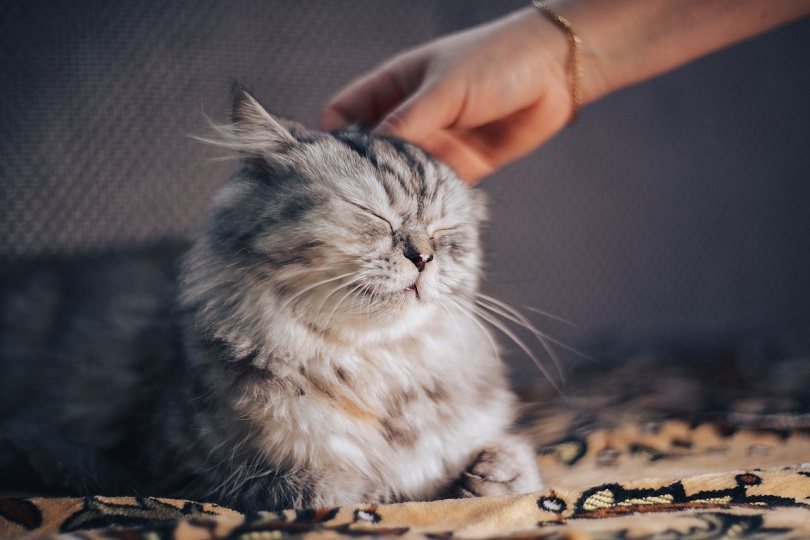
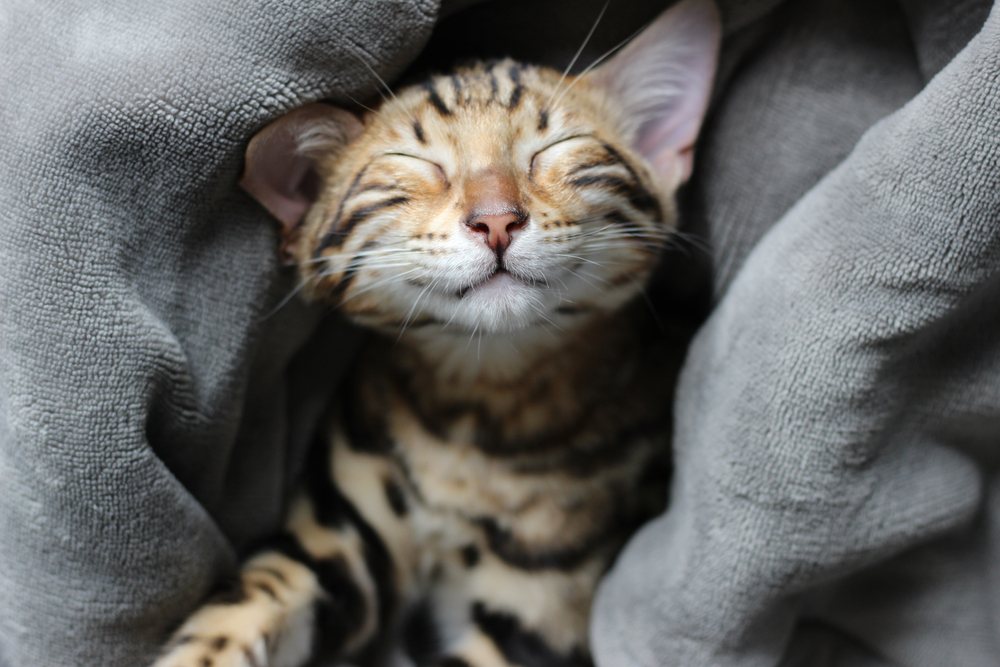
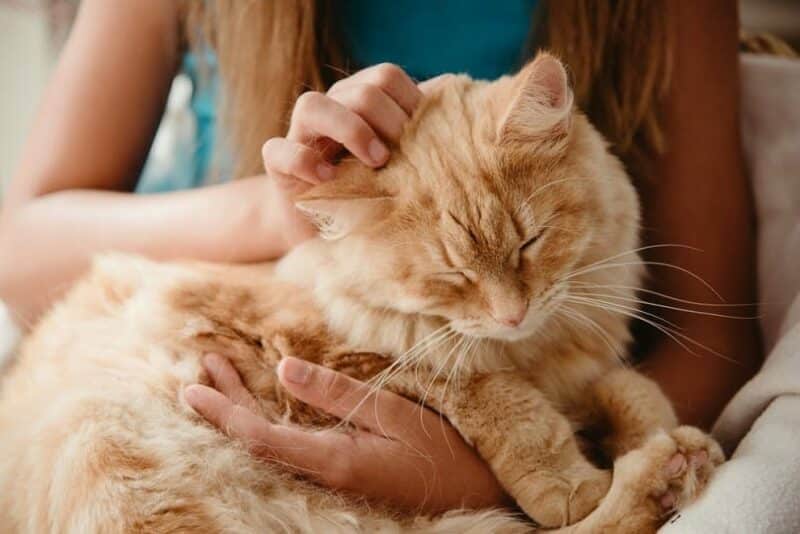
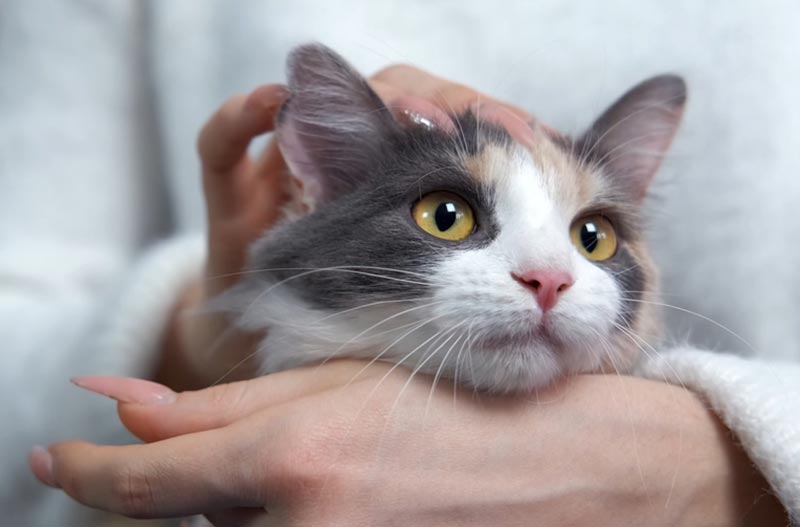
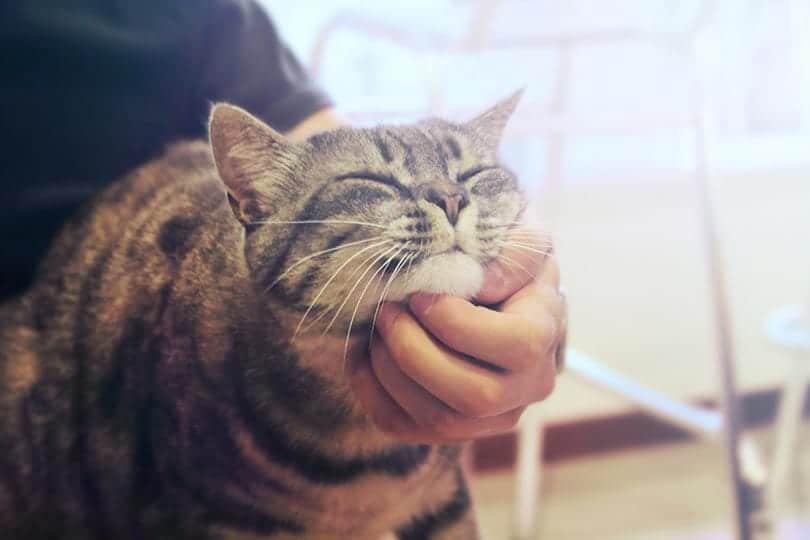
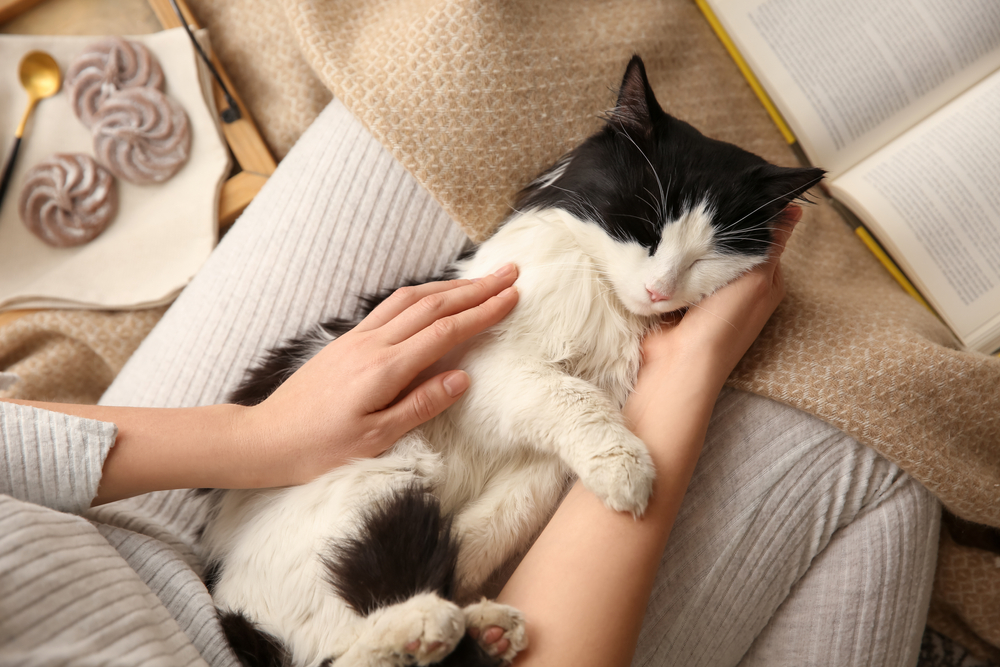
There is still much we don't understand about cat purring, but what we do know is that it is often a sign of contentment and (what we consider to be) “happiness” in cats. Purring is usually accompanied by other positive behaviors like kneading, relaxed body language, and half-closed eyes. So, if your cat is purring away, chances are they're feeling pretty good! Cats often begin purring when they begin cuddling with their favorite human. They may also purr when it’s time for a meal!
The act of purring can be calming and therapeutic for both the cat and the owner. Purring is also thought to have health benefits, as it is believed that a cat’s purring can help reduce stress, lower blood pressure, and promote healing in humans.
When Do Cats Purr?
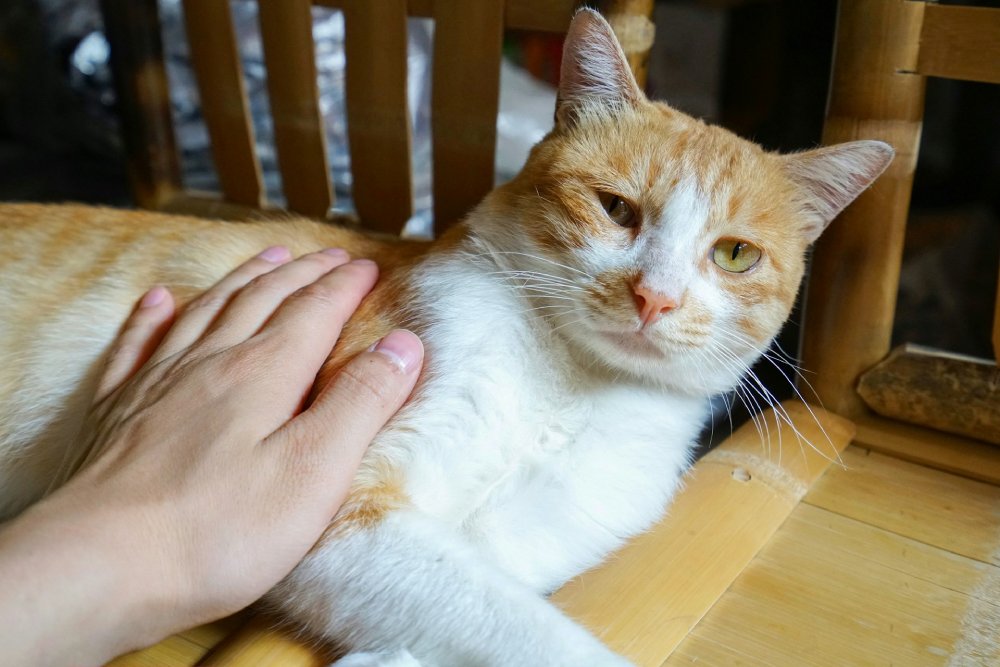
The individual factors that make a particular cat purr can be quite mysterious. It is sometimes impossible for us to notice cats purring unless we happen to stroke them in an area and in a way that they enjoy. Yet they are also capable of purring when we are not around, and the extent of that purring varies from one cat to another. It is important to remember that every cat is different—some cats may rarely purr, while others may do it all the time.

What Does Purring Mean?
It's only recently that the scientific community has begun to understand purring. When it comes to this behavior, it can seem easier to ask questions than to find the answers. This is partly because studies of cats' behavior and communication have been neglected compared to those of dogs. This is partly because dogs usually make more willing subjects and are more easily motivated, especially when food is involved.
Nevertheless, the study of cats—the purr in particular—has gained more attention in recent years. The idea that purring is a cat communication technique has been around for decades. Researchers hypothesized in the early 2000s that purring has multiple purposes.
Today, experts believe that purring is generally associated with contentment for cats, but it can also be a sign of nervousness, discomfort, or stress. In addition, there are possibly healing, communication, and peace-making factors involved in purring.
When Does a Kitten First Purr?
If you’re lucky enough to be around a litter of kittens, you may notice that these adorable little fur balls start purring when they're just a few days old. Kittens, like adult cats, purr for a variety of reasons. One reason is that it may be a way to communicate with their mother. Mother cats also purr when they’re nursing their kittens, and therefore, purring might be a bonding experience for them. Since purring may promote healing, it is possible that mother cats purr while nursing their kittens as a way to also promote their health and well-being.
Kittens may continue purring as they nurse, perhaps as a way to show contentment. The act of purring is also thought to be a self-soothing behavior that helps kittens feel calm and relaxed.

The Language of Purring
Scientists seem to have uncovered more about the purr as they have delved deeper into it. Researchers have recorded both ordinary purring and purring with the intent to solicit food . The difference between these two sounds can even be discerned by non-cat owners. There is a higher frequency cry inside the low purr, similar to a meow. This cry sounds somewhat like the isolation cry of kittens or the distress cry of a baby. It is worth noting that a cat’s purring frequency doesn’t change, but its volume and the inclusion of a meow might be what distinguishes the two purrs.
Our natural human sensitivity to baby sounds may make us more responsive to the cry contained within the purr. So, scientists have postulated that many grown cats may purr while eating or when they want to be fed. Some cats will make loud purrs when they're exploring somewhere new. It is also possible for cats to purr after being startled or when they have been frightened, such as when they have been chased by a dog.
Purring & Health: How Purring Can Help Heal Injuries & Relieve Stress
Research has shown that the vibrations produced by purring can have a number of health benefits for both cats and humans3. For cats, purring can help expedite the process of healing injuries and relieving stress. For humans, exposure to purring has been shown to lower blood pressure and reduce stress levels. In addition, the vibrations produced by purring can help to reduce pain and promote healing in both cats and humans.
When a cat purrs, they are not only showing contentment, but they may also be healing themselves. The frequency of a cat's purr is between 25 and 150 Hertz which happens to be the same frequency as many bone and muscle healing devices. Additionally, this low frequency can help relieve stress and ease the pain. Cats have been known to purr when they are injured or in pain as a way to comfort themselves.
Conclusion
We still don't fully understand how cats purr. However, it is generally believed that the purring sound is produced by air passing over vibrating muscles. These vibrations are created by the movement of air through the glottis, which is controlled by muscles in the larynx.
Cats purr when they are generally thought to be content and happy, but they also purr when they are injured or in pain. This suggests that purring may have some therapeutic effect on cats.
Featured Image Credit: Amandad, Pixabay

Expert cat care, straight to your inbox
Vet-reviewed advice, behavior tips, and the best of Catster. Free, and you can unsubscribe anytime.
By signing up, you agree to our Terms & Conditions and Privacy & Cookies Policy.
Christian started writing for a local newspaper as a teenager, and he's been involved in the publishing industry for most of his adult life. Combining his love of writing with a passion for animals, he is currently the Director of Editorial at Pangolia and the Editor-in-Chief at Catster.
Christian lives in the Philippines with his wife, son, and four rescue cats: Trixie, Chloe, Sparky, and Chopper.
Join the conversation
Ask a question, share your story, or send private feedback.