Can Cats Smile? 5 Vet-Approved Ways to Tell if Your Cat is Happy


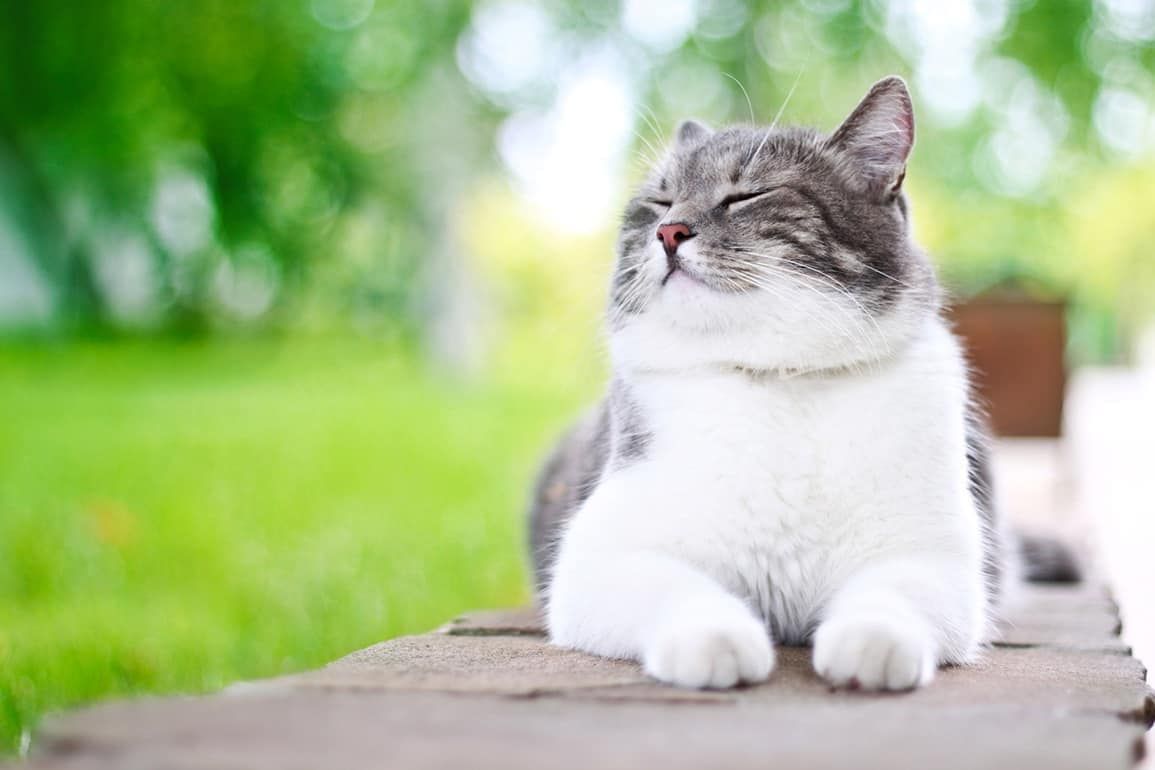
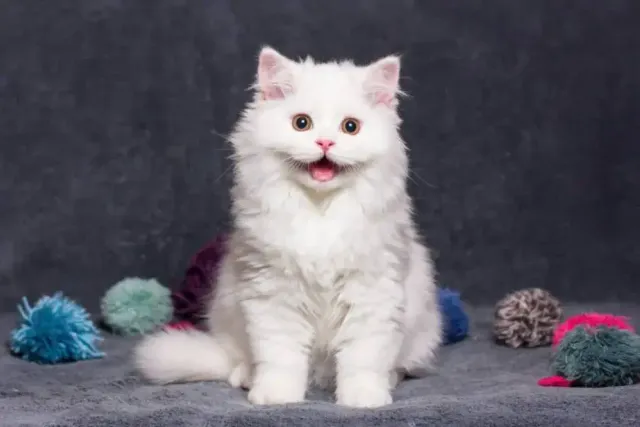
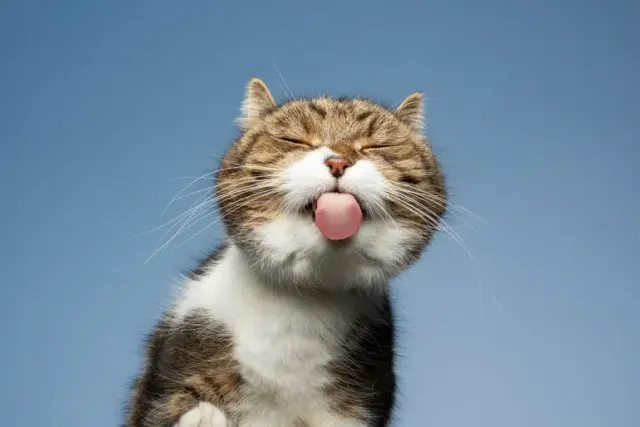
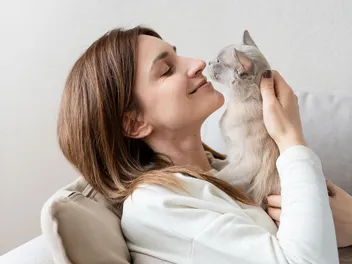
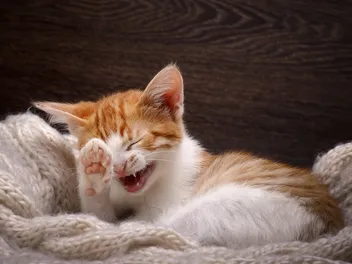
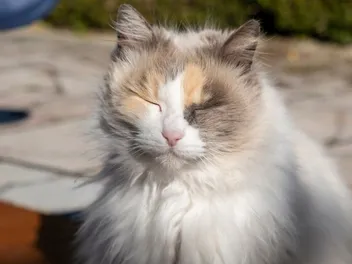
Sometimes cats make a face that makes you wonder: is my cat actually smiling at me? It looks just like a smile: closed eyes and a mouth turned upward. Cats do have the muscular ability to make facial expressions that resemble a human smiling, however, cat emotions aren’t feelings in a human sense. Instead, they are responses to emotions or stimuli they perceive.
Nonetheless, cats do have signs that indicate contentment, akin to human happiness. Read on to learn more about feline emotions.

Can Cats Smile?
Theoretically, cats do possess the muscles and nerves that would be required to position their lips in a way that a human would interpret as a “smile”. However, cats don’t smile for the reasons humans do.
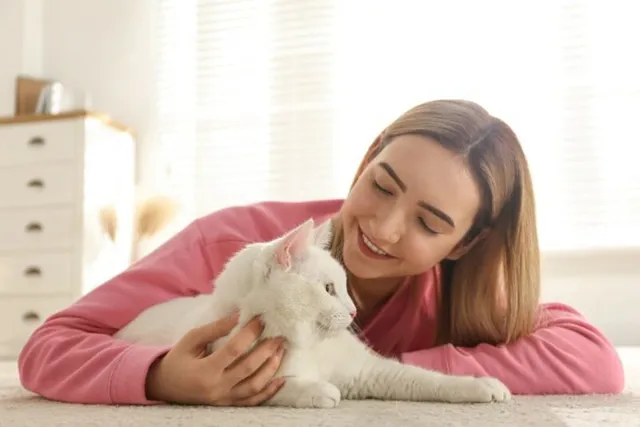
Cats can perceive some human emotions and respond to them 1. They often rely on visual and auditory cues to formulate a response. Cats are able to distinguish between human emotional cues and can read human body language to an extent - cats have been known to spend more time with people that are depressed 2, and they tend to interact more with humans that seem excited or agitated 3.
Cats don’t form emotions to elicit feelings. Instead, they elicit emotions to respond to their environment. For example, a cat that’s had a bad experience with a vet visit in the past might appear frightened and agitated when brought into a vet’s office for subsequent visits because they’ve been emotionally motivated to not enjoy the experience.

How to Tell if Your Cat is Happy
While happiness is a very complex topic, there are some signs that indicate contentment in cats.
Please Note: The use of male pronouns (he/him/his) in the following section is a stylistic choice by the author. This information is transferable to female cats too.
1. Purring
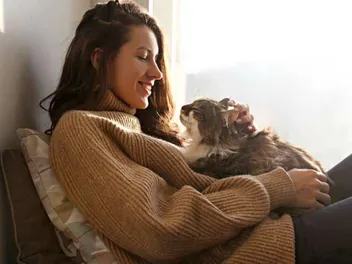
A cat purring can mean a few different things, like fear or even pain, but you know your cat is very content with you when you pet or scratch him and he answers with purring. That’s because purring is also a contentment noise, a noise that says that he really likes what you’re doing.

2. Kneading
You know a cat is very comfortable when they move their paws in a kneading motion. They will knead a blanket, your skin or hair, another animal’s fur, or even the air when they are extremely comfortable.
It is thought that this physical response goes all the way back from when your cat was a kitten, nursing from its mother. Kittens, when drinking milk from their mom, will knead their mom with their paws. It’s pretty adorable to see your cat reverting back to kittenhood when he kneads with his paws!
3. Slow Blink
Cats slowly blink at humans mostly to demonstrate trust. In the wild, cats would never close their eyes to anything that would seem threatening to them, so take it as “I love and trust you” when your cat does this to you.
Research has shown that humans who do this to their cats will receive the message back to them, so experiment with your cat at home. Do not stare with wide eyes at your cat, simply come at them with relaxed eyes. A slow blink looks first like a narrowing of the eyes, then a slow and steady closing.
Is there anything better than a happy cat? We don’t think so—that’s where the Hepper Nest Bed comes in.

- COMFY KITTY - Your cat or kitten will have an amazingly deep sleep in this self warming, nesting cat bed. The warm, fluffy cat bed lining provides calming stress relief for cats of all ages.
- PRETTY HOME - This round cat bed has a modern and unique design that’s perfect for a sleek indoor look. We don’t think of it as cat furniture but think of the Cat Nest as a “cat home”.
- SPACE SAVER - Reclaim your desk, window sill, or couch from kitten encroachment. This calming nest cat bed has an elevated, space-saving hideout so comfortable your kitty can't resist!
This product was designed with both your and your kitty's happiness in mind. While the comfortable bowl shape and wide lip to rest their heads on are ideal for sleepy kitties, you’ll appreciate the removable and machine-washable fleece liner for easy cleaning. It doesn’t get any better than this! Click here to try it out.
At Catster, we’ve admired Hepper for many years and decided to take a controlling ownership interest so that we could benefit from the outstanding designs of this cool cat company!

4. Head Rubbing
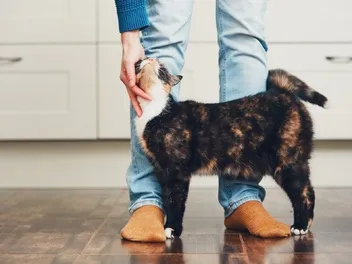
A cat that wants to be friendly will commonly rub their heads on any part of you or other animals or things. This is called bunting, and it happens because they have scent glands on their cheeks that basically “mark” whatever they bump into as “theirs”.
Cats do this when they want to bond with you, though some cats may also do it to get your attention (especially if it’s worked in the past).
5. Tail Position
A cat’s tail is an important part of their communication toolkit, and can hint at their emotional status at times. A confident, content cat usually holds their tail upright, with the tip of the tail slightly curled. Often, pets that are excited to see you once you come home tend to greet you like this!

Do Cats Remember Faces?
Cats are able to remember and distinguish familiar humans from unfamiliar ones, indicating that they do remember faces. However, they seem to be limited to only being able to remember their owners, and while they can tell if someone isn’t their owner, they don’t seem to have much of a response to unfamiliar faces (which is sometimes observed in other species, such as dogs and horses). Cats are also able to remember their owner’s voice.

Conclusion
Though the human-looking smile that a cat displays does not convey happiness per se, there’s lots of other ways that cats can tell you they are content. We hope by now you understand all the ways cats tell you that they love to be around you.
Sources
Understanding feline emotions: … and their role in problem behaviours
https://www.sciencedirect.com/science/article/abs/pii/S0168159108000051?via%3Dihub
How Depressive Moods Affect the Behavior of Singly Living Persons Toward their Cats
Singly Living People and Their Cats: A Study of Human Mood and Subsequent Behavior
Featured Image Credit: islam zarat, Shutterstock
Expert cat care, straight to your inbox
News, insights, and useful advice, delivered to you.

No spam — unsubscribe anytime.
By signing up, you agree to our Terms & Conditions and Privacy & Cookies Policy.
How useful was this post?
Click a star to rate. You can leave written feedback afterwards. (We read all feedback.)
Jordin Horn is a freelance writer who has covered many topics, including home improvement, gardening, pets, CBD, and parenting. Over the years, she has moved around so much that there's been no time to settle down and own a pet. However, as an animal lover, she dotes on and cuddles any pet she happens upon! She grew up with and dearly loved an American Eskimo Spitz named Maggie and a Pomeranian/Beagle mix named Gabby. She calls Colorado home, but has also recently resided in China, Iowa, and Puerto Rico
Jordin does not like to settle for the "easy answer" when it comes to living life with your pet. She loves to research the best methods and products out there and cut through the jargon so you can see plainly what something is or how something is done.